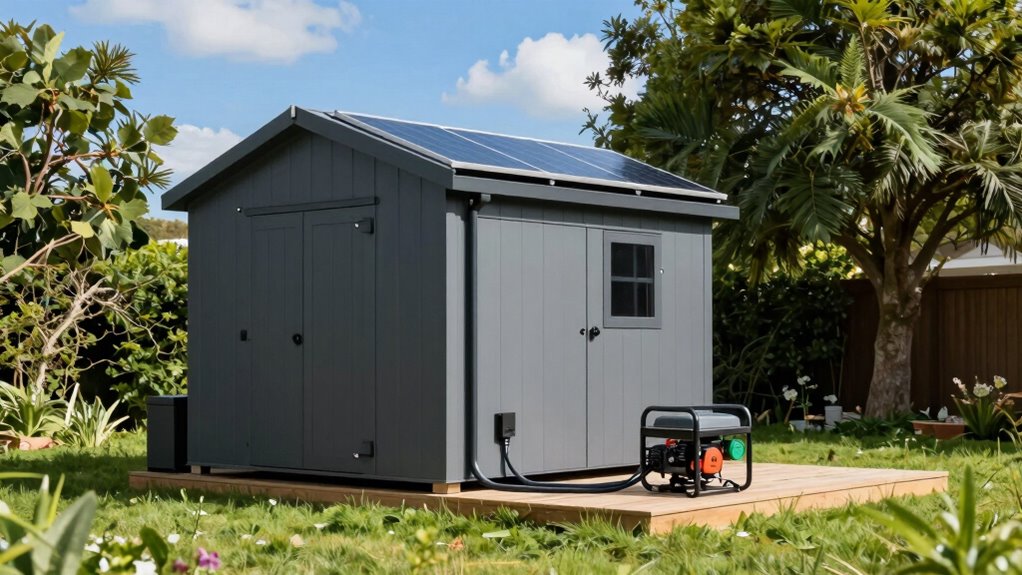
To plan backup power for detached structures, start by listing essential appliances and calculating their total wattage, including startup surges. Choose a generator that matches or slightly exceeds this load, considering fuel type and storage needs. Make certain your generator is installed with proper ventilation, grounding, and safety measures. Regular maintenance and testing are vital for reliability. Keep fuel supplies adequate for expected outage durations. If you explore further, you’ll find detailed steps to guarantee safe and efficient backup power for your detached structures.

Get backup power and energy gear delivered free — and shop member deals
- Fast, free delivery on millions of items
- Access to Prime Big Deal Days deals on October 6–7
- Prime Video, Amazon Music and more included
Key Takeaways
- Assess the power needs of all essential appliances and devices in the detached structure to determine appropriate generator size.
- Choose a suitable fuel type (gasoline, propane, diesel) considering storage capacity and outage duration.
- Install the generator with proper ventilation, grounding, and safety features to prevent hazards.
- Regularly maintain and test the generator to ensure reliable performance during power outages.
- Use transfer switches or outdoor outlet kits for safe, code-compliant connection to the detached structure’s electrical system.
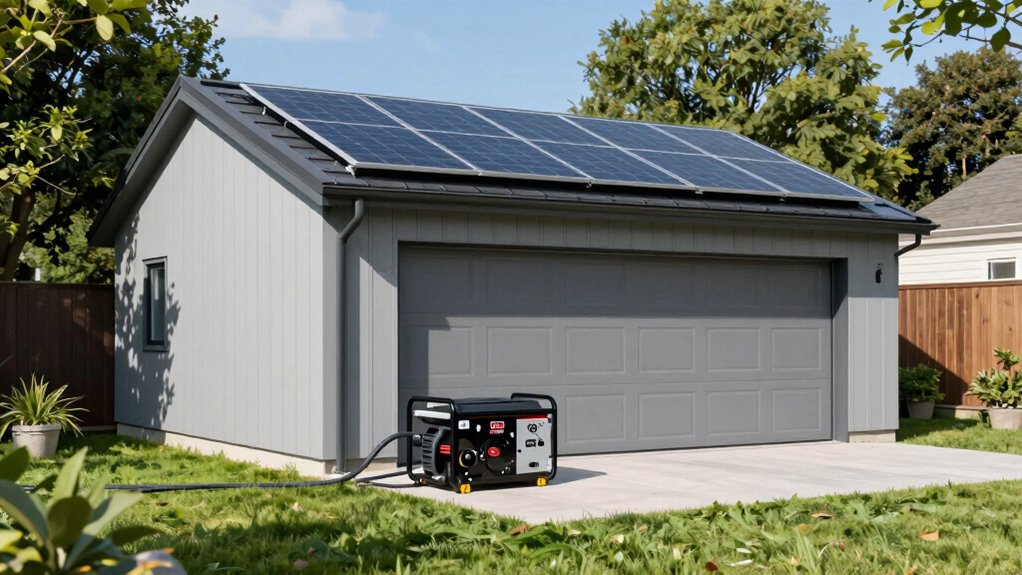
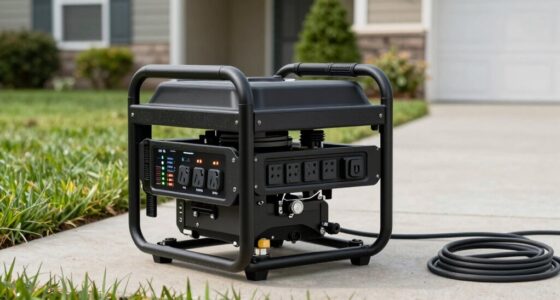
When planning backup power for detached structures, it’s essential to think about how you’ll keep critical appliances and systems running during outages. A key step is selecting the right generator that matches your needs. You need to consider the power consumption of the appliances and devices you want to operate. For example, if you rely on a refrigerator, lights, or a sump pump, you’ll want a generator capable of handling their combined wattage. Ignoring power consumption considerations can lead to undersized systems that won’t meet your needs or oversize units that waste fuel and increase costs.
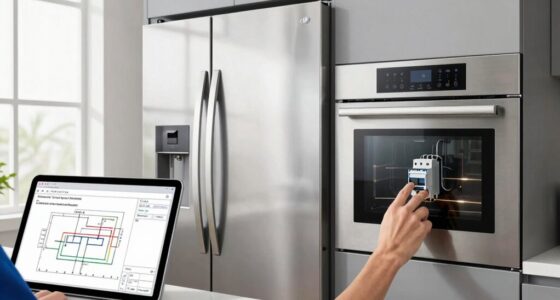
Before choosing a generator, list all the essential equipment you want to power during an outage. Check the wattage requirements for each item—this information’s usually on the appliance label or in the user manual. Add up these wattages to determine the total power capacity you need from your backup generator. Remember to include a buffer for startup surges, especially for motors or appliances with compressors, as they often draw more power when they first turn on. This careful calculation helps you avoid overloading your generator or leaving vital systems unpowered. Additionally, understanding power demands can help optimize fuel efficiency and ensure reliable operation. Being aware of fuel storage considerations is also crucial to maintaining continuous backup power during extended outages. Knowing how to calculate load requirements can make your planning more precise and effective. Proper load calculation ensures your generator operates efficiently without unnecessary strain or risk of failure.
List essential appliances, check wattages, and include a surge buffer to ensure reliable backup power during outages.
Generator maintenance is vital for ensuring reliable backup power when you need it most. Regularly scheduled maintenance, like changing oil, inspecting spark plugs, and testing safety features, keeps your generator in top condition. If you skip maintenance, you risk unexpected breakdowns during outages, which defeats the purpose of having backup power. Set a maintenance schedule based on the manufacturer’s recommendations, and consider storing spare parts or accessories, such as extra oil and filters, to simplify troubleshooting. Conducting periodic performance tests can help verify your generator’s readiness and identify potential issues early.
Another important consideration is fuel type and availability. Gasoline, propane, or diesel generators each have pros and cons. Gasoline might be more accessible but has a shorter shelf life, while propane can store longer but requires proper connections. Think about how long you might need backup power and plan your fuel storage accordingly. Also, ensure your generator is installed safely, with proper ventilation and grounding, to prevent hazards like carbon monoxide poisoning or electrical issues.
Ultimately, effective backup power planning for detached structures hinges on understanding your power needs, maintaining your generator, and considering fuel logistics. By carefully calculating power consumption and staying on top of generator maintenance, you can guarantee your system will perform reliably when outages strike. This proactive approach safeguards your critical appliances and gives you peace of mind, knowing your detached structure remains operational no matter what.
Frequently Asked Questions
What Is the Average Cost of Backup Power Systems for Detached Structures?
The average cost of backup power systems for detached structures typically ranges from $1,000 to $3,000, depending on factors like system sizing and installation. Cost considerations include choosing between portable generators and standby systems, with larger, more powerful units costing more. To guarantee you get the right system, assess your power needs carefully, which influences both system sizing and overall costs, helping you avoid overspending or underpowering your structure.
How Long Can a Backup Power System Run During an Outage?
Imagine your backup power system as a marathon runner—its stamina depends on generator capacity and your power consumption. During an outage, a well-sized generator can run from a few hours up to several days, depending on fuel supply and load. If your power needs are minimal, it might last longer. Regularly assess your power consumption to guarantee your system provides reliable backup during extended outages.
Are There Any Legal Regulations for Installing Backup Power in Detached Structures?
Yes, there are legal regulations you need to follow when installing backup power in detached structures. You must guarantee legal compliance by obtaining all necessary permits and adhering to local building codes. Regulations can vary by area, so check with your local authorities or electrical inspector to confirm specific requirements. Proper installation not only keeps you compliant but also ensures safety and reliable operation during power outages.
How Often Should Backup Power Systems Be Maintained or Tested?
You should maintain and test your backup power systems regularly—think of it as giving them a spa day, but for generators. Follow the recommended maintenance frequency, typically every three to six months, to make sure they’re ready when needed. Testing protocols are essential; run your system under load at least once a year. This keeps everything reliable, so you’re not left in the dark when disaster strikes—because who wants surprises?
Can Solar Panels Be Integrated Into a Backup Power Plan?
Yes, you can integrate solar panels into your backup power plan. Solar integration enhances your backup capacity by providing renewable energy during outages, reducing reliance on generators or grid power. To do this effectively, consider adding batteries to store excess solar energy for later use. This setup guarantees your detached structure remains powered, especially during prolonged outages, while also promoting sustainability and lower energy costs over time.
Conclusion
Think of backup power as your guiding star in the night sky—steadily shining to lead you through darkness. By planning ahead and choosing the right system, you guarantee your detached structures remain a beacon of comfort and safety, no matter the storm. When power fades, your backup becomes the steady heartbeat, the unwavering pulse that keeps your haven alive. With foresight, you transform uncertainty into a calm, resilient rhythm, lighting your way forward.
Evergreen bestsellers Picks
bestsellers
As an affiliate, we earn on qualifying purchases.