
To plan for power outages while working from home, assemble an emergency kit with water, snacks, a flashlight, and a portable charger. Invest in backup power like a generator or UPS to keep essential devices running. Prepare by downloading important files and scheduling work during reliable power times. Establish a resilient workspace near natural light and plan alternative locations nearby. Communicate your plans with colleagues and family. Keep learning how to stay prepared and stay productive during outages.
Open a free Amazon Business account
Business pricing, bulk buying and tax-exempt orders.
As an affiliate, we earn on qualifying purchases.
Key Takeaways
- Assemble an emergency kit with essentials like water, snacks, flashlight, and portable charger to stay prepared during outages.
- Invest in backup power sources such as generators or UPS to maintain device operation and internet connectivity.
- Download important work files and fully charge devices ahead of potential outages to ensure uninterrupted productivity.
- Identify alternative workspaces with reliable power and natural light for use during outages.
- Communicate your outage plan with employers or clients, including backup arrangements and contingency strategies.
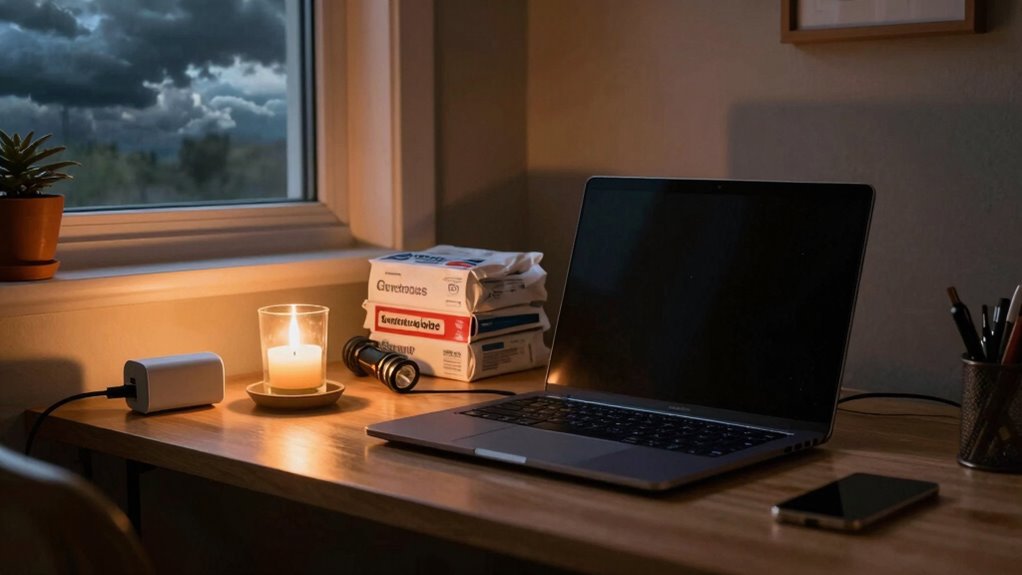
Power outages can strike unexpectedly, leaving your home temporarily without electricity. If you work from home, this situation can disrupt your productivity and create a lot of frustration. To stay prepared, it’s vital to plan ahead. One of the first steps is assembling a well-stocked emergency kit. Your emergency kit should include essentials like bottled water, non-perishable snacks, a flashlight with extra batteries, a portable phone charger, and a battery-powered radio. Having these items ready means you can stay safe and informed during an outage without scrambling to find supplies.
In addition to an emergency kit, investing in backup power options is essential. A portable generator or an uninterruptible power supply (UPS) can keep your essential devices running. This is especially important if your work depends on a stable internet connection or specific equipment. A backup power source guarantees that you can continue working or at least maintain communication with colleagues and clients without interruption. Before an outage, test your backup power systems to confirm they’re functioning properly, so you’re not caught off guard when you need them most. Understanding power management and how to optimize backup systems can help ensure seamless operation during outages, especially since household products like surge protectors can also play a key role in safeguarding your devices.
Planning for power outages also involves setting up contingency plans for your work tasks. Identify which tasks are critical and see if they can be completed offline or stored locally on your device. Download important files in advance and make sure your devices are fully charged. Consider scheduling important calls or meetings during times when power is more likely to be available, such as daytime hours, or inform your team about potential disruptions. This way, you can minimize work loss and stay connected. Additionally, understanding power outage preparedness can help you better adapt your strategy and reduce downtime during unexpected disruptions.
It’s also wise to establish a designated workspace that’s less vulnerable to power outages. If possible, position your work area near a window with natural light, so you can work even if your lights go out. Keep a list of local emergency contacts and the locations of nearby public Wi-Fi spots or coffee shops with reliable power. This allows you to quickly pivot and find alternative workspaces if your home becomes inaccessible during an outage. Understanding nail biology and how nails grow and their strength can even be useful in assessing your overall readiness for sudden disruptions, as maintaining good personal hygiene and health can support resilience during stressful situations.
Finally, communicate your plans with your employer or clients so they understand your potential limitations during outages. Having a clear strategy that includes emergency kits, backup power, and contingency plans will help you stay resilient and productive despite unexpected disruptions. With proper preparation, you can navigate power outages without letting them derail your work-from-home routine.
Frequently Asked Questions
How Long Can a Typical Home Power Outage Last?
A typical home power outage usually lasts a few hours, but it can extend to several days depending on the emergency preparedness of your utility provider and the cause of the outage. Power outage duration varies widely, so it’s smart to be ready for unexpected delays. You should keep essentials like flashlights, batteries, and non-perishable food on hand, ensuring you’re prepared for longer outages and minimizing disruption.
What Are the Best Portable Power Sources for Remote Work?
You should consider solar chargers and portable generators as top choices for remote work during outages. Solar chargers are eco-friendly, compact, and ideal for charging devices on the go, especially in daylight. Portable generators provide reliable power for longer outages, running laptops and essential appliances. Both options guarantee you stay connected and productive, giving you peace of mind and flexibility during unexpected power disruptions.
How Do I Protect Sensitive Electronic Equipment During Outages?
Did you know that 80% of electronic failures are caused by power surges? To protect sensitive equipment during outages, use surge protectors to prevent voltage spikes. Also, keep equipment backups like uninterruptible power supplies (UPS) handy; they give you time to save work safely. Regularly check and replace surge protectors and batteries in backups to make sure they’re effective when needed most.
Can Alternative Internet Options Keep Me Connected?
Yes, alternative internet options like satellite internet can keep you connected during outages, especially when traditional broadband fails. Backup generators also provide reliable power to keep your devices running. Combining these solutions guarantees you stay productive, even when the power’s out. You might consider investing in a satellite internet plan and a backup generator to maintain a steady connection and power supply, minimizing work disruptions during emergencies.
What Safety Precautions Should I Take During a Blackout?
Think of a blackout as a sudden storm; safety hinges on your preparedness. You should use emergency lighting to see clearly and avoid accidents. Keep fire safety in mind by unplugging appliances to prevent surges and avoiding candles to reduce fire risks. Stay away from downed power lines, and if needed, use a flashlight for guidance. Staying cautious guarantees you weather the storm safely and minimize hazards during the outage.
Conclusion
So, next time the power vanishes without warning, you’ll be the hero in your own blackout drama—pretending to cook on a gas stove, reading by candlelight, and proudly showcasing your impressive flashlight collection. Who knew planning could turn you into a survivalist? Remember, a little prep goes a long way—because nothing says “prepared” like having snacks and a charged phone when the lights go out. Stay bright, even when the grid isn’t!
Fall Picks
fall essentials
As an affiliate, we earn on qualifying purchases.