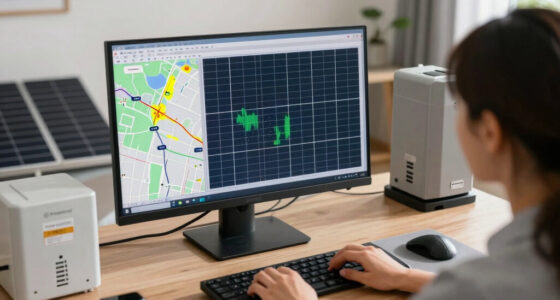

Remote monitoring and alert systems aren’t infallible; common myths suggest they catch everything instantly, but sensor accuracy and connectivity issues can cause false alarms or missed problems. Effective alerts help you respond faster and prevent costly damage, but choosing the right tools and understanding their limits matters. Clear interpretation of alerts is vital, and future innovations will make these systems even smarter. Stay tuned to discover what truly influences successful remote monitoring.

Get backup power and energy gear delivered free with Prime
- Fast, free delivery on millions of items
- Prime Video, Amazon Music and more included
- Member-only deals all year
Key Takeaways
- Remote monitoring systems are not infallible; sensor accuracy, connectivity, and proper interpretation are crucial for reliability.
- Effective alert systems enable rapid responses, reduce downtime, and support proactive maintenance, improving overall operational efficiency.
- Proper selection, integration, and user training ensure monitoring tools align with existing workflows and provide accurate, actionable data.
- Clear interpretation of alerts, prioritization, and user engagement are vital to prevent false alarms and ensure timely responses.
- Future trends like AI and predictive analytics will enhance system reliability, reduce false alarms, and enable proactive issue management.
Common Misconceptions About Remote Monitoring Capabilities
Many people believe that remote monitoring systems are infallible or can detect every issue instantly. However, sensor accuracy plays a vital role in their effectiveness. No system is perfect, and sensor limitations can lead to false alarms or missed problems. Proper user training helps guarantee you interpret alerts correctly and respond appropriately. Without understanding how sensors work or their potential inaccuracies, you might over-rely on the system or dismiss genuine alerts. It’s essential to recognize that remote monitoring is a tool, not a crystal ball. Investing in quality sensors and training users properly helps minimize errors and enhances overall system reliability. Recognizing the importance of accurate sensors and understanding their limitations can significantly improve monitoring outcomes. Remember, effective monitoring depends on both technology and your knowledge of its capabilities and limits.
The Real Benefits of Effective Alert Systems
Effective alert systems help you respond faster to issues, minimizing potential damage. They also lower the risk of costly downtime, keeping your operations running smoothly. By improving communication and response times, these systems boost your overall efficiency and productivity. Incorporating accurate notifications ensures that alerts are both timely and precise, further enhancing system reliability.
Faster Response Times
When alert systems are designed to notify you instantly of issues, response times improve dramatically, minimizing potential damage or downtime. Quick alerts allow you to act before problems escalate. Here’s how faster response times make a difference:
- Automated diagnostics identify issues immediately, reducing guesswork.
- You can prioritize critical problems, optimizing your response efforts.
- User training ensures you understand alerts, speeding up decision-making.
- Rapid notifications cut down the time between detection and action, preventing costly failures.
- Ethical Hacking techniques can be integrated into alert systems to proactively identify vulnerabilities before they are exploited.
Reduced Downtime Risks
Reduced downtime risks are one of the most significant benefits of a reliable alert system because quick notifications enable you to address issues before they cause prolonged outages. By leveraging predictive analytics, your system can identify potential failures early, allowing you to take preventive measures. This proactive approach minimizes the chances of unexpected breakdowns that disrupt operations. Additionally, effective alert systems help you respond swiftly to cybersecurity risks, reducing the window of vulnerability. Early detection of suspicious activities ensures you can act before breaches cause damage or downtime. Properly configured alert systems can also integrate with retail hours to provide timely updates on store operations or maintenance schedules, further enhancing operational efficiency. Overall, these capabilities keep your systems running smoothly, safeguarding productivity and reducing costly interruptions. Implementing such alert systems not only enhances your ability to prevent downtime but also strengthens your cybersecurity defenses.
Improved Operational Efficiency
Implementing a reliable alert system substantially boosts your operational efficiency by enabling quick decision-making and rapid response to issues. With features like predictive analytics, you can anticipate problems before they escalate. Proper staff training guarantees your team interprets alerts correctly and acts swiftly. Consider these benefits:
- Faster problem resolution minimizes disruptions.
- Data-driven insights optimize resource allocation.
- Proactive maintenance reduces emergency repairs.
- Enhanced staff training improves response accuracy.
Limitations That Can Trip Up Your Monitoring Strategy

Despite the advantages of remote monitoring and alerts, several limitations can undermine your strategy if you’re not careful. One major challenge is relying too heavily on remote troubleshooting, which can slow down issue resolution if problems are complex or poorly diagnosed remotely. You might also face gaps in technician training, leading to misinterpreting alerts or overlooking critical signals. Without proper skills, your team may struggle to respond swiftly or accurately, reducing the system’s effectiveness. Additionally, technical issues like connectivity disruptions or false alarms can create confusion, wasting time and resources. Recognizing these limitations helps you implement safeguards, such as targeted training and contingency plans, ensuring your remote monitoring remains a reliable tool rather than a source of frustration. Moreover, understanding common health issues like signs of illness or injury in animals can help prevent crises before they escalate.
Choosing the Right Tools for Your Needs
When choosing tools for remote monitoring, you need to guarantee they’re compatible with your existing systems. Think about which features matter most to you, whether it’s real-time alerts, data analysis, or ease of use. Prioritizing these points will help you select the right tools to meet your specific needs. For instance, if engine performance is a concern, exploring Kia Tuning options can enhance your vehicle’s capabilities.
Selecting Compatible Technologies
Choosing the right tools for remote monitoring and alerts starts with understanding your specific needs and existing infrastructure. To guarantee smooth operation, focus on:
- Hardware compatibility – confirm devices work seamlessly with your current hardware setup.
- Software integration – choose solutions that easily connect with your existing systems.
- Scalability – ensure the technology can grow with your organization.
- Reliability – prioritize tools with proven uptime and support.
Matching hardware and software is vital; incompatible tools can lead to data gaps or system failures. Check compatibility matrices and integration capabilities before purchasing. Remember, selecting technologies that fit your existing environment minimizes disruptions and maximizes performance. Being deliberate in your choices saves you time and resources while ensuring your remote monitoring system operates effectively.
Assessing Feature Priorities
After confirming hardware compatibility and integration, the next step is to prioritize the features that matter most to your organization. Focus on sensor calibration to guarantee accurate, reliable data collection—improper calibration can lead to false alarms or missed issues. Equally important is data privacy; choose tools that safeguard sensitive information through encryption and access controls. Consider whether real-time alerts are essential or if historical data analysis offers more value. Think about ease of use, scalability, and how well the system supports your existing infrastructure. By clearly defining your priorities—be it precise sensor calibration, robust data privacy, or user-friendly interfaces—you’ll select tools that genuinely meet your needs and improve your remote monitoring effectiveness. Additionally, understanding Self-Understanding – Personality Test can help tailor the system features to better fit user preferences and enhance overall engagement.
How to Interpret and Act on Alerts Effectively
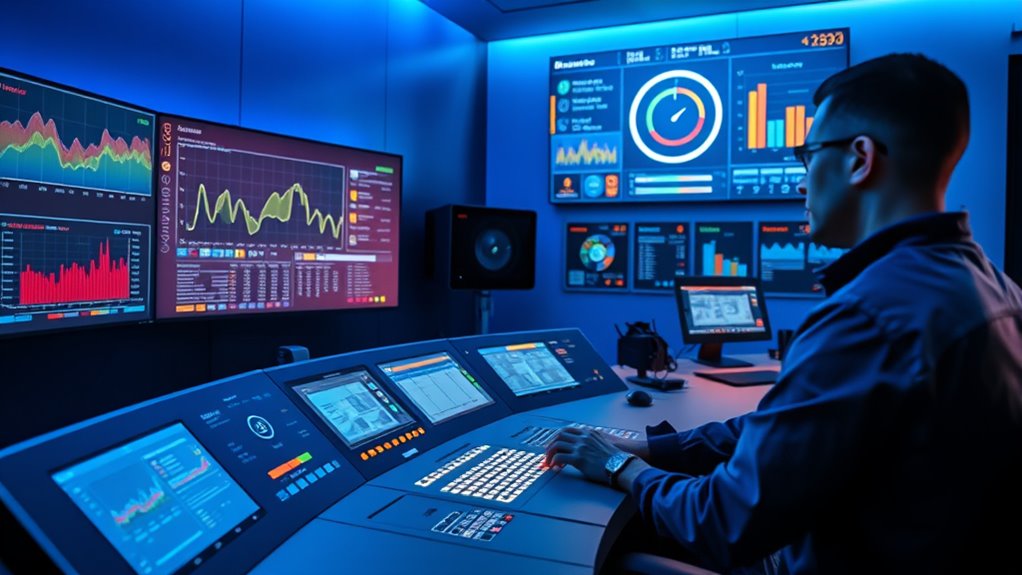
Understanding how to interpret alerts promptly and accurately is essential for effective remote monitoring. To act appropriately, focus on alert prioritization and notification timing. Here are key steps:
- Assess the urgency of each alert to determine its priority level.
- Respond quickly to high-priority alerts, avoiding delays caused by poor notification timing.
- Verify the alert’s details to avoid false alarms or misjudgments.
- Take immediate corrective action or escalate if necessary, based on the alert’s significance.
- Recognize that dreams and subconscious signals can sometimes influence our perceptions and responses, underscoring the importance of clear and accurate alert interpretation.
Integrating Remote Monitoring Into Broader Management Practices

To effectively incorporate remote monitoring into your broader management practices, you need to align it with your existing workflows and strategic goals. This means integrating data privacy measures and providing user training to ensure everyone understands how to use the system securely and effectively. When done right, your team can respond faster, make informed decisions, and maintain compliance. Consider this table to see key aspects: emotional support, which can help foster a supportive environment during transitions. | Aspect | Focus Area | Outcome |
| —————— | ——————— | ———————————– |
|---|---|---|
| Data Privacy | Secure data handling | Protects sensitive info |
| User Training | Skill development | Reduces errors, boosts confidence |
| Workflow Alignment | Process integration | Seamless management process |
Future Trends and How They Will Shape Remote Monitoring
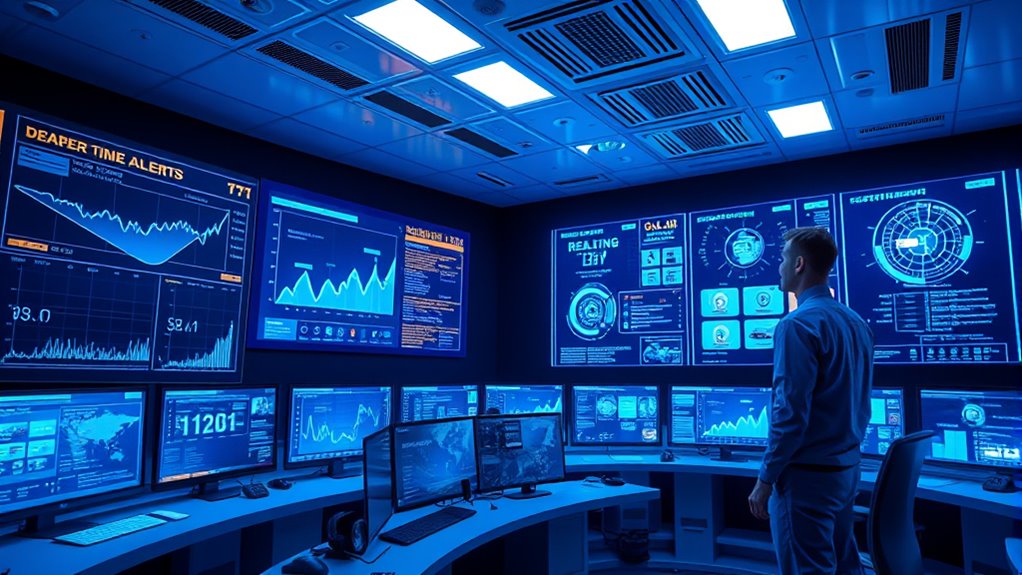
Emerging technologies and evolving industry standards are set to revolutionize remote monitoring in the near future. You’ll see a shift toward smarter systems powered by predictive analytics, enabling proactive responses before issues escalate. AI integration will make monitoring more intuitive, reducing false alarms and automating routine tasks. Here’s what to expect:
- Advanced predictive analytics that forecast equipment failures and health trends.
- Seamless AI integration for real-time data analysis and decision-making.
- Enhanced user interfaces driven by machine learning for easier interpretation.
- Greater customization options tailored to specific industry needs.
- The importance of attention in managing complex systems effectively will become even more critical as technology advances.
These innovations will make remote monitoring more reliable, efficient, and proactive—ultimately transforming how you manage and respond to operational data.
Frequently Asked Questions
How Do Privacy Concerns Impact Remote Monitoring Strategies?
Privacy concerns profoundly impact your remote monitoring strategies by requiring you to prioritize data privacy and secure user consent. You need to ensure that personal information is protected and that users understand how their data is collected and used. By transparently addressing these concerns, you build trust and comply with regulations, making your monitoring systems more effective and ethically sound. Ultimately, respecting privacy fosters better user engagement and long-term success.
What Are the Costs Associated With Implementing Advanced Alert Systems?
Implementing advanced alert systems involves costs like hardware, software, and ongoing maintenance. You should perform a thorough cost analysis to understand these expenses and how they fit into your budget. Effective expense management helps you maximize value while minimizing unnecessary spending. Keep in mind that investing in reliable alert systems can reduce operational risks and improve response times, ultimately saving money in the long run.
How Can Remote Monitoring Be Customized for Different Industries?
You can customize remote monitoring by leveraging industry-specific solutions tailored to your sector’s unique needs. To overcome customization challenges, engage with providers who understand your industry’s workflows and compliance requirements. Focus on adaptable alerts and data analytics that address your operational nuances. This way, your remote monitoring system becomes more effective, reduces false alarms, and enhances safety and efficiency tailored precisely to your industry’s demands.
What Training Is Needed for Staff to Interpret Alerts Correctly?
Imagine your staff as skilled navigators, steering through a sea of alerts. To interpret alerts correctly, you need targeted staff training that covers alert interpretation basics, common false alarms, and troubleshooting techniques. Hands-on exercises, real-world scenarios, and continuous education make certain they stay sharp. This way, your team confidently distinguishes critical issues from noise, acting swiftly and accurately to maintain safety and efficiency.
How Does Remote Monitoring Integrate With Existing Cybersecurity Measures?
You integrate remote monitoring with cybersecurity by ensuring data encryption protects transmitted information and access controls restrict who can view or modify data. These measures help prevent unauthorized access and data breaches. You should regularly update encryption protocols and review access controls to adapt to evolving threats. Combining these security layers with your existing cybersecurity measures creates a robust defense, maintaining data integrity and confidentiality across your remote monitoring systems.
Conclusion
Remember, remote monitoring is like a lighthouse guiding you through foggy waters—when used correctly, it illuminates issues before they become crises. Don’t fall for myths or overlook limitations; instead, choose the right tools and learn to interpret alerts effectively. By integrating these practices into your management, you’ll navigate challenges smoothly. Stay informed about future trends, and your monitoring system will continue to serve as a reliable beacon in your operations.
Halloween Picks
halloween
As an affiliate, we earn on qualifying purchases.