
During long blackouts, keep perishable foods in a cool, dark spot and minimize opening your fridge or freezer to preserve cold. Use coolers with ice packs for meat and dairy, and switch to non-perishables like canned goods and dried grains in your pantry. For water, boil for at least a minute or use purification tablets, storing enough clean water for several days. Proper storage and safety checks are key—learn more about safeguarding your supplies during extended outages.
Key Takeaways
- Store perishable foods in cool, dark places and minimize refrigerator door openings to preserve cold temperatures.
- Boil or purify water using tablets or filters before drinking to prevent waterborne illnesses.
- Regularly inspect canned and stored foods for damage or spoilage, discarding any questionable items.
- Use airtight containers for water and food storage to prevent contamination and pests.
- Keep an emergency supply of clean water sufficient for several days and change it periodically to ensure freshness.
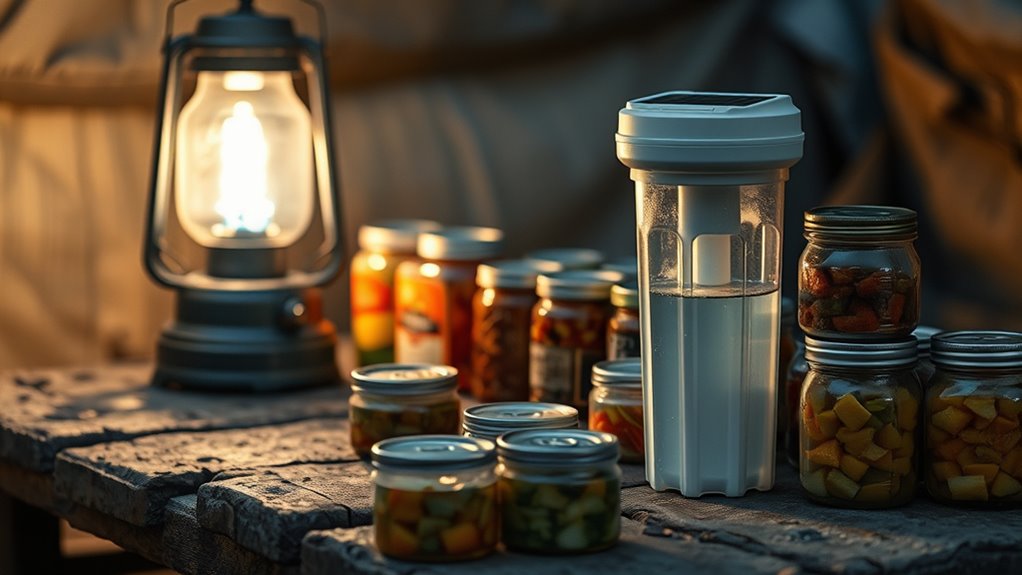
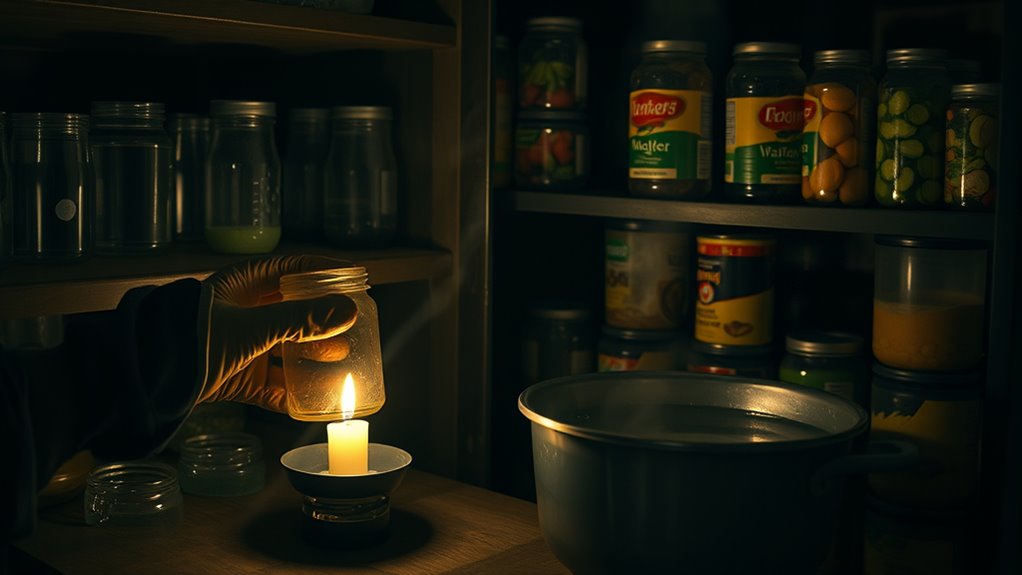
During a long blackout, ensuring your food and water stay safe becomes critical to prevent illness. Without power, refrigeration and proper storage become challenging, increasing the risk of food spoilage and bacterial growth. To protect your food, you need to focus on effective food storage methods. Keep perishable items in a cool, dark place if possible, such as a cellar or a shaded corner away from direct sunlight. If you have a cooler and some ice packs, use them to maintain a cold environment for meat, dairy, and other sensitive foods. Avoid opening refrigerator or freezer doors unnecessarily to preserve their cold temperatures longer. Non-perishable foods like canned goods, dried grains, and preserved fruits can serve as reliable staples during extended outages. Make sure your pantry is stocked with these items beforehand, so you can access them without hassle. Properly organizing your food storage can also reduce waste and make it easier to find what you need quickly.
Water safety is just as crucial. During a blackout, your regular water supply might become contaminated or disrupted, so water purification becomes a top priority. If you rely on municipal water, avoid drinking tap water unless you’ve purified it first. Boiling water is one of the most effective purification methods—bring it to a rolling boil for at least one minute to kill bacteria, viruses, and parasites. If boiling isn’t feasible, use water purification tablets or portable water filters designed to remove contaminants. Store an emergency supply of clean water in sealed containers, ideally enough to last at least a few days. Remember to change these supplies periodically to prevent stagnation or spoilage.
Handling food and water safely requires vigilance. Always check canned goods for dents, bulges, or leaks before consuming, and discard any suspicious items. When in doubt, throw it out—consuming spoiled food can cause serious illness. For water, don’t rely on unclear or discolored sources; instead, purify any questionable water before drinking or cooking with it. Keep your purification tools clean and in good working order. Use airtight containers for storing water and food to prevent contamination and pests. Additionally, maintain a clean environment around your storage areas, regularly wiping surfaces and washing your hands before handling food or water supplies. Being aware of food safety and proper storage techniques can significantly reduce health risks during extended blackouts.
Frequently Asked Questions
How Can I Tell if Canned Food Is Still Safe to Eat?
You can tell if canned food is safe to eat by inspecting the can carefully. Check for any signs of damage like dents, rust, or bulging, which indicate spoilage. Always look at the food expiration dates, and if the date has passed, it’s best to discard it. Also, open the can and smell or examine the contents for any off odors, discoloration, or mold before consuming.
What Are Natural Methods to Purify Water During a Blackout?
Sure, because boiling water sounds so last century, right? You can try solar distillation by placing contaminated water in a clear container, covering it with a lid, and letting the sun do its magic—evaporating and condensing clean water. If you prefer instant results, boiling water for at least a minute kills most pathogens. Both methods are natural hacks to keep you hydrated when power’s out and taps run dry.
How Long Can Food Safely Stay Unrefrigerated Before Spoiling?
You can generally keep perishable food safe for about 2 hours unrefrigerated, but in hot weather, that time shortens to just 1 hour. Pay attention to spoilage indicators like sour smell, slimy texture, or discoloration. Food safety decreases rapidly once these signs appear. Always use your senses to check for spoilage, and when in doubt, discard questionable items to prevent foodborne illness.
Are There Specific Foods That Last Longer Without Refrigeration?
Like a trusty old friend, canned goods last longer without refrigeration, making them ideal during blackouts. You’ll find that dry grains, beans, and honey also have impressive shelf lives, thanks to preservation techniques like sealing and dehydration. These foods can stay safe for extended periods, giving you more options when power’s out. Relying on such items helps you manage your supplies and guarantees you’ve got nourishment when refrigeration isn’t an option.
What Are Signs of Waterborne Illness After a Blackout?
If you notice gastrointestinal symptoms like diarrhea, vomiting, or stomach cramps after a blackout, it could be a sign of waterborne illness from contaminated water. To stay safe, avoid drinking or using water that looks cloudy, has a strange odor, or tastes off. Boiling water for at least a minute or using water purification tablets can help eliminate germs. Seek medical help if symptoms persist or worsen.
Conclusion
During a long blackout, think of your food and water supply as a fragile garden needing your care. By keeping everything cold, sealed, and clean, you protect it from unseen threats that can spoil your resources. Remember, a moment’s vigilance is like tending to delicate plants—if you ignore them, they wither away. Stay alert and proactive, and you’ll keep your supplies safe, ensuring your survival is as resilient as a well-tended garden thriving through any storm.