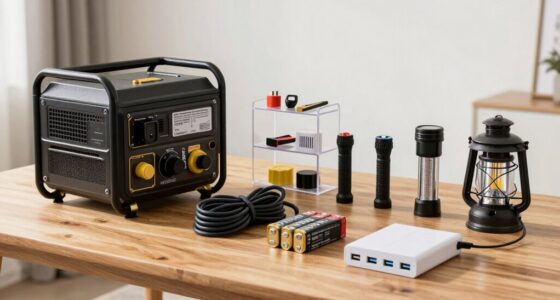
During outages, you should prioritize essential devices, turn off non-essentials, and unplug electronics to save power. Use energy-efficient bulbs and switch off or dim lights when possible. Limit appliance use and operate high-energy devices only during available power periods. Regularly maintain your solar panels to keep them efficient. By managing your energy wisely now, you can extend your backup power and ensure critical functions stay running longer—keep going to discover more valuable strategies.

Get backup power and energy gear delivered free with Prime
- Fast, free delivery on millions of items
- Prime Video, Amazon Music and more included
- Member-only deals all year
Key Takeaways
- Prioritize essential devices and turn off non-essentials to conserve energy during outages.
- Unplug chargers and electronics not in use to prevent phantom loads.
- Use energy-efficient appliances and switch to LED lighting to reduce power consumption.
- Schedule high-energy tasks like laundry during periods of available power.
- Implement power management habits, such as limiting device use and turning off unused electronics.

Are you looking for effective ways to reduce your energy consumption and lower your utility bills? During outages, managing your energy use becomes even more vital. One of the best strategies is to enhance your solar panel efficiency if you have a solar power system. Make sure your panels are clean and free from dirt, dust, or snow, as these can diminish their ability to absorb sunlight and generate electricity. Positioning your panels at the correct angle also maximizes sunlight exposure, helping you get the most out of your renewable energy source. Keep an eye on your system’s performance to identify any drops in efficiency, and consult a professional if needed to guarantee your setup is working at its best. Improving solar panel efficiency not only sustains power during outages but also reduces reliance on the grid, saving you money and energy in the long run.
Alongside enhancing your solar panels, appliance power management plays a vital role in conserving energy during outages. Prioritize and use only essential devices, turning off everything that’s non-essential. During power disruptions, avoid leaving appliances on standby, as they draw phantom loads that waste energy. Unplug chargers, lamps, and electronics when not in use to prevent unnecessary drain. When you do use appliances, choose energy-efficient models and operate them during times when power is available, or use portable power solutions if you’ve got them. Managing your appliance power consumption effectively reduces the load on your generator or backup system, allowing these resources to last longer during an outage. Additionally, consider scheduling tasks like laundry or dishwashing during times when power is stable to prevent overtaxing your backup power. Incorporating energy-efficient lighting options like LED bulbs further minimizes power usage during dark hours, making your energy resources stretch further.
Frequently Asked Questions
How Can I Identify Energy Wastage During Outages?
You can identify energy wastage during outages by using smart meters, which track your energy use in real-time, helping you spot unusual spikes. Conduct energy audits to pinpoint inefficiencies, such as appliances that consume excess power or leaks in your electrical system. Regularly reviewing your smart meter data and performing audits empowers you to make adjustments, reducing waste and conserving energy even during outages.
Are There Specific Appliances I Should Unplug First?
Don’t wait for the storm to hit before thinking about appliance prioritization. Start by unplugging sensitive devices like chargers, microwaves, and lamps first—these tend to use standby power. Follow unplugging guidelines by turning off and unplugging large appliances such as refrigerators and HVAC units only if advised. This way, you conserve energy and reduce risks, keeping your home safer and more efficient during outages.
How Can I Maintain Essential Devices Without Power?
To keep essential devices running without power, you can use solar backups and power banks. Connect your smartphones, tablets, and small appliances to solar-powered chargers or portable power banks to make certain of continuous operation. Prioritize devices that keep you safe and informed, like radios and medical equipment. Keep your power banks charged when electricity is available, and store solar backups in direct sunlight for quick access during outages.
What Safety Precautions Should I Take During Outages?
During outages, you should prioritize safety by practicing emergency preparedness. Keep a supply of alternative lighting, like flashlights and batteries, to prevent accidents. Avoid using candles to reduce fire risks, and never operate generators indoors. Stay informed through a battery-powered radio or phone alerts, and keep a first aid kit accessible. These precautions help protect you and your loved ones while ensuring you’re ready for any situation.
Can Energy Conservation Help Reduce Outage Impacts?
Yes, conserving energy can reduce outage impacts by easing demand on the grid. You can use renewable sources like solar or wind to generate power locally, reducing reliance on the main supply. Additionally, smart grids help manage electricity more efficiently, preventing overloads. By conserving energy, you’re not only lowering your consumption but also supporting a more resilient energy system, which minimizes the risk and severity of outages.
Conclusion
By implementing simple energy conservation strategies during outages, you can markedly reduce power demand and ease the strain on the grid. Did you know that during peak outages, household energy use can drop by up to 30% when everyone conserves? Every small effort counts. Stay mindful of your energy habits, stay safe, and help support your community’s resilience. Together, we can make a meaningful difference, even in challenging times.
Fall Picks
fall essentials
As an affiliate, we earn on qualifying purchases.