After a storm, start by inspecting your generator’s fuel system for leaks, corrosion, or debris, and replace contaminated fuel if needed. Check electrical connections for loose or damaged wires and verify the battery and circuit breakers are in good shape. Examine the generator’s physical parts for cracks, dents, or blockages, especially around vents and hoses. Perform a test run to confirm smooth operation and safety. Continuing will guide you through detailed steps to keep your generator reliable and safe.
Key Takeaways
- Visually inspect the generator for visible damage, corrosion, leaks, or debris, especially around vents and cooling components.
- Check fuel system for leaks, contamination, and ensure fuel lines are intact and clean.
- Test electrical connections for corrosion, loose wires, or damage before powering up.
- Verify structural integrity and clear debris from vents, fans, and cooling systems.
- Conduct a safe test run, listening for abnormal noises and monitoring for proper operation.
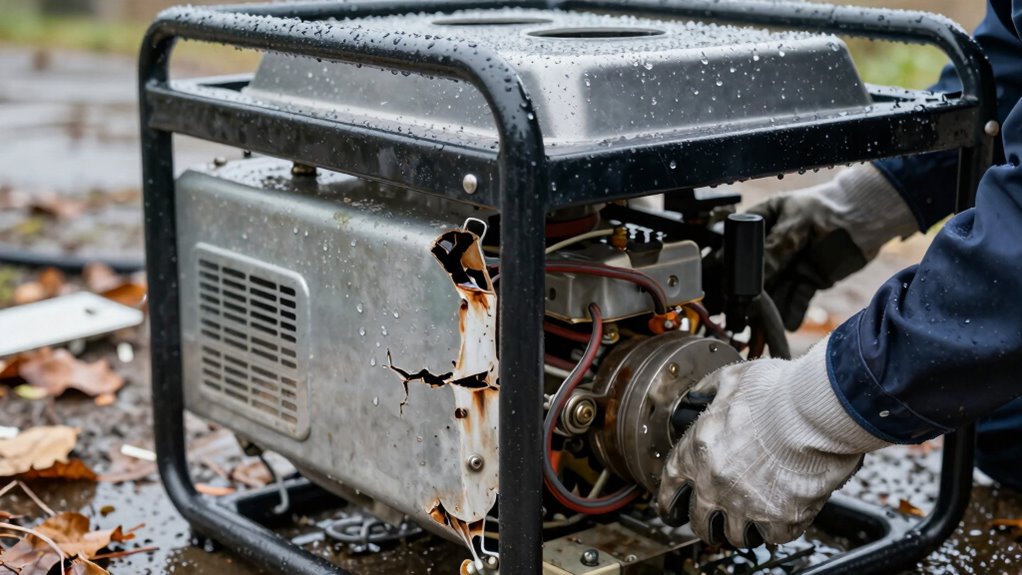
Have you ever wondered how to guarantee your generator is still safe and functional after a storm? Storms can cause significant damage, making it essential to perform a thorough inspection before trusting your generator to power your home or business again. Start by examining the fuel system. Check the fuel tank for leaks, corrosion, or debris that might have entered during the storm. Ensure that the fuel lines are intact and free of cracks or blockages. If you notice any signs of damage or stale fuel, it’s best to drain the tank and refill it with fresh fuel. Old or contaminated fuel can cause your generator to run poorly or not at all, so don’t skip this step. Also, inspect the fuel filter for clogs and replace it if necessary. Proper fuel flow is critical to keeping your generator running reliably, especially after a storm when conditions may have compromised the system.
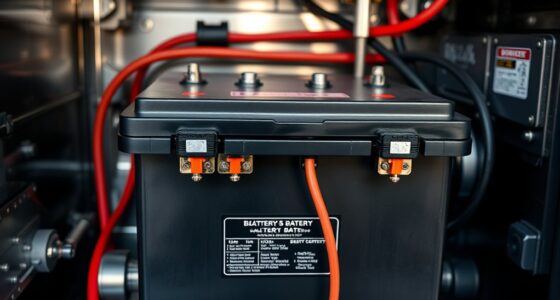
Next, turn your attention to the electrical connections. Storms often bring power surges, lightning strikes, or water intrusion that can damage wiring and electrical components. Carefully inspect all visible wiring for signs of fraying, corrosion, or loose connections. Pay special attention to the battery terminals, starter wiring, and circuit breakers. Tighten any loose connections and replace damaged wires immediately. If your generator has external control panels, check for moisture or corrosion that could interfere with operation. Avoid attempting to test or operate the generator if you find signs of electrical damage; instead, consult a professional for repairs. Ensuring that all electrical connections are secure and dry helps prevent short circuits or electrical fires when you power it back up. Additionally, understanding regulatory considerations can help ensure your generator complies with safety standards and environmental regulations, especially after storm damage.
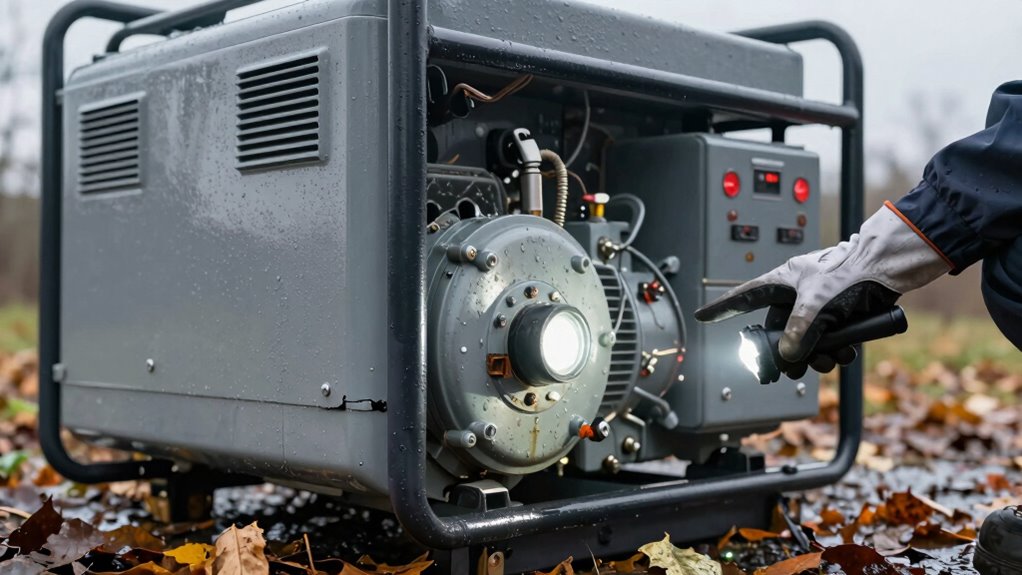
While inspecting these components, also look for any physical damage to the generator itself, including cracks, dents, or bent parts. Check the cooling system, including the radiator and hoses, for leaks or blockages. After a storm, debris can get lodged in vents or fans, so clear out any obstructions to allow proper airflow. If your generator has a protective cover or enclosure, verify that it’s still intact and properly fitted. Once you’ve completed a visual inspection of the fuel system, electrical connections, and physical condition, perform a test run to confirm everything operates smoothly. Additionally, understanding the role of contrast ratio can help you assess the overall quality of your generator’s components and their ability to handle different lighting conditions. Always follow safety protocols during inspections, and if you’re unsure about any damage, it’s wise to have a professional technician assess your generator before relying on it again. This careful inspection helps ensure your generator remains safe and ready to provide power when it’s needed most after a storm.
Top picks for "inspect generator after"
Open Amazon search results for this keyword.
As an affiliate, we earn on qualifying purchases.
Frequently Asked Questions
Can I Safely Test My Generator Immediately After a Storm?
You shouldn’t test your generator immediately after a storm. First, check for fuel stability to confirm no contamination or leaks, and inspect for corrosion or damage caused by moisture. Allow the generator to dry if it’s wet and remove any debris around it. Once you’ve completed these safety checks, and everything appears intact, then you can carefully test the generator to verify it operates correctly without risking further damage.
How Do I Identify Hidden Damages on the Generator?
You can spot hidden damages by thoroughly inspecting both external damage and internal components. Start by looking for cracks, corrosion, or loose parts on the exterior. Then, open the generator to check for internal issues like burnt wires, corrosion, or displaced parts. Running the generator briefly can also reveal unusual noises or vibrations, indicating hidden problems. Regular inspections like this help guarantee your generator stays reliable after a storm.
What Safety Precautions Should I Take During Inspection?
During inspection, always prioritize safety by wearing personal protective gear like gloves and safety glasses to prevent electrical hazards. Make certain the generator is turned off and disconnected from power sources before examining it. Be cautious of wet or damaged areas, as they increase the risk of electrical shock. Keep a safe distance from any exposed wiring and use insulated tools. Never rush, and double-check for any signs of damage before powering up again.
How Often Should I Perform Maintenance After Storm Damage?
Think of your generator as a garden that needs regular tending. After storm damage, you should perform maintenance immediately and then check it weekly, especially focusing on generator fuel levels and electrical connections. This keeps it in top shape, prevents rust and corrosion, and guarantees reliable power when you need it most. Regular inspections help catch issues early, saving you time and costly repairs down the line.
When Should I Call a Professional for Generator Repair?
You should call a professional for generator repair immediately if you notice persistent problems or unusual sounds during operation, even after performing regular generator maintenance. If your storm preparedness routine reveals damage like leaks, corrosion, or electrical issues, don’t delay—consult an expert. Prompt repairs guarantee your generator functions reliably during emergencies, minimizing downtime and preventing further damage. Regular inspections and timely professional help keep your backup power ready when storms strike.
Conclusion
After a storm, inspecting your generator is essential to guarantee it’s ready when you need it most. Regular checks can prevent costly repairs and keep your home powered during emergencies. Did you know that about 70% of generator failures are caused by neglect or improper maintenance? By taking a few minutes to inspect and maintain your generator, you can avoid these common issues and stay prepared for any future storms. Stay vigilant and keep your generator in top shape.