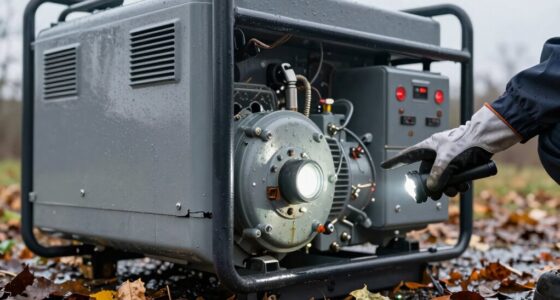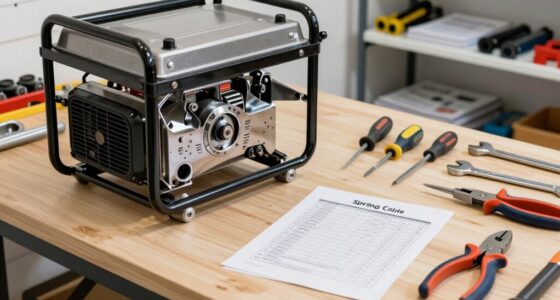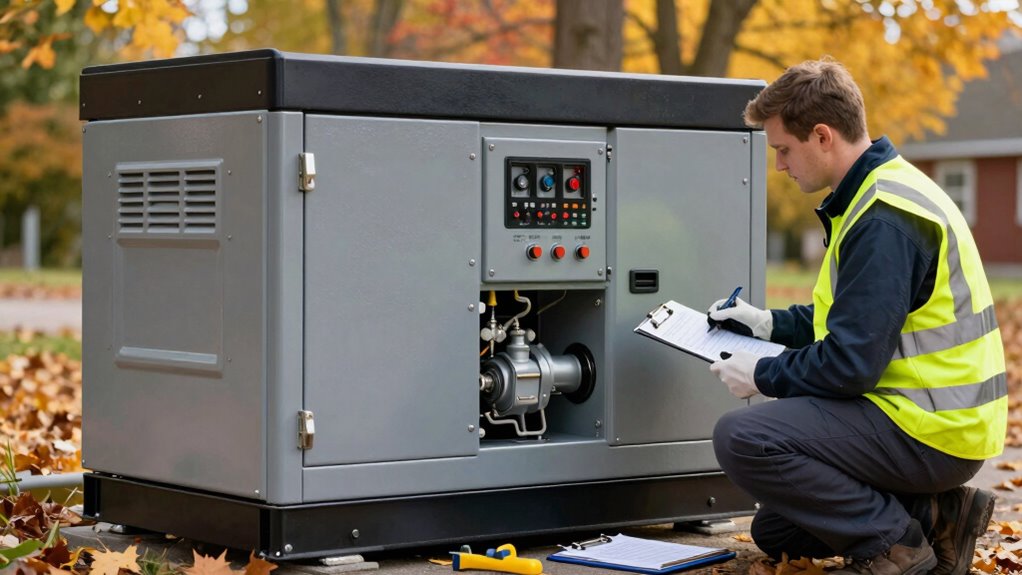

To build a standby generator fall checklist, start by scheduling regular maintenance, like oil and filter changes, and inspecting spark plugs, batteries, and fuel systems. Check the environmental area for debris, obstructions, or ventilation issues. Conduct load tests and guarantee electrical connections are secure and damage-free. Don’t forget safety checks and operational tests. Staying proactive helps keep your generator ready for cold weather or outages. Keep exploring to discover detailed steps for a thorough, effective checklist.

Get backup power and energy gear delivered free with Prime
- Fast, free delivery on millions of items
- Prime Video, Amazon Music and more included
- Member-only deals all year
Key Takeaways
- Establish a fall-specific maintenance schedule including oil changes, filter replacements, and component inspections.
- Conduct safety checks to ensure proper operation and verify emergency readiness before winter.
- Clear debris and ensure ventilation pathways are unobstructed to prevent fire hazards.
- Inspect electrical connections and wiring for corrosion or damage, ensuring secure and safe connections.
- Document all maintenance activities and inspections for reference and compliance.
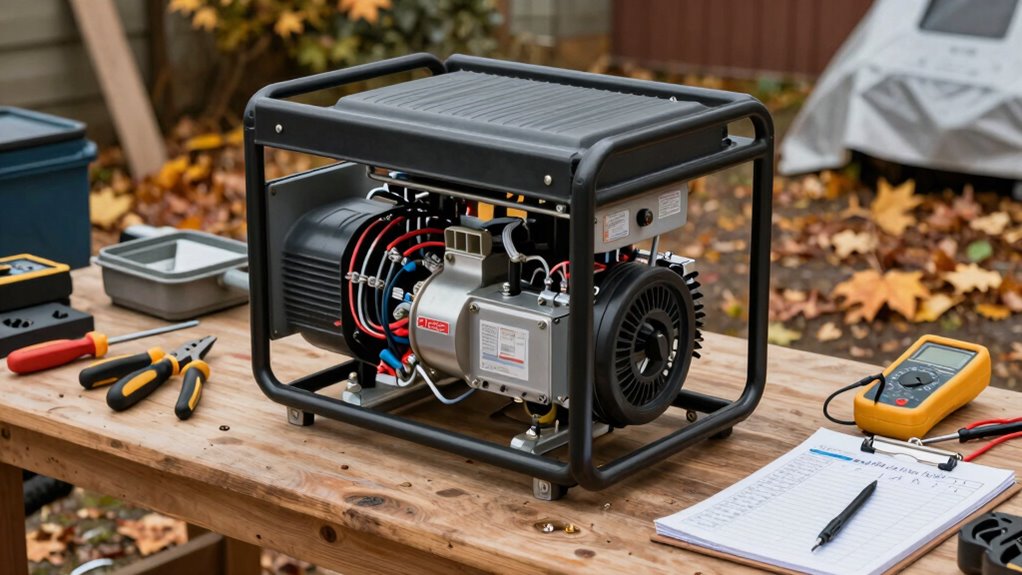
As fall approaches, it’s vital to prepare your standby generator to guarantee it’s ready when you need it most. The changing weather can bring power outages, and you want your generator to operate smoothly without surprises. Building a fall checklist starts with establishing a solid maintenance schedule. Regular maintenance ensures your generator stays in top shape, extending its lifespan and preventing unexpected breakdowns. Begin by checking and replacing oil and filters according to the manufacturer’s recommendations, typically every 50 to 100 hours of use or annually. Inspect the spark plugs, battery, and fuel system for corrosion or wear, and clean or replace parts as necessary. Don’t forget to test the generator under load, making sure it kicks on and operates correctly. This proactive approach minimizes risks and guarantees readiness when stormy weather hits. Proper documentation of your maintenance routines can also help tracking performance and plan future inspections more efficiently. Additionally, familiarizing yourself with generator safety guidelines can prevent accidents and ensure proper operation during emergencies. Regularly checking filter maintenance and replacement schedules can further enhance your generator’s reliability during critical times. Incorporating routine inspections of the outdoor environment around your generator can help prevent debris buildup and ensure clear ventilation. Moreover, inspecting the power connections regularly can prevent potential electrical hazards.
Frequently Asked Questions
When Is the Best Time to Schedule Generator Maintenance?
You should schedule generator maintenance in early fall to guarantee ideal fuel efficiency and noise levels during peak usage. Doing it now helps identify issues before harsh weather hits, preventing outages. Regular maintenance boosts fuel efficiency by keeping components clean and functioning smoothly, and it reduces noise levels, making your generator quieter and less disruptive. Don’t wait until problems worsen; proactive maintenance keeps your standby generator reliable year-round.
How Often Should I Test My Standby Generator?
You should test your standby generator monthly to guarantee peak fuel efficiency and manageable noise levels. Regular testing helps you identify issues before emergencies, keeps the system running smoothly, and confirms it will start when needed. During each test, listen for unusual noise levels, check fuel consumption, and verify proper operation. Consistent testing not only prolongs your generator’s lifespan but also guarantees reliable backup power when you need it most.
What Safety Precautions Are Necessary During Generator Servicing?
During generator servicing, you need to prioritize safety by wearing appropriate safety gear like gloves and eye protection. Confirm the fuel quality is good—avoid old or contaminated fuel—that could cause malfunctions or hazards. Always disconnect power before maintenance, work in a well-ventilated area, and keep a fire extinguisher nearby. Follow manufacturer instructions carefully, and never service the generator when you’re exhausted or distracted to prevent accidents.
Can I Perform Maintenance Myself or Need a Professional?
Like a modern-day knight, you can perform basic DIY tips to maintain your generator safely. However, for complex tasks or troubleshooting, it’s best to seek professional services. While routine checks, like oil or filter changes, are manageable, tackling electrical or fuel system issues requires specialized knowledge. You’ll guarantee safety and proper functioning by knowing when to DIY and when to call in the pros.
What Signs Indicate My Generator Needs Urgent Repairs?
If your generator’s fuel efficiency drops unexpectedly or it produces louder-than-usual noise levels, it’s a sign you need urgent repairs. You might notice difficulty starting, strange vibrations, or a decline in power output. These issues can indicate worn parts or fuel system problems. Address these signs promptly to prevent breakdowns and guarantee your generator runs smoothly during emergencies. Regular maintenance helps catch problems early.
Conclusion
By following this fall checklist, you’ll guarantee your standby generator stays reliable when you need it most. Regular maintenance can extend its lifespan and prevent unexpected failures. Did you know that generators with scheduled upkeep are 70% less likely to break down during power outages? Staying proactive with your generator care not only keeps your home safe but also saves you money in the long run. Stay prepared and enjoy peace of mind all season long.
Columbus Day / Indigenous Peoples' Day Picks
long weekend sales
As an affiliate, we earn on qualifying purchases.