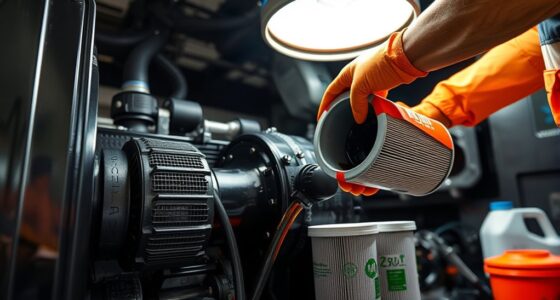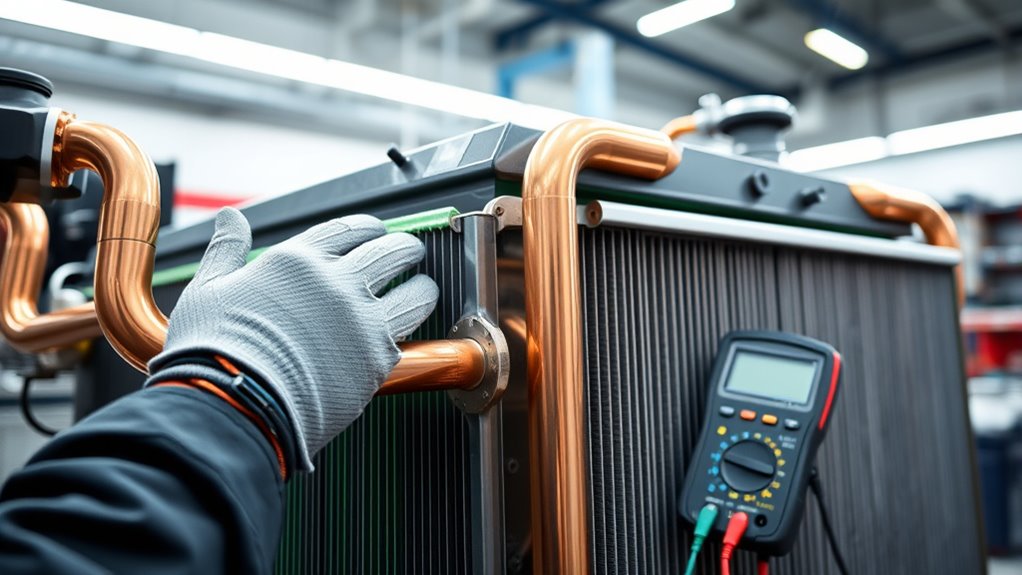

To keep your cooling system in top shape, regularly check and maintain your coolant level and condition, replacing it every 30,000 to 50,000 miles with manufacturer-specified fluids. Flush your system when needed to remove debris and prevent corrosion, and look out for signs of overheating or leaks. Proper maintenance boosts engine performance, prevents costly repairs, and ensures smoother drives. If you want all the essential tips, learn more below.
Key Takeaways
- Regularly check coolant levels and clarity to identify potential issues early.
- Replace coolant every 30,000 to 50,000 miles using manufacturer-approved fluids.
- Drain and flush the cooling system periodically to remove debris and contaminants.
- Monitor for signs of overheating, leaks, or sweet smells indicating coolant leaks.
- Perform routine inspections and radiator flushes to maintain optimal engine temperature and performance.
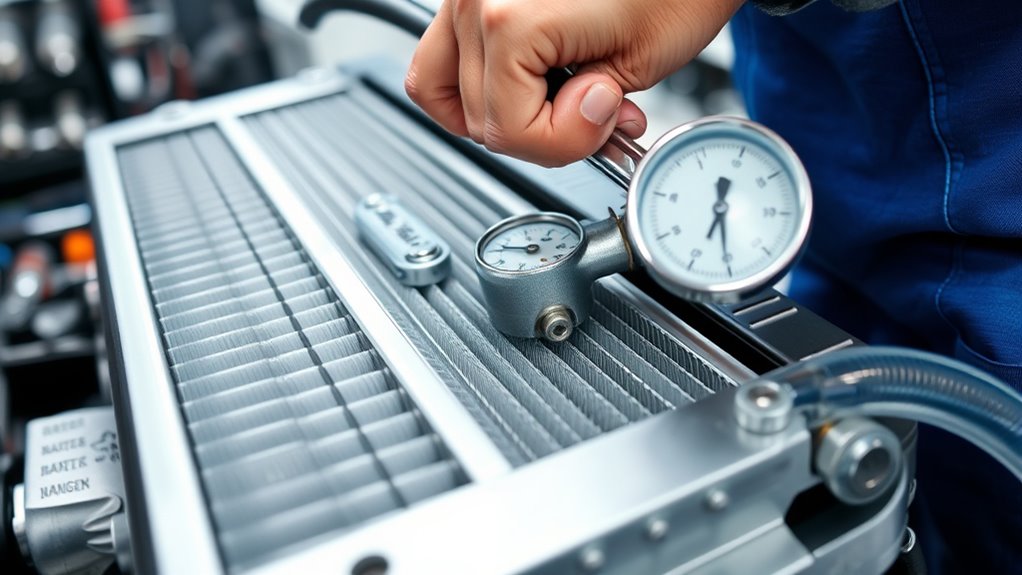
Coolant, or antifreeze, plays a key role in regulating engine temperature and preventing freezing or boiling under extreme conditions. Over time, coolant degrades and loses its effectiveness, which can lead to corrosion, leaks, or overheating. You should replace your coolant according to the manufacturer’s recommended interval, typically every 30,000 to 50,000 miles, but it’s wise to check the level and condition more frequently, especially if you notice overheating signs. When replacing coolant, always use the correct type specified for your vehicle; mixing incompatible coolants can cause clumping or reduced performance. The process involves draining the old coolant, flushing the system if necessary, and refilling with fresh, high-quality coolant. This not only maximizes heat transfer but also helps prevent corrosion within the radiator and engine passages. Regularly monitoring your coolant’s chemical stability can help you catch potential issues before they lead to more serious problems. Keeping an eye on your cooling system’s health means paying attention to signs like overheating, coolant leaks, or a sweet smell from the engine bay, which could indicate a coolant leak. Regular inspections, combined with routine radiator flushes and coolant replacements, ensure your vehicle maintains ideal operating temperatures. Don’t forget that a well-functioning cooling system benefits your engine’s longevity and performance, saving you money on repairs down the line. By staying proactive with these maintenance practices, you reduce the risk of unexpected breakdowns and keep your vehicle running reliably. Ultimately, consistent attention to your radiator and coolant system helps you enjoy smoother drives, better fuel efficiency, and peace of mind knowing your engine stays cool under pressure.
Frequently Asked Questions
How Often Should I Replace My Coolant?
You should replace your coolant every 30,000 to 50,000 miles or every 2 to 3 years, depending on your vehicle and coolant type. Check the coolant color—if it’s rusty or cloudy—or if it’s lost its bright hue, it’s time for a change. Also, consider coolant additives; they help prevent corrosion and improve performance. Regular replacement guarantees your cooling system stays efficient and prevents costly repairs.
What Are Signs of a Failing Radiator?
Imagine your radiator as a shield guarding your engine; when it fails, rust symbolizes corrosion, while a sudden overpressure warning signals the shield’s cracks. Signs include coolant leaks, overheating, or rust-colored residue. You might notice a sweet smell or steam, indicating internal damage. These issues point to a failing radiator, often caused by corrosion or pressure buildup. Addressing these signs early keeps your engine cool and prevents costly repairs.
Can I Mix Different Types of Coolant?
You shouldn’t mix different types of coolant because coolant compatibility varies, and mixing incompatible coolants can cause clumping or corrosion. Always check the manufacturer’s mixing precautions on the coolant labels, and stick to the type recommended for your vehicle. If you need to change coolant, drain the system completely before adding new coolant, ensuring ideal cooling system performance and avoiding potential damage.
How Do I Check for Radiator Leaks?
Did you know that a small leak in your radiator can cause engine overheating and reduce fuel efficiency by up to 15%? To check for radiator leaks, use a radiator sealant first—if that doesn’t work, perform a pressure test. This involves pressurizing the system and inspecting hoses and the radiator for signs of leaks or cracks, ensuring your cooling system stays in top shape and prevents costly repairs.
Is It Necessary to Flush the Cooling System Regularly?
Yes, you should flush your cooling system regularly to prevent buildup and maintain ideal performance. During a flush, replace the coolant and consider adding coolant additives for better protection. Check your radiator cap for any wear or leaks, as it helps maintain proper pressure. Flushing every 2-3 years or as recommended by your vehicle’s manual ensures your radiator stays clean and your engine stays cool.
Conclusion
Think of your cooling system as the heart of your vehicle, keeping everything running smoothly beneath the surface. When you give it regular attention, you’re like a gardener tending to delicate plants—removing weeds and nourishing roots to guarantee vibrant growth. Neglect, on the other hand, can lead to withered parts and breakdowns. Stay vigilant, perform routine maintenance, and your cooling system will keep your journey cool and trouble-free, just like a well-tended garden in full bloom.