To troubleshoot noise issues from your generator, start by checking your local noise ordinances, as limits often range around 55-60 decibels at the property line. Next, measure your generator’s sound levels with a reliable meter and make certain it’s properly maintained with mufflers and vibration dampers. Placing the generator away from property boundaries and using soundproof enclosures can also help. If these steps aren’t enough, understanding penalties and seeking professional advice can keep you compliant—keep exploring for more detailed tips.
Key Takeaways
- Know typical noise limits (55-60 dB) and check local ordinances via city websites or neighborhood associations.
- Use a sound level meter at recommended distances (25-50 feet) for accurate noise testing.
- Regularly maintain and soundproof your generator to reduce excessive noise caused by mechanical issues.
- Place generators away from property lines and windows, and consider enclosures or vibration dampers for noise reduction.
- Monitor noise levels during operation to ensure compliance and prevent fines or legal penalties.
What Are Typical Noise Limits for Generators in Residential Areas?
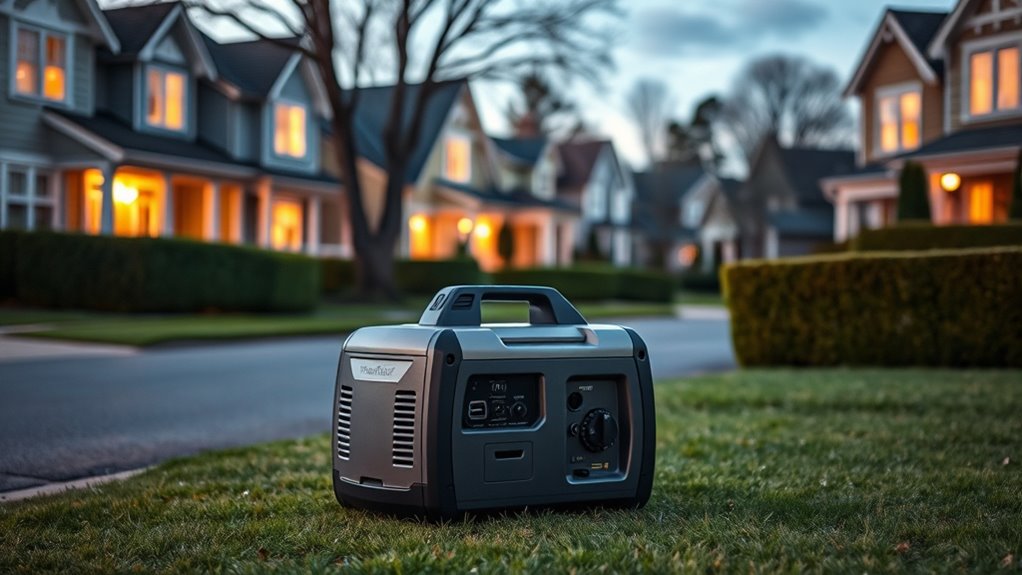
What are the typical noise limits for generators in residential areas? Usually, local ordinances restrict generator noise to around 55 to 60 decibels at the property line, roughly equivalent to a normal conversation or background music. To stay within these limits, you should consider soundproofing techniques, such as installing barriers or enclosures that absorb sound. Proper generator placement also plays a crucial role—position your unit away from windows, bedrooms, and neighbor’s property, ideally on a solid, insulated surface. These measures help reduce noise transmission and prevent disturbances. Remember, adhering to local noise limits not only keeps you compliant but also maintains good neighborly relations. Proper soundproofing and placement are your best tools for quiet operation.
How Can I Check Local Noise Ordinances for My Neighborhood?
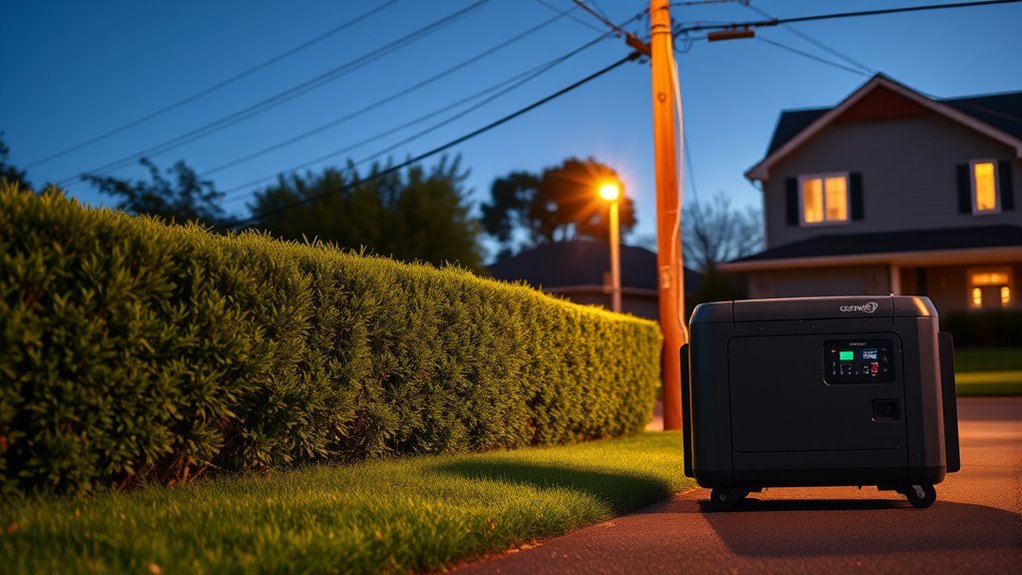
To find out your neighborhood’s noise rules, start by searching local regulations online or visiting your city’s official website. You can also contact your neighborhood association for specific guidelines or review city ordinance codes for detailed information. Knowing where to look guarantees you stay compliant and avoid noise violations. Additionally, understanding local community dynamics can help anticipate how noise ordinances are enforced and foster positive relations with neighbors.
Find Local Regulations Online
Checking your local noise ordinances online is the quickest way to find specific rules for your neighborhood. Many city and county websites provide access to local regulations, including noise compliance standards. Start by visiting your city’s official website and look for sections like “Government,” “Codes,” or “ordinances.” You can also search for terms such as “noise regulations” or “sound ordinances” specific to your area. Some jurisdictions offer downloadable PDFs or searchable databases, making it easy to review restrictions on generator noise levels and operating hours. Additionally, noise ordinances for generators often specify permissible decibel levels and times of day for operation. By researching online, you guarantee you’re informed about local regulations, helping you stay compliant and avoid fines or complaints. Online resources are a reliable, fast way to understand your neighborhood’s noise limits and maintain proper noise compliance.
Contact Neighborhood Association
Reaching out to your neighborhood association can provide valuable insights into local noise regulations that might not be readily available online. Neighborhood associations often have detailed knowledge about specific rules and past local noise disputes, helping you understand what’s permissible in your area. Contacting them allows you to ask about any neighborhood-specific noise ordinances or restrictions on generators. They can also advise you on how to handle complaints or disputes related to noise. Engaging with your association shows you’re committed to respecting your neighbors and following community standards. This proactive step can prevent conflicts and help you stay informed about any updates or changes to local noise policies. Being aware of local noise ordinances can help you ensure compliance and avoid potential penalties. Building a good relationship with your neighborhood association makes managing noise issues more straightforward.
Review City Ordinance Codes
City ordinances are usually available online through your local government’s website, making it easy to review specific noise regulations for your area. Start by checking these codes to understand permissible noise levels and quiet hours. Look for regulations regarding soundproof enclosures, which can substantially reduce noise emissions from your generator. Also, verify any rules about muffler maintenance, since a well-maintained muffler helps control noise levels and ensures compliance. Some neighborhoods may have stricter limits, especially near schools or hospitals. Familiarizing yourself with these ordinances helps you avoid fines and neighbor complaints. Additionally, understanding noise pollution regulations can guide you in minimizing environmental impact and maintaining good neighborhood relations. If you’re unsure about interpretations, contact local authorities for clarification. Staying informed ensures you operate your generator responsibly within the established noise limits.
What Are Common Causes of Excessive Generator Noise?
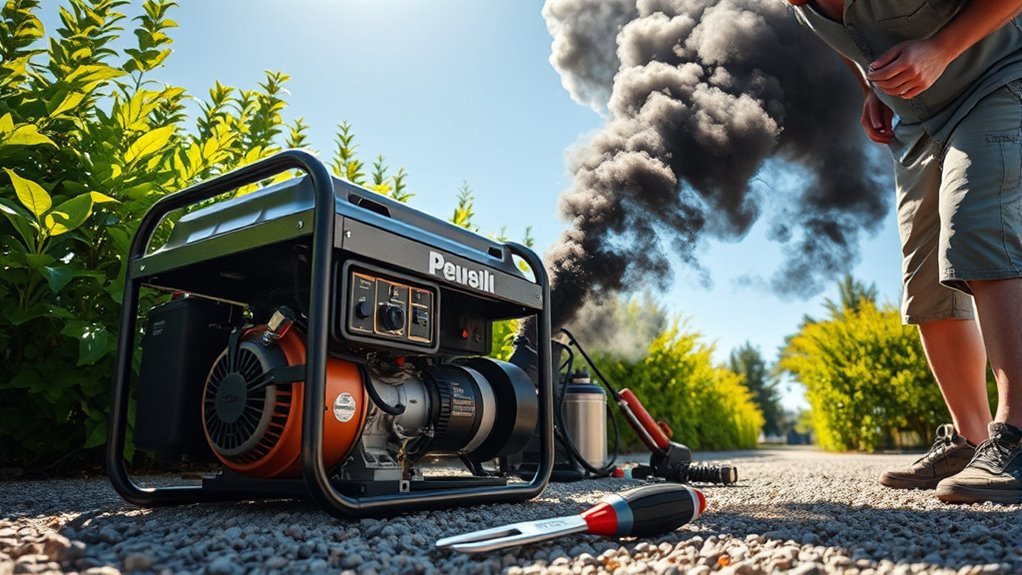
Excessive generator noise often stems from mechanical issues or improper installation. A common cause is a damaged or poorly fitted generator muffler, which can markedly increase noise levels. If the muffler isn’t functioning properly, sound waves escape more freely, amplifying noise. Additionally, engine vibrations can contribute to excessive noise; loose or worn mounting brackets allow the engine to vibrate more intensely, creating loud rattling sounds. Other mechanical problems, like worn belts or loose components, also elevate noise levels. Ensuring your generator’s muffler is intact and properly installed is vital. Regular maintenance to tighten loose parts and check for engine wear helps keep noise within acceptable limits. Addressing these issues promptly can prevent noise complaints and keep your generator running smoothly. Incorporating soundproofing techniques can further reduce noise impact in sensitive environments.
How Do I Properly Measure Noise Levels From My Generator?
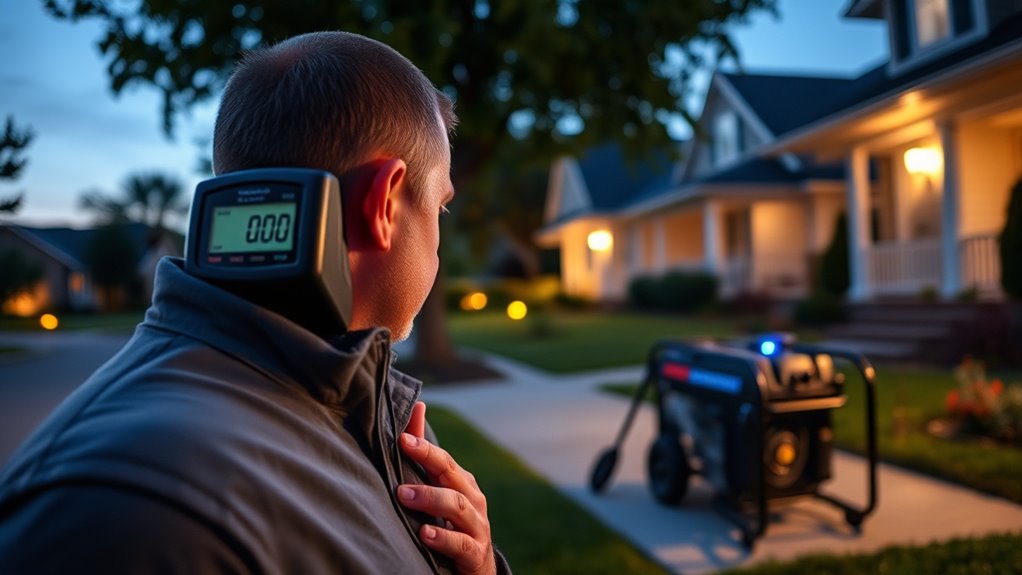
To accurately gauge your generator’s noise levels, you’ll need a sound level meter. Make sure to use it correctly by holding it at the appropriate distance from the source. This way, you can guarantee your readings reflect real-world noise exposure and help you stay compliant with local ordinances. Additionally, understanding noise level ratings can assist in selecting the right measurement tools for your needs.
Subheading 1: Using a Sound Level Meter
Measuring noise levels from your generator accurately is essential for ensuring compliance with local ordinances. To do this, use a reliable sound level meter, positioning it at the recommended distance—usually specified by regulations—to get an accurate reading. When measuring, stand away from the noise barrier options you might have installed, as these can affect the sound level. Incorporate soundproofing techniques around your generator if needed, but always verify their effectiveness with the meter. Proper measurement helps you determine if your noise barrier options and soundproofing techniques are sufficient or if adjustments are necessary. Additionally, choosing the right headphone for monitoring can improve your ability to assess noise accurately during testing. Keep in mind that consistent readings provide a clear picture of your generator’s noise impact, helping you stay within permissible limits and avoid potential fines.
Subheading 2: Measuring at Proper Distance
When determining the noise impact of your generator, positioning your sound level meter at the correct distance is key. Proper distance measurement guarantees accurate sound testing and helps you stay within local noise limits. Typically, measure at a standard distance of 25 or 50 feet, depending on regulations. To visualize this, consider the following:
| Distance (feet) | Typical Use | Impact on Sound Testing |
|---|---|---|
| 10 | Close inspection | Higher sound levels |
| 25 | Standard testing | Most accurate readings |
| 50 | Regulatory compliance | Approximate noise level |
Always follow local guidelines for measurement distance, and ensure your sound level meter is steady and pointed directly at the generator during testing. Additionally, proper equipment setup is essential for obtaining reliable and consistent measurements.
What Are Effective Ways to Reduce Generator Noise?
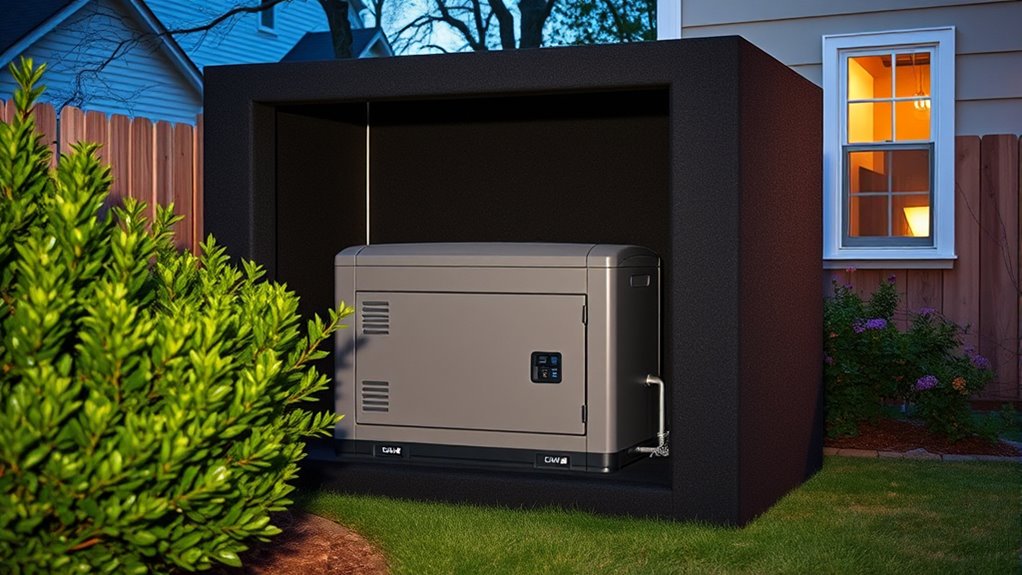
Reducing generator noise effectively involves implementing practical strategies that target sound containment and absorption. One of the most effective methods is installing a soundproof enclosure, which shields surrounding areas from noise and minimizes sound escape. Additionally, incorporating vibration damping materials around the generator reduces vibrations that contribute to noise transmission. Properly sealing gaps and using resilient mounts can further dampen vibrations and prevent sound leaks. Regular maintenance also ensures the generator runs smoothly, producing less noise overall. Placing the generator on a solid, stable surface can decrease vibrations and sound propagation. Using sound-absorbing materials around the generator can further reduce noise levels. Combining these approaches creates a thorough noise reduction system, helping you stay compliant with ordinances while maintaining quieter operation.
Are There Specific Regulations for Portable vs. Stationary Generators?
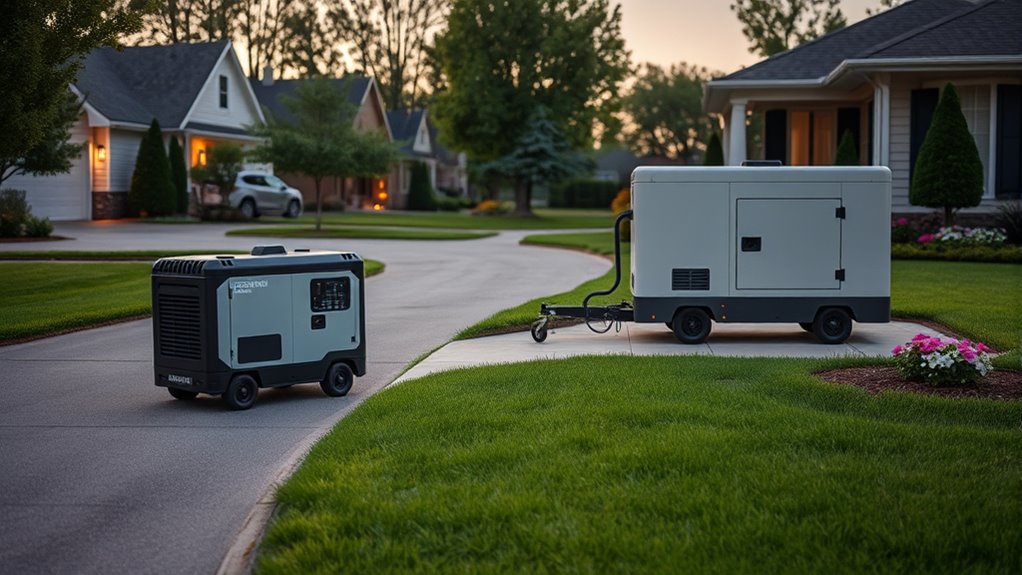
You should be aware that portable generators often have stricter noise limits compared to stationary ones. Stationary generators typically follow different rules based on their location and purpose. Understanding these distinctions helps you guarantee compliance with local regulations. Additionally, some regulations specify noise level limits that vary by jurisdiction and intended use.
Portable Generator Limits
Portable generators are often subject to different regulations than stationary units, primarily due to their size, use, and placement. Local noise ordinances typically set specific limits for portable units, emphasizing generator placement to reduce noise impact. Placing your generator behind structures or away from property lines can help stay within acceptable noise levels. Additionally, using soundproof enclosures can markedly cut noise emissions, making it easier to comply with regulations. Many areas specify maximum decibel levels for portable generators during certain hours, especially in residential zones. It’s your responsibility to check local ordinances, as they often have stricter limits for portable units compared to stationary ones. Proper generator placement and soundproofing are key to avoiding complaints and legal issues.
Stationary Noise Rules
Are there distinct regulations for stationary generators compared to portable ones? Yes, stationary generators often face specific noise rules. You need to contemplate proper generator placement to minimize noise impact on neighbors, such as placing the unit farther from property lines. Installing soundproof barriers or enclosures around the generator can considerably reduce sound levels, helping you stay within local limits. Unlike portable generators, stationary units might be subject to stricter zoning or noise ordinances, especially in residential areas. Check local regulations to understand permissible noise levels and placement requirements. Properly managing generator placement and adding soundproof barriers can ensure your stationary generator operates within allowable noise limits, avoiding fines or complaints. Always review your community’s specific rules before installation to ensure compliance.
How Can I Ensure My Generator Meets Noise Restrictions During Operation?
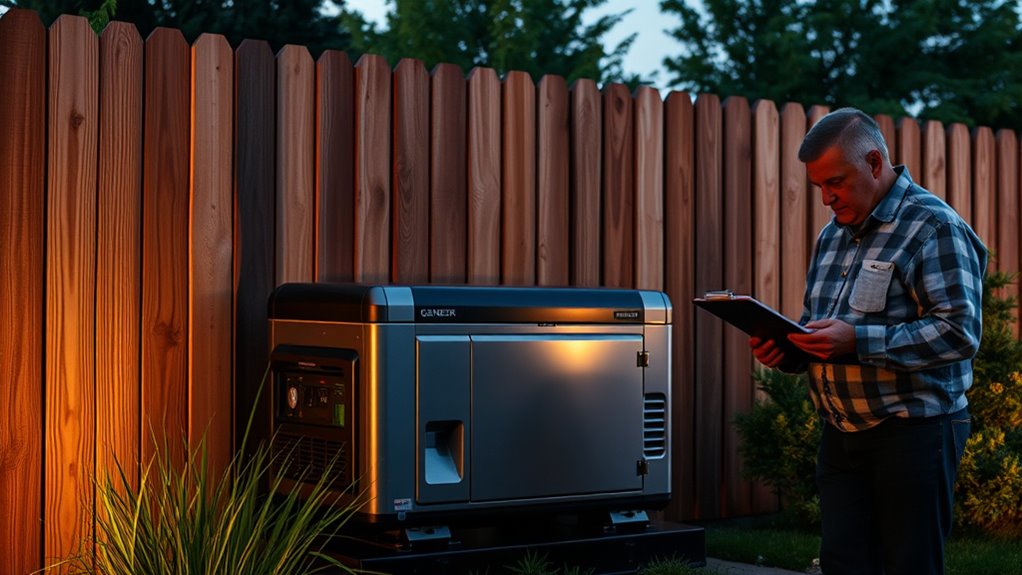
To guarantee your generator stays within noise restrictions during operation, it’s essential to monitor its sound levels regularly and choose appropriate placement. Position your generator away from property lines and windows to minimize disturbance. Installing soundproof enclosures can significantly reduce noise, especially in residential areas. Additionally, maintaining your muffler is crucial; regular muffler maintenance ensures it functions effectively and keeps noise levels low. Check for any leaks or damage that could increase sound emissions. Avoid placing the generator on hard, reflective surfaces, which can amplify noise. Combining proper placement, soundproof enclosures, and diligent muffler maintenance helps keep your generator compliant with local noise ordinances and reduces the impact on neighbors. Regular checks and adjustments ensure smooth, quiet operation.
What Are Penalties or Fines for Violating Noise Ordinances?
Violating noise ordinances can lead to significant penalties or fines that vary depending on your local regulations. These fines and penalties might include monetary charges, citations, or even legal action if you ignore repeated violations. Enforcement mechanisms typically involve local authorities, such as police or code enforcement officers, monitoring noise levels and issuing fines when standards are exceeded. In some areas, fines increase with each violation, and persistent offenders may face court hearings or mandatory noise mitigation measures. It’s essential to understand your community’s specific regulations and comply to avoid costly penalties. Staying within permitted noise limits helps you prevent enforcement actions and ensures you’re respecting your neighbors and local laws.
How Can I Troubleshoot and Fix Noisy Generator Components?
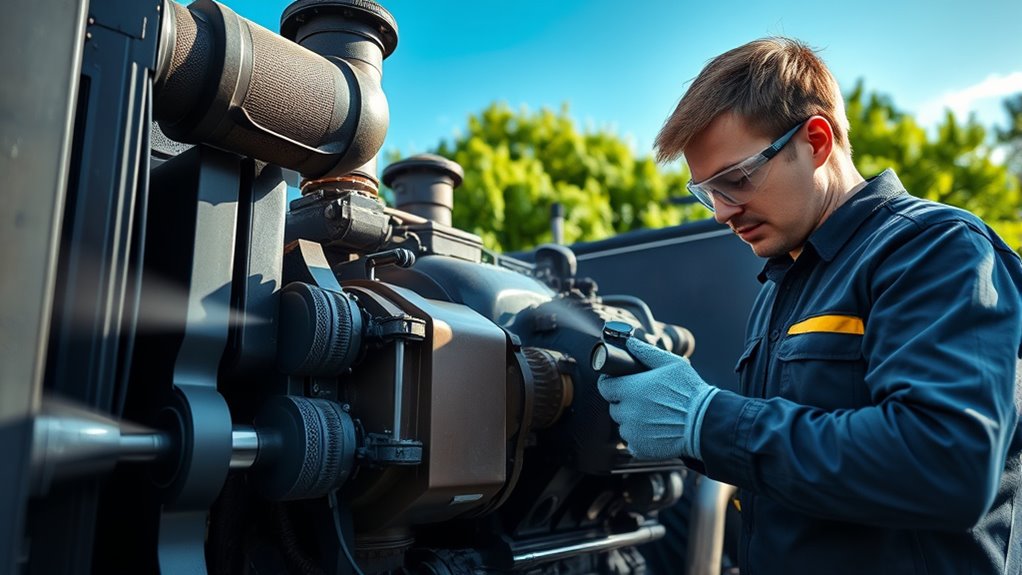
When your generator starts making more noise than usual, pinpointing the source of the problem is essential for effective troubleshooting. Begin with a thorough component inspection, checking for loose or damaged parts that could be causing excessive noise. Listen carefully to identify whether the noise stems from the engine, exhaust, or other components. Tighten any loose bolts or fittings, and replace worn or damaged parts as needed. Regular maintenance helps with noise reduction, so clean or replace air filters and inspect belts and bearings for wear. If a specific component is causing the noise, fixing or replacing it can substantially reduce sound levels. Taking these steps ensures your generator runs quieter and complies with noise ordinances.
When Should I Consult Professionals for Noise or Maintenance Issues?
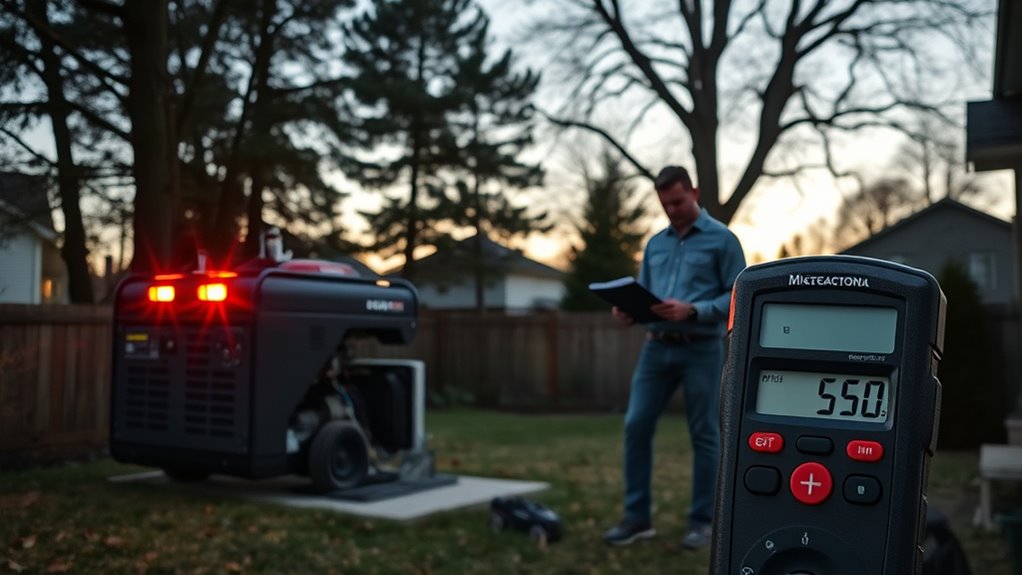
If troubleshooting your generator’s noise levels and performing basic maintenance doesn’t resolve the issue, it’s time to seek professional help. Experts can diagnose complex problems affecting noise reduction techniques and ensure proper generator upkeep. They can identify underlying issues like worn parts or improper installation that you might overlook.
| Signs to Consult Professionals | When to Seek Help |
|---|---|
| Persistent loud noise | Noise remains high despite troubleshooting |
| Unusual vibrations | Vibrations or sounds indicate mechanical issues |
| Frequent breakdowns | Regular failures suggest maintenance neglect or faults |
| Inconsistent performance | Irregular operation hints at internal problems |
| Failed DIY repairs | If basic fixes don’t improve noise or function |
Frequently Asked Questions
Can Noise Ordinances Vary Between Different Municipalities?
Yes, noise ordinances can vary between municipalities due to regional differences and local regulations. You should check your specific area’s rules because what’s acceptable in one municipality might not be in another. Local government websites or city offices can provide detailed information. Always stay informed about your local noise ordinances to avoid fines or complaints, especially if you operate a generator or other noisy equipment.
Are There Specific Times When Noise Restrictions Are More Lenient?
While community regulations often set strict limits on generators noise during daytime hours, many municipalities relax these restrictions at night or during designated quiet times. You should check local ordinances, as some areas permit louder noise levels after hours to accommodate emergencies or special events. Remember, even during lenient periods, it’s essential to be considerate and avoid disturbing neighbors, ensuring your generator use remains compliant with community standards.
How Can I Document Noise Violations Effectively?
To document noise violations effectively, start by using a noise measurement device to record the decibel levels during the violation. Take clear, timestamped videos or photographs showing the noise source and surroundings. Keep a detailed log of dates, times, and descriptions of each incident. This violation recording creates solid evidence if you need to report the issue to authorities or pursue legal action, ensuring your complaint is well-supported.
Do Noise Ordinances Apply to Emergency Generator Use?
You might worry about noise ordinances not applying during emergencies, but they often do. Emergency generator use typically has exceptions, yet local rules on generator placement and soundproofing techniques still matter. To stay compliant, place your generator away from neighbors and use soundproofing methods. Document your efforts and guarantee you follow any specific guidelines, so you’re prepared if authorities question your noise levels during critical times.
What Noise Levels Are Considered Acceptable During Nighttime Hours?
During nighttime hours, acceptable noise levels typically stay below 50-55 decibels, but it varies by location. You should utilize soundproofing techniques to reduce generator noise and conduct noise level measurements to guarantee compliance. If your generator exceeds local limits, consider installing barriers or mufflers. Always check local ordinances to confirm specific acceptable noise thresholds, and adjust your setup accordingly to avoid disturbances during quiet hours.
Conclusion
Stay vigilant about your generator’s noise levels, because ignoring small issues can lead to unexpected fines or even shutdowns. Picture that faint hum growing louder, disturbing neighbors, or slipping past your notice until it’s too late. Regular checks and proper maintenance can keep your generator running smoothly and quietly. But what if the next unexpected noise reveals a hidden problem? Don’t wait—your peace of mind might depend on catching it first.