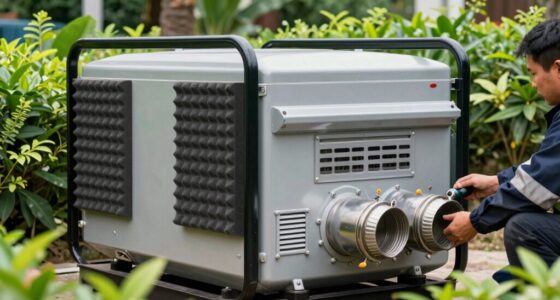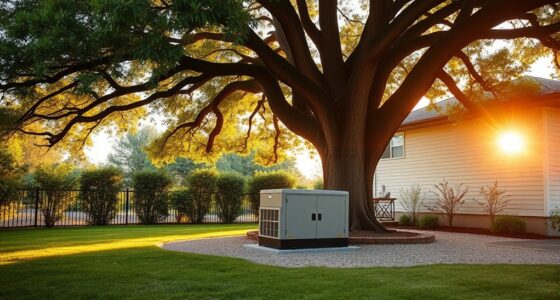

To design effective ventilation and cooling for enclosures, focus on optimizing airflow by strategically placing vents, filters, and fans near heat sources, and using passive methods like heat sinks or conductive materials. Guarantee steady, directed airflow to prevent hotspots, and consider pressure differentials for better circulation. Regularly test and adjust your setup, keeping maintenance in mind. If you continue developing your approach, you’ll discover even more ways to improve enclosure thermal management.

Get backup power and energy gear delivered free with Prime
- Fast, free delivery on millions of items
- Prime Video, Amazon Music and more included
- Member-only deals all year
Key Takeaways
- Strategically position heat-generating components to promote natural convection and facilitate effective airflow pathways.
- Incorporate vents, louvers, or filters that balance airflow enhancement with environmental protection.
- Use fans strategically near heat sources to create directed airflow and improve heat removal.
- Design enclosure shape and size to optimize airflow circulation and prevent dead zones or turbulence.
- Regularly test and fine-tune ventilation systems, including cleaning vents and adjusting fan speeds for optimal cooling performance.
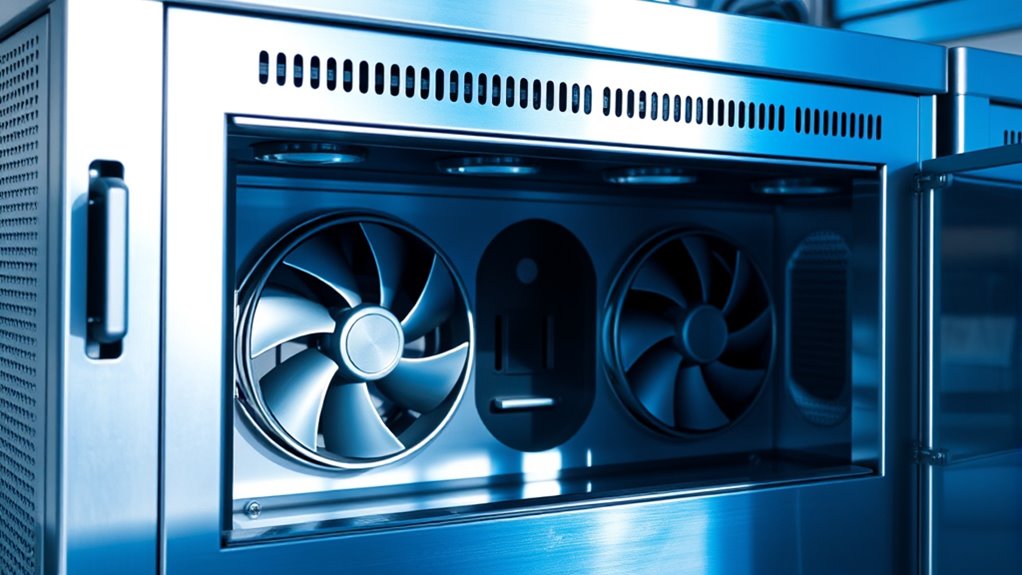
Have you ever wondered how to keep electronic enclosures cool and well-ventilated? Proper thermal management is vital to prevent overheating, which can lead to component failure or reduced lifespan. To achieve this, you need to focus on airflow optimization—ensuring that cool air enters, warm air exits, and heat is effectively dispersed. Starting with a clear understanding of your enclosure’s internal layout helps you identify the best pathways for airflow. Positioning heat-generating components strategically can facilitate natural convection, allowing hot air to rise and exit without obstruction. Using vents, louvers, or filters can further improve airflow, but you must balance ventilation with environmental protection to prevent dust or moisture ingress.
Effective thermal management relies heavily on controlling airflow patterns. You want to create a steady, directed flow so that cool air reaches all critical parts and hot air is swiftly removed. Fans are a common solution, but their placement matters. Install them where they can generate the most effective airflow, such as near heat sources or at strategic points to promote circulation. Consider using a combination of exhaust and intake vents — this creates a pressure differential that encourages air movement through the enclosure. When designing for airflow optimization, you should also think about the enclosure’s size and shape, as these factors influence how air moves through the space. Larger enclosures may require more or larger fans, while smaller ones might rely on passive ventilation.
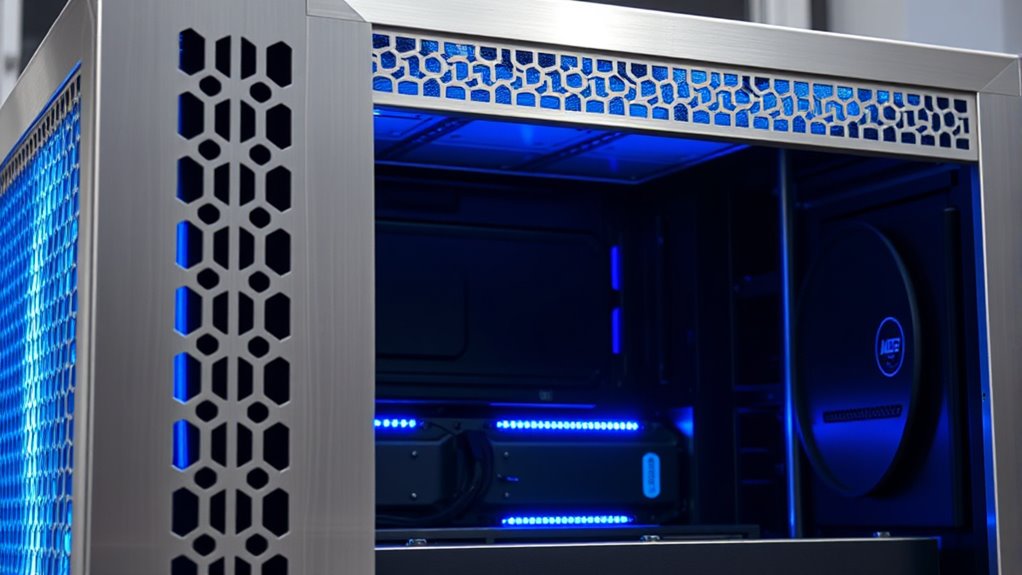
Material choice also impacts thermal management. Using thermally conductive materials or incorporating heat sinks can help dissipate heat more efficiently. In some cases, adding vents or perforations in the enclosure walls can facilitate passive cooling, reducing reliance on active components like fans. However, be cautious about creating airflow paths that cause turbulence or dead zones where heat accumulates. Properly designed airflow channels help ensure consistent cooling performance across the entire enclosure. Additionally, understanding the performance metrics of your ventilation components, such as fan airflow rates and filtration efficiency, can help you select the most suitable solutions for your needs.
Finally, always test your design under real operating conditions to verify airflow effectiveness. Use thermal imaging or sensors to identify hotspots and adjust your ventilation approach accordingly. Fine-tuning fan speeds or modifying vent placement can make a significant difference in maintaining ideal temperatures. Remember, effective airflow optimization is not a one-time task but an ongoing process. Regular maintenance, such as cleaning vents and replacing filters, is vital to sustaining good thermal management over time. By paying careful attention to these elements, you’ll ensure your electronic enclosures stay cool, reliable, and efficient.
Frequently Asked Questions
How Do Environmental Factors Influence Enclosure Ventilation Design?
Environmental factors like ambient conditions directly influence your enclosure ventilation design. You need to take into account temperature, humidity, and air quality to ensure proper airflow and cooling. These factors affect material selection, as some materials withstand harsh conditions better than others. By understanding ambient conditions, you can optimize ventilation, prevent overheating, and extend the enclosure’s lifespan. Properly addressing these factors ensures your enclosure remains functional and protected in its specific environment.
What Are the Latest Innovations in Cooling Technology for Enclosures?
Imagine cooling technology so advanced it reacts instantly to heat spikes—it’s like your enclosure has a brain! You’ll love smart cooling systems that optimize energy use and adaptive ventilation that adjusts airflow in real-time, preventing overheating before it happens. These innovations make managing enclosure temperatures effortless, ensuring your equipment stays cool without wasting power. Stay ahead with the latest in cooling tech that’s smarter, faster, and more efficient than ever.
How Can I Assess Airflow Effectiveness in Complex Enclosure Layouts?
You can assess airflow effectiveness in complex enclosures by using airflow modeling software to simulate different scenarios and identify potential dead zones or turbulence. Additionally, airflow visualization techniques like smoke or thermal imaging help you see real-time airflow patterns. Combine these methods to pinpoint issues, optimize fan placement, and guarantee even cooling, ultimately improving ventilation efficiency and maintaining ideal enclosure conditions.
What Maintenance Practices Ensure Long-Term Cooling System Efficiency?
You should regularly perform filter maintenance to keep airflow unobstructed and prevent dust buildup, which can reduce cooling efficiency. Additionally, inspect fans routinely for wear, noise, or vibrations, replacing or repairing them as needed. Ensuring filters are clean and fans operate properly helps maintain long-term cooling system efficiency, preventing overheating and extending your enclosure’s lifespan. Consistent maintenance keeps airflow ideal and reduces unexpected downtime.
How Do Regulatory Standards Impact Enclosure Ventilation Requirements?
Regulatory standards act like a guiding compass, shaping your enclosure’s ventilation to guarantee safety and efficiency. Compliance with these standards enforces strict benchmarks, turning your cooling system into a well-oiled machine that withstands scrutiny. By adhering to regulations, you prevent chaos and overheating, creating a sanctuary for your equipment. In this dance of standards enforcement, you maintain harmony, ensuring your enclosure breathes freely and performs reliably over time.
Conclusion
By prioritizing proper ventilation and cooling, you can greatly extend your enclosure’s lifespan and guarantee peak performance. Did you know that poor ventilation can increase internal temperatures by up to 20°C? That’s like adding a hot summer day inside your box! So, always design with airflow in mind, use the right fans or vents, and regularly check your system. With these simple steps, you’ll keep your enclosure cool, efficient, and trouble-free for years to come.
Fall Picks
fall essentials
As an affiliate, we earn on qualifying purchases.