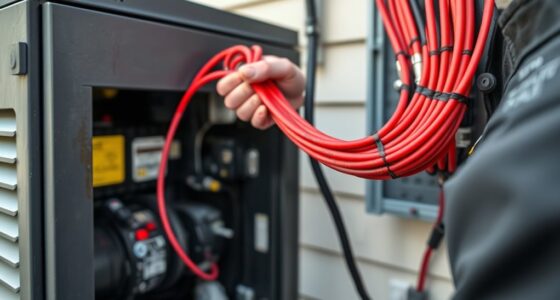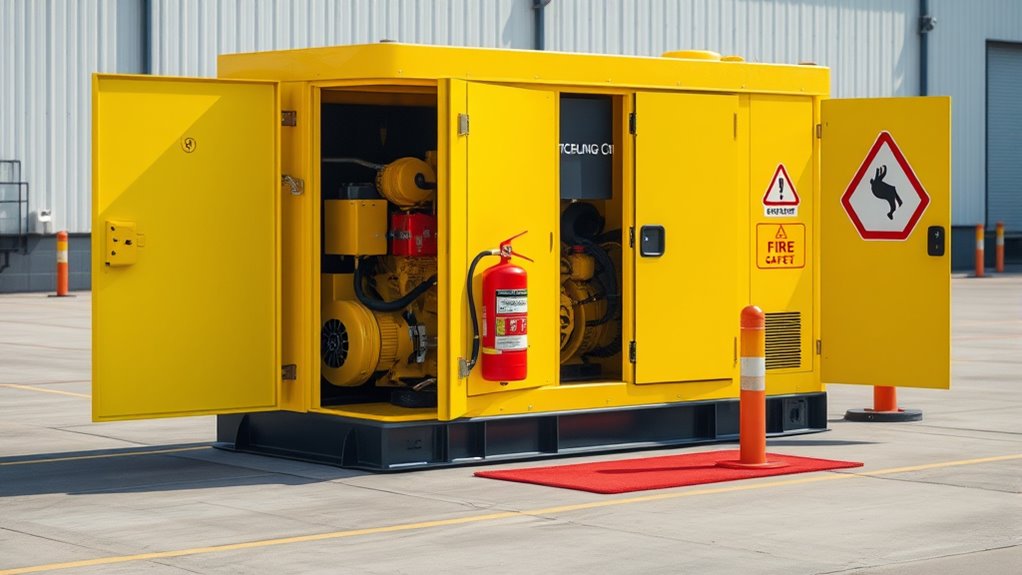
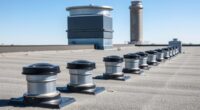
To make certain fire safety for your generator enclosure, you should incorporate proper ventilation with securely positioned vents that prevent heat buildup and exhaust gases. Use fire-resistant materials like drywall or metal for the walls, and seal joints to contain any fires that might start. Regularly inspect vents and materials to catch issues early. Following fire safety guidelines reduces risks and protects your equipment and environment—keep going to discover more safety tips.
Key Takeaways
- Ensure adequate ventilation with properly sized intake and exhaust vents fitted with protective grilles.
- Use fire-resistant materials like concrete, drywall, or metal for enclosure walls to contain fires.
- Strategically position vents away from ignition sources and install spark arrestors or filters to prevent sparks.
- Incorporate fire detection systems and seal joints with fire-resistant sealants for early fire warning and containment.
- Conduct regular inspections, adhere to local fire codes, and consult safety professionals to maintain optimal fire safety measures.
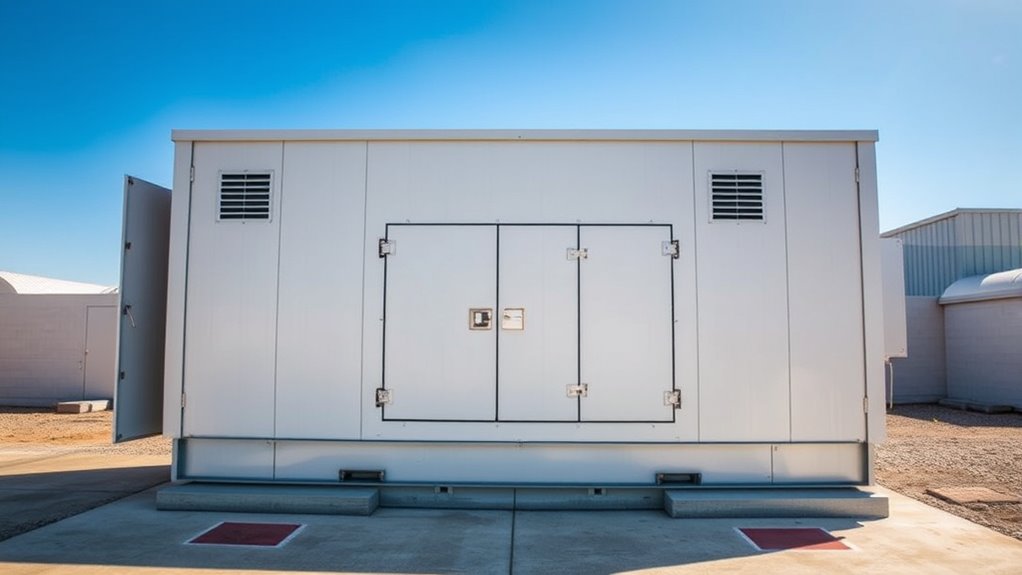
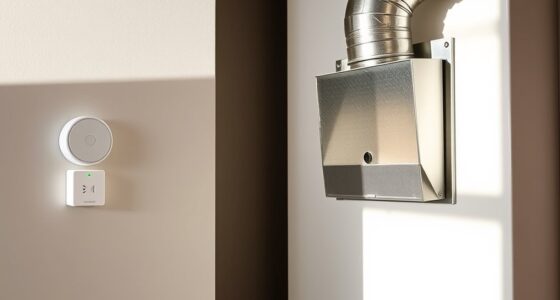
Ensuring fire safety in generator enclosures is crucial to protect both your property and your safety. One of the most critical aspects of this is understanding and properly implementing ventilation requirements. Generators produce significant heat and exhaust gases during operation, which can quickly accumulate if not adequately ventilated. Poor airflow can lead to overheating, increasing the risk of fire. Consequently, you need to ensure your enclosure has sufficient intake and exhaust vents that promote continuous airflow, preventing heat buildup and expelling dangerous fumes. Installing vents with protective grilles helps keep out debris, pests, and moisture, which could otherwise obstruct airflow or cause corrosion. Remember, the goal is to maintain a steady flow of air that keeps the generator cool and disperses any combustible gases safely away from ignition sources.
Proper ventilation in generator enclosures prevents overheating and fire hazards by ensuring continuous airflow and safe gas dispersal.
Alongside ventilation, the choice of fire-resistant materials greatly impacts your enclosure’s fire safety. Building your enclosure with fire-resistant panels or walls helps contain any potential fires, preventing them from spreading to surrounding structures. These materials are specially designed to withstand high temperatures, delaying the onset of combustion and giving you extra time to respond if a fire occurs. Fire-resistant drywall, concrete, or metal panels are excellent options, especially when installed with proper fireproofing techniques. Using fire-resistant materials isn’t just about preventing fires; it’s also about minimizing damage and ensuring your generator remains operational or can be quickly restored after an incident. Properly sealed joints and penetrations with fire-resistant sealants further enhance the enclosure’s protective barrier, reducing vulnerabilities. Additionally, incorporating fire detection systems can provide early warning and enhance your overall safety measures.
You should also consider the placement of vents and openings. They must be strategically positioned to facilitate airflow while minimizing the risk of sparks or flames entering or escaping the enclosure. Avoid placing vents near potential ignition sources, such as fuel tanks or electrical connections, and ensure they’re protected with spark arrestors or filters. Regular inspections are essential to verify that vents are clear of obstructions like dirt, leaves, or snow, which could compromise ventilation and increase fire risk.
In addition, combining good ventilation with fire-resistant building materials creates a layered defense that greatly enhances safety. It’s a proactive approach—by ensuring proper airflow and choosing the right materials, you reduce the likelihood of overheating and contain any fire that might start. This dual focus not only protects your equipment but also safeguards your property and the people around you. Always follow local fire codes and manufacturer guidelines for ventilation and materials, and consider consulting fire safety professionals to optimize your generator enclosure’s design. Doing so guarantees you’re taking thorough steps to minimize fire hazards and maintain a safe environment for your generator operation.
Frequently Asked Questions
How Often Should Generator Enclosures Be Inspected for Fire Safety?
You should inspect generator enclosures for fire safety at least quarterly, following your maintenance schedules. Regular inspections help identify potential fire hazards early, such as wiring issues or debris buildup. Additionally, confirm everyone involved has up-to-date fire safety training so they know how to respond effectively. Consistent checks and proper training reduce fire risks, keeping your generator and surroundings safe. Remember, proactive maintenance saves lives and prevents costly damage.
What Fire Extinguishers Are Recommended for Generator Enclosure Fires?
Like a shield protecting a fortress, your fire safety equipment must be precise. You should use ABC dry chemical extinguishers for generator enclosure fires—they’re versatile and effective against electrical and combustible fires. Additionally, CO2 extinguishers are ideal for electrical fires, leaving no residue. Always confirm your fire extinguisher types are suitable for electrical equipment, and keep them accessible. Regularly check your fire safety equipment to stay prepared for any unexpected blaze.
Are There Specific Fire Safety Codes for Generator Enclosure Locations?
You need to follow specific fire safety codes and enclosure regulations when locating generator enclosures. These standards guarantee proper placement, ventilation, and fire protection measures are in place. Local building codes and NFPA guidelines often specify clearance distances, fire-resistant materials, and safety equipment requirements. By adhering to these fire safety codes, you help prevent fires and ensure safe operation, reducing risks for personnel and property.
How Can Ventilation Affect Fire Risk in Generator Enclosures?
You might think ventilation isn’t a big deal, but poor ventilation design can substantially increase fire risk in generator enclosures. When airflow is restricted, heat and combustible gases build up, creating dangerous conditions. Proper ventilation reduces these hazards by allowing heat and gases to escape, lowering fire risk. Make sure your enclosure’s ventilation system is well-designed and maintained to prevent overheating and minimize the chance of fire.
What Are the Signs of Potential Fire Hazards Inside a Generator Enclosure?
You should look for fire hazard indicators like overheating components, burnt or discolored wiring, and unusual smells inside your generator enclosure. Sparks, smoke, or visible flames are clear warning signs of enclosure fire risks. Keep an eye on excessive dust, oil leaks, or corrosion, as these can also contribute to fire hazards. Address these issues promptly to prevent potential fires and guarantee safe generator operation.
Conclusion
By understanding fire risks, implementing safety measures, and maintaining your generator enclosure, you safeguard your property, your loved ones, and your peace of mind. Stay vigilant, stay prepared, and stay safe. Because a well-protected generator isn’t just about equipment — it’s about safeguarding what matters most. Take action today, prevent disaster tomorrow, and ensure your safety is always a priority. Your vigilance makes all the difference; your safety depends on it.