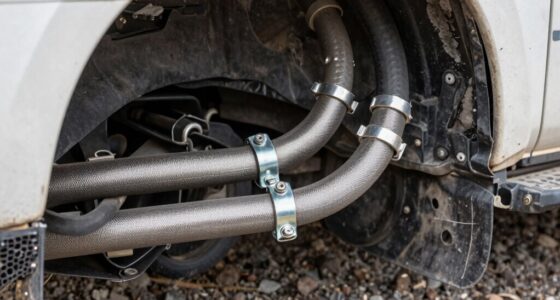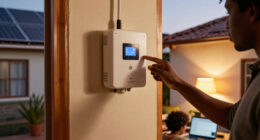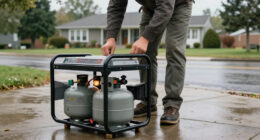
To safely and efficiently place your mobile generator, position it on a flat, level surface away from windows, doors, and vents, ensuring good ventilation and exhaust dispersal. Keep it distant from indoor spaces and sensitive areas to reduce noise and carbon monoxide risks. Secure it with sturdy tie-downs, and use natural or artificial barriers to block sound. Regularly check placement for environmental hazards, and continue exploring best practices to optimize safety and performance.

Get backup power and energy gear delivered free with Prime
- Fast, free delivery on millions of items
- Prime Video, Amazon Music and more included
- Member-only deals all year
Key Takeaways
- Place the generator on a flat, stable surface with adequate clearance for ventilation, fuel access, and maintenance.
- Position away from living spaces and sensitive areas to minimize noise and ensure safety.
- Ensure proper ventilation by directing exhaust fumes away from windows, doors, and enclosed spaces.
- Secure the generator with tie-downs to prevent theft and accidental movement, especially in mobile setups.
- Protect the unit from weather elements, moisture, and debris to maintain optimal performance and safety.
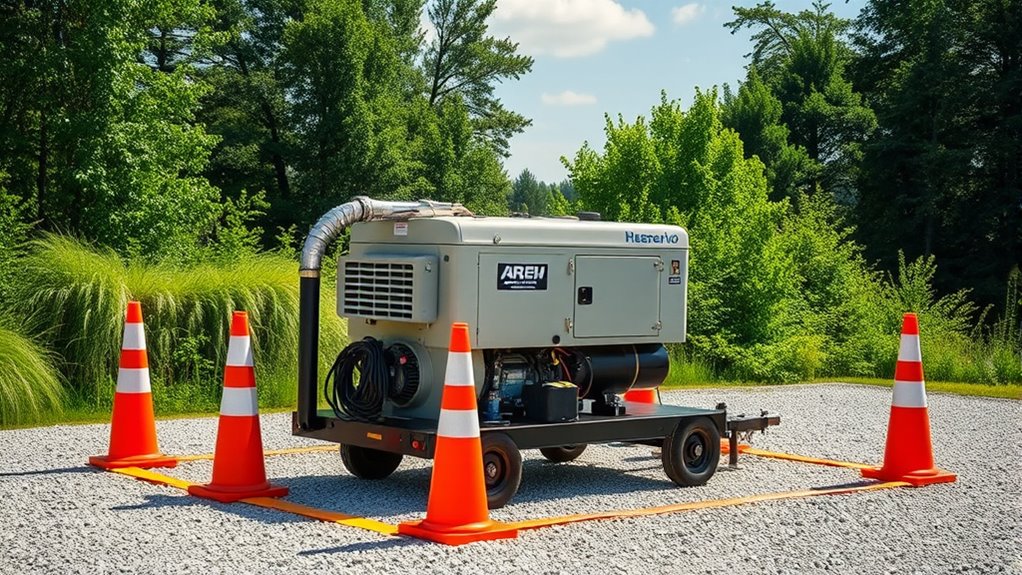
When setting up a mobile generator, proper placement is essential to guarantee safety and peak performance. One of your top priorities should be assuring the generator is positioned in a way that maximizes fuel efficiency. To do this, place it on a flat, level surface that allows for proper ventilation and prevents tipping. Avoid positioning the generator in areas where it might be exposed to excessive wind or rain, as moisture and debris can hinder engine performance and reduce fuel economy. Keeping the generator in a shaded area can help prevent overheating and conserve fuel, especially during prolonged use. Additionally, make sure there’s enough space around the unit for easy access to fuel tanks, maintenance points, and ventilation openings. Proper spacing not only improves fuel efficiency by ensuring the engine runs smoothly but also minimizes the risk of overheating, which can lead to increased fuel consumption. Implementing automation in logistics can further optimize placement by monitoring operational conditions and adjusting as needed. Noise reduction is another critical factor when deciding where to place your mobile generator. To keep noise levels manageable for yourself and nearby people, position the generator as far away as possible from living spaces, offices, or any areas where noise could be disruptive. Use natural barriers like trees, shrubs, or existing structures to help absorb sound waves and block noise from reaching sensitive areas. If natural barriers aren’t available, consider installing temporary sound barriers or enclosures designed specifically for generators. Remember, the closer the generator is to your living or working space, the louder it will seem, so always prioritize distance and soundproofing measures to maintain a peaceful environment. Safety is paramount, so you must also think about ventilation and exhaust placement. Never place a generator indoors or in enclosed spaces, as carbon monoxide can quickly build up and pose serious health risks. Ensure the exhaust system is directed away from windows, doors, and vents to prevent fumes from re-entering indoor spaces or neighboring properties. Proper placement also involves avoiding areas with loose gravel, dry leaves, or other combustible materials that could ignite from the heat or sparks generated by the engine. Finally, secure the generator against theft or accidental movement, especially if it’s in a public or open area. Use sturdy anchoring or tie-downs to prevent shifting or tipping, which could cause safety hazards or damage the unit. By thoughtfully considering these placement tips—focusing on fuel efficiency, noise reduction, ventilation, and security—you’ll guarantee your mobile generator operates safely, efficiently, and quietly, providing reliable power whenever you need it.
Frequently Asked Questions
How Often Should a Mobile Generator Be Inspected for Safety?
You should inspect your mobile generator at least weekly to guarantee safety. Follow a regular inspection schedule and use safety checklists to identify potential issues early. Before each use, do a quick visual check for leaks, corrosion, or damage. More thorough inspections should happen monthly, covering fuel levels, wiring, and exhaust systems. Consistent inspections help prevent accidents and keep your generator running reliably and safely.
What Weather Conditions Can Affect Mobile Generator Operation?
Weather hazards like rain, snow, or high winds can substantially affect your mobile generator’s operation. In wet conditions, moisture can damage the generator and reduce its durability, increasing the risk of electrical hazards. Cold temperatures might cause fuel issues or engine trouble, while high winds can tip over or damage the unit. To guarantee safe and reliable use, always monitor weather conditions and protect your generator accordingly.
Are There Legal Restrictions for Generator Placement in Residential Areas?
Yes, you need to follow local zoning and noise ordinances when placing your generator in residential areas. These laws regulate how close you can set up your generator and limit noise levels to prevent disturbing neighbors. Check with your local authorities to verify compliance and avoid fines. Always position your generator outdoors, away from windows and vents, to stay within legal limits and ensure safety.
How Can I Prevent Carbon Monoxide Buildup Around the Generator?
To prevent carbon monoxide buildup around your generator, guarantee proper ventilation strategies by placing it outdoors in a well-ventilated area, away from windows and vents. Always use CO detectors nearby to alert you of dangerous levels. Regularly check and maintain both the generator and detectors to ensure they’re working correctly. Never operate the generator indoors or in enclosed spaces, and keep it a safe distance from your home.
What Personal Protective Equipment Is Recommended When Operating a Generator?
When operating a generator, you should wear personal protective gear like gloves, safety glasses, and hearing protection to keep yourself safe. Safety equipment such as a respirator or mask is also recommended if you’re working in poorly ventilated areas. Always guarantee your gear fits properly and is in good condition. By using the right safety equipment, you reduce your risk of injury and stay protected during generator operation.
Conclusion
Proper placement and safety of your mobile generator protect you and your property. Always keep it outdoors, away from windows and vents, to avoid dangerous fumes. For example, in a recent case, a homeowner placed their generator too close to their house, causing harmful CO buildup indoors. By following safety guidelines and positioning your generator correctly, you prevent accidents and ensure reliable power. Stay vigilant, prioritize safety, and enjoy peace of mind during outages.
Halloween Picks
halloween
As an affiliate, we earn on qualifying purchases.