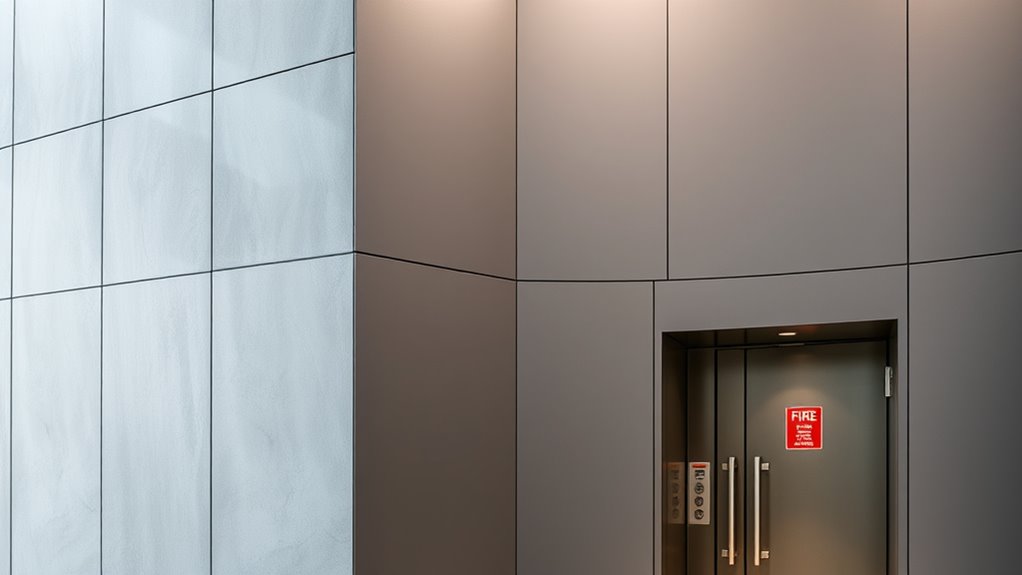

To incorporate fire-rated rooms and walls, you need to use approved fire-resistant materials like drywall, mineral boards, and intumescent coatings. Guarantee continuous, sealed assemblies around penetrations and install firestop systems and fire-rated doors and windows for added protection. Regular inspections and prompt repairs maintain their effective fire resistance. Properly implementing these measures boosts safety, helps you comply with building codes, and reduces fire risks—stay with us to explore more about effective fire protection strategies.
Key Takeaways
- Select tested and approved fire-resistant materials like drywall, mineral boards, and intumescent coatings for wall assemblies.
- Ensure continuous, sealed wall assemblies around penetrations using firestop systems and specialized sealants.
- Incorporate fire-rated doors and windows to enhance containment and prevent fire spread.
- Regularly inspect and maintain fire-rated walls, replacing damaged materials to uphold fire resistance.
- Adhere strictly to building codes and standards during construction and renovation to ensure compliance.
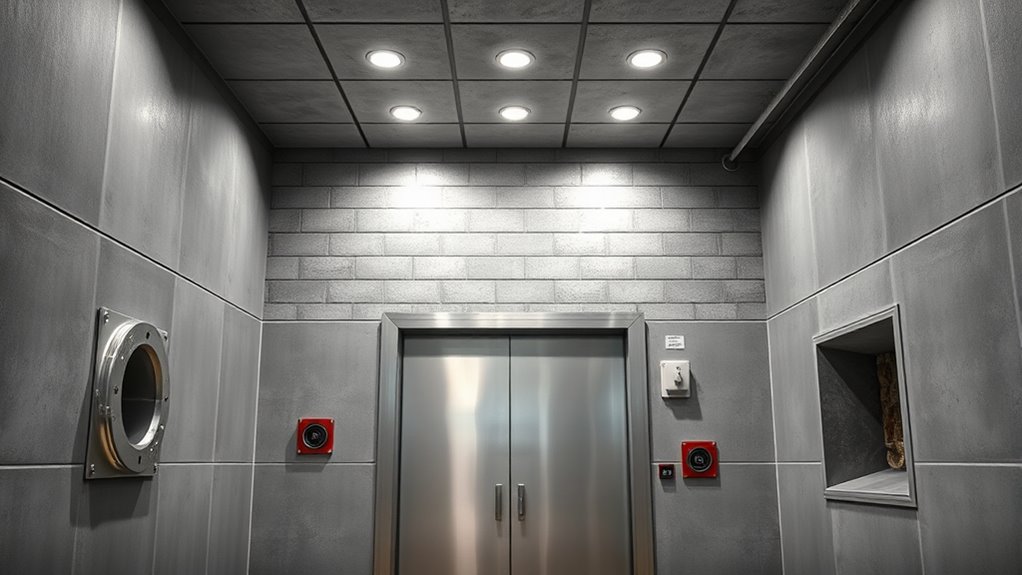
Fire-rated rooms and walls are essential components of building safety that help contain fires and prevent their spread. When designing or renovating a space, understanding and implementing fire safety standards is crucial. These standards specify how walls and rooms should be constructed to withstand fire for a designated period, giving occupants more time to evacuate and reducing property damage. To meet these standards, you need to carefully select wall assembly materials that are tested and approved for fire resistance. These materials act as barriers, slowing the transfer of heat and flames, thereby maintaining structural integrity during a fire.
The choice of wall assembly materials is central to creating effective fire-rated walls. You typically combine various components, such as fire-resistant drywall, mineral-based boards, or intumescent coatings, to achieve the desired fire rating. Each material has unique properties that contribute to the overall fire resistance of the assembly. For instance, fire-rated drywall is designed to withstand high temperatures and prevent the spread of flames, while mineral boards offer enhanced durability and thermal insulation. When selecting these materials, you must consider their fire-resistance ratings, compatibility, and ease of installation to ensure compliance with building codes.
Meeting fire safety standards isn’t just about choosing the right materials; it also involves proper construction techniques. You need to ensure that wall assemblies are continuous and sealed properly around penetrations like electrical wiring, pipes, and vents. Gaps or weak points can compromise the fire resistance of the wall, allowing flames or smoke to pass through. Using firestop systems and sealants designed for fire-rated assemblies helps maintain the integrity of these walls. Additionally, installing fire-rated doors and windows within these walls enhances overall fire containment.
Regular inspection and maintenance are vital to ensure the ongoing effectiveness of fire-rated walls and rooms. Over time, wear and damage can reduce their fire resistance. You should verify that all components remain intact, and replace any compromised materials immediately. Adhering to local fire safety standards and guidelines ensures that your building maintains its protective capabilities over time. Incorporating resilience strategies and continuous training for staff can further enhance overall safety and response readiness in case of fire emergencies.
Incorporating fire-rated rooms and walls requires careful planning, material selection, and ongoing maintenance. By prioritizing fire safety standards and using appropriate wall assembly materials, you create a safer environment that minimizes risks during a fire. This proactive approach not only protects lives but also helps meet legal requirements and reduces potential liabilities. When you take these steps seriously, you strengthen your building’s resilience against fire emergencies, offering peace of mind to everyone inside.
Frequently Asked Questions
What Materials Qualify as Fire-Rated for Walls and Rooms?
You can qualify for fire-rated walls and rooms using materials like fire-resistant drywall, which withstands high temperatures and slows fire spread. Additionally, applying intumescent paint expands when exposed to heat, providing an extra layer of protection. Confirm these materials meet local fire safety standards and are properly installed according to manufacturer guidelines. Combining fire-resistant drywall with intumescent paint creates effective fire-rated barriers for your space.
How Do Fire-Rated Walls Impact Building Design?
Fire-rated walls critically impact your building design by guaranteeing fire resistance and safety. They require specific wall construction techniques and materials that meet fire safety standards, which may influence layout, space planning, and material choices. You’ll need to factor in fire ratings for different zones, potentially increasing costs but providing essential protection. Properly integrated fire-rated walls help contain fires, protect occupants, and comply with building codes, ultimately enhancing your building’s safety and durability.
Are Fire-Rated Rooms Required by Code in Residential Buildings?
You might be surprised, but fire-rated rooms aren’t always required in residential buildings. Building codes prioritize fire safety, and requirements vary depending on the structure’s size, purpose, and location. Generally, these rooms are mandated in multifamily or commercial settings, not standard homes. Always check local codes because they guide your design decisions, ensuring safety without unnecessary restrictions, so you can create a secure, compliant space.
How Often Should Fire-Rated Walls Be Inspected or Maintained?
You should schedule fire safety inspections for your fire-rated walls at least annually to ensure they remain effective. Regular maintenance is vital, especially after any damage or renovations. Keep an eye out for cracks, deterioration, or compromised seals, and address issues promptly. Following the recommended maintenance frequency helps maintain your fire-rated walls’ integrity, guaranteeing they provide the necessary protection during a fire emergency.
Can Fire-Rated Walls Be Integrated With Soundproofing Features?
Think of combining fire-rated walls with soundproofing as building a fortress that’s both safe and quiet. You can integrate fire-resistant drywall with soundproofing barriers, creating a wall that blocks fire and noise simultaneously. Many fire-rated drywall options include soundproofing features, so you don’t have to sacrifice safety for silence. With proper installation, you’ll enjoy a space that’s both protected and peaceful, just like a quiet, fireproof sanctuary.
Conclusion
By incorporating fire-rated rooms and walls, you’re truly safeguarding your space like a fortress against disaster. These structures don’t just slow down fire—they stand as unstoppable guardians, giving you precious extra minutes to escape or save what matters most. Think of it as having a superhero shield for your property, turning a potentially catastrophic event into a manageable challenge. Embrace fire-rated solutions today, and make your safety strategy stronger than ever before.