
TL;DR
Saft has inaugurated a solid-state battery production line at its Bordeaux facility in southwestern France. The TotalEnergies subsidiary says the line will develop and manufacture batteries aimed mainly at aviation and space, with potential energy-density gains of up to 50% over conventional lithium-ion technology. Commercial output, production capacity and customer timelines have not been disclosed in the source report.
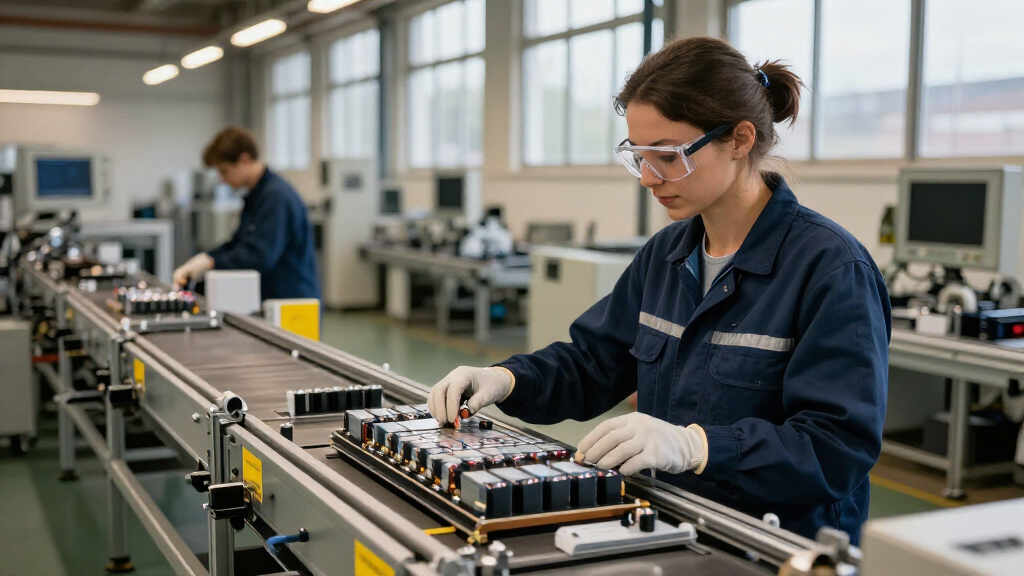
Saft has inaugurated a solid-state battery production line at its facility in Bordeaux, southwestern France, opening a site for development and manufacturing of batteries the company is targeting at aviation and space applications. Saft, a subsidiary of TotalEnergies, says the technology could provide up to 50% higher energy density than conventional lithium-ion batteries, though the figure is a company-stated potential benefit rather than a reported result from commercial products.
The line will work with solid-electrolyte batteries combining sulfide and polymer technologies at room temperature, according to Saft. The company describes itself as the first French manufacturer with development and production capabilities for this combination. Conventional lithium-ion batteries use a liquid electrolyte; solid-state designs replace that liquid component with a solid electrolyte. The new line is intended to support development and manufacturing, but the report does not state its output capacity or whether it is producing batteries for commercial sale.
Saft is directing the work toward aviation and space, sectors where weight, safety and energy density can affect performance and system design. The company says solid-state batteries may offer improved safety and energy density compared with conventional lithium-ion technology. These are potential advantages: the source report does not provide independent test data, product specifications or a schedule for qualifying the batteries for aircraft or spacecraft.
Saft also points to possible production benefits. It says processes such as dry coating can reduce energy use and that eliminating solvents can lower manufacturing’s environmental impact. The company estimates these methods could cut production-stage carbon dioxide emissions by up to 40%. That figure applies to the manufacturing stage, according to the report, and is not a claim about emissions across a battery’s full life cycle.
A New Route for Aircraft Batteries
The opening gives Saft a dedicated production location to develop solid-state batteries for applications with demanding requirements. In aviation, higher energy density could help battery systems store more energy for a given weight, while safety performance is a key consideration for aircraft designers. Whether these advantages can be achieved in practical products will depend on testing, manufacturing consistency, cost and qualification—details not supplied in the announcement.
For space applications, high energy density and safety are also relevant to battery selection. The Bordeaux line may let Saft develop products for those needs, but the report does not identify a customer, mission or order. The development is therefore a step in the company’s technology and manufacturing program, not evidence that solid-state batteries are already in widespread use in either sector.
The manufacturing claims also have potential relevance beyond aviation and space. Lower energy use or solvent-free processes could reduce some environmental impacts, if demonstrated at production scale. Saft’s up to 40% emissions reduction estimate is limited to the production stage and remains a company claim; the report gives no baseline, production volume or independent assessment for readers to compare against.
Saft’s Existing Aviation Work
The new line follows Saft’s work on batteries for aircraft electrification. According to the source report, the company has already delivered semi-solid battery cells for evaluation in future electric and hybrid aircraft architectures. Those cells are distinct from the solid-state batteries associated with the newly inaugurated line. The report does not identify the recipients of the cells or describe the results of their evaluations.
Saft views solid-state batteries as one possible contribution to the gradual electrification of air transport, while also pursuing several electrochemical technologies to address different requirements. The Bordeaux facility is part of that effort. The company also identifies stationary energy storage as a possible future application, but says that market would require the technology to meet its technical and economic requirements. No stationary-storage product or project is announced in the source material.
“The company says the technology could offer energy density up to 50% higher than conventional lithium-ion batteries.”
— Saft, as reported by Energy Storage
Scale, Testing and Delivery Dates
The source report does not specify the line’s annual capacity, investment cost, workforce or expected production volumes. It also does not say when Saft expects to complete development, begin customer qualification or deliver solid-state batteries for operational use. No aircraft or space customer, supply agreement or commercial order is identified.
Performance and environmental benefits remain unverified in the information provided. Saft’s energy-density and production-emissions figures are expressed as potential or maximum gains, but the report gives no product-level test results, comparison methodology or detailed baseline. It is also unclear how the batteries will perform on durability, charging, safety under operating conditions and cost—factors that will shape whether they can serve the intended markets.
Qualification Before Wider Use
The immediate work at Bordeaux is expected to support development and manufacturing of the solid-electrolyte battery technologies. The source does not give a timetable for the next milestone. The key developments to watch are whether Saft publishes technical results, confirms production volumes, identifies evaluation partners or sets dates for qualification and deliveries.
In aviation, Saft’s previously delivered semi-solid cells are being evaluated for future electric and hybrid aircraft architectures, according to the report. The results and timing of those evaluations are not provided. For solid-state batteries, any move from development to use in aircraft or spacecraft will require evidence that the products meet the relevant technical and economic requirements. Saft has not announced that such qualification is complete.
Key Questions
Where did Saft open its solid-state battery line?
Saft inaugurated the line at its Bordeaux facility in southwestern France.
What applications is Saft targeting?
The company is focusing on aviation and space. It also says stationary energy storage could be a potential market if the technology meets that sector’s technical and economic requirements.
How much higher could the energy density be?
Saft says the technology could reach up to 50% higher energy density than conventional lithium-ion batteries. The report does not provide independent testing or specifications for a commercial product.
When will the batteries be available?
The source report does not give a commercial launch date, production capacity or customer delivery schedule. Qualification and product timelines remain unclear.
Has Saft announced aircraft or space customers for the new batteries?
No customer or order for the solid-state batteries is named in the report. Saft has previously delivered semi-solid cells for evaluation in future electric and hybrid aircraft architectures, but those cells are not identified as products from the new solid-state line.
Source: rss