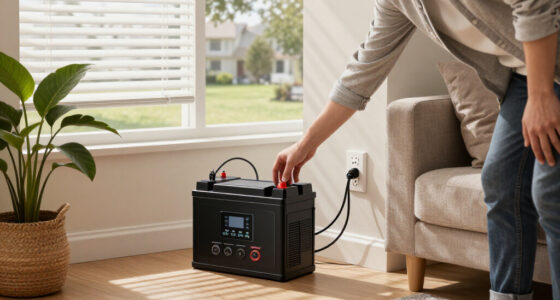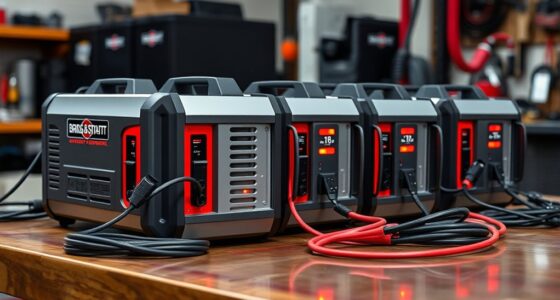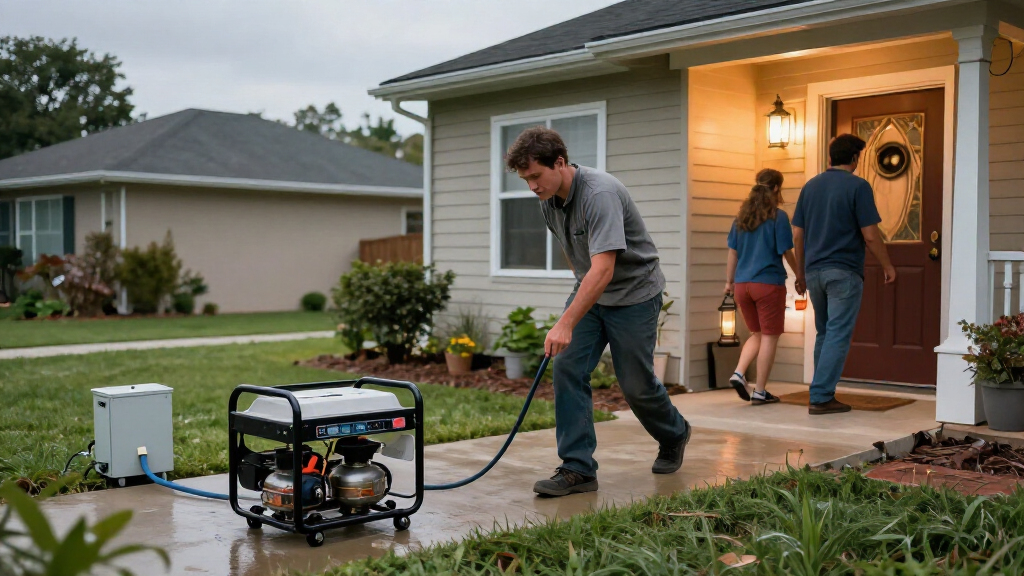
Among these dual fuel home generators, I rank the Westinghouse 14500 Peak Watt model as the best overall for its high output, remote start, and transfer-switch compatibility. The DuroMax XP13000EH is a strong alternative for buyers prioritizing a 13,000-watt class generator, while the Westinghouse 6500 Watt is a more manageable choice for essential circuits. The main tradeoff is straightforward: larger units can support more loads but take up more space and need careful connection planning; smaller models are easier to handle but limit what can run at once. Propane adds fuel flexibility, though output can differ by fuel and runtime depends on load and tank size. Read on for the full comparison and advice on matching generator capacity to your home.
Complete the kit


Key Takeaways
The Westinghouse 14500 leads this lineup for buyers seeking high output alongside remote starting and transfer-switch compatibility.
The DuroMax XP13000EH and DuroMax XP13000HX sit in the 13,000-watt class, while the HX listing adds electric start and a whole-home-backup focus; confirm exact outlet and connection needs before choosing between them.
Mid-sized options such as the Westinghouse 6500 and 6600 favor essential-load backup over running many large appliances at once.
The BILT HARD 5500W inverter stands apart from the conventional portable generators here, making inverter design a distinct consideration for buyers with sensitive electronics or lower-noise priorities.
Compact picks like the WEN 4,750W and Westinghouse 4650 trade household coverage for easier scale and, in the Westinghouse model, an RV-ready 30A outlet.
| BILT HARD 5500W Dual Fuel Inverter Generator, Gasoline/LPG |  | Best Compact Inverter for Essential Backup | Fuel type: Gasoline and LPG | Gasoline starting/running watts: 5,500 / 4,000 watts | LPG starting/running watts: 5,000 / 3,600 watts | VIEW LATEST PRICE | See Our Full Breakdown |
| DuroStar DS13000MX 13,000-Watt Dual Fuel Portable Generator with Electric Start |  | Best for High-Capacity Home Backup | Fuel type: Gasoline and propane | Starting watts: 13,000 watts | Running watts: 10,500 watts | VIEW LATEST PRICE | See Our Full Breakdown |
| Westinghouse 14500 Peak Watt Dual Fuel Portable Generator with Remote Electric Start and Transfer Switch Compatibility | 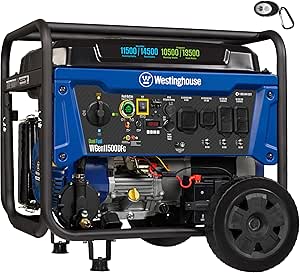 | Best Premium Convenience Pick | Fuel type: Gasoline and propane | Starting watts: 14,500 watts | Running watts: 11,500 watts | VIEW LATEST PRICE | See Our Full Breakdown |
| DuroMax XP13000EH 13,000-Watt Dual Fuel Portable Generator |  | Best Heavy-Duty All-Metal Workhorse | Fuel type: Gasoline and propane | Starting watts: 13,000 watts | Running watts: 10,500 watts | VIEW LATEST PRICE | See Our Full Breakdown |
| Champion 11,500-Watt Electric Start Dual Fuel Portable Generator |  | Best for Safety and Operating Feedback | Fuel type: Gasoline and LPG | Gasoline starting/running watts: 11,500 / 9,200 watts | Propane starting/running watts: 10,350 / 8,280 watts | VIEW LATEST PRICE | See Our Full Breakdown |
| Westinghouse 6500 Watt Dual Fuel Portable Generator with CO Sensor and Transfer Switch Ready Outlets |  | Best for Straightforward Home Backup | Peak output: 6,500 watts | Running output: 5,300 watts | Fuel: Gasoline or propane | VIEW LATEST PRICE | See Our Full Breakdown |
| Westinghouse 6600 Watt Dual Fuel Portable Generator with Remote Electric Start and CO Sensor |  | Best for Convenient Starting | Peak output: 6,600 watts | Running output: 5,300 watts | Fuel: Gasoline or propane | VIEW LATEST PRICE | See Our Full Breakdown |
| Westinghouse 12500 Watt Dual Fuel Portable Generator with Remote Electric Start |  | Best for Higher-Capacity Backup | Peak output: 12,500 watts | Running output: 9,500 watts | Fuel: Gasoline or propane | VIEW LATEST PRICE | See Our Full Breakdown |
| Westinghouse 4650 Peak Watt Dual Fuel Portable Generator, RV Ready 30A Outlet, Gas & Propane Powered, CO Sensor |  | Best for RV and Essential-Load Backup | Peak output: 4,650 watts | Running output: 3,600 watts | Fuel: Gasoline or LPG | VIEW LATEST PRICE | See Our Full Breakdown |
| DuroMax XP13000HX 13,000-Watt Dual Fuel Portable Generator with Electric Start and Whole Home Backup |  | Best for Maximum Listed Output | Listed output: 13,000 watts | Fuel: Gasoline or propane | Engine: 500cc 4-stroke | VIEW LATEST PRICE | See Our Full Breakdown |
| Westinghouse 13500 Peak Watt Dual Fuel Portable Generator with Remote Electric Start |  | Best for Extended, High-Load Backup | Peak output: 13,500 watts | Running output: 10,500 watts | Fuel types: Gasoline, propane, natural gas | VIEW LATEST PRICE | See Our Full Breakdown |
| Westinghouse 12500 Peak Watt Dual Fuel Portable Generator with Remote Electric Start and CO Sensor |  | Best for Safety-Focused Home Backup | Peak output: 12,500 watts | Running output: 9,500 watts | Fuel types: Gasoline, propane | VIEW LATEST PRICE | See Our Full Breakdown |
| WEN 4,750-Watt Dual Fuel Portable Generator with Electric Start and Wheel Kit |  | Best for Modest Backup Loads | Starting output: 4,750 watts | Running output: 3,800 watts | Fuel types: Gasoline, propane | VIEW LATEST PRICE | See Our Full Breakdown |
| dual fuel home generator | Outlets | Voltage | Engine | Runtime |
|---|---|---|---|---|
| BILT HARD 5500W Dual Fuel Inve | — | 120 volts | 160 cc, 4-stroke OHV | — |
| DuroStar DS13000MX 13,000-Watt | 5 | 240 volts | 500 cc, 4-stroke | Up to 17 hours |
| Westinghouse 14500 Peak Watt D | 2 | 240 volts | — | Up to 19 hours |
| DuroMax XP13000EH 13,000-Watt | — | 240 volts | — | 3 hours |
| Champion 11,500-Watt Electric | 4 | 240 volts | — | Up to 10 hours |
| Westinghouse 6500 Watt Dual Fu | Household duplex, RV-ready TT-30R, transfer-switch-ready L14-30R, and one additional outlet | — | 274cc 4-stroke OHV | — |
| Westinghouse 6600 Watt Dual Fu | — | 120/240V | 274cc | — |
| Westinghouse 12500 Watt Dual F | 6 | — | 457cc 4-stroke | — |
| Westinghouse 4650 Peak Watt Du | 4 total, including an RV-ready connection | — | 212cc 4-stroke | — |
| DuroMax XP13000HX 13,000-Watt | 7 | 240V | 500cc 4-stroke | — |
| Westinghouse 13500 Peak Watt D | — | 240 volts | — | Up to 19 hours |
| Westinghouse 12500 Peak Watt D | 6, including GFCI and transfer-switch-ready outlets | — | — | Up to 12 hours |
| WEN 4,750-Watt Dual Fuel Porta | 3 | — | — | Up to 11 hours |
More Details on Our Top Picks
BILT HARD 5500W Dual Fuel Inverter Generator, Gasoline/LPG
The BILT HARD 5500W suits buyers who want inverter-style power for essentials, smaller loads, or mixed home and RV use rather than a generator sized for whole-home backup. It delivers up to 4,000 running watts on gasoline, dropping to 3,600 on LPG, so fuel choice brings a modest capacity tradeoff. Its USB-C outlet and parallel connectors add flexibility that the much larger DuroStar DS13000MX does not prioritize, while smart power management is intended to curb fuel use and noise as demand changes. The compromise is substantial for a supposedly portable unit: it weighs 61.7 pounds, and the listed warranty is only 90 days. I would skip it if you need 240-volt output or enough capacity for major household loads.
Pros:- Runs on gasoline or LPG, giving buyers a choice of available fuel.
- Inverter format and smart power management are suited to variable, smaller loads.
- USB-C and parallel connectors provide useful charging and expansion options.
Cons:- Running output falls to 3,600 watts on LPG.
- At 61.7 pounds, it is heavy for a compact portable generator.
- The listed 90-day warranty is short.
Best for: Households seeking portable, lower-capacity backup for essential 120-volt devices, with the option to use the same generator for RV or outdoor power.
Not ideal for: Buyers who need whole-home capacity, 240-volt output, or frequent easy lifting; its running output is limited and it weighs 61.7 pounds.
- Fuel type:Gasoline and LPG
- Gasoline starting/running watts:5,500 / 4,000 watts
- LPG starting/running watts:5,000 / 3,600 watts
- Voltage:120 volts
- Engine:160 cc, 4-stroke OHV
- Tank volume:1.14 gallons
- Weight:61.7 pounds
- Dimensions:23.23 × 18.7 × 12.6 inches
Our verdict“Choose the BILT HARD for flexible, smaller-scale backup and inverter features, but pick the DuroStar DS13000MX if household load capacity matters more than portability.”
DuroStar DS13000MX 13,000-Watt Dual Fuel Portable Generator with Electric Start
The DuroStar DS13000MX is the capacity-first choice here: its 10,500 running watts and 240-volt output make it better suited to a transfer-switch-connected home backup setup than the smaller Champion 11,500-Watt. Electric start simplifies startup, while the CO safety alert, low-oil shutdown, and metal construction address practical emergency-use concerns. It runs on gasoline or propane, and the listed runtime is up to 17 hours, though actual runtime depends on load and fuel. This is not the pick for buyers who value low weight or inverter portability; a 500 cc engine and substantial frame are built around output, not easy transport. I would also verify the outlet configuration and transfer-switch requirements for your home before choosing it.
Pros:- 10,500 running watts and 240-volt output support demanding backup loads.
- Gasoline and propane operation gives fuel flexibility.
- Electric start makes operation more accessible during an outage.
- CO safety alert and low-oil shutdown add useful safeguards.
Cons:- Large, heavy construction makes transport and storage harder.
- A transfer switch and compatible installation are separate planning needs.
- Fuel consumption and noise may be considerable under heavy loads.
Best for: Homeowners with a transfer-switch-ready backup plan who want high 240-volt output for multiple household circuits and prefer electric start.
Not ideal for: Buyers who need a lightweight unit for frequent transport, quiet inverter operation, or a simple generator for a few small devices.
- Fuel type:Gasoline and propane
- Starting watts:13,000 watts
- Running watts:10,500 watts
- Voltage:240 volts
- Engine:500 cc, 4-stroke
- Tank volume:8.3 gallons
- Runtime:Up to 17 hours
- Outlets:5
Our verdict“Pick the DS13000MX for high-output, transfer-switch-oriented home backup, and choose the Champion if you need a somewhat lower-output option with more monitoring features.”
Westinghouse 14500 Peak Watt Dual Fuel Portable Generator with Remote Electric Start and Transfer Switch Compatibility
For buyers who want high output without relying on pull-starting, the Westinghouse 14500 pairs 11,500 running watts with electric and remote start. Its 19-hour listed runtime and 9.5-gallon tank are attractive for extended outages, though that figure should not be treated as a guarantee at every load. Against the DuroStar DS13000MX, it offers more stated running capacity and remote-start convenience; the DuroStar, by comparison, lists more outlets. The Westinghouse is transfer-switch compatible, but the switch is a separate part of a safe home connection. Its 550 cc engine and large fuel tank point to a heavy machine, not an easy carry-around generator. Buyers should also confirm outlet details, since the supplied data lists only two total outlets.
Pros:- 11,500 running watts provide the highest listed running output in this group.
- Electric and remote start reduce effort when starting the generator.
- Listed runtime reaches up to 19 hours on a full tank.
- Transfer-switch compatibility supports a planned home backup installation.
Cons:- The generator is heavy and may need assistance to move.
- Only two total outlets are listed, limiting direct connection options.
- A transfer switch is required separately for a suitable home connection.
Best for: Homeowners planning transfer-switch-connected backup who value remote starting, long listed runtime, and strong running output.
Not ideal for: Buyers who need easy solo transport, many outlet choices, or a compact generator for occasional small loads.
- Fuel type:Gasoline and propane
- Starting watts:14,500 watts
- Running watts:11,500 watts
- Engine displacement:550 cc
- Tank volume:9.5 gallons
- Runtime:Up to 19 hours
- Voltage:240 volts
- Outlets:2
- Warranty:3-year limited residential warranty
Our verdict“Choose the Westinghouse 14500 for remote-start convenience and high output, but favor the DuroStar DS13000MX if a larger listed outlet count is more useful.”
DuroMax XP13000EH 13,000-Watt Dual Fuel Portable Generator
The DuroMax XP13000EH targets buyers who put rugged construction and high output ahead of easy handling. Its 10,500 running watts match the DS13000MX, while electric start, a foldable handle, hour meter, and low-oil shutdown make it better equipped for regular backup or job-site duties than a basic portable unit. Both models offer gasoline-and-propane operation; the DS13000MX lists a larger 8.3-gallon tank, while the XP13000EH data gives an unusual 0.5-gallon tank and only three hours of runtime. Those figures call for checking the exact configuration before relying on it for prolonged outages. At 234 pounds, this is a stationary-use choice once positioned, not a generator to move casually around a property.
Pros:- 10,500 running watts support demanding backup and work-site loads.
- Gasoline and propane fuel options provide flexibility.
- Electric start, hour meter, and low-oil shutdown support practical operation.
- All-metal construction and foldable handle suit heavy-duty use.
Cons:- At 234 pounds, it is difficult to transport without help.
- Listed runtime is only three hours, limiting confidence for extended use.
- The listed 0.5-gallon tank volume is unusually small for this output and should be confirmed.
Best for: Homeowners or contractors who need substantial 240-volt output, durable construction, and can keep the generator in a fixed, accessible location.
Not ideal for: Anyone who needs straightforward long-duration fuel planning or expects to move a generator often; the listed tank and runtime figures are restrictive and the unit weighs 234 pounds.
- Fuel type:Gasoline and propane
- Starting watts:13,000 watts
- Running watts:10,500 watts
- Voltage:240 volts
- Engine displacement:500 cc
- Tank volume:0.5 gallons
- Runtime:3 hours
- Weight:234 pounds
- Dimensions:30 × 29 × 26 inches
Our verdict“Choose the XP13000EH for fixed-location heavy-duty use, but favor the DS13000MX if the listed tank capacity and runtime are central to your outage plan.”
Champion 11,500-Watt Electric Start Dual Fuel Portable Generator
The Champion 11,500-Watt is a practical middle ground for buyers who want substantial home-backup output alongside useful operating feedback. On gasoline it provides 9,200 running watts, but propane output drops to 8,280, so fuel flexibility comes with a real capacity reduction. Its CO Shield is designed to shut the engine off when unsafe carbon monoxide levels are detected, while Intelligauge tracks voltage, hertz, and runtime to help owners monitor use and maintenance. Compared with the higher-output Westinghouse 14500, Champion gives up running capacity and remote start, but offers four listed outlets and clear monitoring features. The 7.7-gallon tank and 10-hour listed runtime favor planned backup over indefinite operation, and the reported five hours on propane at 50% load may mean more frequent checks.
Pros:- Electric start and included battery simplify startup.
- CO Shield adds automatic shutdown protection for unsafe CO levels.
- Intelligauge monitors voltage, frequency, and runtime.
- Four listed outlets offer more connection options than the Westinghouse 14500.
Cons:- Running output falls from 9,200 watts on gasoline to 8,280 on propane.
- Reported propane runtime is five hours at 50% load.
- At 74 dBA, operation may be loud near living areas.
Best for: Homeowners who want dual-fuel backup with electric start, CO shutoff protection, and on-unit feedback for tracking generator operation.
Not ideal for: Buyers who need the highest available output, remote start, or long propane operation between checks.
- Fuel type:Gasoline and LPG
- Gasoline starting/running watts:11,500 / 9,200 watts
- Propane starting/running watts:10,350 / 8,280 watts
- Engine displacement:459 cc
- Tank volume:7.7 gallons
- Runtime:Up to 10 hours
- Voltage:240 volts
- Outlets:4
- Warranty:3-year limited warranty with free lifetime technical support
Our verdict“Choose the Champion for safety features and operating feedback in a high-output dual-fuel package, but pick the Westinghouse 14500 if maximum running capacity and remote start matter more.”
Westinghouse 6500 Watt Dual Fuel Portable Generator with CO Sensor and Transfer Switch Ready Outlets
The WGen5300DFcv suits buyers who want useful household backup capacity without moving up to the much larger Westinghouse WGen9500DF. Its 5,300 running watts and L14-30R transfer-switch-ready outlet support a more direct connection to selected home circuits, while the RV-ready outlet adds flexibility for recreational use. Gasoline or propane operation gives you a second fuel option when one is hard to obtain, and the stated runtime of up to 14.5 hours helps reduce refueling interruptions under suitable conditions. A CO sensor and low-oil shutdown add safety measures, though they do not replace outdoor placement and proper ventilation. Compared with the remote-start Westinghouse 6600, this model has fewer convenience features; its appeal is a simpler backup setup, not extra output or push-button starting.
Pros:- Runs on gasoline or propane for fuel flexibility
- L14-30R outlet supports connection to a compatible transfer switch
- Up to 14.5 hours of stated runtime from a 4.7-gallon tank
- CO sensor and automatic low-oil shutdown add safety protections
Cons:- No remote-start feature is listed
- Weight is not specified, making transport planning difficult
- Some assembly is required after delivery
Best for: Homeowners who need midrange backup for selected circuits and want both an RV outlet and transfer-switch-ready connection.
Not ideal for: Buyers seeking remote electric start, higher running wattage, or clearly documented portability details.
- Peak output:6,500 watts
- Running output:5,300 watts
- Fuel:Gasoline or propane
- Engine:274cc 4-stroke OHV
- Fuel tank:4.7 gallons
- Stated runtime:Up to 14.5 hours
- Outlets:Household duplex, RV-ready TT-30R, transfer-switch-ready L14-30R, and one additional outlet
- Warranty:3 years
Our verdict“Choose this Westinghouse for practical, midrange home backup with transfer-switch-ready and RV outlets, but skip it if remote starting or greater capacity matters more.”
Westinghouse 6600 Watt Dual Fuel Portable Generator with Remote Electric Start and CO Sensor
The Westinghouse 6600 is a better fit than the WGen5300DFcv for buyers who value easy startup: its remote key-fob electric start means less effort when the generator is stored outside or conditions make manual starting inconvenient. It still provides 5,300 running watts, so the listed peak rating does not mean more sustained capacity than the WGen5300DFcv. Both models offer gasoline-or-propane operation, a 4.7-gallon tank, and up to 14.5 hours of stated runtime; the distinction here is convenience, not a bigger load ceiling. Transfer-switch readiness and CO and low-oil shutdown features suit backup use, while 120/240V output broadens connection options. The tradeoff is a heavy, bulky frame and regular maintenance, so I would not choose it for frequent solo transport or buyers who do not need remote starting.
Pros:- Remote key-fob electric start adds convenience during outages
- Gasoline and propane operation provides fuel flexibility
- Up to 14.5 hours of stated runtime from a 4.7-gallon tank
- CO and low-oil shutdown features support safer operation
Cons:- Described as heavy and bulky for portable use
- Running output is 5,300 watts, the same as the WGen5300DFcv
- Requires regular maintenance
Best for: Homeowners who want dual-fuel backup with remote starting and expect to leave the generator in a fixed outdoor operating area.
Not ideal for: Buyers prioritizing easy transport, lower weight, or a meaningful increase in continuous output over the WGen5300DFcv.
- Peak output:6,600 watts
- Running output:5,300 watts
- Fuel:Gasoline or propane
- Engine:274cc
- Fuel tank:4.7 gallons
- Stated runtime:Up to 14.5 hours
- Voltage:120/240V
- Starting and safety:Remote electric start; automatic CO and low-oil shutdown
- Warranty:3-year limited
Our verdict“Pick the Westinghouse 6600 if remote starting is worth more to you than a capacity upgrade or easy portability.”
Westinghouse 12500 Watt Dual Fuel Portable Generator with Remote Electric Start
With 9,500 running watts, the Westinghouse WGen9500DF is the capacity step-up in this group for households that need to run more substantial loads than the 5,300-watt Westinghouse 6600 can support. Its gasoline-or-propane flexibility and remote electric start make it suited to outage backup, while six outlets provide more connection choices for household and other equipment. The stated 12-hour runtime is solid, but it is shorter than the up-to-14.5-hour claims for the smaller Westinghouse models, and real runtime depends on load and fuel. This is still a portable generator, not a lightweight one: the larger 457cc engine and 6.6-gallon tank make transport and storage a bigger commitment. I would favor it when sustained capacity matters more than compactness, but compare it carefully with the 13,000-watt DuroMax XP13000HX if your planned loads call for still more output.
Pros:- 9,500 running watts provide substantially more sustained capacity than the Westinghouse 6600
- Remote and electric starting offer convenient startup options
- Dual-fuel operation allows gasoline or propane use
- Six outlets and transfer-switch-ready connections support varied setups
Cons:- Larger engine and tank make storage and transport more demanding
- Stated 12-hour runtime is shorter than the smaller Westinghouse models’ listed maximum
- Requires regular maintenance
Best for: Households planning to power several essential circuits or larger appliances and wanting remote start with gasoline-or-propane flexibility.
Not ideal for: Buyers with modest backup needs, limited storage space, or a priority on easy one-person movement.
- Peak output:12,500 watts
- Running output:9,500 watts
- Fuel:Gasoline or propane
- Engine:457cc 4-stroke
- Fuel tank:6.6 gallons
- Stated runtime:Up to 12 hours
- Outlets:6
- Starting:Remote and electric start
- Frequency:60Hz
Our verdict“Choose the WGen9500DF when your backup plan needs much more sustained output than the midrange Westinghouse units provide.”
Westinghouse 4650 Peak Watt Dual Fuel Portable Generator, RV Ready 30A Outlet, Gas & Propane Powered, CO Sensor
The WGen3600DFcv is the compact-capacity choice here: at 3,600 running watts, it is aimed at essential loads and RV use rather than powering a broad set of household circuits. Its RV-ready outlet and gasoline-or-propane capability make it more directly suited to travel than the larger Westinghouse WGen9500DF, which offers far more output but demands more storage space and transport effort. The listed 14-hour runtime from a 4-gallon tank is a useful planning point, though actual runtime varies with load and fuel. CO sensing, low-oil shutdown, overload protection, and a fuel gauge bring practical safety and operating information. The tradeoff is limited capacity: buyers expecting to run multiple large appliances at once should look instead to the WGen5300DFcv or a higher-output option. Noise data and weight are not provided.
Pros:- RV-ready 30A outlet suits recreational vehicle connections
- Gasoline and propane operation gives a choice of fuel
- Listed runtime of up to 14 hours from a 4-gallon tank
- CO sensor, low-oil shutdown, overload protection, and fuel gauge are included
Cons:- 3,600 running watts limit the number of larger household loads it can support
- Weight and noise specifications are not provided
- Some assembly is required
Best for: RV owners and households seeking a dual-fuel generator for essential loads, with an RV-ready connection and a smaller stated output than the high-capacity models.
Not ideal for: Homeowners who need to run multiple high-demand appliances or want documented noise and weight figures before choosing.
- Peak output:4,650 watts
- Running output:3,600 watts
- Fuel:Gasoline or LPG
- Engine:212cc 4-stroke
- Fuel tank:4 gallons
- Stated runtime:Up to 14 hours
- Voltage and frequency:120V, 60Hz
- Outlets:4 total, including an RV-ready connection
- Additional features:CO sensor, automatic low-oil shutdown, automatic voltage regulation, fuel gauge, hour meter, overload protection
Our verdict“Choose the WGen3600DFcv for RV use and essential-load backup, not for powering a larger household load plan.”
DuroMax XP13000HX 13,000-Watt Dual Fuel Portable Generator with Electric Start and Whole Home Backup
The DuroMax XP13000HX is the high-output pick for buyers whose load plan exceeds what the Westinghouse WGen9500DF’s 9,500 running watts can cover. Its listed 13,000-watt output, 240V capability, electric start, and seven outlets point toward substantial home-backup use, with gasoline and propane providing fuel flexibility. That extra capacity comes with a serious portability penalty: at 245 pounds and roughly 30 by 29 by 26 inches, it is a stationary setup once placed, not a generator to move casually. The supplied data also lists a 0.5-gallon tank alongside a 17-hour runtime; those figures appear difficult to reconcile, so I would verify tank capacity and runtime with the manufacturer before planning refueling. Compared with the Westinghouse 12500, this model lists more output, but its size and unclear fuel-capacity data call for extra scrutiny.
Pros:- Listed 13,000-watt output exceeds the Westinghouse WGen9500DF’s 9,500 running watts
- Gasoline and propane operation adds fuel flexibility
- Electric start simplifies startup
- Seven outlets and 240V output suit a range of backup connections
Cons:- 245-pound weight and large dimensions make moving and storage difficult
- Listed 0.5-gallon tank capacity conflicts with the stated 17-hour runtime and should be verified
- High output may be unnecessary for essential-load-only backup
Best for: Homeowners with high backup-load demands, a planned permanent operating location, and a compatible 240V connection setup.
Not ideal for: Buyers who need frequent repositioning, have limited storage space, or require clear fuel-capacity and runtime figures before purchase.
- Listed output:13,000 watts
- Fuel:Gasoline or propane
- Engine:500cc 4-stroke
- Fuel tank:0.5 gallons (listed; verify with manufacturer)
- Stated runtime:17 hours (listed)
- Voltage:240V
- Starting:Electric start
- Outlets:7
- Weight and dimensions:245 pounds; 30 x 29 x 26 inches
Our verdict“Consider the XP13000HX for high-demand backup when you can keep it in place, but verify its listed fuel capacity and runtime before relying on them.”
Westinghouse 13500 Peak Watt Dual Fuel Portable Generator with Remote Electric Start
With 10,500 running watts and gasoline, propane, and natural gas compatibility, this Westinghouse is the most flexible fuel option among these three. Its stated 19-hour runtime and 9.5-gallon tank suit longer outages when refueling opportunities may be limited. Compared with the Westinghouse WGen9500DFc, it offers more running capacity and adds natural gas, though the WGen9500DFc lists a CO sensor and more outlet details. The remote start can save effort when the generator is stored outside, but it does not remove the need to operate it safely outdoors and away from openings. This is a better fit for larger backup loads than the WEN 4,750-watt model; the tradeoff is a larger, heavier-duty machine, with weight and outlet configuration not specified in the supplied data.
Pros:- 10,500 running watts provide more capacity than the WEN 4,750-watt generator.
- Supports gasoline, propane, and natural gas.
- Listed runtime reaches up to 19 hours on a full tank.
- Remote electric start reduces the effort of starting the unit.
Cons:- Weight is not specified, making storage and moving requirements harder to judge.
- The supplied details do not identify outlet types or confirm a CO sensor.
- Its high output and 9.5-gallon tank call for more storage space than the smaller WEN.
Best for: Households planning to power several substantial backup loads and wanting gasoline, propane, or natural gas flexibility.
Not ideal for: Buyers needing documented weight, a listed CO sensor, or a clearly itemized outlet layout before choosing a home backup generator.
- Peak output:13,500 watts
- Running output:10,500 watts
- Fuel types:Gasoline, propane, natural gas
- Tank capacity:9.5 gallons
- Engine displacement:500 cc
- Runtime:Up to 19 hours
- Voltage:240 volts
- Warranty:3 years
Our verdict“Choose this Westinghouse for larger backup loads and three-fuel flexibility, provided you can accommodate its substantial footprint and verify outlet needs.”
Westinghouse 12500 Peak Watt Dual Fuel Portable Generator with Remote Electric Start and CO Sensor
The WGen9500DFc pairs 9,500 running watts with a built-in CO sensor, making it a strong choice for buyers who want substantial home-backup output and an added carbon-monoxide warning feature. It runs on gasoline or propane, unlike the 13,500-peak-watt Westinghouse, which also supports natural gas and lists a longer runtime. The listed 12-hour runtime and 6.6-gallon tank make this a more moderate-capacity option, while six outlets—including transfer-switch-ready and GFCI outlets—give buyers clearer connection details than the supplied information for the larger Westinghouse. Remote start and a fuel gauge add convenience, but at 212.1 pounds it is not easy to reposition. Buyers should also plan for its substantial storage footprint.
Pros:- CO sensor adds a safety-monitoring feature.
- 9,500 running watts suit a substantial range of home backup loads.
- Six outlets include GFCI and transfer-switch-ready options.
- Remote start, fuel gauge, and hour meter support convenient operation and monitoring.
Cons:- At 212.1 pounds, moving it can be difficult.
- Gasoline and propane are the only listed fuel options.
- Its 6.6-gallon tank and up-to-12-hour runtime trail the larger Westinghouse model’s stated endurance.
Best for: Homeowners seeking a high-output gasoline-or-propane generator with a CO sensor and documented transfer-switch-ready outlets.
Not ideal for: People who need natural-gas operation, extended runtime beyond the listed 12 hours, or a generator they can move without assistance.
- Peak output:12,500 watts
- Running output:9,500 watts
- Fuel types:Gasoline, propane
- Engine displacement:457 cc
- Tank capacity:6.6 gallons
- Runtime:Up to 12 hours
- Outlets:6, including GFCI and transfer-switch-ready outlets
- Weight:212.1 pounds
- Dimensions:27.2 × 26.1 × 26.5 inches
Our verdict“Pick the WGen9500DFc if you want a CO sensor and clearly listed home-connection options, and can manage its weight and storage needs.”
WEN 4,750-Watt Dual Fuel Portable Generator with Electric Start and Wheel Kit
The WEN makes the most sense for buyers who need a smaller backup-load range rather than whole-house-level capacity. Its 3,800 running watts fall well below the 9,500 watts listed for the Westinghouse WGen9500DFc, so buyers will need to prioritize which essentials run at once. In return, this model offers gasoline-or-propane operation, electric start, and a wheel kit—useful features for a generator that may need to move between storage and an outdoor operating spot. The four-gallon tank is listed for up to 11 hours of runtime, though the supplied data does not state the conditions behind that figure. Its 224 cc engine and lower output make it a more limited backup choice, and noise information is not provided.
Pros:- Gasoline and propane give buyers two fuel options.
- Electric start avoids relying on a pull start.
- Wheel kit helps with moving the generator between storage and use.
- Listed runtime reaches up to 11 hours from a four-gallon tank.
Cons:- 3,800 running watts limit how many high-demand appliances can operate together.
- Only three outlets are listed.
- Noise level is not specified in the supplied product details.
Best for: Households that want electric-start dual-fuel backup for selected essentials and value a wheel kit for repositioning.
Not ideal for: Buyers who need to run several large appliances at once or want the higher capacity of the Westinghouse 9,500-running-watt model.
- Starting output:4,750 watts
- Running output:3,800 watts
- Fuel types:Gasoline, propane
- Engine displacement:224 cc
- Tank capacity:4 gallons
- Runtime:Up to 11 hours
- Voltage and frequency:120 volts, 60 hertz
- Outlets:3
- Warranty:2 years
Our verdict“Choose the WEN for selected essential loads and easier repositioning, not for powering a broad set of household appliances at once.”

How We Picked
I compared these 13 models on the factors that shape real home-backup decisions: stated wattage class, dual-fuel operation, starting method, outlet and transfer-switch details, safety features named in the product listings, and portability cues such as a wheel kit. I gave more weight to a balanced combination of capacity and practical connection features than to peak output alone. A generator’s advertised wattage does not tell a buyer which circuits it can support without checking running watts, starting surges, and the specific appliances involved.
The ranking separates broad home-backup candidates from smaller essential-load and RV-oriented options. The Westinghouse 14500 ranks first for combining substantial stated output with remote start and transfer-switch compatibility. The DuroMax 13,000-watt models and other high-output Westinghouse units follow for buyers who need more capacity, while the 6,500-watt class and smaller generators rank lower for whole-home coverage but can be a better fit for simpler, narrower plans. I treat listed features as starting points, not proof of runtime, noise, fuel-specific output, or safe installation; buyers should verify those details in the manufacturer documentation.
Factors to Consider When Choosing Dual Fuel Home Generators
Choosing a dual-fuel generator is less about finding the largest number on a listing and more about matching power, connection method, and fuel plan to your outage routine. I’d settle those questions before comparing convenience features, since a generator that cannot support your priority loads or connect safely may not suit your home.
Size the generator around circuits, not the whole house label
Make a list of the loads you need during an outage, then check each appliance’s running watts and starting surge. Refrigerators, well pumps, sump pumps, and air conditioners can demand a brief startup spike, so adding only their running wattage may lead to overloads. A 13,000-watt-class unit offers more headroom than the 4,750- to 6,600-watt options here, but it still may not run every household circuit simultaneously. Decide whether you can stagger heavy loads, such as a pump and cooking appliance, rather than sizing for every device at once. Ask an electrician to help plan circuit coverage when your list includes hardwired equipment. This approach can keep you from paying in space and fuel for capacity you will not use—or buying a unit that trips under startup demand.
Check connection compatibility before buying
Transfer-switch compatibility is not the same as having a transfer switch installed, and a generator outlet alone does not make a direct home connection safe. Confirm the generator’s outlet type and amperage against the inlet, transfer switch, and wiring your electrician specifies. Never connect a portable generator to a home through a standard wall outlet; that can create dangerous backfeed. If you want selected circuits powered, a professionally installed transfer switch or interlock setup can make the connection safer and more practical. Buyers considering whole-home backup should also check whether their intended system can handle the home’s service and largest loads. Sort out that equipment plan before choosing among models with similar wattage claims.
Compare gas and propane as a supply plan
Dual-fuel operation gives you a second fuel option, but it does not mean both fuels provide identical output or runtime. Check the manufacturer’s specifications for gas and propane separately, then compare them with the loads you expect to run. Gasoline may be more accessible in some locations, while propane can be stored for longer periods when handled according to its safety guidance. A small propane cylinder may not support long outage operation, so estimate how many cylinders or larger tanks your plan requires. Avoid assuming that owning two fuel options solves storage, refueling, or transport challenges. Your choice should reflect what you can safely store and obtain during a regional outage.
Treat peak watts and running watts as different numbers
Peak watts describe short-term surge capacity, while running watts better reflect the load a generator can sustain. Listings may highlight a peak figure, so use the detailed specifications—not the headline number—when comparing models. This matters especially for products in nearby wattage classes, where a higher peak rating does not necessarily mean meaningfully more continuous power. Account for the generator’s fuel-specific ratings too, since propane output can be lower than gasoline output on some models. Leave some capacity in reserve rather than planning to run continuously at the limit. That margin can help accommodate startup surges and changes in what your household needs.
Choose convenience features that fit your routine
Electric and remote start can simplify operation when a generator is heavy, stored in a garage or shed, or used by someone who would prefer not to pull a recoil starter. Those features add convenience but do not remove the need to read the starting procedure, maintain the battery where applicable, and test the unit periodically. A wheel kit can matter more than a remote if you need to move the generator across a driveway or yard. CO sensors add a safety layer, but they do not make indoor or garage operation safe. Plan to run any portable generator outdoors and away from doors, windows, and vents, following the manual and local safety guidance. Match convenience features to the person who will operate the unit during an outage, not just to the spec sheet.
Plan for sound, placement, and maintenance
A generator’s rated output is only useful if you have a safe, workable outdoor location for it. Check the manual for required clearances and exhaust direction, and consider distance from bedrooms and nearby homes when comparing conventional portables with inverter-style options. Do not assume a smaller generator is automatically quiet; look for a stated decibel rating and the conditions under which it was measured. Maintenance also affects readiness: fuel handling, oil checks, battery care, and periodic test runs belong in the ownership plan. Consider where the unit will be stored and how you will move it before selecting a larger frame. If routine upkeep is unlikely, a simpler setup and a written maintenance schedule may matter more than extra output.
Frequently Asked Questions
Can a 6,500-watt dual-fuel generator run my whole house?
It may support selected household circuits, but the wattage alone cannot establish whole-house coverage. Check the generator’s running watts on each fuel, then total the running and startup demands of the circuits you want to use. Large loads such as central air conditioning, electric ranges, and well pumps can use a substantial share of available capacity. A transfer switch can connect chosen circuits, but it does not increase the generator’s output. If you want broad coverage, have an electrician review your load list and compare it with the generator’s exact specifications.
Should I choose a 13,000-watt model or a smaller generator for outage backup?
Choose based on the loads you plan to run together, not on a general idea of household size. The 13,000-watt-class models in this roundup offer more capacity for multiple circuits and demanding appliances, but they are larger equipment and still require safe placement, connection planning, and fuel management. A smaller unit can make sense when you only need essentials and can take turns running high-draw appliances. Check running watts and startup surges on the intended fuel before deciding. If your load list is uncertain, an electrician can help identify the circuits that matter most.
Does propane provide the same power and runtime as gasoline?
Not necessarily. Many dual-fuel generators have different output ratings for gasoline and propane, so check the model’s fuel-specific running and peak figures. Runtime also depends on load, tank capacity, and operating conditions; a generator’s runtime claim is not a guarantee for your setup. Propane can be useful as a stored backup fuel, but the quantity available from your tank or cylinders determines how long that option lasts. Compare your likely load with both fuel ratings and plan where replacement fuel will come from during an extended outage.
Can I plug a portable generator directly into a wall outlet to power my house?
No. Feeding a home through a standard wall outlet can send power back into utility lines and put people at risk. Use a properly installed transfer switch or another code-compliant connection method designed for your electrical system. A generator described as transfer-switch compatible still needs the correct inlet, wiring, and setup. Ask a qualified electrician to confirm compatibility before a storm or outage. Follow the generator manual for cord ratings, grounding instructions, and placement.
Is a CO sensor enough to make a portable generator safe to use indoors or in a garage?
No. A carbon monoxide sensor is an added safety feature, not permission to run a generator indoors, in a garage, or in another enclosed space. Exhaust can contain dangerous carbon monoxide, which can enter a home through openings even when the generator is outside. Operate it outdoors, well away from doors, windows, and vents, and follow the manufacturer’s placement instructions and public safety guidance. Keep working carbon monoxide alarms inside the home as a separate protective measure. Never rely on a sensor to replace safe placement.
Conclusion
For most buyers seeking a balance of output and connection features, I’d start with the Westinghouse 14500 as the best overall pick. The best premium choice is the DuroMax XP13000HX for buyers drawn to its high-output, whole-home-backup positioning, while the best value fit depends on your required capacity and the outlet features your setup needs; compare the mid-sized Westinghouse models against your essential-load list rather than choosing on wattage alone. For beginners, I’d favor a smaller, simpler plan such as the WEN 4,750W or Westinghouse 6500 when essential circuits are enough. The BILT HARD 5500W inverter is the specific pick for buyers who want an inverter-style option, and the Westinghouse 4650 suits those who also value an RV-ready 30A outlet. Before buying any model, verify fuel-specific running watts, outlet compatibility, safe placement, and the circuits you intend to power.