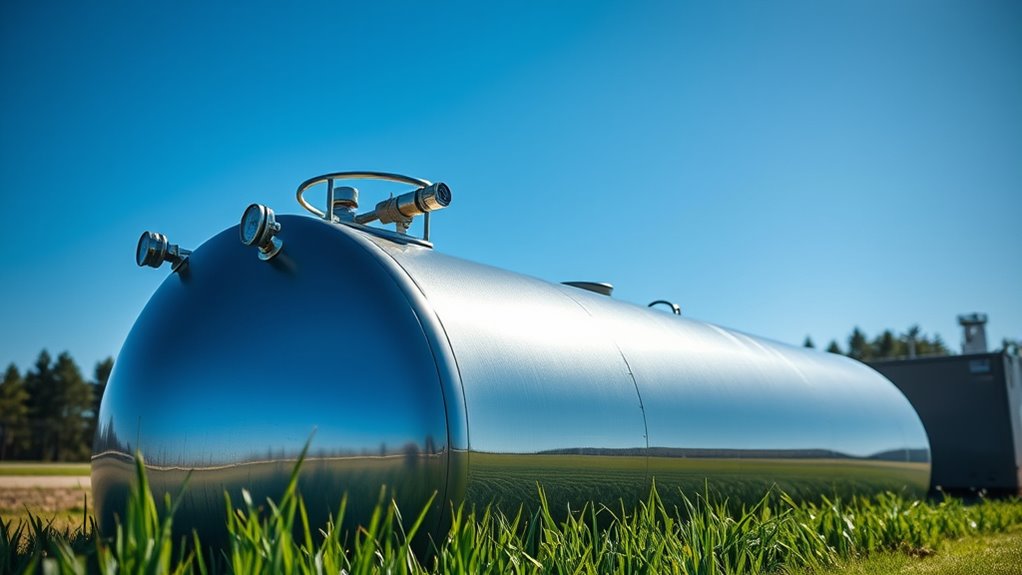

To size your propane tank for a standby generator, you need to assess your power needs, considering appliances and expected runtime, then choose the right tank type and capacity within local regulations. Think about future growth, seasonal energy variations, and guarantee there’s enough buffer space for emergencies. Always follow safety guidelines, factor in industry standards, and consult professionals for ideal size and placement. Want to learn the nine essential rules to avoid common pitfalls? Keep going.
Key Takeaways
- Calculate total fuel needs based on generator load, runtime, and seasonal variations to select appropriate tank size.
- Include a 10-15% buffer capacity beyond calculated fuel requirements for safety and reliability.
- Consider generator fuel efficiency and peak demand periods to prevent shortages during extended outages.
- Follow local codes and safety standards for tank placement, size limits, and installation practices.
- Consult professionals to ensure proper sizing, installation, and compliance for optimal generator performance.
Assess Your Power Consumption Needs Accurately
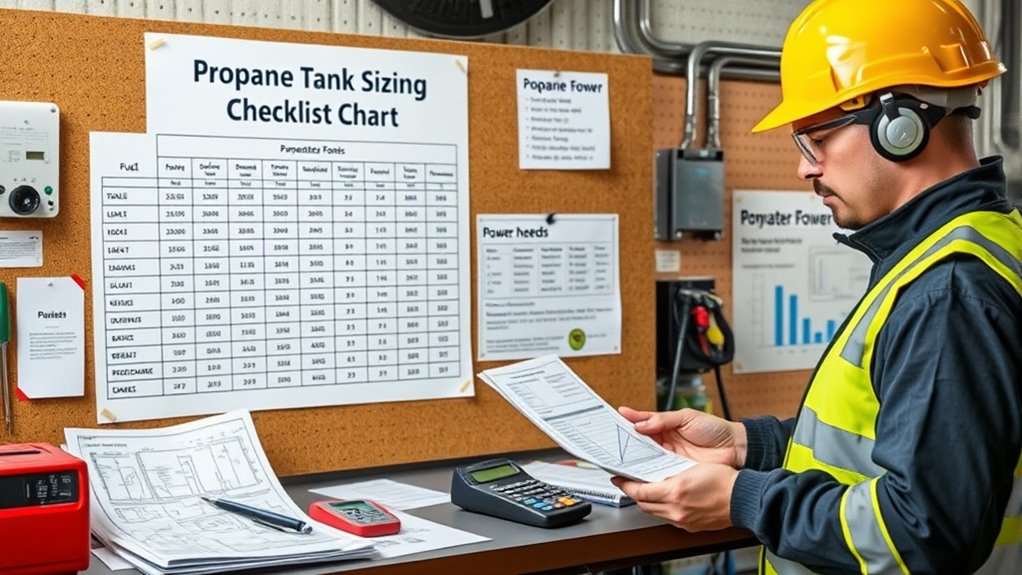
To determine the right propane tank size for your generator, you first need to accurately assess your power consumption needs. Start by listing all the appliances and systems you plan to run during an outage. Check each device’s wattage or amperage and add them up to get your total load. This helps you estimate how much fuel you’ll need over time. Also, consider the generator’s fuel gauge to monitor remaining fuel levels easily and prevent unexpected outages. Safety valves are essential for maintaining safe pressure levels, especially if your tank is larger or under high demand. Knowing your consumption and safety measures ensures you select a tank that provides enough capacity while prioritizing safety and efficiency. Incorporating quality assurance best practices such as regular inspections and documentation can further ensure your propane setup remains reliable and safe. This step is critical for a reliable and safe backup power solution.
Understand the Types of Propane Tanks and Their Capacities
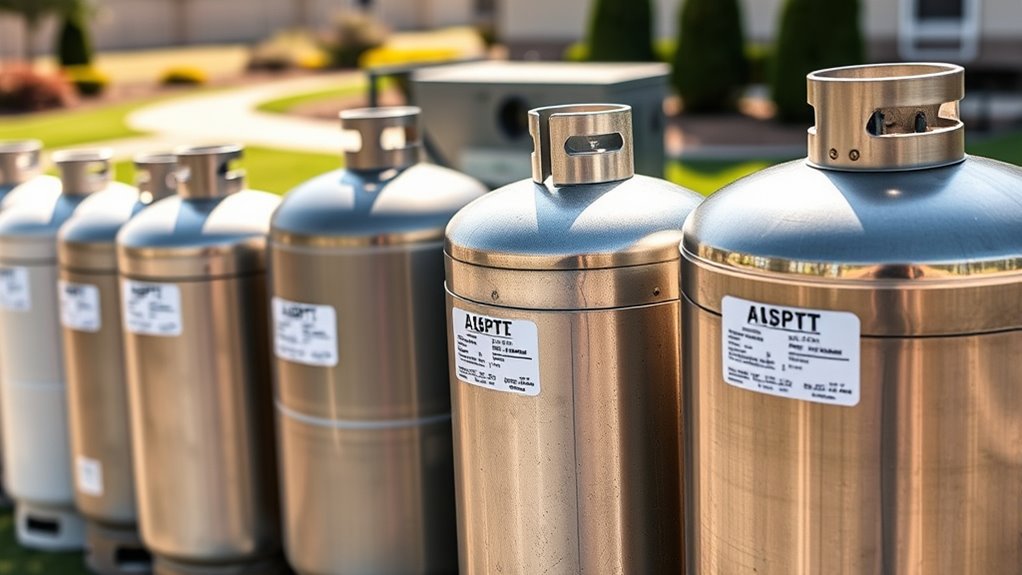
Are you familiar with the different types of propane tanks available for backup generators? Knowing your options helps you choose the right tank size and type. Propane tank types vary mainly by installation and usage, such as above-ground, underground, and portable tanks. Each offers different tank capacity options to suit your needs. Below is a quick comparison:
| Tank Type | Capacity Range | Installation Method |
|---|---|---|
| Above-Ground | 250 to 1,000 gallons | Above soil surface |
| Underground | 250 to 1,000 gallons | Buried underground |
| Portable | 5 to 100 gallons | On wheels or stands |
| Horizontal | 250 to 420 gallons | Horizontal placement |
| Vertical | 250 to 420 gallons | Vertical placement |
Understanding these propane tank types and capacity options guarantees you select the best fit for your generator’s runtime needs. Additionally, tank capacity plays a crucial role in ensuring uninterrupted power during outages.
Determine the Runtime Required During Power Outages
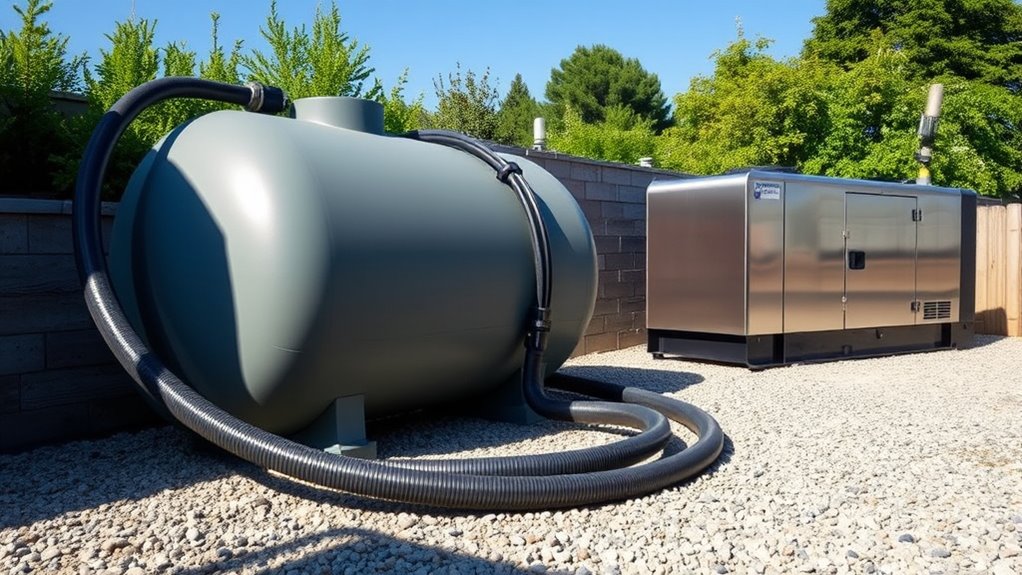
Understanding how long your generator needs to run during a power outage is essential for selecting the right propane tank size. To determine this, consider these factors:
- Identify critical appliances you want to power and estimate their total power consumption.
- Check your generator’s fuel efficiency to know how much fuel it consumes per hour.
- Decide on a safe runtime, whether it’s a few hours or several days.
- Consider your installation location, as accessibility and safety may influence tank size choices.
- Remember that nutritional value of juices can be affected by the type of fuel used if you are considering alternative energy sources or hybrid systems.
Match Generator Fuel Consumption Rates to Tank Size
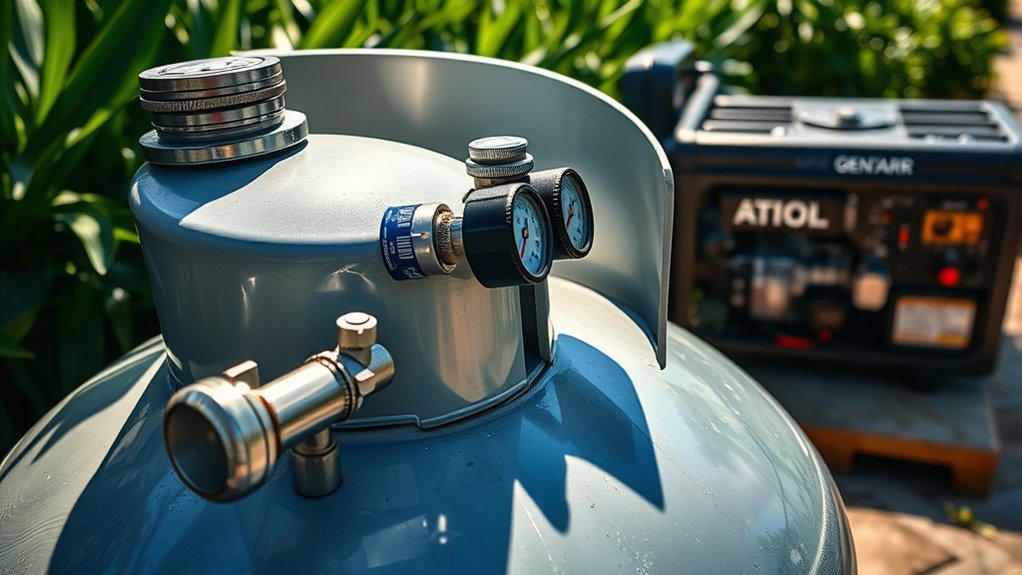
To guarantee your propane tank lasts through outages, you need to know your generator’s fuel consumption rate. Once you have that, you can match it to your tank’s capacity for reliable operation. This approach helps you avoid running out of fuel when you need it most. Additionally, understanding the bedroom layout and space can help optimize your setup for safety and efficiency.
Calculate Consumption Rate
Determining the fuel consumption rate of your generator is essential for matching it to your propane tank size. Accurate consumption estimation helps guarantee reliable backup power without over- or under-sizing your tank. To do this, consider these steps: 1. Check your generator’s manufacturer specifications for fuel efficiency ratings. 2. Note the rated load; higher loads increase fuel consumption. 3. Calculate daily usage based on expected runtime during outages. 4. Convert fuel consumption data into gallons or pounds, depending on your tank’s measurement. Additionally, understanding your generator’s performance cookies can help optimize operation and fuel efficiency during extended use.
Match Tank Capacity
Once you’ve estimated your generator’s fuel consumption rate, the next step is to match that rate to an appropriately sized propane tank. Ensuring your tank capacity aligns with your generator’s fuel needs prevents running out during outages. Consider tank maintenance to keep fuel quality high, as contaminated or degraded fuel can impair performance. A larger tank provides more stored energy, reducing refills and ensuring reliable operation during extended outages. Conversely, an undersized tank risks running dry, forcing interruptions. Always choose a tank size that covers your generator’s consumption rate comfortably, factoring in future needs. Proper matching minimizes maintenance issues and maintains fuel quality, ensuring your generator runs smoothly when you need it most. Additionally, understanding tank capacity and its relation to water quality and flow rate can help optimize overall system performance.
Consider Future Expansion and Increased Power Demands
Considering future expansion and increased power demands is essential when sizing your propane tank for a generator. Planning for future scalability guarantees your system can handle additional loads without costly upgrades. During expansion planning, keep these key points in mind:
- Assess potential load increases from new appliances or equipment.
- Estimate future energy needs to avoid undersizing your tank.
- Choose a larger tank if you anticipate growth beyond current requirements.
- Allow space for expansion in your location to accommodate future tank additions.
- Select appropriate tank sizes based on reliable propane tank sizing guidelines to ensure safety and efficiency.
Account for Seasonal and Usage Variations
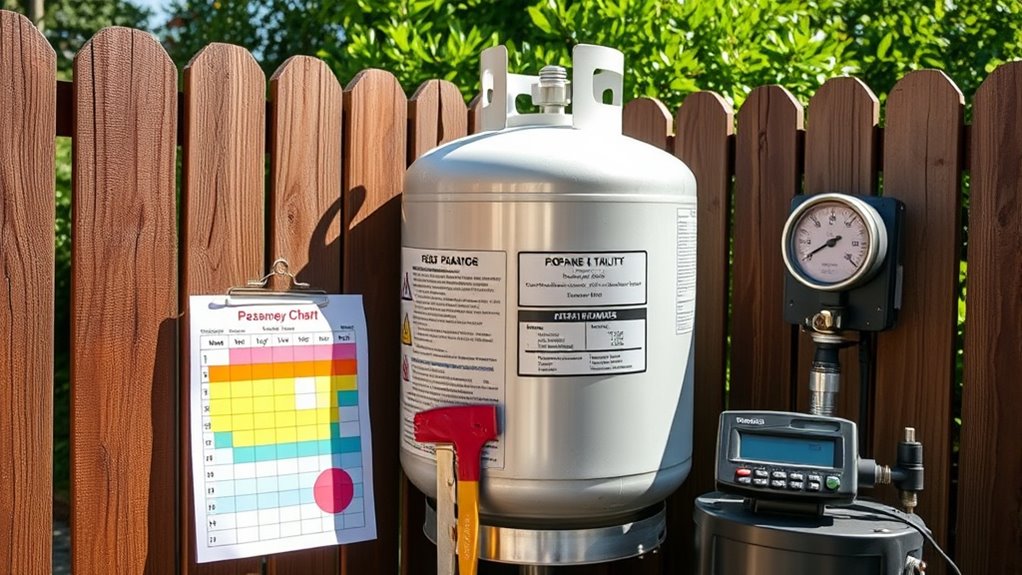
You need to ensure how seasonal changes can increase your propane needs during colder months. Your usage patterns might shift, especially if you rely on backup power more frequently at certain times of the year. Planning for these variations ensures your tank can handle peak demands without running out.
Seasonal Demand Fluctuations
Seasonal demand fluctuations markedly impact propane needs for generators, especially in regions with distinct temperature changes throughout the year. During colder months, your generator consumes more fuel due to increased heating demands and lower outdoor temperatures. To manage this effectively: 1. Monitor your generator’s fuel consumption rates regularly. 2. Plan for increased fuel storage before winter to ensure continuous power. 3. Schedule routine generator maintenance to keep it running efficiently during peak times. 4. Prioritize fuel storage safety by securing tanks from extreme weather and potential leaks. Additionally, understanding projector technology can help you choose the right equipment to optimize your setup during different seasons. Adjusting your propane tank size for seasonal changes helps prevent shortages and ensures reliable backup power. Proper planning also supports generator maintenance and reduces risks associated with fuel storage safety, keeping your system ready year-round.
Usage Pattern Changes
Changes in your propane usage patterns can considerably affect your generator’s fuel needs over time. During peak seasons, increased heating or cooling demands may cause higher fuel consumption, impacting your tank’s capacity. Conversely, milder months reduce usage, extending your tank’s lifespan. Monitoring these variations helps maintain ideal fuel efficiency, ensuring you don’t run out unexpectedly. Additionally, the tank material plays a vital role; durable materials like steel or composite resist seasonal wear and corrosion, preserving fuel quality. AI-powered data analytics can assist in predicting these seasonal fluctuations, enabling more precise adjustments. Adjusting your tank size or usage schedule based on seasonal and usage fluctuations can prevent overflows or shortages. Regularly tracking your consumption patterns enables you to optimize fuel efficiency, reducing costs and avoiding the inconvenience of running out during critical times.
Backup Power Needs
Accounting for seasonal and usage variations is essential when determining your backup power needs. Your energy consumption can spike during extreme weather, increasing propane use. To plan effectively, consider these factors:
- How much your generator consumes based on fuel efficiency, especially during peak seasons.
- The duration you’ll need backup power, which affects tank size requirements.
- Seasonal temperature changes that influence propane vaporization and tank material performance.
- Your typical usage patterns, including unexpected surges in power demand.
- The potential impact of AI-driven analytics on predicting and managing your fuel needs more accurately.
Choosing tank materials suited for temperature fluctuations ensures safety and efficiency. By understanding these variables, you can avoid running out of fuel during critical moments and select the right tank size to meet fluctuating backup power needs reliably.
Follow Local Regulations and Safety Guidelines
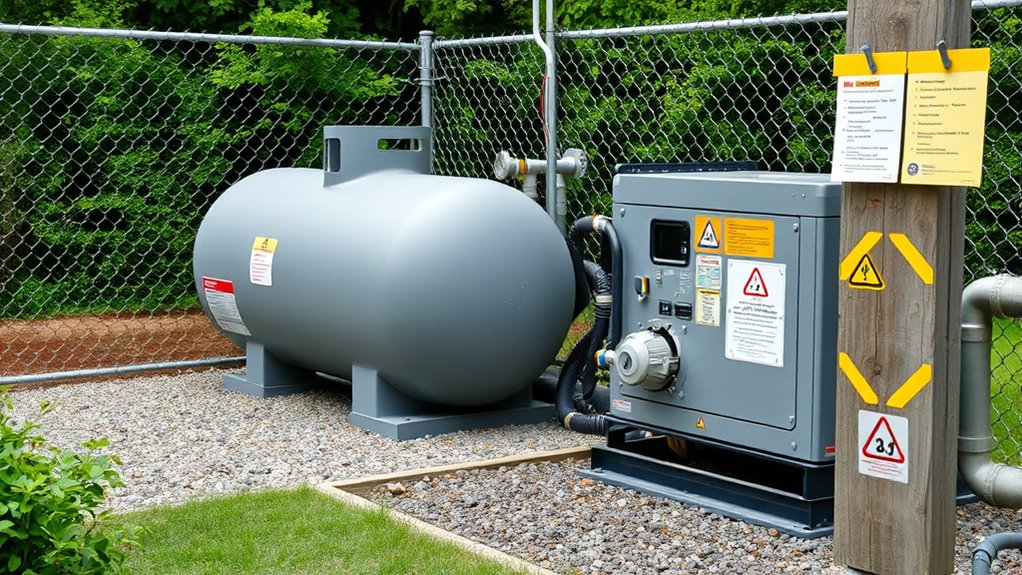
To guarantee safe and compliant operation, you must follow all local regulations and safety guidelines when selecting and installing a propane tank for your generator. These rules often specify tank size limits, placement distances, and safety zones to prevent hazards. Proper tank maintenance is essential for propane safety; regular inspections can detect leaks or corrosion that pose risks. Adhering to regulations ensures your setup meets code requirements and minimizes legal liabilities. Always check with local authorities before installation, and work with licensed professionals familiar with regional standards. Following these guidelines protects you, your property, and your loved ones. Prioritizing safety and compliance helps avoid costly violations and ensures your generator runs reliably when you need it most.
Incorporate Buffer Space for Unexpected Fuel Use
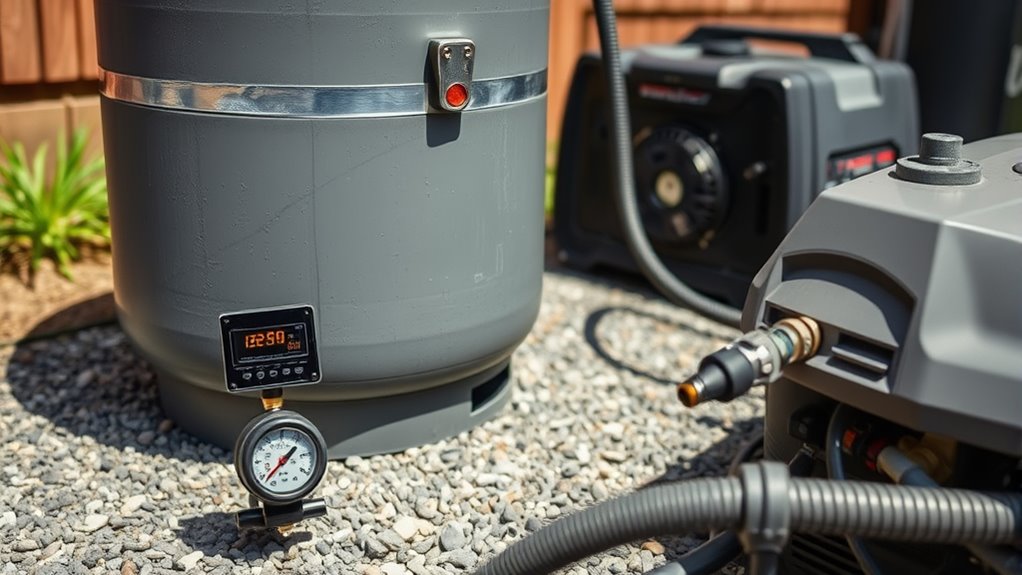
Including a buffer space for unexpected fuel use is essential to guarantee your generator remains operational during emergencies or longer-than-anticipated outages. This extra capacity accounts for variations in fuel consumption, especially if your generator’s fuel efficiency fluctuates under different loads. To ensure maximum storage safety and avoid running out of fuel, consider these steps:
- Add at least 10-15% more capacity beyond your calculated needs.
- Regularly monitor fuel levels to prevent overfilling or leaks.
- Choose high-quality, certified tanks that meet safety standards.
- Plan for periodic inspections to detect any potential safety issues early.
Consult Professional Recommendations and Industry Standards
Consulting professional recommendations and industry standards guarantees your propane tank is appropriately sized for generator use. Experts consider tank compatibility with your specific generator model and make certain it meets safety and efficiency requirements. Following installation guidelines is essential to avoid issues like leaks or insufficient fuel supply. Professionals can assess your property’s space, ventilation needs, and local codes to recommend the right tank size. They also ensure your setup adheres to industry standards, reducing safety risks and ensuring reliable operation during outages. Relying on expert advice helps you avoid common mistakes, such as underestimating fuel needs or installing incompatible tanks. Ultimately, consulting pros ensures your propane tank is correctly matched to your generator, providing peace of mind and long-term performance.
Frequently Asked Questions
How Often Should I Monitor My Propane Tank Levels?
You should monitor your propane tank levels at least once a month to guarantee proper tank maintenance and maintain fuel efficiency. Regular checks help you catch leaks, gauge fuel consumption, and prevent unexpected outages. If you notice your tank’s getting low, refill it promptly to keep your standby generator running smoothly. Consistent monitoring also extends the life of your tank and ensures reliable power when you need it most.
What Are the Signs of an Under-Sized Propane Tank?
A word to the wise: don’t wait till it’s too late. Signs of an under-sized propane tank include frequent refills, decreased pressure, or delayed generator startup. You might also notice tank corrosion or smell a leak, which signals the tank isn’t meeting your needs. If you spot these issues, it’s time to upgrade your tank size to prevent interruptions and guarantee safety.
Can Multiple Tanks Be Connected for Larger Capacity?
Yes, you can connect multiple tanks for capacity expansion. Just guarantee proper tank connection techniques, such as using appropriate piping and valves, to safely combine their capacity. This setup allows you to increase total propane storage, supporting larger or more frequent generator use. Always consult a professional to verify that your system’s design meets safety standards and local codes, preventing issues like uneven pressure or leaks.
How Do Weather Conditions Affect Propane Tank Performance?
Weather impact and temperature fluctuations can seriously mess with your propane tank’s performance. When it’s scorching hot, pressure builds up, risking leaks or explosions. Cold weather makes the propane less efficient, reducing power availability. You might think your tank’s invincible, but extreme weather conditions can compromise safety and capacity. So, don’t ignore weather impact; plan for seasonal changes to keep your generator running smoothly and safely.
What Safety Features Should I Consider for Propane Tank Installation?
You should prioritize safety features like corrosion-resistant materials to prevent tank deterioration, especially in harsh weather. Guarantee proper ventilation to handle vapor pressure safely and avoid buildup. Installing pressure relief valves is essential to prevent over-pressurization, and regular inspections help detect early signs of tank corrosion or vapor pressure issues. These measures protect you from leaks, explosions, and costly repairs, keeping your propane system safe and reliable.
Conclusion
By mastering these nine rules, you’ll become a propane tank sizing expert, capable of powering your entire home during the apocalypse. Imagine a tank so perfectly sized that it could fuel your generator through a hurricane, an earthquake, and a blackout, all without a single drop of fuel squandered. Follow these guidelines, and you’ll ensure your standby generator is an unstoppable fortress of power—ready to conquer any disaster Mother Nature throws your way.