
To quickly size a propane tank for your standby generator, start by determining your generator’s hourly fuel use, then multiply that by your expected runtime plus a safety margin—typically 25-30%. Match this total capacity to a tank size that can handle extended outages without frequent refueling. Always check local regulations and installation guidelines to guarantee safety and compliance. Keep these key points in mind to select the best tank size; more details help fine-tune your choice.
Key Takeaways
- Calculate generator’s hourly propane consumption and multiply by expected outage duration; add safety margin for reliability.
- Match tank capacity to the total fuel needs, including safety buffer, for continuous, long-term operation.
- Check local regulations for maximum tank sizes and proper installation requirements.
- Ensure proper tank placement for safety, accessibility, and compliance with safety standards.
- Balance upfront costs, space, and safety considerations to select an optimal tank size for your generator needs.
How to Choose the Right Propane Tank Size
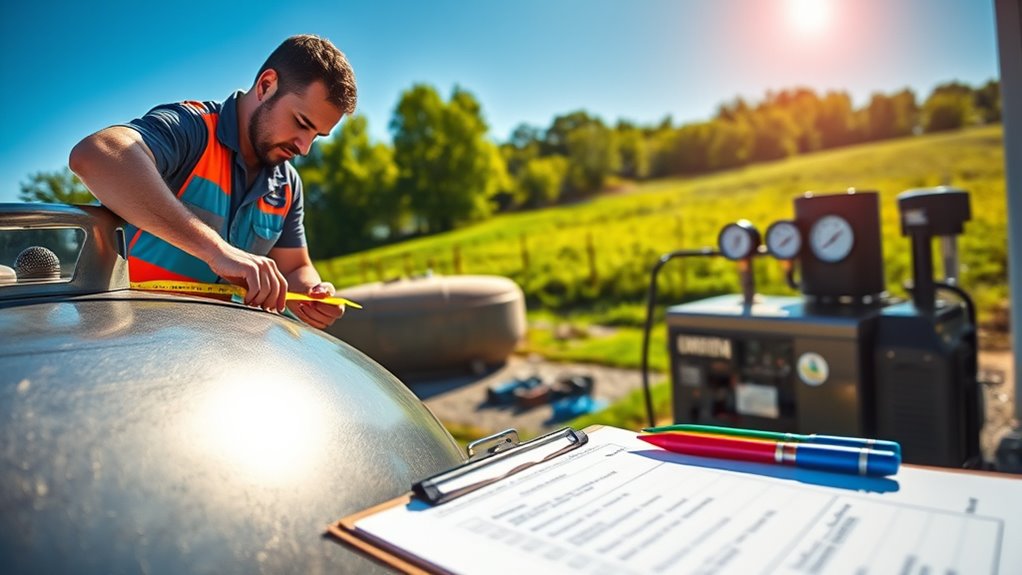
Choosing the right propane tank size for your standby generator is essential to guarantee reliable power during outages. When selecting a tank, you need to consider your generator’s fuel consumption and tank capacity to make sure it can run long enough without interruption. Fuel consumption refers to how much propane your generator uses per hour, which directly impacts how much fuel you’ll need to keep it running during a power outage. Knowing this helps you determine the appropriate tank size, so you don’t run out of fuel unexpectedly. If your generator consumes 1.5 gallons of propane per hour, and you want it to operate for at least 24 hours, you’ll need a tank with a capacity of at least 36 gallons. This guarantees continuous power and prevents frequent refueling.
Tank capacity is the maximum amount of propane a tank can hold, and it’s essential to match this with your generator’s needs. Larger tanks provide longer run times, reducing the need for frequent refills, which is especially important during extended outages or in situations where resupply might be delayed. However, bigger tanks also come with higher upfront costs and take up more space, so you should balance capacity with practicality. To make an informed choice, you should estimate your typical power outage duration and consider your generator’s fuel consumption rate. If outages are rare but tend to last multiple days, investing in a larger tank makes more sense. Conversely, for shorter outages, a smaller tank might suffice.
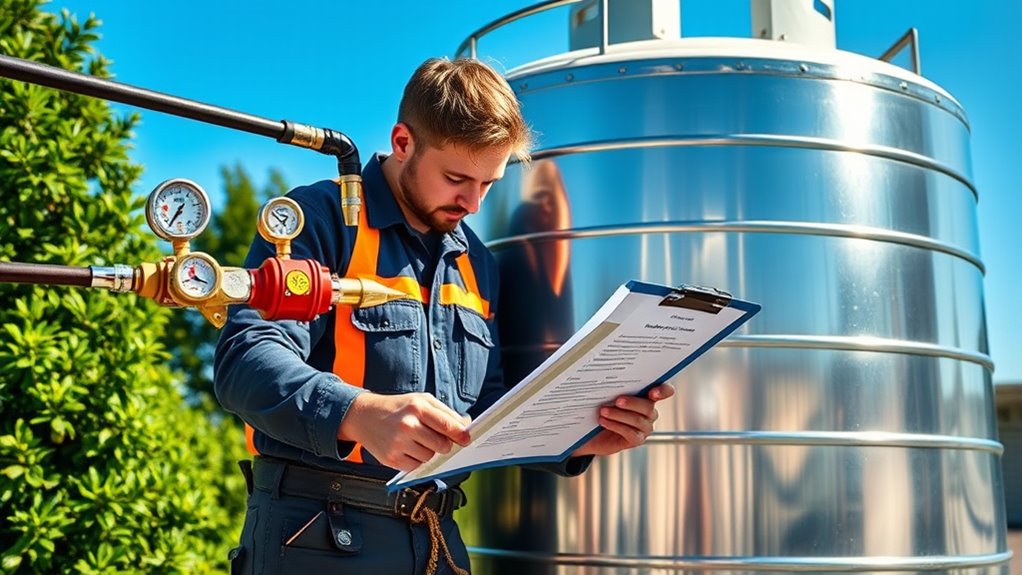
It’s also wise to account for safety margins when sizing your propane tank. Always add extra capacity beyond your estimated fuel needs to allow for unexpected prolongations of outages or increased power demands. This buffer helps prevent running out of fuel unexpectedly, which could leave your home vulnerable. Additionally, check local regulations and safety standards for propane tanks, as they may restrict tank sizes or installation procedures. Proper tank placement and regular maintenance are key to safe and efficient operation, so consider these factors in your planning.
Furthermore, choosing a tank with good insulation can help maintain fuel quality and reduce vaporization loss over time. Ultimately, balancing fuel consumption, tank capacity, safety, and cost will guide you toward the optimal propane tank size for your standby generator. Doing your homework now ensures you’re prepared for any power outage, keeping your home and loved ones safe and comfortable. Remember, the right tank size isn’t just about filling a space; it’s about ensuring peace of mind and continuous power when you need it most.
Frequently Asked Questions
How Often Should Propane Tanks Be Inspected or Maintained?
You should inspect your propane tank at least once a year and perform regular maintenance as recommended by the manufacturer. An inspection schedule guarantees safety and efficiency, so check for leaks, rust, or damage before each use. Follow maintenance tips like keeping the area clear and verifying connections. Regular inspections help prevent potential hazards, extend tank lifespan, and ensure your standby generator operates reliably when needed most.
Can I Upgrade My Propane Tank Size Later?
Like changing gears on a journey, upgrading your propane tank size is definitely possible. You can plan for a tank replacement or capacity upgrade later, but keep in mind it requires coordination with your propane supplier and possibly some adjustments to your system. Make certain your current setup can handle the new capacity, and consult professionals to make the transition smooth. Upgrading gives you more capacity, just like turning a simple ride into an adventure.
Are There Safety Concerns With Larger Propane Tanks?
Yes, larger propane tanks can pose safety concerns, but proper tank safety measures and risk mitigation strategies considerably reduce these risks. Make sure your tank is installed by professionals, follows local codes, and is regularly inspected. Proper ventilation and clear safety zones are essential. By adhering to safety standards and consulting experts, you can safely operate larger tanks while minimizing potential hazards.
What Are the Local Regulations for Propane Tank Installation?
Oh, the thrill of maneuvering local regulations! You need installation permits before placing a propane tank, making sure it meets safety zone requirements. Ignoring these rules can lead to hefty fines or dangerous situations. Check with your local authorities or fire department to understand specific zoning distances and permit processes. Don’t skip this step; it’s the key to keeping your setup safe, legal, and hassle-free.
How Does Weather Affect Propane Tank Performance?
Weather affects your propane tank performance through temperature fluctuations and wind impact. When temperatures drop, your tank’s pressure decreases, potentially reducing efficiency, while high temperatures increase pressure, risking safety issues. Wind impact can cause temperature variations around the tank, influencing pressure levels and condensation. To maintain ideal performance, monitor weather conditions, insulate tanks in cold climates, and ensure proper ventilation to minimize wind effects.
Conclusion
Choosing the right propane tank size guarantees your standby generator runs smoothly when you need it most. Imagine a homeowner who underestimated their tank size and faced a power outage, unable to run essential appliances. Don’t let that happen to you—proper sizing provides peace of mind and reliable backup power. Take a few minutes now to select the right tank; it’s a quick win that safeguards your home and loved ones during emergencies.