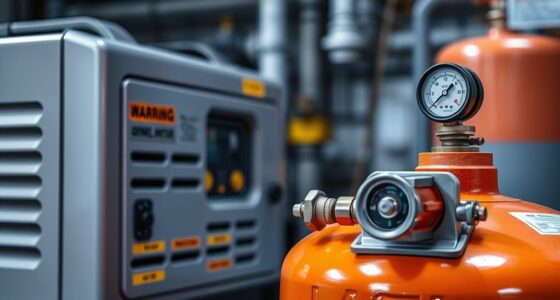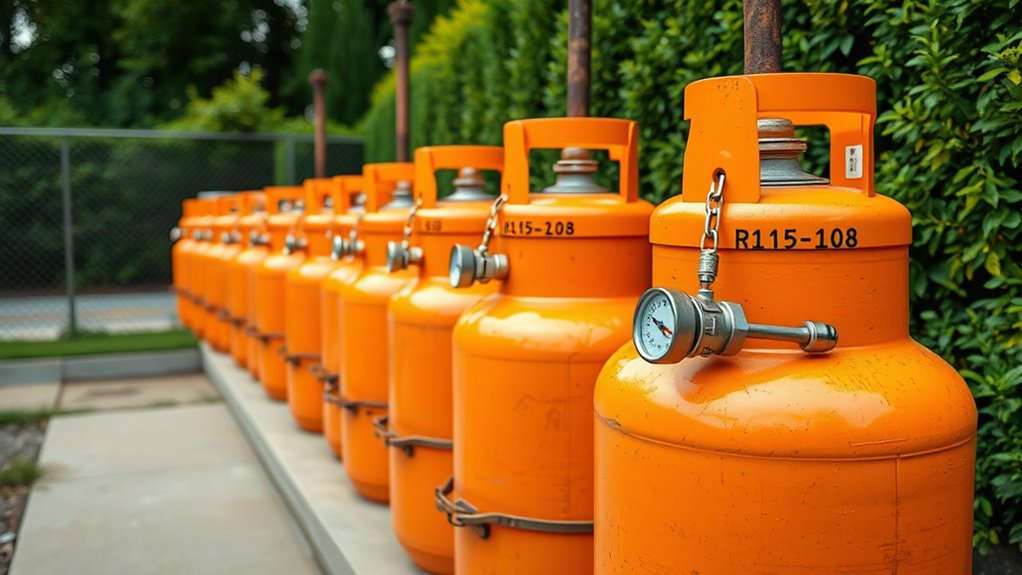

To store propane safely for your standby generator, keep tanks outdoors in well-ventilated areas away from heat, open flames, and electrical sources. Always place them on stable, level surfaces and inspect regularly for leaks, corrosion, or damage. Avoid overfilling and handle tanks carefully during filling and installation. Proper ventilation and adherence to safety regulations are essential for preventing accidents. Continue to explore best practices to guarantee your setup remains safe and reliable.
Key Takeaways
- Store propane tanks outdoors in well-ventilated, upright positions away from ignition sources and heat.
- Keep tanks on stable, level surfaces to prevent tipping and damage.
- Regularly inspect tanks and fittings for leaks, corrosion, or damage.
- Ensure proper ventilation during filling and storage to prevent vapor buildup.
- Post safety and emergency contact information near storage areas for quick access.
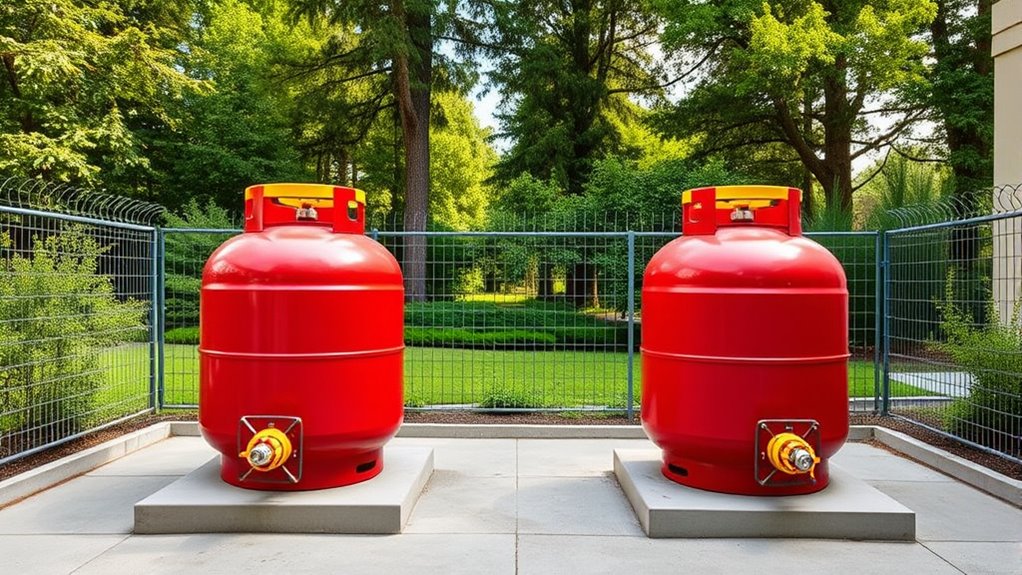
Storing propane safely is crucial to prevent accidents and guarantee it remains a reliable energy source. When you’re managing a standby generator that relies on propane, proper storage practices become essential. One of the key factors is ensuring adequate tank ventilation. A well-ventilated storage area helps prevent the buildup of propane vapors, which are heavier than air and can accumulate in low areas if not properly circulated. You should place the propane tank outdoors or in a well-ventilated enclosure, avoiding confined spaces that can trap vapors. Regularly inspect the area for signs of leaks or corrosion, and keep the tank upright to minimize the risk of leaks. Ventilation not only reduces the chance of vapor accumulation but also helps dissipate any small leaks before they become hazardous. Proper storage conditions are also important for maintaining the integrity of the tank and preventing deterioration over time.
Equally important is preparing for emergencies. Having clear, well-practiced emergency procedures can make a critical difference in preventing injuries or property damage if something goes wrong. Make sure you know how to shut off the propane supply quickly in case of a leak or fire. Keep a fire extinguisher nearby, rated for flammable liquids and gases, and ensure everyone involved knows how to use it effectively. Post emergency contact information and evacuation plans prominently near the storage area. Regularly check your propane tanks and associated fittings for signs of damage, leaks, or corrosion, and address issues immediately. Knowing how to recognize the smell of propane—often described as rotten eggs—can alert you to leaks early. If you detect a leak, evacuate the area immediately and call emergency services rather than attempting to fix the problem yourself. Remember, propane is highly flammable, and safety should always be your top priority.
Handling propane with care also involves understanding the importance of proper tank placement. Keep your tank away from open flames, heat sources, or electrical equipment that might spark. Position it on a stable, level surface to prevent tipping or accidental damage. When filling or inspecting the tank, do so in a well-ventilated area, and avoid overfilling to allow for expansion of the gas. Always follow manufacturer guidelines and local codes to ensure compliance and safety. Additionally, understanding safety regulations related to propane storage can help you stay compliant and prevent hazards.
Frequently Asked Questions
How Often Should Propane Tanks Be Inspected for Leaks?
You should inspect your propane tank for leaks at least once a year. During the inspection, check the tank labeling for any signs of damage or corrosion, and perform leak detection tests around the connections and valves. If you notice a hissing sound, smell gas, or see bubbles during a soap solution test, immediately shut off the supply and contact a professional. Regular inspections guarantee safe operation and prevent potential hazards.
Can I Store Propane Tanks Indoors Safely?
Storing propane tanks indoors isn’t recommended, as it increases the risk of accidents. According to safety regulations, you should always store propane outdoors in a well-ventilated area. Did you know that propane leaks can accumulate quickly in enclosed spaces, creating hazardous conditions? For your safety, keep tanks away from heat sources and open flames, and always follow local safety regulations to prevent dangerous incidents.
What Are the Signs of Propane Tank Corrosion?
You should watch for signs of corrosion on your propane tank, like rust, discoloration, or pitting on the surface. During regular tank maintenance, check for leaks, dampness, or crusty buildup, which may indicate deterioration. Prevent corrosion by keeping the tank clean and protected from moisture, and always inspect it before use. Address any corrosion issues promptly to ensure safe operation and extend your tank’s lifespan.
Is It Safe to Transport Propane Tanks in a Vehicle Trunk?
It’s generally safe to transport propane tanks in your vehicle trunk if you follow proper vehicle safety and secure transportation practices. Always guarantee the tank is upright, tightly sealed, and secured with straps to prevent movement. Keep the tank away from heat sources, and avoid smoking nearby. Ventilate the area around the tank, and never leave it in a hot vehicle for extended periods. Properly secured, your propane tank can be transported safely.
How Do Weather Conditions Affect Propane Storage Safety?
Weather conditions greatly impact propane storage safety. Temperature fluctuations can cause pressure increases inside the tank, so you should regularly check for leaks or bulges. Extreme heat risks propane expansion, while cold temperatures reduce vapor pressure. Make certain proper ventilation requirements are met, especially in hot weather, to prevent gas buildup. Always store propane in a well-ventilated area, away from direct sunlight and sources of heat, to maintain safe conditions.
Conclusion
Remember to store your propane in a well-ventilated, upright container away from heat sources, sparks, and open flames. Regularly check for leaks, keep your tanks secured, and follow all safety guidelines. By staying vigilant, staying cautious, and staying informed, you safeguard yourself, your property, and your loved ones. Safe storage isn’t just a rule—it’s a responsibility. Practice safety, prioritize prevention, and guarantee your standby generator always has reliable, secure fuel.