
To size your propane tank for a standby generator, first calculate your generator’s fuel needs based on its wattage and expected outage duration. Follow relevant safety standards and local codes to determine the right capacity, considering factors like installation location and environmental conditions. Avoid common pitfalls such as overestimating capacity or ignoring permit requirements. Working with experienced professionals guarantees compliance and safety. Keep exploring for detailed guidance to confidently select the best tank for your setup.

Get backup power and energy gear delivered free with Prime
- Fast, free delivery on millions of items
- Prime Video, Amazon Music and more included
- Member-only deals all year
Key Takeaways
- Calculate generator fuel consumption based on wattage and load to determine the required tank capacity.
- Follow NFPA 58 and local codes for installation, setback distances, venting, and permit requirements.
- Ensure tank size matches estimated outage duration and operational demands without exceeding regulations.
- Select certified installers familiar with safety standards, proper placement, and material requirements.
- Regularly inspect and maintain the tank to ensure ongoing compliance and safety over its lifespan.
Understanding the Role of Propane Tanks in Backup Power Systems
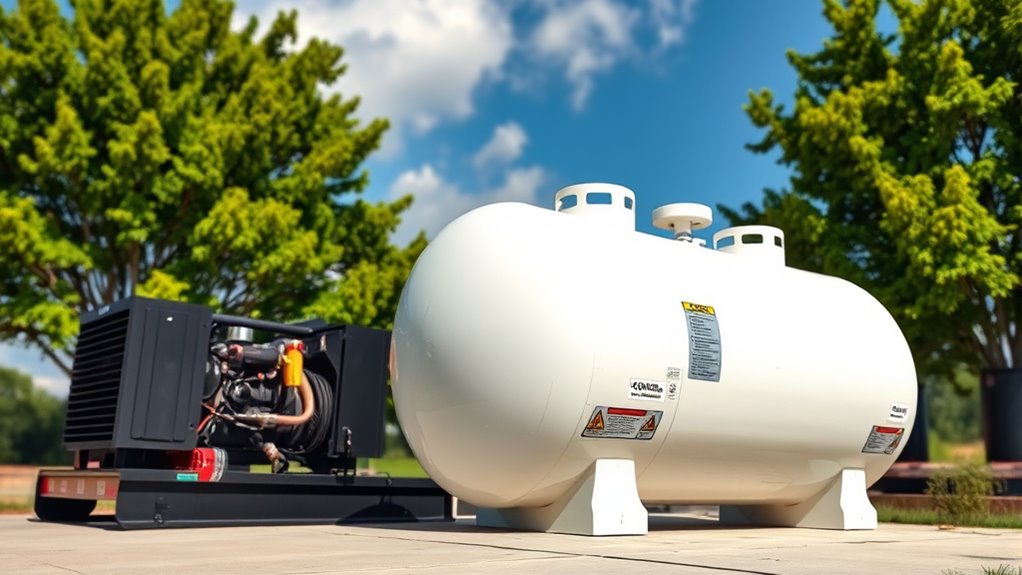
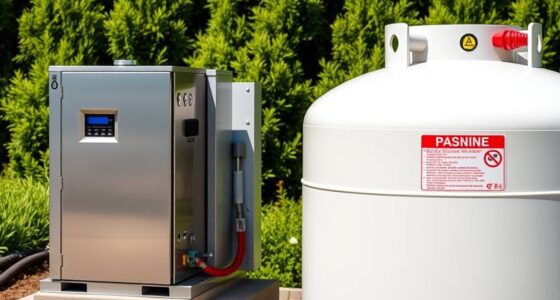
Have you ever wondered how backup power systems stay operational during an outage? Propane tanks play a crucial role by storing fuel securely and reliably. Ensuring propane safety is vital; a well-designed tank prevents leaks, corrosion, and accidents, keeping everyone safe. Tank durability is equally important, as it withstands harsh weather and long-term use without deterioration. A durable propane tank maintains its integrity, providing a consistent fuel supply to your generator when the grid fails. Properly sized tanks also prevent interruptions by holding enough fuel for extended outages. By understanding the importance of propane safety and tank durability, you can ensure your backup power system remains dependable, ready to deliver power whenever you need it most. Regular maintenance and adherence to installation standards help ensure your system operates safely and efficiently.
Determining Your Generator’s Fuel Requirements
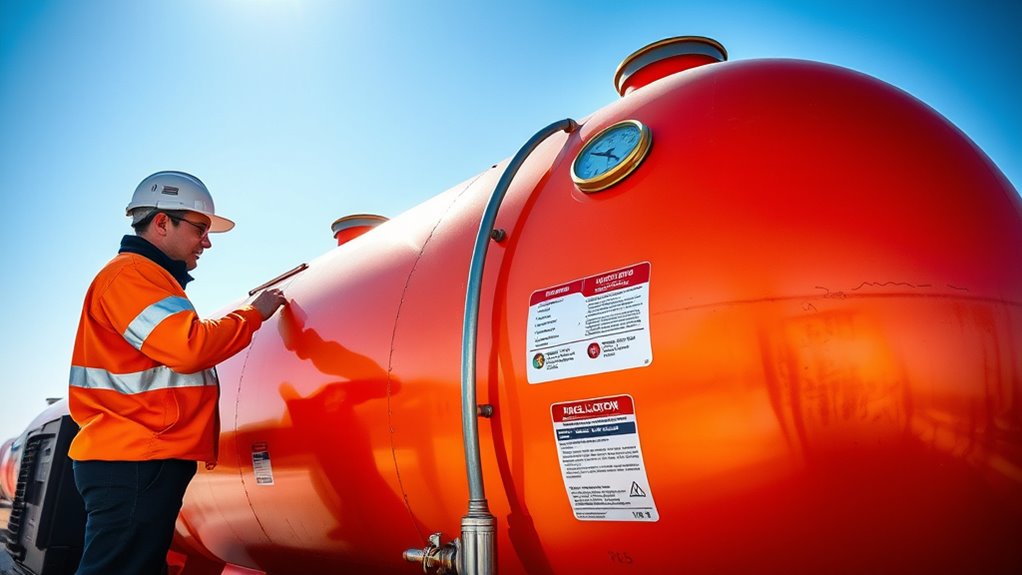
Once you’ve understood the significance of propane safety and tank durability, the next step is figuring out how much fuel your generator will need during an outage. Start by calculating your generator’s fuel consumption rate based on its wattage and the load you’ll expect during power outages. Determine the fuel type—usually propane—since it’s cleaner and more reliable. Consider tank materials, as they influence fuel capacity and safety; steel tanks are durable, while composite options may offer corrosion resistance. Knowing your generator’s run time requirements helps you estimate the necessary fuel volume. Accurate calculations guarantee your propane tank can supply enough fuel without over-sizing, saving costs and maintaining safety standards. Additionally, understanding storage safety considerations is essential for proper tank size selection and safe operation. This step is vital for effective tank sizing and reliable backup power.
Key Codes and Standards Governing Propane Tank Sizing
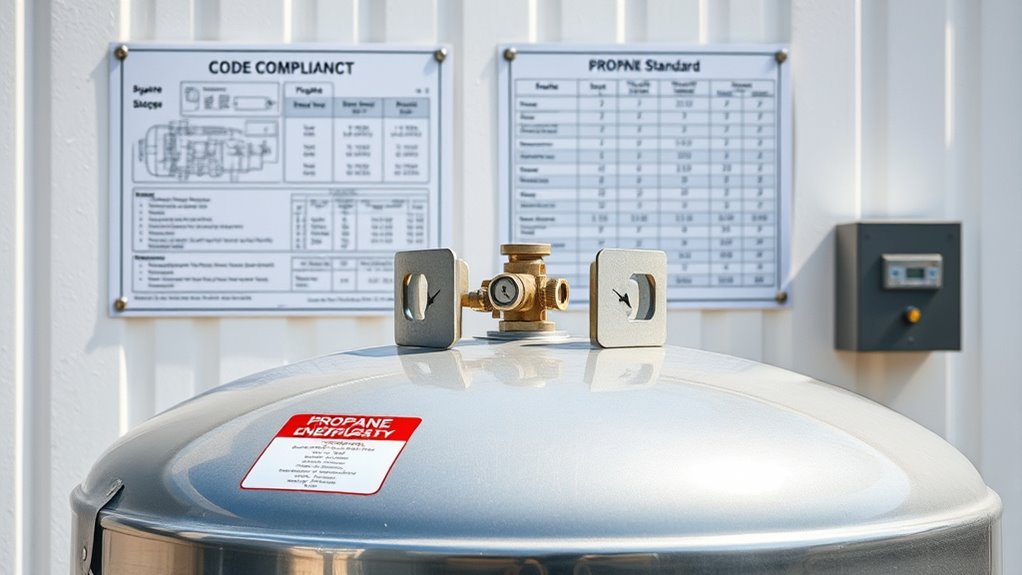
Understanding the key codes and standards for propane tank sizing is essential to guarantee safety and compliance. You need to follow NFPA 58 regulations and any local code requirements that apply to your area. These guidelines help you select the right tank size and prevent potential hazards.
NFPA 58 Regulations
Are you aware of how NFPA 58 sets the standards for propane tank sizing in standby generator systems? This code emphasizes propane safety and proper tank maintenance to prevent hazards. NFPA 58 specifies tank capacities, installation distances, and venting requirements, ensuring safe operation. It also mandates regular inspections and maintenance to avoid leaks and failures. To help you understand, here’s a quick overview:
| Aspect | Requirement | Purpose |
|---|---|---|
| Tank Capacity | Limited based on load and usage | Prevent overfilling |
| Installation Distance | Set distances from structures and sources | Minimize fire risk |
| Venting | Proper venting for pressure relief | Ensure safe pressure levels |
| Maintenance | Regular inspections and testing | Maintain propane safety |
Following NFPA 58 ensures safe, compliant tank sizing and ongoing tank health. Proper installation is also critical for maintaining safety standards and ensuring compliance with regulations.
Local Code Requirements
Have you checked which local codes and standards apply to propane tank sizing in your area? Local regulations often specify requirements for fuel storage, including maximum tank sizes, setback distances, and installation procedures. These codes ensure safe tank maintenance and prevent hazards related to propane use. You must understand how local authorities interpret national standards like NFPA 58 and adapt them to your location. Failure to comply can lead to penalties or unsafe conditions. Be sure to verify permit requirements and inspection protocols before installation. Local codes might also outline restrictions on tank placement, anchoring, or venting. Staying informed helps you select the right tank size and ensures your setup meets all safety and legal standards for reliable fuel storage and generator operation. Additionally, consulting with local authorities can provide clarity on specific regulatory requirements that impact your propane tank installation.
Factors Influencing Proper Tank Capacity Selection
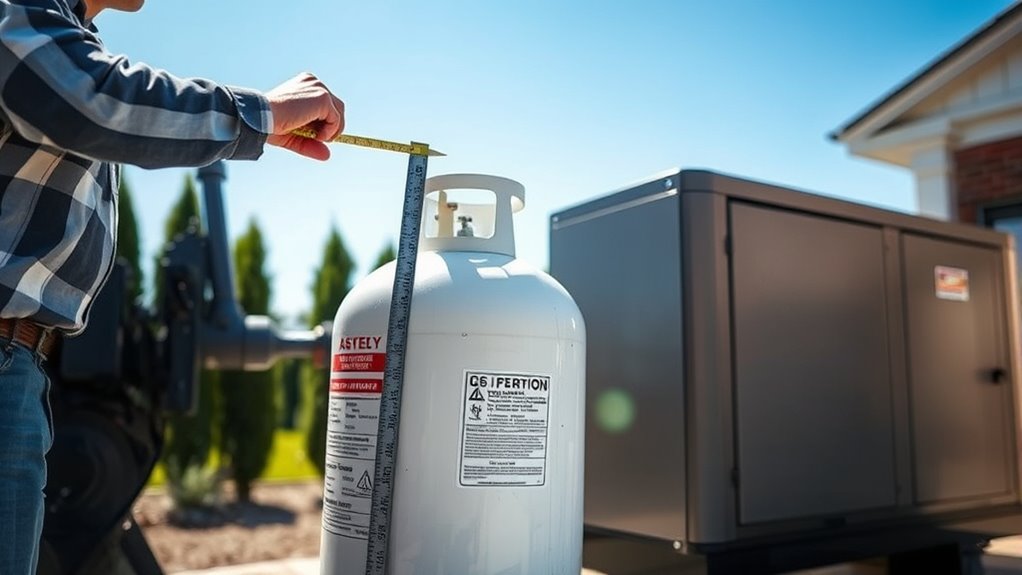
Your generator’s fuel needs can vary based on how much power you use and how long you want it to run during an outage. Local regulations may also influence the tank size requirements you need to meet. Considering these factors guarantees you select a capacity that’s both efficient and compliant. Additionally, understanding bedroom design principles can help ensure your setup aligns with safety and space considerations.
Fuel Consumption Variability
Fuel consumption rates for standby generators can vary considerably based on several factors, making it essential to accurately estimate your tank size. Variability in fuel consumption stems from changes in demand fluctuations and differences in fuel efficiency. When demand spikes, your generator consumes more fuel, reducing run time on a given tank. Conversely, high fuel efficiency means less fuel is used during each operation, extending your capacity. To understand these influences, consider:
- Load size and power demand fluctuations
- Generator age and maintenance condition
- Efficiency ratings and technological features
- Operating environment and temperature impacts
Recognizing these factors helps you better predict fuel needs, ensuring your propane tank is sufficiently sized for reliable, long-term operation without frequent refills.
Local Regulatory Requirements
What local regulations apply to propane tank sizing for standby generators? Regulations vary by location, affecting tank durability and safety standards. Local codes often specify maximum tank size, required clearances, venting, and fire safety measures. These rules guarantee propane purity is maintained and tanks withstand environmental conditions. For example, some areas restrict tank capacity based on property size or proximity to structures. Understanding these regulations helps you select the proper capacity that complies and ensures safe operation. Here’s a quick overview:
| Regulation Aspect | Description |
|---|---|
| Capacity Limits | Maximum allowed tank size in gallons |
| Setback Distance | Minimum distance from buildings or property lines |
| Venting & Access | Requirements for proper ventilation and maintenance |
| Fire Safety Standards | Fire-resistant construction and safety measures |
| Propane Purity & Durability | Ensuring tank materials withstand environmental factors |
Additionally, local inspection requirements may influence tank installation and ongoing maintenance to meet safety compliance.
Safety Considerations and Best Practices for Tank Placement
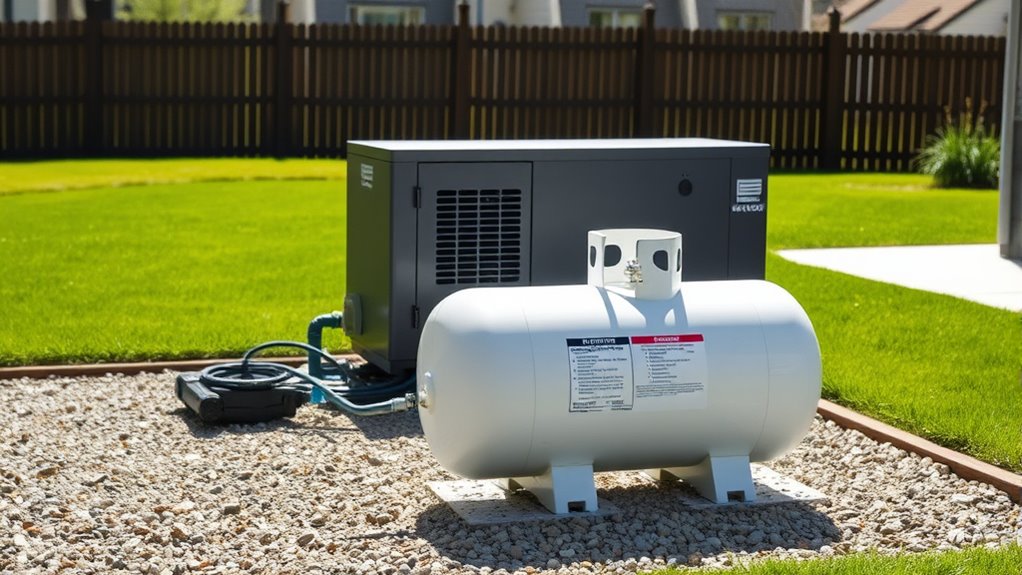
Ensuring proper safety measures and strategic tank placement is crucial when installing propane tanks for standby generators. Proper tank placement minimizes risks and complies with safety considerations, protecting both your property and personnel. When planning, keep these in mind:
- Maintain a safe distance from ignition sources and electrical equipment
- Avoid placing the tank in flood-prone or low-lying areas
- Guarantee proper ventilation and accessibility for inspection and maintenance
- Keep the tank away from windows, doors, or areas where leaks could pose hazards
- Establish clear boundaries around the tank area to promote respect and prevent accidental intrusion or disturbance.
Calculating Propane Volume and Pressure Requirements
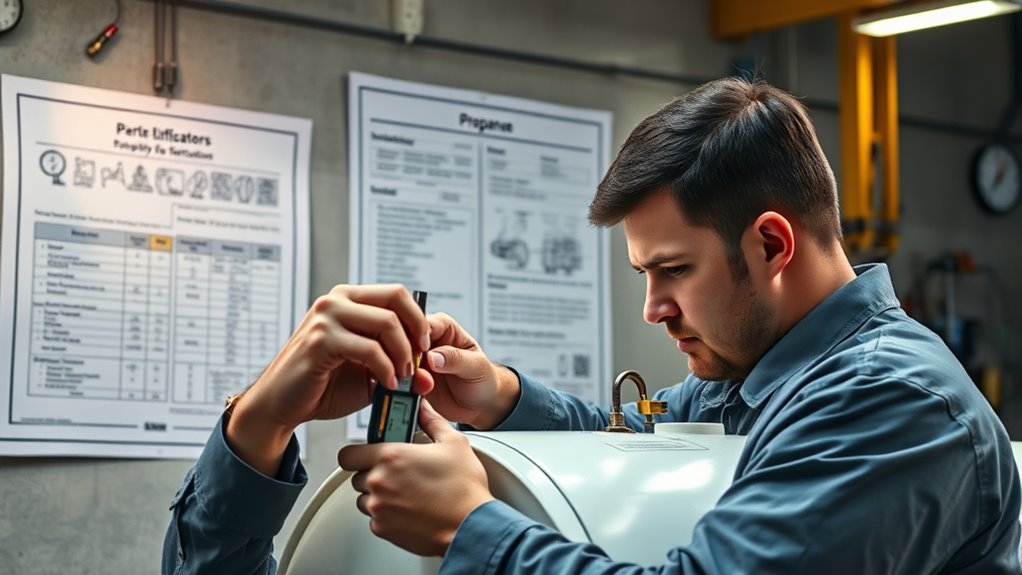
Accurately calculating the propane volume and pressure requirements is essential to guarantee your standby generator operates smoothly and safely. Start by determining the generator’s fuel consumption rate and total runtime to establish the needed propane volume. Consider tank insulation, as it affects how well the propane maintains its pressure and temperature, especially in extreme weather. Proper venting requirements are critical for safety and to prevent pressure buildup, so ensure your tank design includes adequate venting to allow gases to escape safely. Use these calculations to select a tank size that meets your generator’s demands without risking overfill or pressure issues. Additionally, understanding Gold IRA options and the associated regulations can help you plan for long-term reliability and security of your energy storage solutions. Precise volume and pressure assessments help ensure reliable operation while adhering to safety standards.
Compliance With Local, State, and National Regulations
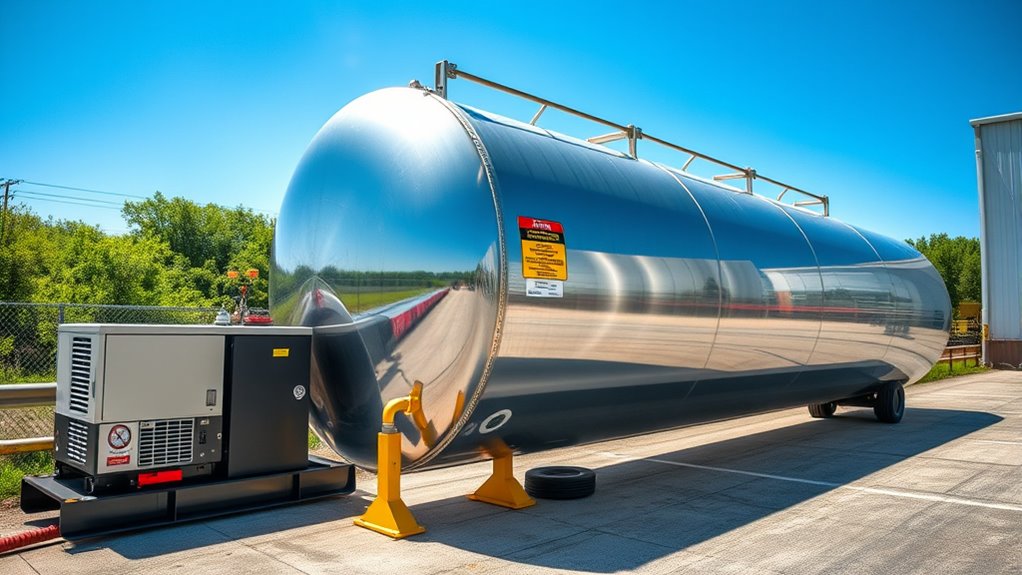
Compliance with local, state, and national regulations is essential when sizing and installing a propane tank for your standby generator. You must guarantee your setup meets all requirements to avoid fines or safety hazards. Regulations often specify approved tank materials, such as steel or composite, to ensure durability and safety. Additionally, you’ll need to obtain installation permits before proceeding, which require detailed plans and proper documentation.
Ensuring compliance with regulations is vital for safe, legal propane tank installation.
Consider these key points:
- Verify local codes for tank material restrictions
- Obtain necessary installation permits
- Ensure compliance with distance and setback requirements
- Follow national standards like NFPA 37 for safety
- Consult industry standards to align your installation with best practices.
Staying compliant guarantees your system’s safety, legality, and smooth operation.
Common Mistakes to Avoid When Sizing Propane Tanks
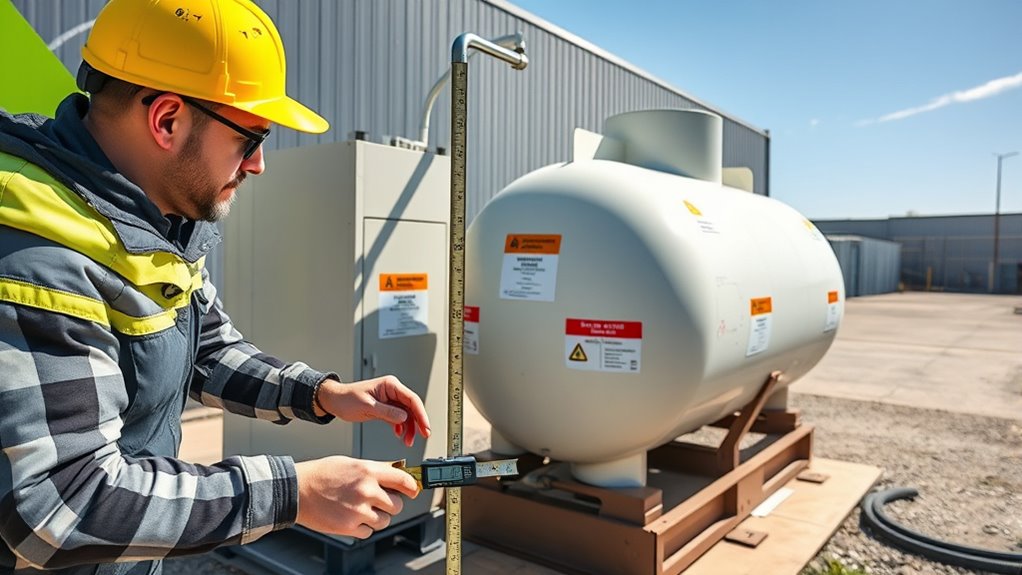
One common mistake is overestimating your tank capacity, which can lead to unnecessary costs and space issues. Ignoring local regulations can also cause delays or legal problems down the line. To guarantee proper sizing, you need to be aware of these pitfalls and plan accordingly. Recognizing relationship patterns can help in making more informed decisions about your setup.
Overestimating Tank Capacity
Have you ever considered how overestimating your propane tank size can lead to unnecessary expenses and logistical challenges? Choosing a tank larger than needed might seem like a safe bet, but it can cause issues such as increased costs, complex installation, and maintenance hurdles. When sizing, pay attention to factors like tank material, which affects durability and safety, and installation location, impacting accessibility and safety regulations. Overestimating can result in:
- Higher upfront costs for a larger tank
- Increased space requirements and logistical planning
- More difficult installation processes
- Potential code compliance issues due to oversized tanks
Avoid these pitfalls by accurately evaluating your generator’s fuel needs, considering your site’s constraints, and selecting a tank size that balances capacity with practicality. Proper sizing ensures efficiency without unnecessary complications.
Ignoring Local Regulations
Did you know that ignoring local regulations can cause serious issues when sizing your propane tank? Regulations often specify requirements for tank material and installation location, which are vital for safety and compliance. Choosing the wrong tank material, like using a standard tank in an area that requires corrosion-resistant options, can lead to code violations. Similarly, placing your tank in an inappropriate location—such as too close to property lines or windows—may violate setback rules. Failing to adhere to these regulations not only risks fines but can jeopardize safety and insurance coverage. Always check local codes before selecting your tank material and deciding on an installation location. Doing so ensures your system meets all legal standards, avoiding costly mistakes and future complications.
Working With Professionals: Choosing the Right Installer and Inspector
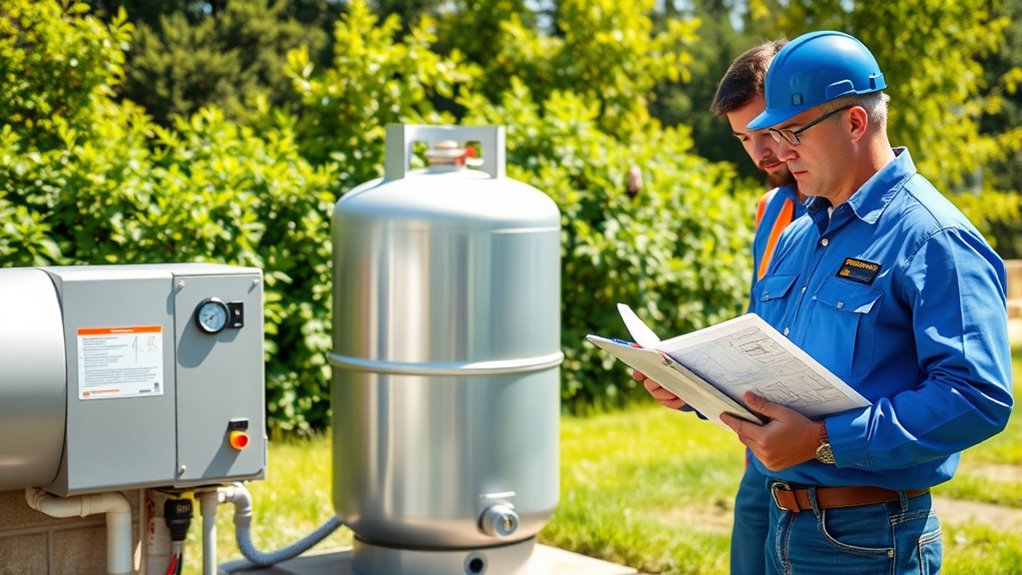
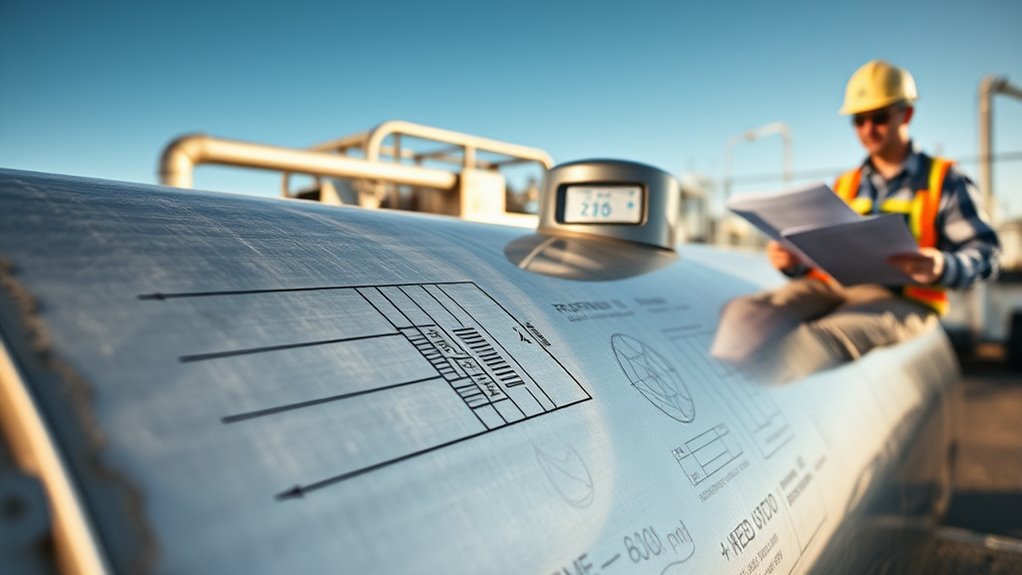
Choosing the right installer and inspector is crucial to guarantee your propane tank and standby generator setup is safe and compliant with local codes. You want professionals experienced with tank material options and familiar with obtaining installation permits. An expert will ensure proper placement, adherence to safety standards, and that your system meets all regulations.
Look for these qualities:
- Knowledge of tank material requirements for durability and safety
- Ability to navigate local permitting processes smoothly
- Certification and licensing relevant to propane and gas installations
- Proven track record with similar projects and positive reviews
Working with qualified professionals reduces risks, prevents costly mistakes, and ensures your setup is both safe and compliant. Don’t cut corners—invest in experts who prioritize safety and code adherence.
Keeping up With Code Changes and Industry Updates
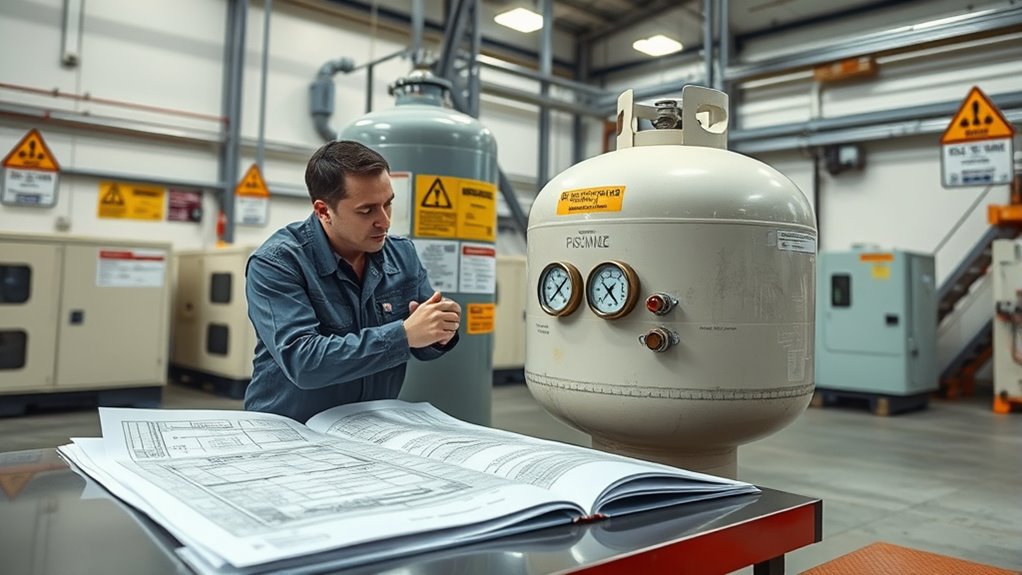
Staying current with evolving codes and industry standards is essential to guarantee your propane tank and standby generator setup remains safe and compliant. Regularly review updates from local authorities, the National Fire Protection Association (NFPA), and industry associations. This helps ensure propane safety by adhering to new regulations and best practices. Keeping up with industry updates also informs you about changes in tank maintenance requirements, preventing potential issues before they arise. Make it a habit to consult professionals for inspections and to verify your setup meets current codes. Staying proactive minimizes risks, ensures safe operation, and avoids costly penalties. Ultimately, ongoing education about code changes keeps your system reliable, compliant, and safe for years to come.
Frequently Asked Questions
How Often Should Propane Tanks Be Inspected for Safety?
You should inspect your propane tank at least once a year for safety. Regular checks help you spot signs of tank corrosion and leaks early, preventing potential hazards. During inspections, look for rust, corrosion, or damage, and perform leak detection tests around fittings and valves. If you notice any issues, get professional help immediately. Consistent inspections keep your tank safe and compliant with regulations.
What Are the Environmental Considerations for Propane Tank Installation?
When installing a propane tank, you should consider environmental factors like preventing tank corrosion through proper protective coatings and avoiding underground placement to reduce corrosion risks. guarantee vapor dispersion is adequate by maintaining proper clearance from buildings and vents, which minimizes gas buildup and potential hazards. Also, check local regulations for environmental protections, and plan installations away from water sources or environmentally sensitive areas to prevent contamination.
Can Propane Tanks Be Shared Between Multiple Generators?
Did you know that shared infrastructure can reduce installation costs by up to 30%? Yes, propane tanks can be shared between multiple generators, offering significant cost efficiency. This setup requires careful planning to guarantee safety and proper regulation compliance. You need to check local codes and coordinate with professionals to design a system that safely manages pressure and fuel delivery, maximizing savings without compromising safety or performance.
What Are the Insurance Implications of Propane Tank Installation?
You should understand that installing a propane tank impacts your insurance coverage and liability considerations. Insurance providers may require specific safety measures and inspections, and failure to meet these standards could limit your coverage or lead to higher premiums. Additionally, proper installation reduces the risk of leaks or accidents, helping protect you from liability claims. Always inform your insurer about the installation to ensure your coverage remains valid and all-encompassing.
How Does Seasonal Temperature Variation Affect Propane Tank Sizing?
Temperature fluctuations impact your propane tank sizing because colder weather reduces vapor pressure, requiring larger tanks or supplemental insulation. Conversely, warmer temperatures increase vapor pressure, easing pressure management. You should consider insulation requirements to maintain consistent pressure and avoid fuel shortages during seasonal changes. Monitoring temperature variation helps you choose the right tank size, ensuring safe, reliable propane supply year-round, regardless of seasonal temperature swings.
Conclusion
Getting your propane tank right isn’t just about meeting codes—it’s about ensuring peace of mind when you need backup power most. By understanding the essentials and working with trusted professionals, you set yourself up for a seamless experience. Keep an eye on updates and don’t overlook safety. With a little guidance, you’ll find confidence in your system, knowing you’re prepared for any outage—because sometimes, the best power is the one quietly waiting in the wings.
Columbus Day / Indigenous Peoples' Day Picks
long weekend sales
As an affiliate, we earn on qualifying purchases.