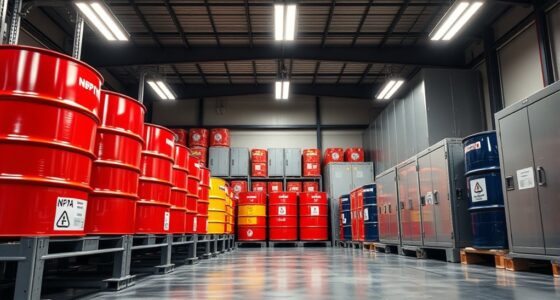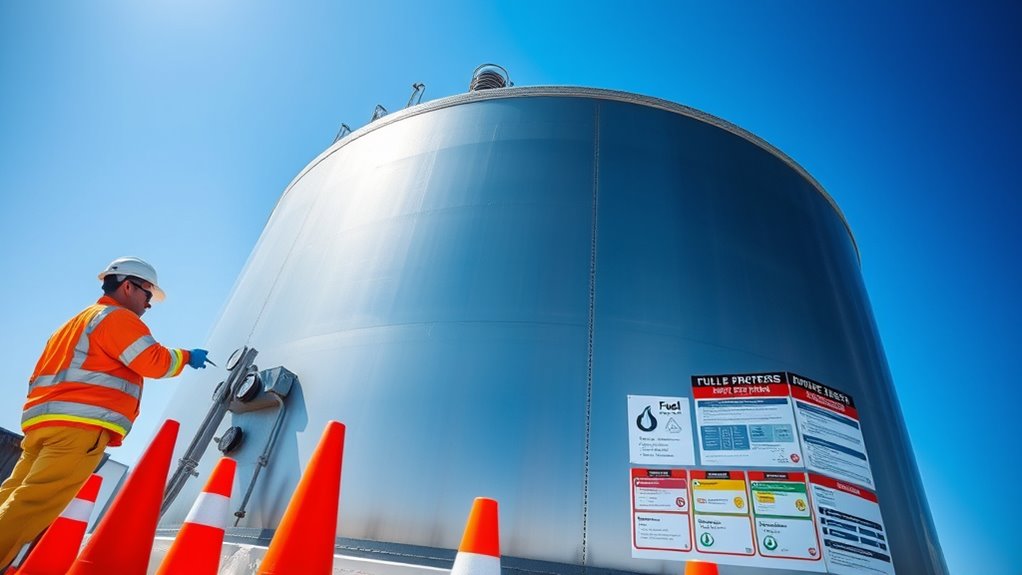

To stay compliant with fuel tax and regulations for on-site storage, you need to track fuel volumes carefully, maintain detailed records of deliveries, and stay updated on permits and safety standards. Regular inspections and staff training are essential to prevent violations and safety issues. Accurate reporting to tax authorities helps avoid penalties and legal actions. Continuing with these best practices will equip you with the knowledge to keep your fuel storage compliant and safe.
Key Takeaways
- Maintain detailed records of fuel deliveries, storage levels, and disposal to ensure accurate tax reporting and regulatory compliance.
- Register with relevant authorities, adhere to capacity limits, and obtain necessary permits for legal on-site fuel storage.
- Conduct regular inspections and maintenance of storage tanks to meet safety standards and prevent environmental hazards.
- Train staff on proper handling procedures, safety protocols, and regulatory requirements to minimize violations.
- Use leak detection systems and double-walled tanks to enhance safety and demonstrate compliance during inspections.

When storing fuel on-site, understanding fuel tax and regulatory requirements is essential to stay compliant and avoid penalties. Proper management begins with knowing the rules surrounding tank safety and storage regulations. These regulations are designed to prevent leaks, spills, and environmental contamination, which can lead to hefty fines and legal issues. Ensuring your tanks meet all safety standards not only keeps your operation compliant but also protects your personnel and the environment. Regular inspections, maintenance, and adherence to local codes are critical steps in maintaining tank safety. For example, double-walled tanks and leak detection systems are often mandated to prevent accidental releases. Staying current with storage regulations means you’re aware of capacity limits, labeling requirements, and necessary permits, which can vary depending on your location and the type of fuel stored. Understanding emotional support can also be beneficial in managing the stress associated with compliance responsibilities. Fuel tax laws add another layer of complexity to on-site storage. Many jurisdictions require you to pay fuel taxes based on the volume stored or used on-site. If you’re storing fuel for commercial purposes, you might need to register with state or federal agencies, file regular reports, and keep detailed records of purchases and usage. These records help guarantee you’re correctly calculating and remitting taxes, avoiding audits or fines. Failing to comply with tax obligations can result in severe penalties, including back taxes, interest, and even legal action. It’s essential to understand the specific tax rates applicable to your fuel type and storage situation to remain compliant. This often involves coordinating with tax authorities and possibly using specialized software to track fuel inventory accurately. Monitoring your fuel storage setup is also key to staying within the law. Keep detailed logs of fuel deliveries, storage levels, and disposal methods. This documentation not only helps with tax reporting but also demonstrates compliance during inspections. Additionally, train your staff on proper handling procedures, safety protocols, and regulatory requirements to minimize risks. When you prioritize tank safety and stay informed about storage regulations and tax laws, you reduce the chance of costly violations. Regular audits and inspections can catch potential issues early, ensuring your storage practices align with current standards.
Frequently Asked Questions
How Often Do Fuel Storage Regulations Change?
Fuel storage regulations typically change irregularly, with updates happening a few times a year or as needed. You should stay alert for regulatory updates to guarantee you’re always compliant. Keep track of compliance deadlines, as they can vary with each new regulation. Regularly checking official sources or consulting with industry experts helps you stay ahead of any changes, avoiding penalties and ensuring your on-site storage remains compliant.
Are There Specific Permits Required for On-Site Fuel Storage?
Yes, you need specific permits for on-site fuel storage. These permits guarantee fuel safety and regulate storage capacity, preventing accidents and environmental hazards. You’ll typically require approval from local or state agencies, depending on your storage capacity. Make sure to adhere to all safety standards, including proper tank installation, labeling, and safety measures. Securing the right permits helps you stay compliant and safe while managing your fuel storage effectively.
What Penalties Exist for Non-Compliance With Fuel Taxes?
If you don’t comply with fuel taxes, you risk hefty fines, penalties, and potential legal action. Non-compliance can also lead to fuel theft concerns and storage safety issues, making your operation vulnerable. Authorities may impose audits or seize fuel assets, and you could face criminal charges. To avoid these risks, make certain you follow all tax regulations, maintain proper storage safety protocols, and implement security measures to prevent theft.
How Do Storage Methods Impact Regulatory Requirements?
A chain is only as strong as its weakest link, so your storage methods greatly impact regulatory requirements. When you choose storage container regulations and adhere to safety standards, you guarantee compliance and safety. Proper tank design, secure containment, and regular inspections are essential. If you neglect these, you risk fines or environmental hazards. Your careful approach keeps your operations running smoothly and safely, demonstrating that good practices are your best safeguard.
Can On-Site Fuel Storage Tax Obligations Vary by Location?
Yes, your on-site fuel storage tax obligations can vary by location. Local tax exemptions might apply, reducing your tax liability in certain areas. Additionally, you must prioritize storage safety, as different regions have specific regulations to prevent hazards. Always check local laws to guarantee compliance and optimize your tax benefits, especially if your area offers exemptions or special rules regarding fuel storage.
Conclusion
As you manage your on-site fuel storage, remember that staying compliant is like steering through a busy, well-marked river. Clear regulations and proper tax payments keep your operation flowing smoothly, avoiding dangerous rapids or unexpected storms. With vigilant attention, you’ll keep your fuel depot safe and compliant, like a sturdy boat gliding effortlessly on calm waters. Embrace these practices, and your on-site storage remains a steady, reliable vessel in your business journey.