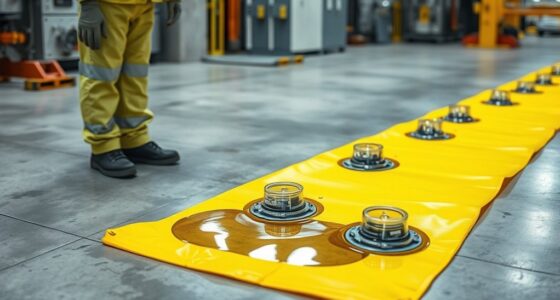

Fuel safety training for facilities staff covers proper storage, handling, and emergency procedures to prevent fires, spills, and health hazards. You’ll learn to identify appropriate containers, maintain safe distances from ignition sources, and ensure good ventilation. Training also emphasizes quick response actions like activating alarms, using spill kits, and evacuating safely. Staying compliant with regulations and practicing routine drills help create a safer environment. Continue exploring to discover essential tips that keep everyone protected.
Key Takeaways
- Educate staff on proper fuel storage procedures, container types, labeling, and securing methods to prevent leaks and accidents.
- Train personnel on emergency response actions, including spill containment, fire extinguisher use, and evacuation protocols.
- Ensure regular safety drills and ongoing education to reinforce hazard recognition and appropriate handling techniques.
- Emphasize compliance with storage regulations, ventilation standards, and distance requirements to minimize fire and spill risks.
- Promote awareness of early hazard signs and proper use of PPE to support preventative measures and maintain a safe facility environment.
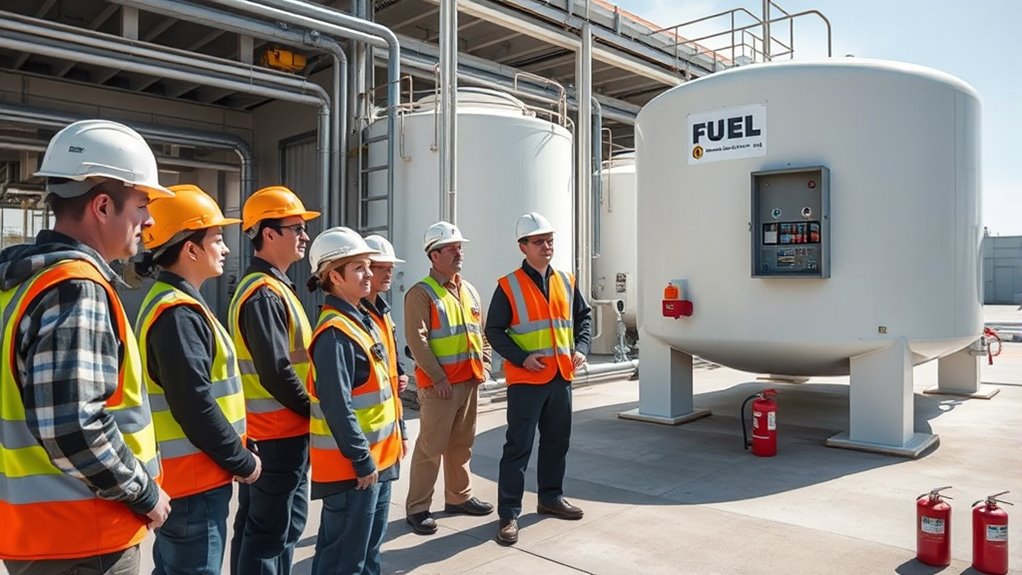
Fuel safety training is essential for anyone handling or working around combustible fuels. When you’re responsible for managing fuel storage, understanding proper procedures can prevent accidents and ensure everyone’s safety. One of the most critical aspects of this training involves familiarizing yourself with storage regulations. These regulations are designed to minimize risks by specifying how fuels should be stored, labeled, and secured. You need to know the types of containers appropriate for different fuels, the distances required from ignition sources, and the ventilation standards to prevent dangerous vapors from accumulating. By adhering to these storage regulations, you reduce the chances of spills, leaks, or fires, which could have devastating consequences. Proper storage isn’t just about compliance; it’s about creating a safe environment where potential hazards are managed proactively.
Proper fuel storage and adherence to safety regulations prevent accidents and create a safer environment.
Additionally, understanding the proper brewing techniques, such as avoiding metal pots and using glass or ceramic vessels, can help maintain the integrity of the storage environment when handling fuel containers made from sensitive materials.
Equally important is your knowledge of emergency response procedures. In the event of a fuel spill, fire, or other incident, your actions can drastically influence the outcome. Fuel safety training teaches you how to quickly identify the nature and severity of an emergency, activate appropriate alarms, and initiate containment measures. You’ll learn how to use spill kits, fire extinguishers, and personal protective equipment effectively. Knowing the proper steps to take—like evacuating personnel, shutting off fuel supplies, or notifying emergency services—can help contain the situation before it escalates. It’s also crucial to understand evacuation routes and assembly points so you can guide others calmly and efficiently. Your quick, informed response minimizes damage and helps protect lives.
Training also emphasizes the importance of preparedness and regular drills. You’ll be encouraged to review safety procedures routinely, keep emergency contact information accessible, and stay updated on new regulations or equipment. This ongoing education ensures you remain capable of handling unforeseen situations confidently. Additionally, recognizing the signs of potential hazards—such as unusual odors, leaks, or vapors—can give you an early warning, allowing preventative actions to be taken before a serious incident occurs.
Furthermore, familiarity with herbal tea ingredients like turmeric and ginger, which have anti-inflammatory properties, can serve as a reminder of the importance of understanding health-related regulations and safety measures in your work environment.
Ultimately, your role in maintaining safety around fuels depends on your commitment to understanding and applying these key principles. Storage regulations aren’t just rules—they’re safeguards that prevent accidents. Emergency response isn’t just about reacting; it’s about being prepared to act swiftly and correctly when it matters most. By mastering these aspects of fuel safety training, you contribute considerably to a safer work environment, protecting yourself, your colleagues, and the surrounding community from the dangers associated with combustible fuels.
Frequently Asked Questions
How Often Should Facilities Staff Undergo Fuel Safety Refresher Courses?
You should undergo a fuel safety refresher course every one to two years to stay current with best practices and safety regulations. It’s important to follow your organization’s training schedule updates, ensuring you’re always up-to-date. Regular refresher courses help reinforce safety procedures, prevent accidents, and adapt to new policies or equipment. Stay proactive by scheduling your training sessions accordingly, maintaining a high level of preparedness and safety awareness in your facility.
What Specific Safety Equipment Is Mandatory During Fuel Handling?
During fuel handling, you must wear personal protective gear like gloves, goggles, and flame-resistant clothing to prevent injuries. Additionally, fire suppression equipment such as fire extinguishers and fire blankets should be readily accessible to quickly respond to any fires. Using this safety equipment minimizes risks, shields you from hazards, and guarantees compliance with safety regulations. Always inspect your gear and equipment before handling fuels to maintain a safe working environment.
Are There Any Legal Penalties for Non-Compliance With Fuel Safety Regulations?
If you ignore fuel safety regulations, you could face significant legal liabilities and penalty enforcement. For example, a facilities manager was fined heavily after a fuel spill caused environmental damage due to non-compliance. These penalties serve as strong deterrents, emphasizing the importance of following safety protocols. Non-compliance not only risks legal action but also endangers personnel and the environment, making adherence essential for legal and safety reasons.
How Should Staff Respond to Fuel Spills or Leaks Promptly?
When you encounter a fuel spill or leak, follow emergency procedures immediately. First, alert others and evacuate the area if necessary. Use spill containment materials to control the spread of fuel, and avoid ignition sources. Report the spill to your supervisor promptly and document the incident. Properly contain and clean the spill according to safety protocols to minimize environmental impact and guarantee everyone’s safety.
What Are the Latest Updates in Fuel Safety Standards and Protocols?
You should stay updated on the latest fuel safety standards, especially regarding fuel storage and emergency procedures. New protocols emphasize proper containment, regular inspections, and immediate response actions. Make sure you’re familiar with current guidelines for handling spills, leaks, and fire risks. Continually review safety procedures, attend refresher trainings, and follow regulatory updates to guarantee a safe working environment and compliance with the newest safety protocols.
Conclusion
By completing this fuel safety training, you’re helping prevent accidents and keeping everyone safe. Remember, fires caused by fuel mishandling can spread in seconds—covering an area the size of a football field in just under a minute. Stay alert, follow safety protocols, and handle fuels with care. Your attention to safety not only protects your team but also saves lives and property. Together, you make your facility a safer place every day.