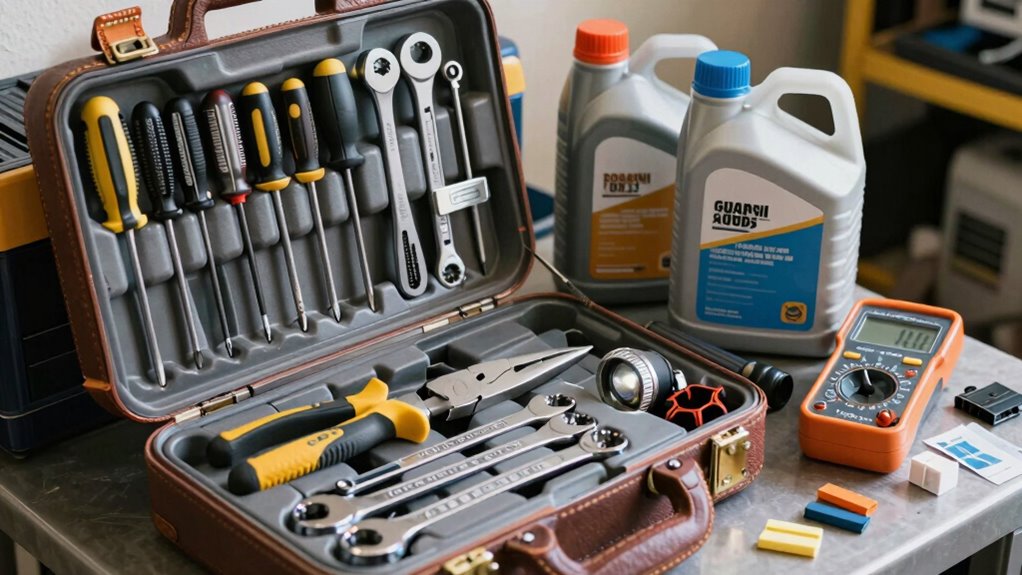
To build a maintenance toolkit for generator service days, start by gathering essential hand tools like screwdrivers, wrenches, pliers, and a socket set, making certain they’re clearly labeled. Add testing equipment like a multimeter, a flashlight, and spare parts such as fuses and connectors. Organize everything in a sturdy, compartmentalized container, and regularly clean and inspect your tools. Follow safety protocols and keep a checklist to guarantee you’re prepared; exploring further will help you create a more efficient setup.
Key Takeaways
- Identify essential tools like screwdrivers, wrenches, pliers, and testing equipment suitable for generator maintenance.
- Use organized storage with labeled compartments to keep tools accessible and prevent misplacement.
- Regularly inspect, clean, and replace worn tools to ensure safety and reliability during service.
- Include safety items such as gloves, eye protection, and a flashlight for secure, efficient work conditions.
- Prepare a checklist of toolkit contents and safety protocols to streamline maintenance tasks and minimize delays.
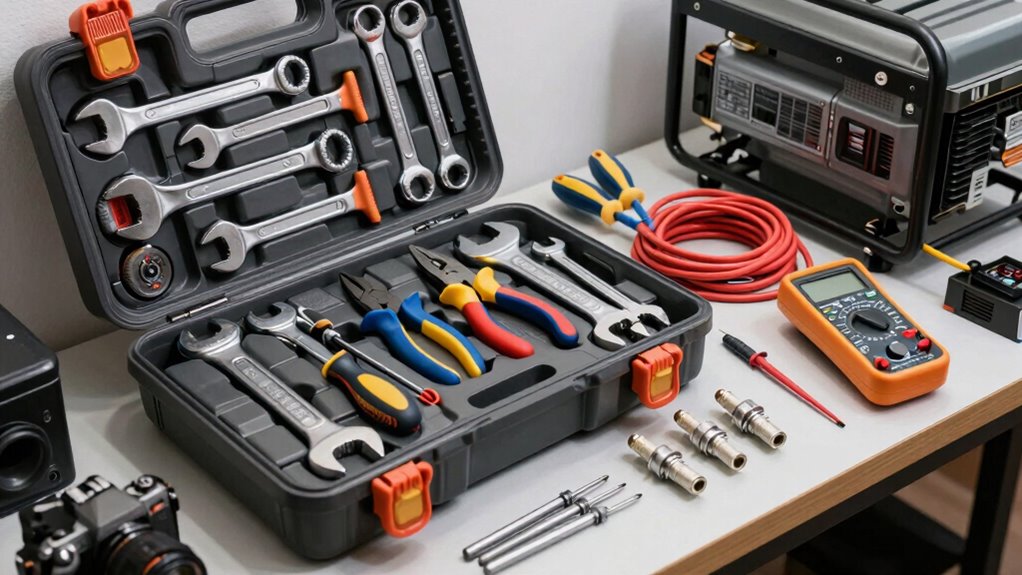
Preparing a well-organized maintenance toolkit is essential for smooth and efficient generator service days. When you’re working on critical equipment like generators, safety should always be your top priority. Before diving into any repair or inspection, review safety protocols to guarantee you’re protected from potential hazards. Wear appropriate personal protective equipment, such as gloves and safety glasses, and make certain your workspace is clear of obstructions. Having a dedicated, organized toolkit helps you follow safety procedures more effectively because you won’t waste time searching for the right tools or rushing through tasks. Good tool organization minimizes clutter and keeps everything accessible, reducing the risk of accidents and mistakes.
An organized toolkit ensures safety, efficiency, and quick access during generator maintenance tasks.
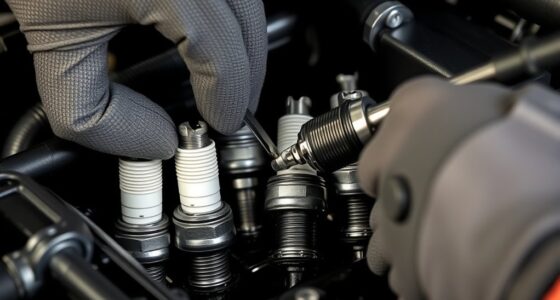
When building your maintenance toolkit, start with the basics. Include essential hand tools like screwdrivers, wrenches, pliers, and a socket set. Opt for high-quality tools with clearly labeled sizes to avoid confusion during busy workdays. Consider adding a torque wrench for precise tightening, especially on critical components. Don’t forget to include a multimeter for electrical testing, which is indispensable for diagnosing issues safely. A flashlight or headlamp can help illuminate tight spaces, making inspections more thorough and safer. Keep spare fuses, electrical connectors, and replacement parts handy, but store them separately in small labeled containers to maintain tool organization and quick access. Additionally, understanding the importance of proper tool maintenance can extend the lifespan of your equipment and ensure safety. Regularly cleaning and inspecting your tools can prevent unexpected failures and keep your toolkit ready for any situation. Incorporating regular inspection routines for your tools is also a key step in maintaining their reliability. Moreover, familiarizing yourself with manufacturer guidelines can help identify the correct tools and procedures for your specific generator model.
Creating a system for organizing your tools is imperative. Use a sturdy tool bag, box, or roll with designated compartments. Arrange tools logically—group similar items together, such as all screwdrivers in one section and all wrenches in another. This way, you can quickly locate what you need without rummaging through your entire kit. This organized approach also helps in preventing misplaced tools, saving time during busy maintenance days. Regularly clean and inspect your tools to assure they’re in good condition, replacing any worn or damaged items immediately. A well-maintained toolkit not only improves efficiency but also enhances safety by preventing tool failures during critical tasks. Maintaining a comprehensive inventory of your tools can further ensure you’re always prepared for upcoming maintenance sessions.
Lastly, consider adding specialty tools that might be specific to your generator model or common issues you encounter, such as oil filter wrenches or cleaning brushes. Keep a checklist of your toolkit contents to verify everything stays complete and ready for each maintenance day. By focusing on safety protocols and maintaining proper tool organization, you’ll streamline your generator service tasks, reduce downtime, and promote a safer, more efficient working environment. Preparing your toolkit thoroughly before each maintenance session ultimately empowers you to work confidently and effectively.

Anker SOLIX C1000 Portable Power Station, 1800W (Peak 2400W) Solar Generator, Full Charge in 58 Min, 1056wh LiFePO4 Battery for Home Backup, Power Outages, and Outdoor Camping (Optional Solar Panel)
- Charge Up in a Flash: Achieve 80% battery capacity in...
- A Decade of Power: Trust in a decade-long journey...
- Powerhouse Versatility: The Anker SOLIX C1000's SurgePad...
As an affiliate, we earn on qualifying purchases.
Frequently Asked Questions
What Safety Gear Should I Include in the Tool Kit?
You should include essential personal protective equipment like gloves, safety goggles, and ear protection in your toolkit to guarantee safety during generator maintenance. Use reliable tool storage solutions to keep everything organized and easily accessible. Always have a first aid kit nearby. Proper safety gear minimizes risks and keeps you protected while working on the generator, ensuring a safer, more efficient service day.
How Often Should I Update My Maintenance Tool Kit?
Frequently, you should review and refresh your maintenance kit to guarantee Tool durability and Inventory management stay sharp. Aim to update your toolkit at least every six months or after major repairs, replacing worn or outdated tools. This routine refresh keeps your tools reliable, prevents unexpected failures, and ensures you’re always prepared for generator service days. Regular updates also help you track inventory, avoiding missing essential equipment when you need it most.
Are There Specific Brands Recommended for Generator Tools?
For generator tools, focus on brand recommendations known for tool durability and reliability. Brands like Milwaukee, DeWalt, and Makita are excellent choices because they offer durable, high-quality tools designed for tough jobs. These brands consistently deliver performance and longevity, making them ideal for generator maintenance. Investing in reputable brands guarantees your tools withstand regular use, saving you time and money in the long run while ensuring safe, efficient service days.
How Do I Organize My Tools for Quick Access?
Time is of the essence, so you want your tools organized for quick access. Use clear tool labeling to identify each item instantly, and choose smart storage solutions like stackable bins or wall-mounted racks. Keep frequently used tools within arm’s reach, and group similar items together. This way, when generator service day arrives, you won’t waste precious minutes searching—your tools will be right where you need them.
Can I Customize My Kit for Different Generator Models?
Yes, you can definitely customize your kit for different generator models. Look into custom kit options that include model-specific tools tailored to each generator. This way, you’ll have the right tools for precise maintenance and repairs. By organizing model-specific tools separately, you guarantee quick access during service days, reducing downtime. Customizing your kit helps streamline your workflow and keeps your tools efficient and tailored to each generator’s needs.

Porch Shield Generator Cover for 5500-15000W, 38 x 28 x 30 inch, Black
- Compatible - More sizes for 5500w -15000w gas...
- Upgrade Material - Made of 600D polyester fabric...
- Tear Resistant & Waterproof - The high-level double...
As an affiliate, we earn on qualifying purchases.
Conclusion
Think of your toolkit as the sturdy trunk of a tree—each tool a essential branch supporting your generator’s health. When service day arrives, these tools become your trusted roots, grounding you in confidence and readiness. With a well-prepared kit, you create a shield of resilience around your generator, ensuring it stands tall through every storm. Keep your toolkit stocked and organized, and you’ll always have the strength to keep the power flowing.
Porch Shield Generator Cover for 5000-10000W, 32 x 24 x 24 inch, Black
- Compatible - More sizes for 5000w -10000w gas...
- Upgrade Material - Made of 600D polyester fabric...
- Tear Resistant & Waterproof - The high-level double...
As an affiliate, we earn on qualifying purchases.

Portable Solar Generator 300W Portable Power Station with 60W Solar Panel
- Portable Generator with 60W Solar Panel Included: with a big battery pack,...
- Multiple Charging outlets for camping gear with SOS Flashlight: with 2* 300W Max AC...
- Multiple Charging Optional, Solar Panel Charger 60W Included: ZeroKor portable power bank generator...
As an affiliate, we earn on qualifying purchases.