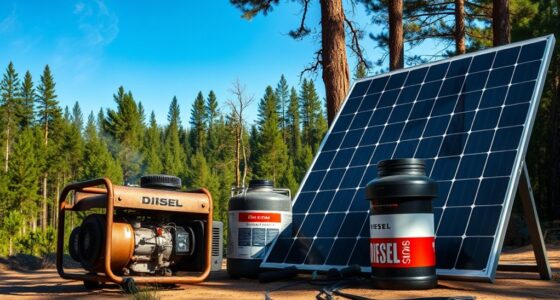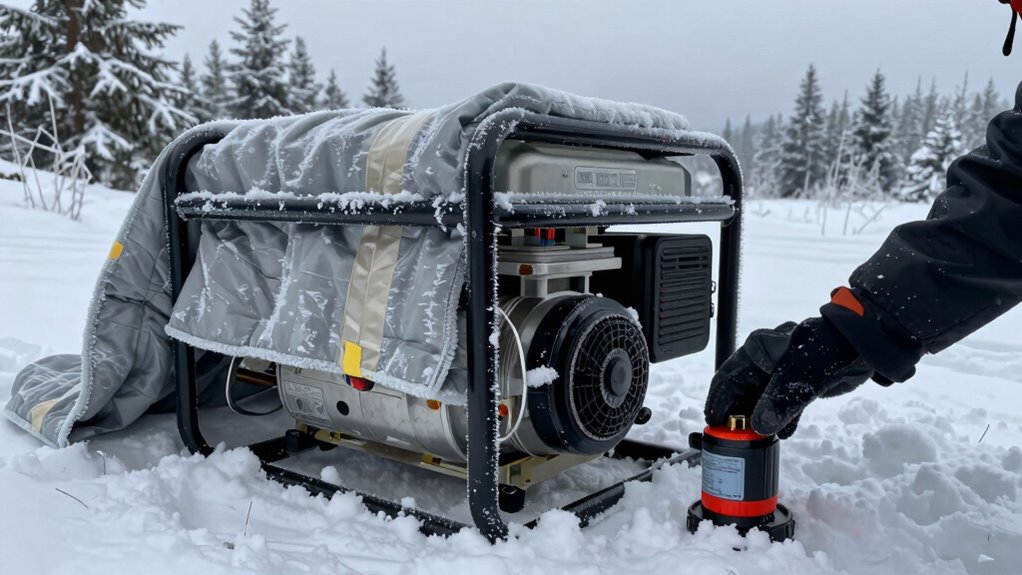

To guarantee your generator starts when it matters, focus on proper cold weather preparations like insulating the battery with blankets or foam sleeves to keep it warm and stable. Stabilize your fuel before storage to prevent gelling or degradation, and always use suitable fuels that perform well in cold temperatures. Regular maintenance and correct storage practices also play a key role in reliability. Keep these secrets in mind, and you’ll be ready for anything winter throws your way.
Key Takeaways
- Insulate batteries with blankets or foam sleeves to retain heat and ensure reliable startup in cold temperatures.
- Use fuel stabilizers and keep tanks full to prevent gelling, degradation, and moisture buildup.
- Choose cold-weather-rated fuel types that resist gelling and improve generator reliability.
- Perform regular maintenance and proper storage to keep components clean and ready for winter conditions.
- Invest in a comprehensive cold weather kit to enhance overall generator startup success during freezing periods.
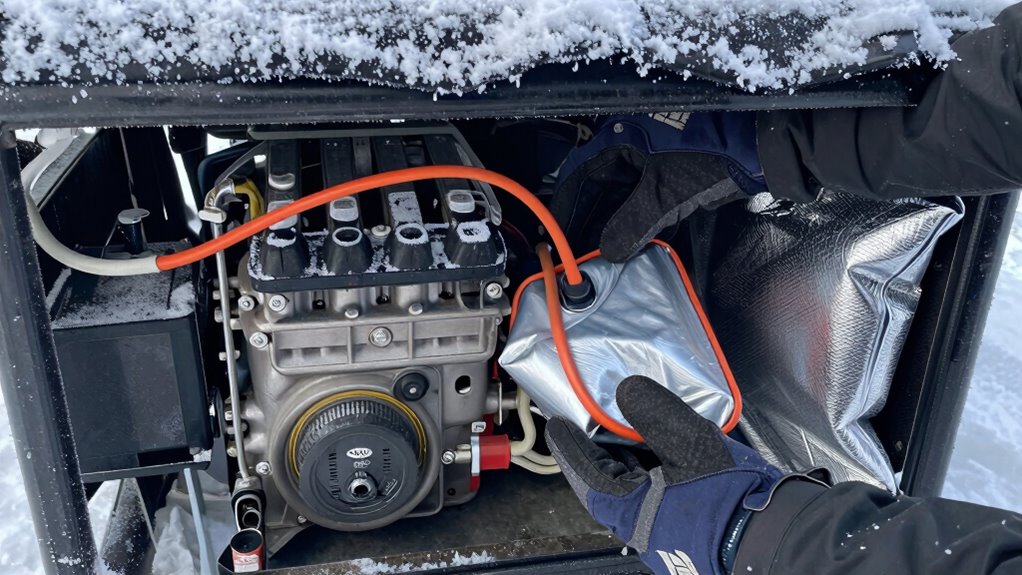
Have you ever wondered what separates a good cold weather kit from a great one? It’s not just about having a few extra blankets or a sturdy flashlight. The best kits include smart solutions that keep your generator running smoothly in freezing temperatures. Two critical elements often overlooked are battery insulation and fuel stabilization. These small but powerful tools can be the difference between a reliable power source and a frustrating failure when you need it most. Ensuring your kit is biodiversity friendly can also support sustainable practices even in off-grid scenarios. Battery insulation is essential because cold temperatures can dramatically reduce a battery’s ability to deliver power. When temperatures drop, your generator’s battery can become sluggish or even fail to start. To prevent this, you should invest in battery insulation. Wrap your battery with insulating blankets or foam sleeves designed for this purpose. These barriers trap heat around the battery, helping it retain its charge and maintain peak function. When you’re facing freezing conditions, a well-insulated battery ensures your generator has the power to start up instantly, rather than struggling or refusing to turn over altogether. Additionally, selecting suitable fuel types can further improve cold weather performance, as certain fuels are less prone to gelling or degradation. Fuel stabilization is equally crucial. Fuel can degrade or gel in cold weather, making it harder for your generator to run smoothly. To combat this, always add a fuel stabilizer to your tanks before storage, especially if you won’t be using the generator regularly. Stabilizers prevent the fuel from breaking down or forming deposits that clog your system. Additionally, keeping your fuel tank full minimizes the amount of air in the tank, reducing moisture buildup that can freeze or cause corrosion. Proper storage practices are also important to prevent moisture contamination and ensure readiness. Incorporating regular maintenance into your winter prep can further prolong your generator’s lifespan and performance. When combined with proper stabilization, your generator’s fuel system remains clean and ready to deliver consistent power, even during prolonged cold spells. Incorporating both battery insulation and fuel stabilization into your cold weather kit gives you a clear advantage. These precautions are straightforward but effective, ensuring your generator can start on the coldest days. Think of them as insurance policies—small investments that pay off when power is critical. Regularly check and maintain these components, especially before winter hits, so you’re never caught off guard. With the right preparation, cold temperatures won’t be your generator’s downfall. Instead, they’ll become just another challenge your kit is ready to handle, providing you peace of mind regardless of how low the thermometer drops.
Top picks for "cold weather secret"
Open Amazon search results for this keyword.
As an affiliate, we earn on qualifying purchases.
Frequently Asked Questions
How Often Should I Test My Cold Weather Generator Kit?
You should test your cold weather generator kit at least once every three months. Regular generator maintenance in a cold climate guarantees your system stays reliable during emergencies. During these tests, check all components, including batteries and fuel lines, to prevent failures when it’s most needed. Consistent testing helps identify issues early, so your generator starts smoothly and runs efficiently in freezing conditions, giving you peace of mind year-round.
Are There Specific Brands Recommended for Cold Weather Generator Accessories?
When it comes to cold weather generator accessories, sticking with trusted brands is wise for guaranteed accessory compatibility and reliability. Brands like Briggs & Stratton, Generac, and Champion are often recommended because they’re known for quality and compatibility with various generator models. Choosing reputable brands ensures your accessories work seamlessly, giving you peace of mind when cold conditions threaten your generator’s start-up. Trusting well-known brands minimizes surprises during critical moments.
Can Cold Weather Kits Be Used on All Generator Models?
Yes, cold weather kits can generally be used on most generator models, but you should always verify compatibility first. Proper generator maintenance and winter preparedness ensure your unit starts reliably in cold conditions. Some kits may fit specific models better, so read the manufacturer’s instructions. Using the right kit helps prevent issues like fuel gelling or battery failure, keeping your generator running smoothly when you need it most.
What Is the Average Cost of a Comprehensive Cold Weather Kit?
You can expect to spend around $100 to $300 for a complete cold weather kit. For example, in a recent case, a homeowner used a kit including battery maintenance tools and fuel additives, ensuring their generator started reliably during a cold snap. These kits typically include items to protect the battery and improve fuel flow, making sure your generator works when you need it most, even in freezing temperatures.
Do Cold Weather Kits Require Professional Installation?
No, cold weather kits typically don’t require professional installation. You can usually handle generator maintenance yourself, especially for winter preparedness. Just follow the kit’s instructions carefully, guaranteeing all components are properly installed and tested before cold weather hits. Proper maintenance and timely installation of these kits help prevent issues during power outages, giving you peace of mind. However, if you’re unsure, consulting a professional can ensure everything’s set up correctly.
Conclusion
With the right cold weather kit, you’re arming your generator like a sturdy anchor against winter’s chill. Think of each component as a secret key, accessing power when the storm clouds gather. When you trust in these essentials, you’re not just starting a machine—you’re igniting a resilient spirit that stands firm through the coldest nights. With preparedness, you hold the torch that guides you safely through the darkest winter, shining hope and warmth when it’s needed most.