TL;DR

Get backup power and energy gear delivered free — and shop member deals
- Fast, free delivery on millions of items
- Access to Prime Big Deal Days deals on October 6–7
- Prime Video, Amazon Music and more included
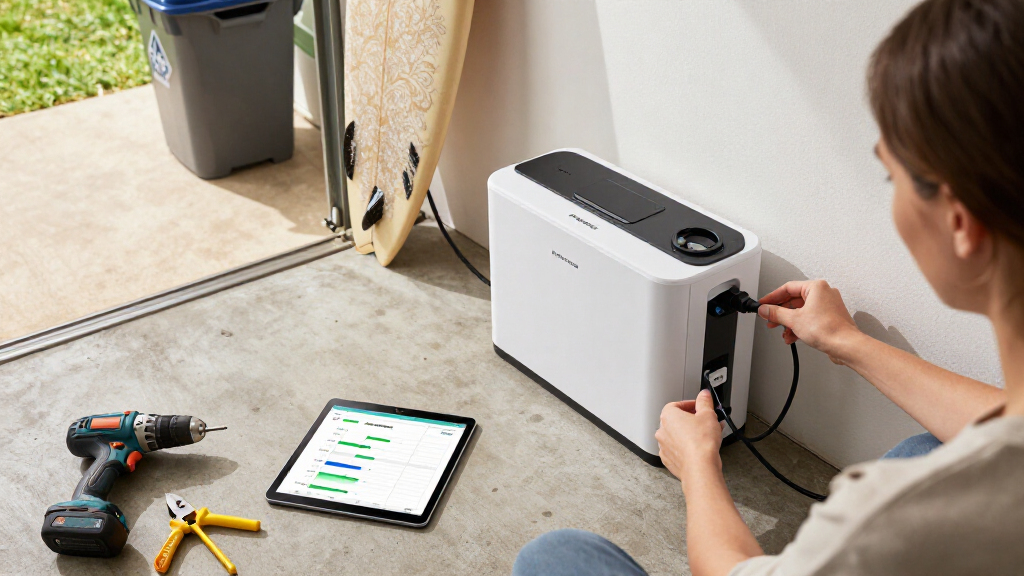
A record 276,011 home batteries were installed across Australia in the first half of 2026, 52% above the prior six months, alongside 180,878 rooftop solar systems — the strongest half-year since 2021. The Clean Energy Council credits the federal Cheaper Home Batteries Program and says uptake is running well ahead of grid operator forecasts.
Australians installed a record 276,011 home batteries in the first six months of 2026, according to the Clean Energy Council’s latest Rooftop Solar and Storage Report, as the federal government’s battery rebate scheme drives household storage uptake at a pace now exceeding new solar installations. The half-year also delivered 180,878 rooftop solar systems, the strongest six-month total since 2021, putting annual installations on track to exceed 300,000 again.
The report, covering January to June 2026, found rooftop solar installations rose 35% year-on-year, adding 1,894 MW of new capacity — a 41% increase on the same period in 2025 and the highest six-month capacity total on record. The June 2026 quarter alone delivered a record 102,234 solar installations totalling 1,079 MW, the largest quarterly total recorded.
Home battery deployment grew even faster. The 276,011 batteries installed in the first half of 2026 added 8,691 MWh of storage, more than double the 4,221 MWh added in the second half of 2025. Across the first 12 months of the federal government’s Cheaper Home Batteries Program, a total of 457,439 batteries with a combined 12.9 GWh of consumer storage capacity were installed nationwide.
The data shows batteries are now being installed faster than solar systems, with 153 batteries deployed for every 100 rooftop solar installations in the first half of 2026, up from 130 per 100 in the second half of 2025. “This indicates substantial retrofitting to homes with existing solar, alongside the new-build solar and storage packages driving the rooftop PV recovery,” the CEC said in the report.
What the Record Uptake Means for the Grid
The figures signal that household investment is running well ahead of official planning assumptions. According to the report, household and small business investment is exceeding the Australian Energy Market Operator’s (AEMO) central planning scenario for both solar and storage. At current rates, rooftop solar in the National Electricity Market (NEM) is expected to reach 40.3 GW by 2029-30, roughly 4.5 GW or 13% above AEMO’s ISP Step Change scenario, while consumer battery storage is projected to reach 59.2 GWh by 2029-30 — 79% above the ISP projection of 33 GWh.
CEC Chief Executive Jackie Trad said the record rollout delivers both consumer and national benefits. “Australia is in the midst of household solar boom,” she said. “We now have more rooftop solar capacity in Australia than the capacity of all our remaining coal-fired power stations combined.”
Rooftop PV supplied 12.9% of the nation’s electricity generation in the first six months of 2026, according to the report, making it a reliable and growing contributor to the energy mix as older fossil-fuel generators retire.
Recovery After 2025’s Solar Slowdown
The record half-year marks a sharp turnaround. Annual rooftop solar installations fell below 300,000 in 2025 — to 273,672 — for the first time since 2020, following years of slowing growth. “Installation volumes have recovered sharply,” the CEC said, pointing to the success of the federal government’s Cheaper Home Batteries Program as a key driver.
Notably, the CEC found that battery incentives have not cannibalised solar sales. “Rather than displacing rooftop PV, battery incentives appear to be drawing new solar installations with them, with many households installing or upgrading solar at the same time as adding storage,” the report said. Trad also flagged that the coming expansion of the Small-scale Renewable Energy Scheme (SRES) to support solar systems up to 1 MW in size would provide another boost for installations.
“The historic growth in household renewables is a win for both consumers and the country, delivering value and reliability for Australians and greater security for our nation’s energy supply.”
— Jackie Trad, Clean Energy Council Chief Executive
Questions Around Sustaining the Boom
Whether the current pace can be sustained is not yet clear. The projection that annual installations will exceed 300,000 in 2026 is an on-track estimate based on first-half data, not a final figure. The AEMO comparison figures — 40.3 GW of rooftop solar and 59.2 GWh of consumer storage by 2029-30 — assume current installation rates continue, which depends on rebate availability, battery pricing, and household demand.
The report also does not break down results by state or retailer, and it does not address emerging technical questions such as grid export limits or the pace of virtual power plant participation, which may shape how the new storage capacity is used.
SRES Expansion and Rebate Program’s Second Year
The next CEC Rooftop Solar and Storage Report, covering July to December 2026, will show whether the second half of the year confirms the full-year projection of more than 300,000 solar installations and whether battery attachment rates continue to climb beyond 153 per 100 solar installs.
Trad said the expansion of the Small-scale Renewable Energy Scheme to cover solar systems up to 1 MW will provide a further boost, opening the incentive to larger commercial-scale rooftop installations. Grid planners will also be watching how the rapidly growing pool of household batteries interacts with the NEM, particularly whether storage growth continues to outpace the ISP’s Step Change scenario.
Key Questions
How many home batteries were installed in Australia in the first half of 2026?
A record 276,011 home batteries were installed between January and June 2026, adding 8,691 MWh of storage — more than double the amount added in the second half of 2025, according to the Clean Energy Council.
What is the Cheaper Home Batteries Program?
It is the Australian federal government’s home battery rebate program. In its first 12 months, the program coincided with the installation of 457,439 batteries totalling 12.9 GWh of consumer storage capacity, the CEC reported.
Are batteries being installed more often than solar panels?
Yes. In the first half of 2026, 153 batteries were installed for every 100 rooftop solar systems, up from 130 per 100 in the second half of 2025, indicating many households with existing solar are retrofitting batteries.
How much of Australia’s electricity comes from rooftop solar?
Rooftop solar supplied 12.9% of national electricity generation in the first six months of 2026, according to the Clean Energy Council report.
Will Australia install more than 300,000 solar systems in 2026?
The CEC says installations are on track to exceed 300,000 this year after 180,878 systems in the first half, but the full-year figure is a projection and will be confirmed with year-end data.
Source: rss
Fall Picks
fall essentials
As an affiliate, we earn on qualifying purchases.