
When addressing seismic, wind, and flooding code considerations, you should guarantee your building design includes retrofitting to meet current seismic standards, incorporates durable materials resistant to wind and water damage, and features adaptive components like elevating structures or flood barriers. Compliance with evolving codes and standards is critical for safety and resilience. Paying close attention to integrated strategies helps protect occupants and assets during disasters. Exploring these aspects further will provide you with thorough guidance for robust, resilient construction.
Key Takeaways
- Integrate seismic retrofitting, wind resistance, and floodproofing features into building design for comprehensive resilience.
- Ensure compliance with evolving building codes that address seismic, wind, and flood hazards simultaneously.
- Use advanced materials and structural techniques to enhance performance against multiple natural disaster loads.
- Elevate essential infrastructure and incorporate flood barriers to minimize water intrusion and flood damage.
- Include emergency safety features, such as clear exits and resilient systems, to protect occupants during disasters.
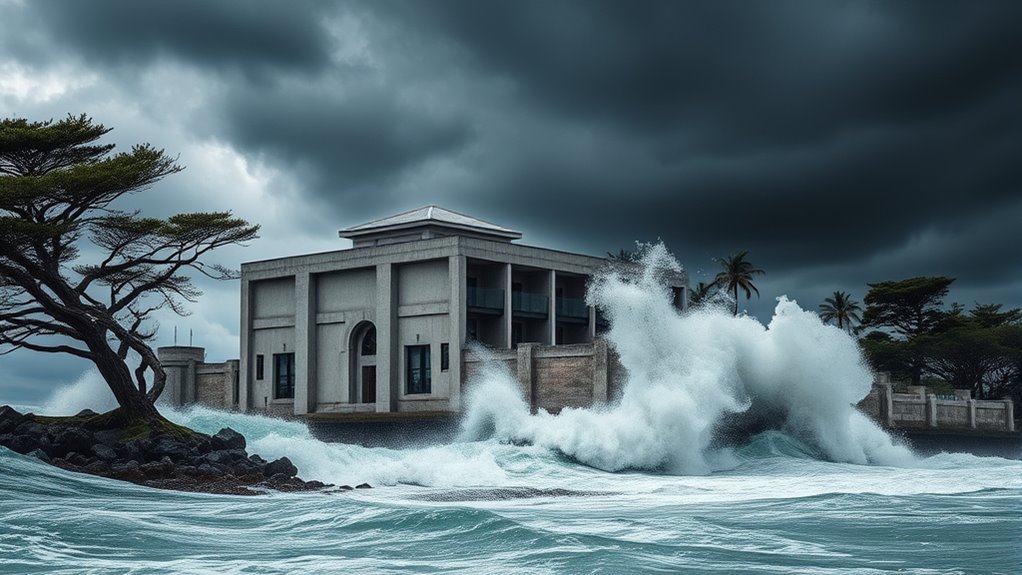
When designing buildings, it’s essential to thoroughly consider seismic, wind, and flooding codes to guarantee safety and resilience. These codes aren’t just bureaucratic requirements; they’re fundamental guidelines that protect lives and property. By adhering to these standards, you ensure that structures can withstand natural disasters, minimizing damage and loss. In areas prone to earthquakes, implementing structural retrofitting becomes indispensable. This process involves strengthening existing buildings to meet current seismic standards, which often evolve as new research and technologies emerge. Retrofitting can include adding braces, shear walls, or base isolators to absorb seismic energy better. It’s a proactive step that extends a building’s lifespan and enhances safety, especially when existing structures were not originally designed to withstand seismic forces. Additionally, staying informed about building code updates helps ensure compliance with the latest safety standards.
Emergency preparedness is another critical aspect intertwined with code compliance. Incorporating emergency plans into building design guarantees occupants know how to respond during disasters. This includes clearly marked exits, accessible escape routes, and designated safe zones. When codes specify requirements for emergency egress and resilience, you’re better equipped to protect lives during an event. Regular drills and staff training complement these design features, reinforcing readiness. You must also consider flood-resistant design strategies if the location is susceptible to flooding. Elevating essential infrastructure, installing flood barriers, and waterproofing foundations can prevent water intrusion. These measures are often mandated by floodplain management codes, which aim to reduce flood damage and facilitate quick recovery.
Understanding the interconnectedness of these codes helps you develop inclusive, resilient buildings. For example, structural retrofitting might include designing buildings that can withstand both seismic and wind loads simultaneously, reducing redundancy and cost. Emergency preparedness isn’t just about safety features but also ensuring that the entire building system, from power to communication, remains operational during and after a disaster. By integrating these considerations into your planning process, you create structures that aren’t only compliant but also adaptable to future challenges. Staying informed about evolving codes and best practices allows you to implement the most effective measures, ultimately safeguarding occupants and assets. In the end, a thoughtful approach to seismic, wind, and flooding considerations ensures that your buildings can endure nature’s unpredictable forces while providing peace of mind for all who use them.
Frequently Asked Questions
How Do Local Climate Variations Influence Code Requirements?
Local climate variations directly influence code requirements by necessitating climate adaptation strategies. You need to design buildings that can withstand specific weather patterns, like heavy rain, high winds, or extreme temperatures. By incorporating climate adaptation, you enhance building resilience, ensuring structures remain safe and functional over time. This approach helps you address unique regional risks, ultimately protecting inhabitants and assets while complying with evolving safety standards.
Are There Specific Materials Recommended for Seismic Resistance?
Like building on solid ground, you should choose seismic resistant materials that prioritize durability and flexibility. Reinforced concrete, cross-laminated timber, and structural steel stand out for their strength and ability to absorb seismic energy. These materials help guarantee your structure withstands shaking and deformation, much like a sturdy oak resists storms. By selecting durable, resilient options, you protect your building and its occupants from seismic risks effectively.
How Often Are Flooding Zone Maps Updated?
Flood zone maps are typically updated every 5 to 10 years through new mapping revisions and flood zone updates. You should regularly check with local agencies like FEMA, as they provide the latest maps and updates. Staying informed guarantees your property remains compliant and protected. Keep in mind that updates can happen more frequently after significant flood events or changes in the landscape, so staying current is vital for accurate risk assessment.
What Are the Penalties for Non-Compliance With These Codes?
Ignoring these codes is like sailing into a storm without a life jacket—you risk severe insurance penalties and legal consequences. If you don’t comply, insurance companies might deny claims, leaving you to cover costly damages yourself. Plus, authorities can impose hefty fines, stop work orders, or even revoke permits. Stay proactive, follow the rules, and safeguard your property—because the cost of non-compliance is far greater than the effort to stay compliant.
How Do Building Codes Address Climate Change Impacts?
Building codes now emphasize climate change impacts by requiring innovative building materials that enhance resilience against extreme weather. You’re encouraged to incorporate building material innovations like flood-resistant or heat-reflective materials. Codes also mandate emergency preparedness plans, ensuring you’re ready for climate-related events. This proactive approach helps protect structures, occupants, and communities, making your building more sustainable and resilient amid changing climate conditions.
Conclusion
By understanding seismic, wind, and flooding codes, you can better protect your structures and occupants. Did you know that buildings designed with proper codes can reduce damage costs by up to 50% during natural disasters? Staying informed and compliant guarantees safety and resilience. So, prioritize these considerations in your projects—it’s the smart choice for long-term success and peace of mind.