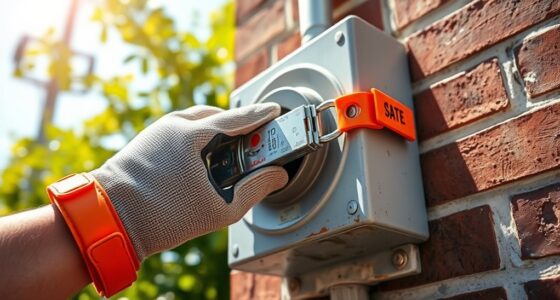
To guarantee your standby generator is installed legally, you need to obtain permits and approvals from your local authorities or AHJ. This process involves submitting detailed plans, load calculations, and site details for review. They verify compliance with safety, zoning, noise, and environmental standards. Securing the proper permits helps prevent fines, delays, or removal of your generator. Keep in mind the specific requirements in your area, and if you keep exploring, you’ll find more helpful guidance.

Get backup power and energy gear delivered free with Prime
- Fast, free delivery on millions of items
- Prime Video, Amazon Music and more included
- Member-only deals all year
Key Takeaways
- Obtain necessary permits by submitting detailed generator plans that meet local code requirements and include load calculations.
- Ensure AHJ reviews and approves specifications, placement, and safety measures before installation.
- Verify compliance with local zoning, setback, noise, and fuel storage regulations to avoid violations.
- Conduct proper load evaluation to confirm generator sizing supports critical loads and adheres to safety standards.
- Complete post-installation inspections to confirm installation meets approved plans and AHJ requirements for legal operation.
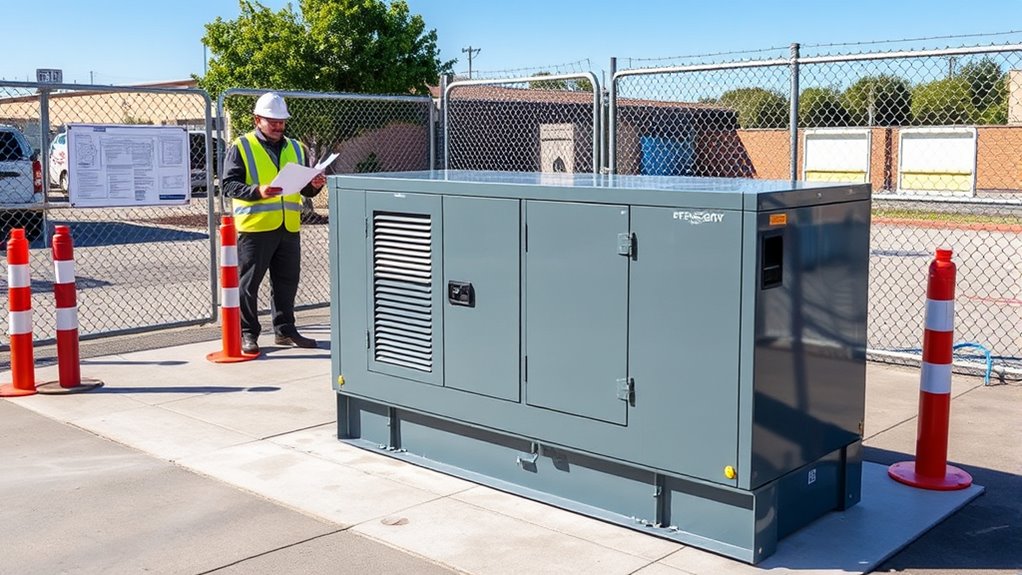
When installing a standby generator, obtaining the necessary permits and approvals from the Authority Having Jurisdiction (AHJ) is a essential first step. This process ensures your generator meets all safety, zoning, and environmental standards. One of your primary concerns should be correct generator sizing, which directly impacts compliance. If your generator is too small, it may not support your essential loads during an outage. Conversely, oversizing can lead to unnecessary costs and potential code violations. The AHJ will want to see that your generator’s capacity aligns with the needs of your home or business and fits within the permitted load calculations.
Before applying for permits, you should carefully evaluate your power requirements. Proper generator sizing involves considering your critical loads—such as refrigerators, heating systems, or medical devices—and ensuring the unit can handle these simultaneously. The AHJ will review your specifications to verify that your chosen generator is appropriate for your property. This step not only guarantees your safety but also guarantees your setup complies with local code requirements, which can vary markedly from one jurisdiction to another.
Assess your critical loads to ensure your generator can handle essential power needs safely and code-compliantly.
Local code compliance plays an essential role in the permitting process. Regulations often specify where and how a generator can be installed, including setbacks from property lines, distance from windows or vents, and requirements for noise mitigation. Some jurisdictions mandate specific wiring methods, grounding procedures, and fuel storage standards. Failing to adhere to these codes can result in delays, fines, or even the requirement to remove or modify your installation later. To avoid these issues, you should thoroughly review local building codes and zoning laws before submitting your application.
The process typically involves submitting detailed plans that include your generator’s specifications, placement, and connection details. Many AHJs require proof of proper sizing, often through load calculations or system diagrams. Once your application is approved, you’ll receive a permit that authorizes you to proceed with installation. During installation, it’s essential to follow all approved plans and local standards. Afterward, an inspection by the AHJ may be required to confirm compliance before you can operate your generator legally. Additionally, staying informed about advances in automation technologies can help ensure your system remains compliant with evolving standards and best practices.
Frequently Asked Questions
How Long Does the Permit Approval Process Typically Take?
The permit approval process usually takes around 2 to 8 weeks, but permit timelines can vary depending on your local AHJ. You might experience approval delays if your application is incomplete or if additional documentation is needed. To speed things up, guarantee your paperwork is thorough and accurate. Keep in contact with the authorities and follow up regularly to help minimize delays and get your standby generator approved as quickly as possible.
Are There Specific Local Codes That Vary by City?
Cities often have their own rules, making local code variations a maze to navigate. You’ll find that city regulations differ widely, like each city speaks its own language. These differences can impact your generator project, from installation to safety standards. To avoid surprises, check with your local authorities or AHJ early. Understanding these nuances helps you stay compliant and guarantees your generator’s smooth approval process, no matter where you’re located.
What Are Common Reasons for Permit Application Rejections?
Permit challenges often arise because your application doesn’t fully demonstrate code compliance or lacks detailed documentation. Authorities may reject your permit if the generator installation doesn’t meet local safety, noise, or setback requirements. To avoid rejection, double-check that your plans align with all applicable codes, include extensive diagrams, and address specific local code nuances. Clear, complete submissions help smooth the approval process and reduce the risk of permit application rejections.
Do AHJS Require On-Site Inspections Before Approval?
Yes, AHJs often require on-site inspections before approval. These inspection requirements make certain your standby generator meets safety and code standards, verifying installation and compliance with local regulations. During approval procedures, inspectors check factors like proper wiring, clearance, and noise levels. You should be prepared for these inspections to confirm everything is correctly installed and adheres to the necessary codes, helping to prevent delays in obtaining your permit.
Are There Permits Needed for Generator Upgrades or Replacements?
When upgrading or replacing your generator, you typically need permits for generator installation, and local regulations play a big role. Don’t leave permits for tomorrow—it’s better to get them sorted now, or you might find yourself in hot water later. Check with your local authorities to ensure compliance. Proper permits streamline the process and keep your project on track, so you can power through any surprises.
Conclusion
Maneuvering permits and AHJ approvals might seem like a quest worthy of King Arthur, but with the right steps, you’ll be all set. Make certain you follow local codes, submit thorough documentation, and keep open communication with authorities. Think of it as your modern-day Excalibur—your key to a smooth installation. Before you know it, your standby generator will be ready to save the day, just like a trusty steed in a time of need.
Fall Picks
fall essentials
As an affiliate, we earn on qualifying purchases.