
NFPA 110 classifications help you understand emergency power systems by grouping them into specific levels, types, and classes. Levels indicate how critical the system is, with Level 1 supporting life safety and Level 2 covering less essential functions. Types specify the power source, like generators or batteries, and classes detail safety and redundancy features. Knowing these classifications guides you in selecting and maintaining the right system to guarantee reliable power during outages—continue to discover what each classification means in more detail.
Key Takeaways
- NFPA 110 classifies emergency power systems by Level, Type, and Class to ensure safety and reliability during outages.
- Level 1 systems support critical functions like life safety, requiring the highest safety standards.
- Types refer to the power sources, such as generator or battery systems, with specific features and capacities.
- Class I, II, and III indicate different safety measures and system robustness based on application criticality.
- Proper classification guides system design, safety compliance, and ensures readiness during emergencies.
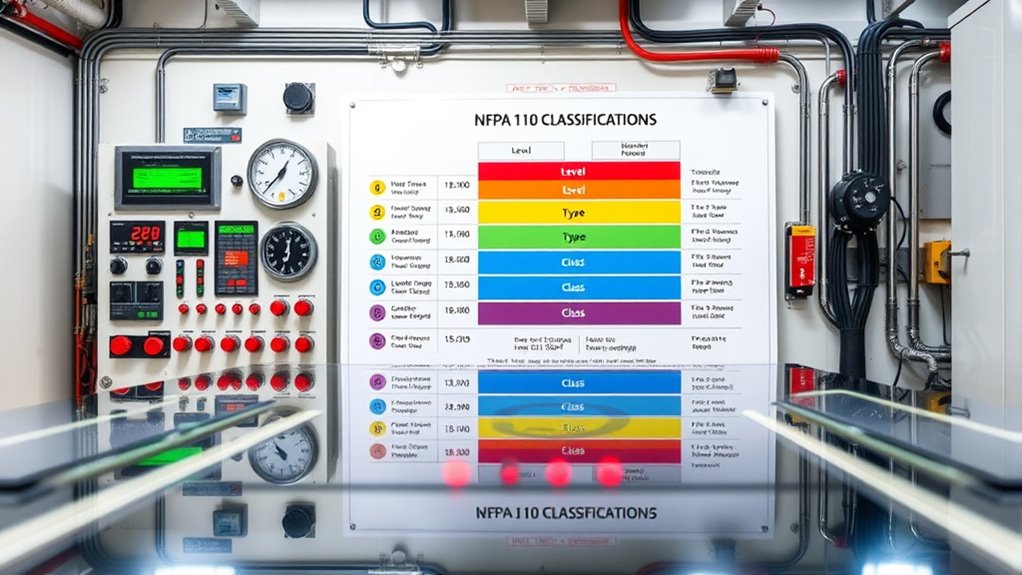
Have you ever wondered how emergency power systems are classified for safety and reliability? Understanding these classifications is essential if you’re responsible for designing, maintaining, or inspecting backup power systems. The NFPA 110 standards provide a clear framework for categorizing emergency power systems based on their level of readiness, type of power source, and overall safety features. These classifications help guarantee that in a real emergency, the power supply will perform as needed, maintaining critical operations without fail.
NFPA 110 divides emergency power systems into different levels, primarily Level 1 and Level 2, which directly relate to their importance and the criticality of the facilities they serve. Level 1 systems are considered the most critical, supporting life safety and life-critical systems such as fire alarms, emergency lighting, and life support. These systems must have the highest standards of generator safety, ensuring rapid startup and continuous operation during power outages. Level 2 systems support less critical functions, like building management or non-essential services, and are designed to provide backup power with slightly relaxed requirements. Knowing these distinctions helps you determine the appropriate level of redundancy and maintenance needed for your specific application.
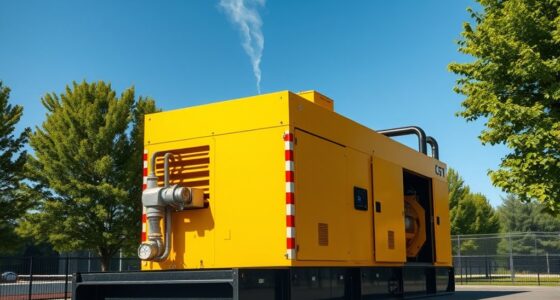
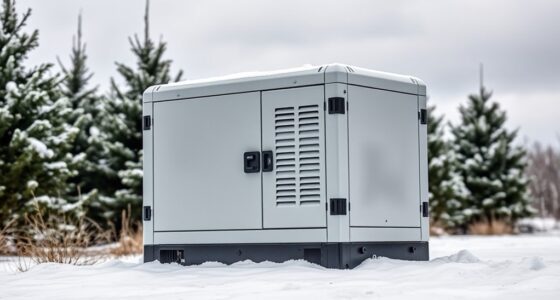
The classification also extends to the types of emergency power sources, primarily generators and batteries. Generators are the most common, and their classification depends on features like fuel type, capacity, and startup time. For example, Class I generators are designed for immediate start-up, guaranteeing emergency power is available within seconds after a grid failure. This quick response is crucial for maintaining generator safety and avoiding interruptions in critical systems. Batteries, used in uninterruptible power supplies (UPS), are classified based on their capacity to support loads during the transition period until generators kick in. The type of emergency power source you choose and how it’s categorized impacts the overall safety and reliability of the system.
Additionally, the classification system considers the physical and operational safety features integrated into the emergency power setup. The overall system classification—referred to as Class I, II, or III—reflects the robustness and safety features incorporated into the emergency power setup. Class I systems include extensive safety measures, redundancy, and testing protocols, making them suitable for the most critical environments. Class II systems are less complex but still reliable, while Class III systems are often used for less critical applications. These classifications guide you in designing systems that meet specific safety standards, ensuring your facility’s emergency power is dependable when it matters most. In essence, understanding NFPA 110 classifications helps you optimize your emergency power setup, making sure it performs flawlessly during emergencies, safeguarding lives, property, and operations.
Frequently Asked Questions
How Do NFPA 110 Classifications Impact Emergency Power System Design?
You should consider NFPA 110 classifications because they directly influence your emergency power system design. They determine the needed generator sizing and battery capacity to guarantee reliable backup during outages. By understanding these classifications, you can select appropriate equipment that meets safety standards, provides sufficient runtime, and supports critical loads. This ensures your facility stays operational, minimizes risks, and complies with safety codes during emergencies.
Are There Regional Differences in NFPA 110 Compliance Requirements?
Your quest for safety is as crucial as the air you breathe. Yes, regional differences in NFPA 110 compliance requirements exist, driven by local regulations and enforcement practices. Some areas impose stricter standards, while others interpret NFPA 110 more leniently. To guarantee full compliance, you must stay informed about regional regulations and actively follow enforcement updates, because overlooking local nuances could jeopardize safety and lead to costly penalties.
What Training Is Recommended for Personnel Managing NFPA 110 Systems?
You should pursue specialized training certification for personnel managing NFPA 110 systems to guarantee proper operation and compliance. It’s essential that your team has the necessary qualifications, including understanding system maintenance, emergency procedures, and inspection protocols. Regular refresher courses and hands-on experience are recommended to keep skills current. Proper training not only helps maintain safety standards but also ensures your personnel can effectively manage the system during emergencies.
How Often Should NFPA 110 System Inspections Be Performed?
Think of your NFPA 110 system as a finely tuned engine that needs regular check-ups. You should perform inspections at least monthly to guarantee everything runs smoothly, along with more thorough maintenance schedules annually. Regular inspections catch issues early and keep your system reliable during emergencies. Staying consistent with these intervals helps prevent failures, ensuring your backup power system is always ready when you need it most.
What Are the Common Challenges in Implementing NFPA 110 Standards?
You may face challenges in implementing NFPA 110 standards due to inconsistent power system maintenance and difficulties in maintaining proper compliance documentation. Guaranteeing all staff are trained on the standards can be tough, and keeping detailed records often slips through the cracks. These issues can lead to compliance gaps, risking system failure. Regular training and diligent documentation help streamline implementation and ensure your system stays reliable and compliant.
Conclusion
Understanding NFPA 110 classifications is like decoding a secret map—each level, type, and class guiding you through a maze of safety standards. When you grasp these labels, you wield a compass that keeps your emergency power systems on course, no matter the storm. Think of it as revealing a fortress’s defenses, ensuring your safety measures stand tall and unwavering. With this knowledge, you’re not just prepared—you’re fortified against the chaos of the unexpected.