
TL;DR

Get backup power and energy gear delivered free with Prime
- Fast, free delivery on millions of items
- Prime Video, Amazon Music and more included
- Member-only deals all year
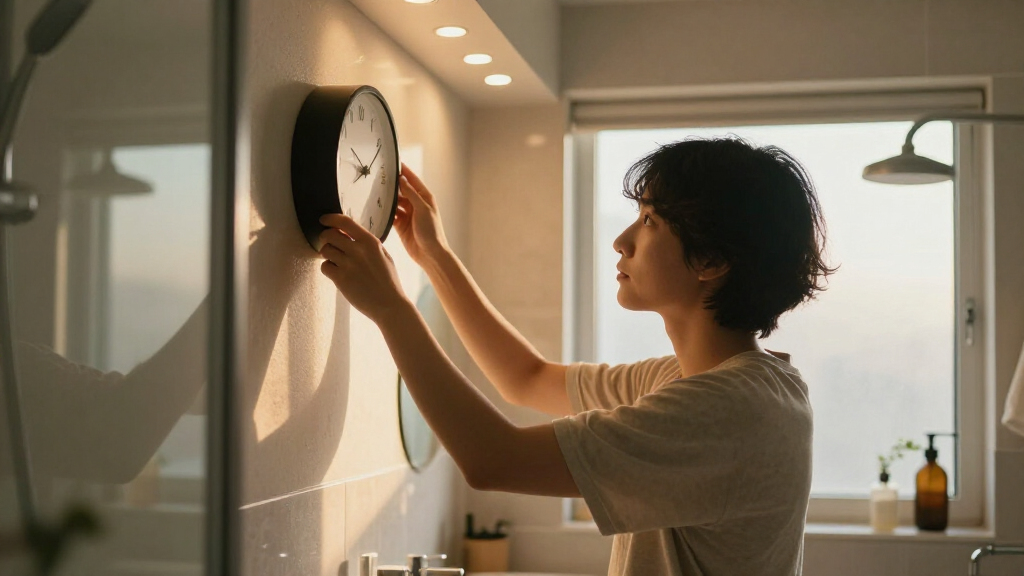
A individual moved a clock into their bathroom, which led to a notable change in their morning routine. This personal experiment highlights how environmental cues influence daily habits and time perception.
A person has reported that moving a clock into their bathroom has permanently altered their morning routine. The individual states that this simple change has had a profound effect on how they start their day, prompting discussions about the influence of environmental cues on daily habits.
The individual, who prefers to remain anonymous, placed a clock on the bathroom wall about two weeks ago. Since then, they say their wake-up time has shifted earlier by approximately 15 minutes, and their overall morning efficiency has improved. They attribute this change to having a visible, immediate reminder of time while preparing for the day, which previously was less prominent.
Experts in behavioral psychology note that environmental cues, such as clocks, can significantly influence routines. Dr. Lisa Chen, a psychologist specializing in habit formation, explained that visual time cues can serve as anchors, helping individuals regulate their schedules more effectively. The person reports that before moving the clock, they often lost track of time in the bathroom, leading to rushed mornings or oversleeping.
While this is a personal anecdote, it has sparked broader interest on social media, with many users sharing similar experiences about small environmental adjustments affecting their routines. The individual emphasizes that this change was simple but impactful, and they plan to continue experimenting with other environmental cues to optimize their mornings.
Impact of Environmental Cues on Daily Routine Effectiveness
This story illustrates how small environmental modifications, like relocating a clock, can influence personal time management and daily habits. For many, routines are driven by visual cues and surroundings; adjusting these can lead to improved punctuality and productivity. The individual’s experience underscores the potential for simple, low-cost interventions to foster better habits and more efficient mornings.
Understanding this dynamic can help others identify environmental factors that may be hindering or helping their routines, offering a practical approach to behavioral change without significant effort or expense. It also raises awareness about the subconscious influence of surroundings on our perception of time and how we organize our days.
Top picks for "clock bathroom chang"
As an affiliate, we earn on qualifying purchases.
The Role of Visual Time Cues in Habit Formation
Research in behavioral science has long shown that environmental cues play a critical role in establishing and maintaining routines. Clocks, alarms, and other visual indicators serve as external signals that reinforce time awareness. Prior studies have demonstrated that people who place clocks in prominent locations tend to be more punctual and better at managing daily schedules.
This particular case adds to the growing body of anecdotal evidence suggesting that simple environmental adjustments can lead to measurable behavioral changes. Moving a clock into the bathroom, a space where many start their mornings, appears to have helped this individual develop a more consistent routine, aligning wake-up times and reducing morning stress.
While individual experiences vary, the trend highlights the importance of environmental design in habit formation and the potential for small tweaks to yield significant benefits in personal productivity.
“Environmental cues like clocks can serve as powerful anchors for establishing routines and improving time management.”
— Dr. Lisa Chen, behavioral psychologist
Extent and Longevity of the Routine Change
It is not yet clear whether this change will have lasting effects or if the individual might revert to previous habits over time. The anecdotal nature of the report means broader applicability remains uncertain, and more systematic studies are needed to confirm causality.
Additionally, it is unknown whether similar results could be achieved by other environmental modifications or if this was a unique response to moving the clock. The long-term psychological or behavioral implications of this change are still to be observed.
Monitoring Long-Term Effects and Broader Applications
The individual plans to continue tracking their morning routine and may experiment with additional environmental cues, such as lighting or alarm placement. Researchers and behavioral experts may explore similar interventions in larger studies to assess their effectiveness.
Further investigations could determine if such simple adjustments are scalable solutions for improving time management and morning productivity across diverse populations.
Key Questions
Can moving a clock really change my morning routine?
Yes, according to behavioral science, environmental cues like clocks influence how we perceive time and organize our routines. Personal anecdotes support this idea, though individual results may vary.
How long does it take for such a change to have an effect?
In this case, noticeable changes appeared within two weeks. The timeline may differ based on individual habits and the specific environmental adjustment.
Are there other environmental factors that can improve morning routines?
Yes, factors such as lighting, alarm placement, and even scent can influence wakefulness and readiness. Combining multiple cues may enhance effectiveness.
Is this approach suitable for everyone?
While simple environmental changes can benefit many, individual differences mean results will vary. Consulting behavioral experts can help tailor strategies for personal needs.
Could this be part of a larger habit formation strategy?
Absolutely. Environmental cues are a key component of habit formation, and integrating them into routines can support sustained behavioral change.
Source: rss
Fall Picks
fall essentials
As an affiliate, we earn on qualifying purchases.