To guarantee safe and compliant fuel piping and venting, you need to follow NFPA 30 for handling flammable liquids, NFPA 54 for natural gas systems, and NFPA 58 for LPG. These codes specify approved materials, proper installation practices, venting methods, and regular inspections to prevent leaks, fires, and hazards. Understanding these standards helps protect your property and safety. Continuing to explore these guidelines will provide you with detailed safety and installation requirements.
Key Takeaways
- NFPA 30, NFPA 54, and NFPA 58 provide comprehensive standards for the installation, maintenance, and safety of fuel piping and venting systems.
- NFPA 30 addresses safe handling, storage, and piping practices for flammable and combustible liquids.
- NFPA 54 covers natural gas and propane piping, emphasizing proper routing, venting, and pressure regulation.
- NFPA 58 focuses on LPG system design, installation, and venting to prevent leaks and explosions.
- Adhering to these codes ensures safe, compliant, and efficient fuel system operation while minimizing hazards.

Understanding and following fuel piping and venting codes is essential for guaranteeing safe and efficient operation of fuel systems in your property. These codes, primarily outlined in NFPA 30, NFPA 54, and NFPA 58, set critical standards for how you install, maintain, and operate fuel piping and venting systems. Adhering to these standards helps prevent leaks, fires, and other hazards that can endanger lives and property. As you work with fuel systems, it’s crucial to familiarize yourself with the specific installation standards and safety requirements mandated by these codes.
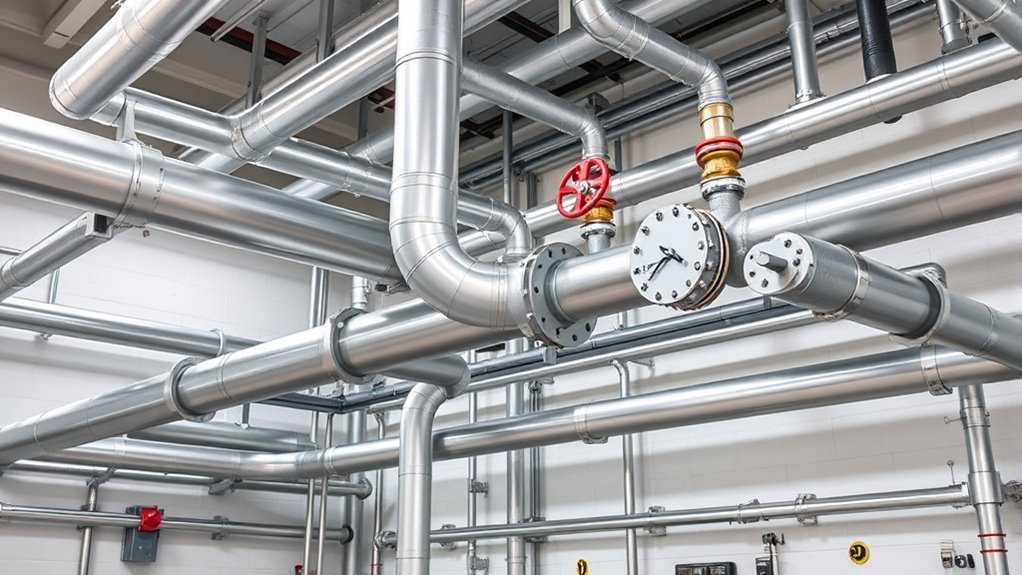
NFPA 30, the Flammable and Combustible Liquids Code, focuses on the safe handling and storage of liquid fuels. It provides detailed guidelines for piping materials, installation practices, and venting methods to minimize fire risks. When installing fuel piping, you must use approved materials that are compatible with the type of fuel and meet the necessary standards. Proper pipe sizing, secure connections, and corrosion protection are vital to ensure that the system operates reliably and safely over time. The safety requirements emphasize the importance of preventing leaks, spills, and vapors from escaping, which could ignite or cause health hazards. Understanding fire prevention strategies outlined in these codes is critical for safety.
NFPA 30 emphasizes safe handling, proper materials, and leak prevention to ensure reliable, hazard-free liquid fuel storage and piping.
NFPA 54, the National Fuel Gas Code, governs the installation of natural gas and propane systems. It emphasizes proper piping layouts, venting, and pressure regulation to guarantee safe gas delivery. You need to follow precise installation standards that specify pipe routing away from ignition sources, using approved fittings and materials. Venting plays a key role in preventing the buildup of dangerous gases within enclosed spaces. This code also mandates regular inspections and testing to verify that the piping and venting systems function correctly and remain compliant with safety requirements.
NFPA 58, the Liquefied Petroleum Gas Code, provides guidelines specific to LPG systems. It covers the design, installation, and operation of LPG piping and venting systems to prevent leaks and explosions. You are required to use approved materials and follow strict installation standards, including proper support and protection from physical damage. Venting must be designed to safely release vapors and prevent accumulation in confined spaces. These safety requirements are especially important because LPG is highly flammable and can cause severe hazards if improperly installed or maintained.
In all cases, understanding and applying these codes guarantees your fuel systems operate safely and efficiently. Regularly consulting the latest editions of NFPA 30, 54, and 58 helps you stay compliant with evolving safety standards. By prioritizing proper installation standards and safety requirements, you minimize risks and protect your property and loved ones from potential fuel-related accidents.
Frequently Asked Questions
How Often Should Fuel Piping Systems Be Inspected for Safety?
You should inspect your fuel piping systems at least annually to guarantee safety protocols are followed. Regular inspections help identify leaks, corrosion, or damage that could cause hazards. If you notice any issues, increase the inspection frequency until repairs are made. Consistent checks help maintain safe operation and prevent potential accidents, ensuring your system stays compliant with safety standards and reduces risk to people and property.
Are There Specific Venting Requirements for Alternative Fuel Types?
For alternative fuels, venting requirements vary considerably based on the specific type. You need to guarantee proper venting to prevent gas buildup and safety hazards. Check the manufacturer’s instructions and applicable standards, as some alternative fuels may require specialized venting systems or materials. Always verify that venting is adequate for the fuel’s properties, and consult local codes or experts to ensure compliance and safety in your installation.
Can Existing Fuel Piping Be Upgraded to Meet New Codes?
Think of your fuel piping system as a vintage ship needing an upgrade to sail new waters. You can retrofit existing piping with modern materials like corrosion-resistant steel, but you must follow renovation guidelines to guarantee safety and compliance. Upgrading piping material involves inspecting current pipes, making modifications, and possibly replacing sections to meet new standards. Always consult local codes and experts to navigate this process smoothly and avoid rough waters.
What Are the Penalties for Code Violations in Fuel Piping?
You face penalty enforcement if you violate fuel piping codes, which can include hefty fines, mandatory repairs, or even license suspension. Violations may also lead to increased inspection frequency and legal consequences if not addressed promptly. To avoid these violation consequences, guarantee your fuel piping systems adhere to safety standards, schedule regular inspections, and update any outdated or non-compliant piping to stay within legal requirements and maintain safety.
How Do Local Amendments Differ From NFPA Standards?
You might think NFPA standards are uniform everywhere, but local amendments often introduce code variations. These differences arise because local authorities adapt national codes to address regional safety concerns, climate, or specific industry needs. As a result, your local amendments could tighten or relax certain requirements compared to NFPA standards, so always verify with your local authority having jurisdiction to ensure compliance with the specific rules that apply to your project.
Conclusion
By mastering fuel piping and venting codes like NFPA 30, 54, and 58, you become the ultimate guardian against catastrophic fires and deadly explosions. Ignoring these standards could release chaos worse than a thunderstorm on a calm day, risking lives and property on an unimaginable scale. So, follow these codes diligently—you hold the power to prevent disaster and keep everyone safe. Don’t just comply—be a hero in the fight against fuel-related hazards!