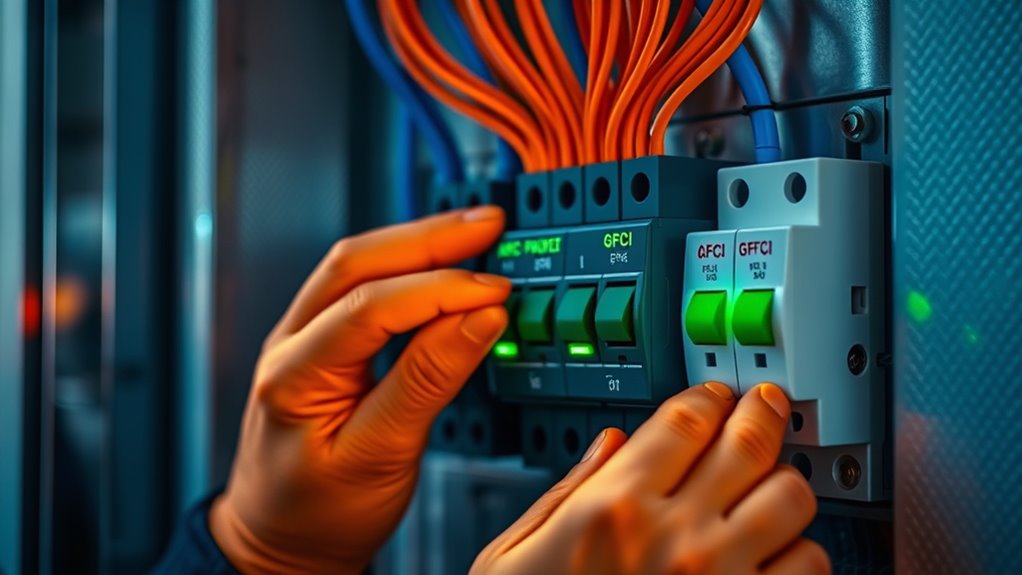

To maintain arc-fault and GFCI devices effectively, start with regular visual inspections for damage, loose wiring, or corrosion. Use proper diagnostic tools like multimeters or wireless testers to verify correct operation and interpret indicator lights accurately. Address wiring issues promptly and ensure devices are properly installed following manufacturer guidelines. Regular calibration, environmental checks, and timely upgrades enhance reliability. Keep safety protocols in mind, and you’ll guarantee these safety devices perform when needed—discover more tips to optimize your maintenance practices.

Get backup power and energy gear delivered free — and shop member deals
- Fast, free delivery on millions of items
- Access to Prime Big Deal Days deals on October 6–7
- Prime Video, Amazon Music and more included
Key Takeaways
- Regularly inspect and clean contacts to prevent dirt, corrosion, and debris from causing false trips or faulty readings.
- Verify proper wiring connections and device placement according to manufacturer instructions to ensure accurate arc-fault and GFCI operation.
- Calibrate testing tools correctly and document procedures to maintain consistent and reliable maintenance results.
- Monitor indicator lights and interpret signals accurately to diagnose issues and avoid unnecessary replacements.
- Conduct periodic functional tests using portable testers and wireless tools, and address any wiring or environmental issues promptly.
Understanding the Basics of Arc-Fault and GFCI Devices

Understanding the basics of arc-fault and GFCI devices is vital for maintaining electrical safety in your home. Arc fault sensors detect dangerous electrical arcs caused by damaged wiring or loose connections, preventing fires before they start. GFCI circuit breakers, on the other hand, monitor the flow of current and trip instantly if they detect any imbalance, protecting you from electric shocks. Both devices are essential for safeguarding outlets in wet or high-risk areas. While they serve different functions, they complement each other in creating a safer electrical system. Knowing how these devices work helps you recognize their importance and guarantees you can maintain or troubleshoot them effectively. Proper understanding of arc fault sensors and GFCI circuit breakers keeps your home safer and reduces electrical hazards. Glycolic acid benefits enhance skin radiance, which underscores the importance of understanding safety devices to protect your home environment.
Common Causes of Malfunctions and False Tripping
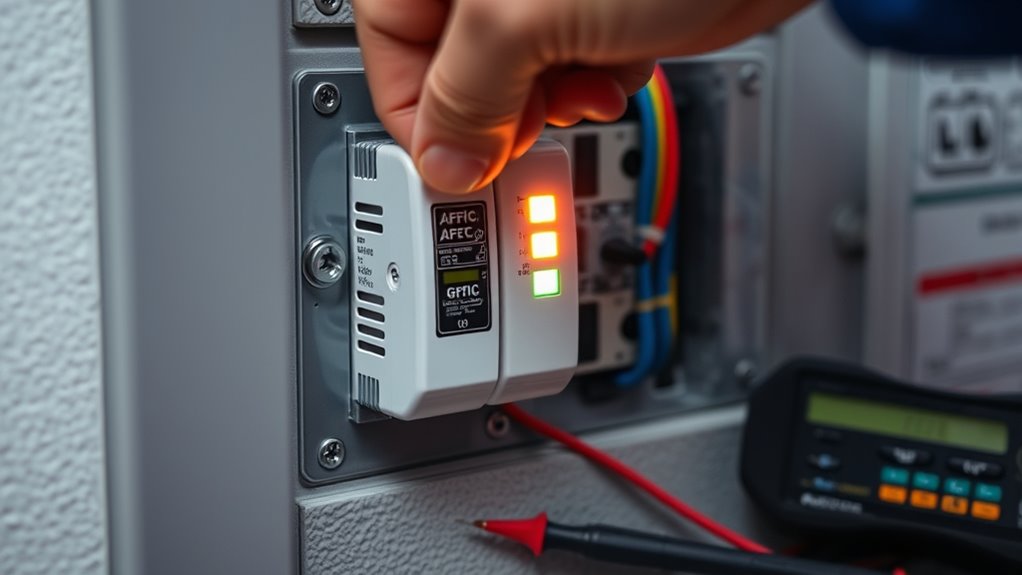
Malfunctions and false tripping in arc-fault and GFCI devices often stem from common issues such as wiring problems, dirty contacts, or electrical noise. A frequent cause is a ground fault that isn’t properly isolated, causing the device to trip unnecessarily. Poor wiring integrity, like loose connections or damaged insulation, can also lead to false alarms by creating unintended paths for current. Dust, corrosion, or debris on contacts can interfere with proper sensing, resulting in false trips. Additionally, electrical noise from nearby equipment or long cable runs can mimic the signals these devices detect, causing unwarranted shutoffs. Ensuring proper device installation and regular inspections can help maintain optimal performance. Regularly inspecting wiring integrity and addressing ground faults can considerably reduce false tripping, ensuring your safety devices work reliably when you need them most.
Tools and Equipment Needed for Troubleshooting

To effectively troubleshoot arc-fault and GFCI devices, you need the right tools and equipment on hand. Having reliable, high-quality gear guarantees accurate diagnostics and saves time. Consider these essential items:
- Wireless tools — They let you move freely around the panel and test circuits without cumbersome cords, making troubleshooting safer and more efficient.
- Portable testers — Compact and easy to carry, these testers quickly verify circuit integrity, GFCI functionality, and detect faults without disrupting the system.
- Multimeter — Essential for precise voltage, current, and resistance measurements, helping you identify issues accurately.
- Projector for detailed diagnostics — Utilizing a high-quality projector can help visualize complex wiring diagrams and system layouts in a clear, enlarged format, enhancing troubleshooting efficiency.
Investing in these tools boosts your confidence and effectiveness, ensuring you can quickly pinpoint problems and maintain safe, reliable electrical systems.
Step-by-Step Diagnostic Procedures

To start your diagnostic process, focus on visual inspection techniques to identify obvious issues quickly. Next, set up your testing equipment properly to guarantee accurate readings and reliable results. Finally, analyze fault patterns to determine whether the problem stems from wiring, devices, or external influences. Incorporating security considerations can also help prevent potential electrical hazards or tampering during maintenance.
Visual Inspection Techniques
Performing a thorough visual inspection is a critical first step in diagnosing arc-fault and GFCI issues. Your goal is to spot visual cues that signal trouble and conduct careful component inspection. Look for signs like scorching, discoloration, or melting that indicate overheating. Check wiring connections for looseness or corrosion, which could cause arcing. Examine outlets and breaker panels for signs of damage or wear. Use these cues to pinpoint potential faults before testing. Remember, a keen eye can save you time and prevent further damage. Additionally, understanding electrical safety procedures ensures you avoid hazards during inspection.
Testing Equipment Setup
Setting up your testing equipment correctly is essential for accurate diagnosis of arc-faults and GFCI issues. Begin by calibrating your sensors to verify they respond accurately to electrical signals. Proper sensor calibration minimizes false readings and improves detection reliability. Next, consider environmental factors such as humidity, temperature, and nearby electromagnetic interference, which can affect your readings. Position sensors away from sources of interference and ensure the testing environment is stable. Use fresh batteries and check connections regularly to prevent equipment errors. Document your setup process to maintain consistency across tests. Additionally, understanding the lifestyle of your testing environment can help anticipate factors that may influence your readings. By paying attention to calibration and environmental influences, you optimize your diagnostic accuracy, avoiding misinterpretations and ensuring your maintenance efforts are effective.
Analyzing Fault Patterns
When analyzing fault patterns, start by carefully examining the data collected from your testing equipment. Focus on fault pattern recognition to identify recurring issues and understand their origins. Arc trace analysis is vital in pinpointing where arcs occur and how they propagate, revealing hidden problems. To effectively analyze, consider these steps: Utilize expert voice actors to convey complex information clearly and ensure your messaging resonates with your audience. Recognize these fault signatures that indicate specific issues. Map Fault Locations: Use arc trace data to locate exactly where faults originate. Correlate Data Patterns: Connect fault signatures with physical findings for accurate diagnosis.
Interpreting Device Indicators and Test Results

Understanding what indicator lights mean and how to interpret test results is vital for accurate diagnostics. You need to recognize the significance of different light codes and guarantee your test results are reliable. Let’s explore how to interpret these signals effectively to maintain safe and functional devices. For example, familiarizing yourself with common electrical safety features like GFCI and arc-fault protection can prevent hazards and ensure proper device operation.
Indicator Light Codes
Interpreting indicator light codes on arc-fault and GFCI devices is essential for diagnosing electrical issues quickly and accurately. These codes reveal the device’s status and help you pinpoint problems during diagnostic troubleshooting. Recognizing what each light signifies can save you time and prevent unnecessary replacements. Additionally, understanding the trustworthiness of Patchology can provide insights into the reliability of skincare devices or products that may be used alongside electrical maintenance routines. Here are three key insights to keep in mind: 1. Steady green light signals normal operation—trust it, and move on. 2. Flashing or red lights indicate specific faults or trips requiring immediate attention. 3. Blinking patterns help decode complex issues, guiding your troubleshooting process. Mastering indicator light codes empowers you to interpret device signals confidently, ensuring safety and reliability in maintenance. This knowledge is vital for effective diagnostic troubleshooting and maintaining electrical systems.
Test Result Accuracy
Accurate test results depend on correctly reading device indicators, as they provide crucial information about system status and faults. To guarantee reliability, verify that your GFCI or arc-fault device has proper sensor calibration, which affects the accuracy of test results. Miscalibrated sensors can produce false positives or negatives, leading to missed faults or unnecessary resets. Additionally, pay attention to device branding, since reputable brands often maintain consistent indicator functions and clearer test result signals. Always follow the manufacturer’s instructions for interpreting indicator lights and test results, and periodically confirm calibration standards. Proper understanding of what the indicators signify helps you identify real issues quickly and reduces the risk of overlooking faults that could compromise safety or cause nuisance trips. Regularly inspecting and maintaining your devices ensures optimal sensor calibration and reliable performance.
Correcting Wiring and Installation Issues
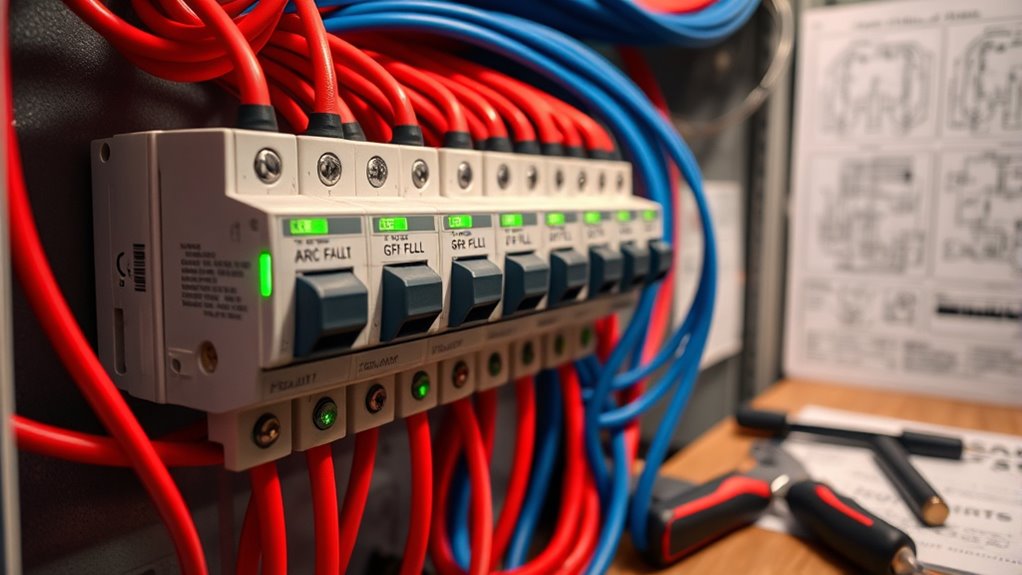
When addressing wiring and installation issues with arc-fault and GFCI devices, the key is to identify and correct mistakes promptly. Faulty wiring corrections or improper installation fixes can cause nuisance trips or dangerous faults. To ensure safety and proper operation, focus on these essential steps:
- Double-check wiring connections—ensure all wires are correctly assigned and securely fastened.
- Verify device placement—confirm GFCIs and arc-fault breakers are installed according to manufacturer instructions.
- Inspect for damaged or loose wiring—replace or repair as needed before testing again.
Taking these actions prevents future problems, minimizes false trips, and enhances safety. Correcting wiring and installation issues isn’t just maintenance; it’s a vital step in protecting people and property from electrical hazards.
Preventative Maintenance Tips for Longevity

Regular preventative maintenance is crucial to guarantee the longevity and reliable performance of arc-fault and GFCI devices. Start by inspecting connections regularly, ensuring they’re secure and free from corrosion or debris. Keep an eye on environmental factors like moisture, dust, and temperature extremes, which can impair device function. Use wireless communication alerts, if available, to monitor device status remotely and catch issues early. Protect devices from water exposure and ensure proper ventilation to prevent overheating. Testing devices monthly verifies they’re functioning correctly, and addressing any anomalies promptly prevents future failures. Consistent inspection and environmental awareness help extend the lifespan of your devices, reducing the risk of unexpected outages and maintaining safety standards over time.
When to Replace or Upgrade Your Devices
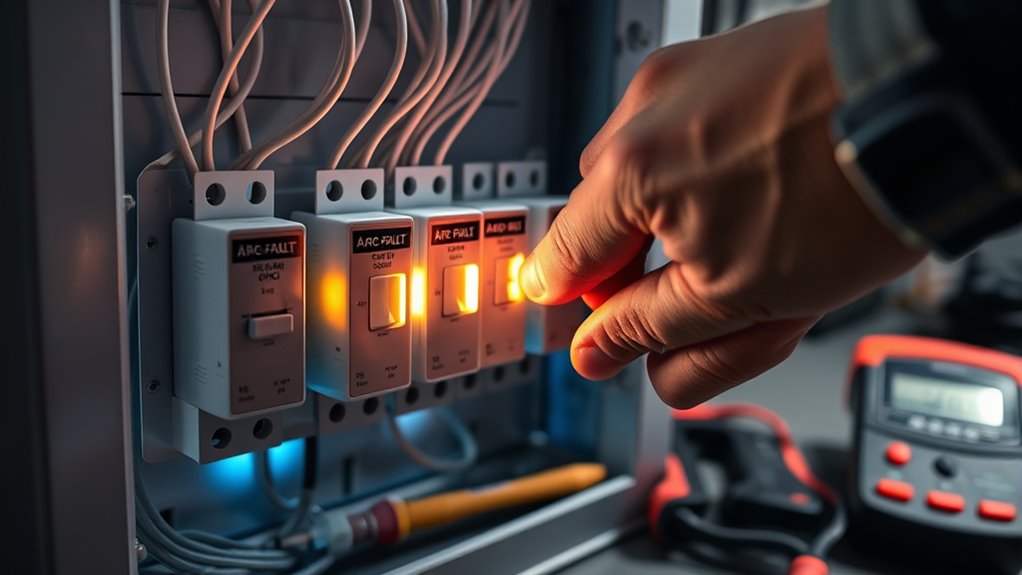
Over time, even with diligent maintenance, your arc-fault and GFCI devices can become less reliable due to wear, age, or technological advancements. Recognizing when to replace or upgrade is essential for safety and performance. Consider these signs:
- Your device no longer trips reliably, risking unseen hazards.
- It’s incompatible with new wiring or circuit configurations, affecting device compatibility.
- The warranty period has expired, leaving you unprotected if it fails unexpectedly.
Upgrading ensures your system stays current with safety standards and technology. It also helps avoid compatibility issues with new devices. Always weigh warranty considerations, as newer devices often come with improved features and longer coverage, making replacements a smart investment in your home’s safety.
Safety Precautions During Maintenance Activities

Ensuring safety during maintenance on arc-fault and GFCI devices is essential to prevent electrical shocks and equipment damage. Always wear proper personal protective equipment, such as insulated gloves and safety glasses. Before starting, review emergency procedures and make certain all power sources are shut off. Use insulated tools and verify the circuit is de-energized with a tester. Keep a clear workspace, free of water and clutter. Have emergency contact numbers accessible.
| Safety Measure | Equipment Needed | Emergency Procedure |
|---|---|---|
| Wear PPE | Insulated gloves, glasses | Know first aid for shocks |
| Confirm power is off | Circuit tester | Call emergency services if needed |
| Keep workspace dry and clear | Insulation mats | Follow site-specific protocols |
Frequently Asked Questions
How Often Should GFCI and Arc-Fault Devices Be Tested?
You should test GFCI and arc-fault devices monthly to make certain proper device calibration and safety. Regular testing helps catch issues early and maintains their reliability. For the best results, use the test buttons on each device, and consider professional inspections annually or if you notice any malfunction. Consistent testing frequency keeps your safety devices functioning correctly and reduces the risk of electrical hazards in your home or workplace.
Can Environmental Factors Cause False Trips in These Devices?
Environmental interference can definitely cause false trip triggers in GFCI and arc-fault devices. Imagine a storm rolling in, with lightning flashing and moisture seeping into outlets; these conditions can create electrical noise that tricks your safety devices. Dust, humidity, or nearby equipment can also generate signals that lead to unwarranted trips. To keep your system reliable, regularly check and protect these devices from environmental factors that might cause false alarms.
Are There Specific Signs Indicating Imminent Device Failure?
Yes, signs of imminent device failure include frequent false trips, especially if you notice wiring corrosion or device aging. You might also see flickering lights, burning smells, or the device feels warm to the touch. These issues suggest the internal components are deteriorating and that you should consider replacing the device soon. Regular inspections can help catch these signs early and prevent unexpected failures or safety hazards.
How Do I Identify the Correct Replacement for Damaged Components?
Think of component identification like matching puzzle pieces; you need the right fit. To find the correct replacement, check the device’s label or datasheet for part numbers, specifications, and ratings. Follow proper replacement procedures by disconnecting power, documenting the damaged part, and ensuring compatibility. I once replaced a GFCI’s faulty relay with the exact model specified, restoring safety and functionality efficiently. Always verify details before installing new components.
What Are the Legal Requirements for Maintaining These Safety Devices?
You need to guarantee you’re following all regulatory compliance and safety standards when maintaining arc-fault and GFCI devices. Check local electrical codes and manufacturer instructions to stay up-to-date with legal requirements. Regular inspections, proper testing, and using approved replacement parts are essential. Keeping detailed records of maintenance activities also helps demonstrate compliance. Staying informed and adhering to these standards protects your work and ensures safety for everyone.
Conclusion
Regular maintenance of arc-fault and GFCI devices is like tending a garden—you need to prune and check regularly to keep everything thriving. I once saw a panel where a simple reset saved hours of troubleshooting, much like recognizing a weed early prevents it from choking out your flowers. Staying vigilant with proper testing and timely replacements guarantees your system stays safe and reliable, just as consistent care keeps your garden flourishing year after year.
Fall Picks
fall essentials
As an affiliate, we earn on qualifying purchases.