
To make certain your emergency system wiring stays separate from other circuits, you should use dedicated pathways, dedicated circuit breakers, and separate panels or subpanels. Avoid sharing conduits or raceways with non-emergency circuits, and install surge protection devices designed for emergency systems. Regular inspections and proper grounding help maintain this separation, minimizing risks and ensuring system reliability during outages. Continue exploring to discover detailed techniques that enhance safety and compliance even further.
Key Takeaways
- Use dedicated circuit breakers and panels to physically separate emergency wiring from other circuits.
- Implement separate wiring pathways and conduit systems to prevent cross-contamination.
- Install surge protection devices specific to emergency systems to safeguard against voltage spikes.
- Follow electrical codes and standards to ensure proper grounding, insulation, and secure connections.
- Conduct regular inspections and testing to verify ongoing separation and system integrity.
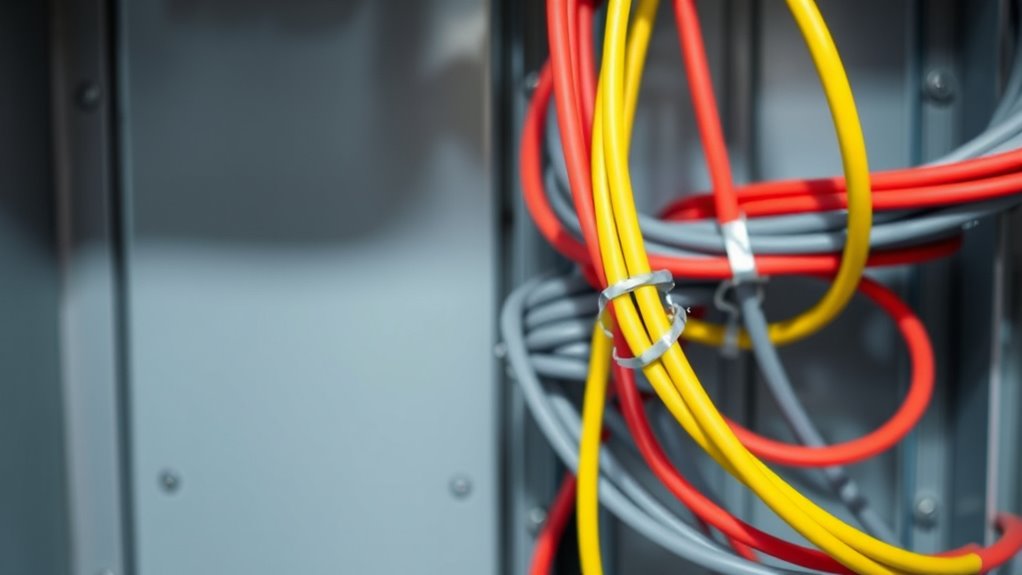
Ensuring the separation of emergency system wiring from other electrical circuits is essential for maintaining safety and reliability. When emergency systems are properly isolated, they can operate effectively during power disruptions or electrical faults without interference from the regular power supply. This separation minimizes the risk of accidental outages or failures that could compromise safety during critical moments. One key aspect of this separation is implementing robust circuit isolation, which involves physically and electrically dividing emergency wiring from all other circuits. By doing so, you prevent faults, surges, or disruptions originating from non-emergency circuits from affecting essential safety systems. Proper circuit isolation is fundamental to ensuring that emergency power remains unaffected by issues in the standard electrical system.
Properly isolating emergency wiring ensures safety and system reliability during power disruptions.
Power surge protection plays a pivotal role in safeguarding emergency wiring. Electrical surges caused by lightning, switching operations, or faults in other parts of the building can travel through shared circuits and damage sensitive emergency equipment. Installing surge protection devices specifically designed for emergency systems ensures that any unexpected voltage spikes are absorbed before reaching critical components. This proactive approach helps maintain the integrity of emergency systems, ensuring they function when needed most.
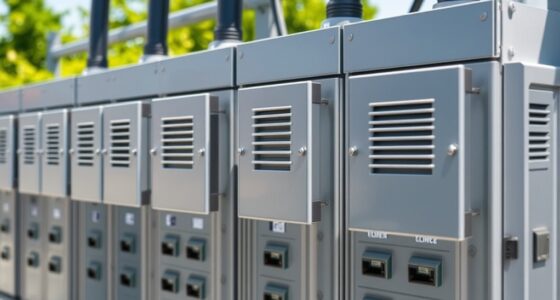
Circuit isolation isn’t just about physical separation; it also involves proper wiring practices and the use of dedicated circuit breakers. You should ensure that emergency circuits are fed from separate, clearly labeled panels or subpanels. This makes it easier to identify and service them without risking accidental connections to non-emergency circuits. Implementing dedicated circuit breakers for emergency wiring adds an extra layer of protection, as it allows quick disconnection during maintenance or in case of faults, without affecting the rest of the electrical system.
Additionally, adhering to strict wiring standards and codes ensures that the separation is maintained consistently. Proper grounding, insulation, and secure connections are critical to prevent accidental cross-connections or shorts that could compromise emergency functions. Regular inspections and testing are also essential to verify that the isolation remains intact over time. This proactive maintenance helps identify potential vulnerabilities before they cause failures.
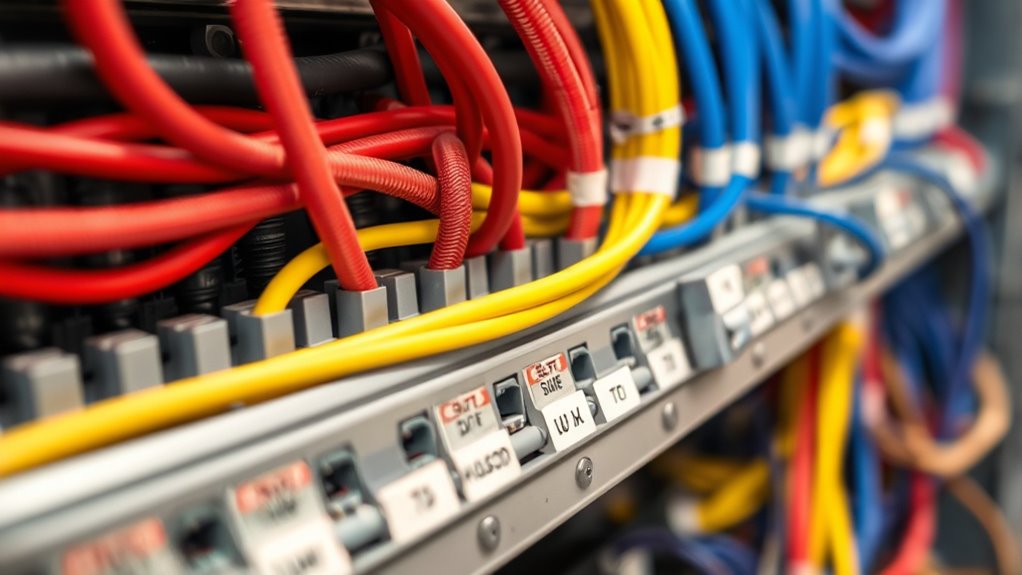
In practice, you’ll want to avoid routing emergency wiring through shared conduit or raceways with other circuits. Instead, use separate pathways and protective devices to keep the systems isolated. This not only enhances safety but also simplifies troubleshooting and maintenance. When emergency wiring is properly separated and protected with surge suppression and circuit isolation, you’re creating a reliable safety net that ensures critical systems are always ready to operate when needed. Ultimately, this careful separation is a fundamental step towards safeguarding lives and property during emergencies.
Frequently Asked Questions
What Are the Common Codes Governing Emergency Wiring Separation?
You need to follow codes like NFPA 70 (NEC) and NFPA 72 for emergency wiring separation. These standards require that fire alarm circuits and power supply wiring be kept separate from other electrical circuits to guarantee system reliability and safety. By adhering to these codes, you prevent interference, ensure proper operation during emergencies, and maintain system integrity, especially for critical functions like fire alarms and emergency power supplies.
How Often Should Emergency Wiring Systems Be Inspected?
You should inspect emergency wiring systems at least annually to guarantee safety and compliance. Routine maintenance is essential, so check connections, test system functions, and verify wiring integrity regularly. Inspection frequency may vary based on local codes or manufacturer recommendations, but annual inspections are generally required. Staying vigilant helps prevent failures during emergencies and keeps your system reliable, ensuring it performs effectively whenever needed.
What Are the Penalties for Non-Compliance With Wiring Separation Standards?
You face penalties that can include hefty fines, increased safety risks, and potential shutdowns if you ignore wiring separation standards. Non-compliance may also lead to costly repairs and installation challenges later, which drive up overall costs. To avoid these penalties, make certain you follow wiring separation guidelines carefully, invest in proper installation practices, and stay updated on regulatory requirements. This proactive approach helps you save money and maintain safety standards.
Can Emergency System Wiring Share Conduits With Other Circuits?
Oh, absolutely, you can share conduits with other circuits—if you enjoy chaos and confusion. But seriously, emergency system wiring shouldn’t mingle with other circuits to guarantee conduit compatibility and maintain wiring color coding. Mixing them risks critical failures and violates safety standards. Keep your emergency wiring separate, clearly color-coded, and properly organized; your safety depends on it. Don’t let conduit compatibility become a conduit catastrophe.
What Materials Are Recommended for Emergency Wiring Insulation?
For emergency wiring insulation, you should use fire-resistant materials like thermoplastic or rubber that offer high insulation durability. These materials withstand heat and mechanical stress, ensuring safety and longevity. Look for cables with fire-retardant coatings or jackets specifically designed for emergency systems. This helps prevent damage, reduces fire risk, and maintains reliable operation during emergencies, aligning with safety standards and ensuring compliance with electrical codes.
Conclusion
By keeping emergency system wiring separate from other circuits, you guarantee faster response times and increased safety during vital moments. Notably, studies show that properly isolated emergency wiring can reduce system failure rates by up to 40%. So, taking this simple step not only boosts reliability but also provides peace of mind. Remember, clear separation isn’t just a best practice—it’s an essential safety measure that can make all the difference when seconds count.