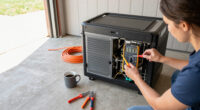
When people compare portable solar generators with portable gas generators, the practical question is usually how to keep essential devices running away from a wall outlet or during an outage. Both can supply portable electricity, but they work differently: a solar generator is a battery power station that may recharge from panels, while a gas generator makes power by burning fuel. That distinction affects how long each can run, where it can operate, how much attention it needs, and what kind of equipment it can support.

Get backup power and energy gear delivered free — and shop member deals
- Fast, free delivery on millions of items
- Access to Prime Big Deal Days deals on October 6–7
- Prime Video, Amazon Music and more included
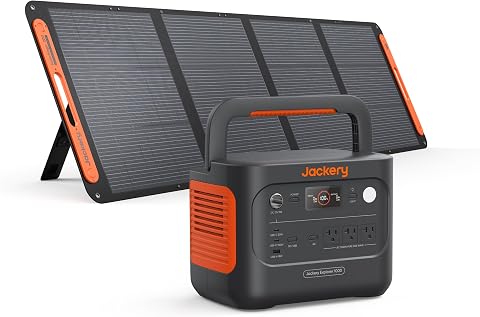
Jackery Solar Generator 1000 v2 with 200W Solar Panel
- ✔ Battery capacity: 1,070Wh
- ✔ Battery type: LFP
- ✔ AC output: 1,500W
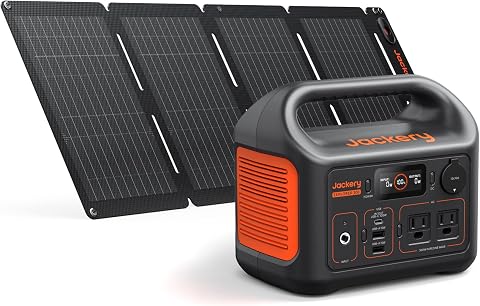
Jackery Explorer 300 Portable Power Station with 40W Solar Panel
- ✔ Battery capacity: 292Wh
- ✔ Rated output: 300W
- ✔ Peak surge: 600W

ZeroKor 300W Portable Power Station with 60W Solar Panel
- ✔ Maximum output: 300W
- ✔ Battery capacity: Not specified
- ✔ Included solar panel: 60W monocrystalline
A battery-based solar generator is the stronger fit for quiet use around people, powering electronics, and avoiding exhaust at the point of use. A gas generator generally suits longer periods of high demand when fuel is available and outdoor operation is practical. The right choice turns on your loads and expected runtime: a battery unit is convenient for modest, quiet power, while gas is often more capable for sustained heavy use. Neither label guarantees a particular output, so compare the unit’s wattage, battery capacity, charging rate, and outlets against your own equipment.
At a Glance
| Criteria | Portable solar generator | Portable gas generator | Winner |
|---|---|---|---|
| Power and appliance compatibility | Inverter output varies by model; check continuous and surge wattage before connecting appliances. | Available output varies; many models can support heavier loads, but check rated and surge wattage. | Depends |
| Runtime and refueling | Limited by stored battery energy; solar can extend use when conditions and panel input allow. | Can run while fuel is available; runtime depends on load, tank size, and fuel consumption. | B |
| Recharging and fuel access | Can recharge from solar panels or, on many models, a wall outlet or vehicle outlet. | Requires the specified fuel and safe outdoor operation; supply may be difficult during disruptions. | Depends |
| Noise and emissions at the point of use | Quiet operation with no engine exhaust at the unit. | Engine noise and exhaust are part of operation. | A |
| Portability and setup | Typically simple to start and connect; panels add carrying and setup needs. | Engine and fuel add weight and handling; needs outdoor placement and maintenance. | A |
| Upfront and ongoing cost | Often higher upfront cost for substantial capacity; no gasoline purchases during battery operation. | May cost less upfront for high output, with ongoing fuel and maintenance expenses. | Depends |
| Outage and overnight use | Useful for electronics and selected essentials; capacity and recharge conditions limit extended heavy loads. | Can sustain higher demand when fuel is accessible, but must stay outdoors and requires safe operation. | Depends |
Jackery Solar Generator 1000 v2 with 200W Solar Panel
For buyers who need a solar generator to support more than phones and lights, the Jackery Solar Generator 1000 v2 is the strongest match in this group. Its 1,070Wh LFP battery and 1,500W AC output give it substantially more headroom than either 300W-class station. That difference changes what we can reasonably plan to power: this model is aimed at appliances and several devices, while the smaller Jackery and ZeroKor are better suited to lighter loads.The included 200W solar panel is also the largest in the lineup. Jackery lists about six hours to charge to 80% with that panel, giving buyers a useful reference point for trips where they can leave the setup collecting sunlight. The station weighs 23.8 lbs, so it remains portable for a car-camping setup, but it is far less convenient to carry on foot than the 7.5 lb Explorer 300. Three pure sine wave AC outlets, two USB-C PD ports, app controls, and LED lights make it the most flexible bundle here.There are practical qualifications. The one-hour charging option requires enabling emergency charging in the app, so we should not assume that speed is the everyday default. Its stated solar time is still a substantial wait, and actual results depend on conditions. Compared with the Explorer 300, we gain capacity and appliance output at the cost of carry weight; compared with ZeroKor, we get a clearly specified battery and much higher AC output, but a bulkier station. For emergency preparedness or base-camp use, that exchange makes sense. For minimalist outings, it is more power and weight than we need.
Pros:
- 1,070Wh LFP battery and 1,500W AC output provide the greatest stated capacity and continuous output here.
- Included 200W panel is the largest in this comparison.
- Three AC outlets, two 100W USB-C PD ports, app controls, and LED lights broaden its usefulness.
- Battery is rated for 4,000 cycles to over 70% capacity, with five-year warranty coverage listed.
Cons:
- At 23.8 lbs, it is much heavier to carry than the Explorer 300.
- One-hour charging requires enabling emergency charging in the app.
- The included panel is listed to take about six hours to reach 80%, so solar replenishment still needs planning.
Best for: Car campers and households seeking a portable station with enough specified capacity and AC output for selected appliances and multiple devices.
Not ideal for: Hikers or buyers prioritizing the lightest possible kit, or anyone who needs rapid solar replenishment without planning around sunlight.
Bottom line: We recommend the 1000 v2 for buyers who need the most capable and clearly specified solar power setup in this lineup and can accommodate its added weight.
“We recommend the 1000 v2 for buyers who need the most capable and clearly specified solar power setup in this lineup and can accommodate its added weight.”
Jackery Explorer 300 Portable Power Station with 40W Solar Panel
The Jackery Explorer 300 is the easiest station in this comparison to take along when carrying weight matters. At 7.5 lbs, it is less than a third the weight of the 1000 v2, while still listing two AC outlets and a 100W USB-C PD port. Its 292Wh battery and 300W rated output put it firmly in the small-device category: think phones, lights, camera gear, and other modest loads rather than appliances that need sustained high wattage.Its strongest differentiator is the combination of LiFePO4 chemistry and a stated rating of over 4,000 charge cycles to 70% capacity. That gives this compact pick an appealing durability profile compared with a basic short-trip power bank, and it contrasts with the 1000 v2 mainly in scale rather than battery chemistry. It also includes a 40W solar panel, so the bundle can recharge away from an outlet. Jackery estimates about 7.5 hours to 80% with that panel, which is slow enough that buyers should view solar as a gradual refill, not a quick turnaround.Compared with ZeroKor, the Explorer 300 is lighter and its 292Wh capacity is explicitly stated, making runtime planning more straightforward. ZeroKor’s panel is 60W, but that does not resolve its unknown battery capacity. The Explorer’s tradeoff is its relatively small energy reserve and low output ceiling; the 600W peak surge does not make it a 600W continuous power source. We would choose it for compact, predictable support on short trips, and skip it if our plan depends on running appliances or powering devices for multiple days without careful rationing.
Pros:
- At 7.5 lbs, it is the lightest option with a stated weight in this comparison.
- 292Wh capacity and 300W rated output make its intended small-load role clear.
- LiFePO4 battery is rated for over 4,000 charge cycles to 70% capacity.
- Includes a 40W solar panel and a 100W USB-C PD port.
Cons:
- The included 40W panel takes about 7.5 hours to reach 80% under the stated estimate.
- Its 300W rated output is unsuitable for many appliances.
- The station and panel may ship separately.
Best for: Travelers and campers who want a lightweight, capacity-specified station for small electronics and modest loads.
Not ideal for: Buyers who need sustained appliance power, a large energy reserve, or fast solar charging from the included panel.
Bottom line: We’d choose the Explorer 300 when low carry weight and a clearly stated small-load capacity matter more than appliance output or quick solar charging.
“We’d choose the Explorer 300 when low carry weight and a clearly stated small-load capacity matter more than appliance output or quick solar charging.”
ZeroKor 300W Portable Power Station with 60W Solar Panel
The ZeroKor 300W bundle stands out for including a 60W monocrystalline solar panel and supporting three recharge routes: an AC outlet, a 12V car outlet, or a compatible solar panel. That makes it appealing for buyers moving between home, car, and campsite charging. Its panel is rated at 20.5% conversion efficiency and supplies USB-A, USB-C, and DC outputs, which can add flexibility when the station itself is not the only device we need to top up.Its main drawback is unusually important for a solar generator: battery capacity is not specified. Without a watt-hour figure, we cannot make a grounded estimate of runtime or compare stored energy directly with the Explorer 300’s 292Wh or the 1000 v2’s 1,070Wh. The 300W maximum output also puts it alongside the Explorer in the small-load tier, not alongside the 1000 v2 for appliance support. The 60W panel is larger than the Explorer’s 40W panel, but panel wattage alone does not tell us how long the ZeroKor takes to recharge.For basic devices, the ZeroKor provides two AC outlets, three USB ports, a quick-charge USB port, DC output, an SOS flashlight, and listed electrical protections. Those features make it a versatile bundle on paper, but they do not make higher-wattage appliances appropriate; the supplied guidance says to avoid appliances over 300W. We also need to keep the panel junction box dry. Compared with the Explorer 300, ZeroKor offers a higher-wattage included panel and more recharge choices, while Jackery gives us a defined battery capacity, lower stated weight, and a long cycle rating. We would choose ZeroKor only when its panel and charging flexibility outweigh the uncertainty about stored energy.
Pros:
- Includes a 60W monocrystalline solar panel with USB-A, USB-C, and DC outputs.
- Supports charging from AC, a 12V car outlet, or compatible solar input.
- Provides AC, DC, and USB outputs plus an SOS flashlight.
- Lists short-circuit, over-current, over-voltage, overload, and overheating protections.
Cons:
- Battery capacity is not specified, making runtime comparison difficult.
- Maximum output is 300W, so higher-powered appliances are outside its stated use.
- The solar panel junction box is not waterproof and must be kept dry.
Best for: Buyers who want a bundled 60W panel and several ways to recharge a compact, low-output station.
Not ideal for: Anyone who needs to estimate runtime confidently, power loads above 300W, or use the solar panel in wet conditions without protecting its junction box.
Bottom line: We’d consider the ZeroKor for flexible recharging and its included 60W panel, but the missing capacity figure keeps it behind the more predictable Jackery options.
“We’d consider the ZeroKor for flexible recharging and its included 60W panel, but the missing capacity figure keeps it behind the more predictable Jackery options.”
As an Amazon Associate we earn from qualifying purchases.
Key Differences
The central tradeoff is stored energy versus fuel-based runtime. A solar generator begins with a finite battery reserve, so its usefulness depends on how much energy your devices consume and how quickly the unit can recharge. Solar panels can replenish that reserve in suitable sunlight, but their real-world contribution changes with weather, shade, panel placement, and the power station’s solar input limit. Gas units can keep making electricity as long as they have fuel, which can be a meaningful advantage when demand stays high for hours or days.
The other major difference is where and how you can use the power. Battery units run quietly and have no engine exhaust at the point of use, making them more comfortable near a campsite or indoors for suitable electrical connections. Gas generators require outdoor operation because their exhaust contains carbon monoxide, a deadly, odorless gas. They also produce engine noise and need fuel handling and maintenance. In practice, the best fit is often clear: choose solar for quiet, simpler power for devices and selected essentials; choose gas for sustained high output when you can operate it safely outside and keep fuel available.
Detailed Comparison
Power and appliance compatibility (major difference)
Neither category wins on its name alone: capacity differs widely by model. Gas generators often offer higher output for large or multiple loads, while solar units are well suited to electronics and selected household essentials. Check continuous watts for devices that run steadily and surge watts for equipment that needs extra power at startup. The gap can be major if you need to run high-demand appliances; it may be minor for phones, lights, laptops, and small electronics. Match the actual ratings to your equipment before buying.
Runtime and refueling (Portable gas generator wins — major)
Gas usually wins for long stretches of power because the unit can keep operating as long as it has fuel. A solar unit is limited by its battery reserve until it can recharge, and its runtime shrinks as the load grows. Solar input can extend operation, but does not make runtime unlimited: sunlight, panel output, and daily energy use all matter. This is a major difference for multi-day outages or sustained heavy loads. For short sessions or intermittent use, a suitably sized battery may last long enough without fuel stops.
Recharging and fuel access (moderate difference)
Solar units can draw energy from compatible panels, and many can also charge from a wall outlet or vehicle outlet. Gas units depend on access to their specified fuel. Neither source is guaranteed during an emergency: cloudy weather can slow solar charging, and fuel may be scarce or inconvenient to store. This is a moderate difference that depends on the location and expected conditions. Compare the unit’s maximum solar input, panel compatibility, recharge time, and fuel use at your likely load rather than assuming either option will replenish itself quickly.
Noise and emissions at the point of use (Portable solar generator wins — major)
Solar wins clearly for quiet operation and the absence of engine exhaust at the unit. That makes battery power less disruptive at campsites, in crowded outdoor settings, or near a sleeping area. A gas generator’s engine makes noise and produces exhaust, so it must run outdoors, away from doors and windows, following the manufacturer’s directions. The gap is major when people will be close to the equipment or when quiet matters. A battery unit does not remove the need to follow electrical and battery safety instructions.
Portability and setup (Portable solar generator wins — moderate)
Battery units usually ask less of the user at startup: charge the battery, connect a device, and monitor the remaining capacity. That earns solar a moderate convenience advantage for short trips and quick backup. The comparison shifts with larger models, which can be heavy, and with panel kits, which add equipment to carry and position. Gas units require fuel, outdoor placement, and routine upkeep. They may be practical to move with a vehicle, but carrying the generator and fuel is part of the job.
Upfront and ongoing cost (moderate difference)
There is no universal price winner because output, capacity, included panels, and build quality vary. For comparable high output, a battery system with enough stored energy and panels can cost more upfront. Gas may offer more output per initial dollar, but fuel and maintenance add costs during use. This is a moderate, use-dependent difference: occasional quiet charging can favor solar over time, while frequent heavy operation can make fuel cost and runtime central to the calculation. Compare total kit cost and likely use, not the generator alone.
Outage and overnight use (major difference)
Solar is more comfortable for quiet overnight use and avoids running an engine near the home. But battery capacity must cover the devices you plan to use, and charging from panels depends on daylight and conditions. Gas has an advantage for sustained power when fuel is available, but it must remain outdoors and cannot be run in a home, garage, or other enclosed space. This is a major distinction for outage planning. Neither option should be treated as whole-home backup without checking output, connection requirements, and safe installation guidance.
Portable solar generator: Pros and Cons
Pros:
- Quiet operation suits campsites and nearby sleeping areas.
- No engine exhaust at the unit during battery operation.
- Can recharge from compatible solar panels, with wall or vehicle charging available on many models.
- Simple access to power for electronics and selected essentials.
Cons:
- Stored energy limits runtime until the unit recharges.
- Solar charging varies with sunlight, panel setup, and input limits.
- Higher-capacity battery systems and panels can raise upfront cost.
- Heavy appliances may exceed the unit’s continuous or startup wattage.
Portable gas generator: Pros and Cons
Pros:
- Can continue generating power as long as fuel is available.
- Often a practical choice for sustained higher loads, depending on model ratings.
- May provide more output for the initial purchase cost than a large battery system.
- Does not rely on sunlight to replenish its energy supply.
Cons:
- Engine noise can disrupt nearby people and activities.
- Exhaust contains carbon monoxide; operation must be outdoors and carefully placed.
- Requires fuel storage and refills, plus routine maintenance.
- Fuel access can be uncertain during a widespread emergency.
Who Should Choose What
Choose Portable solar generator if:
- You need quiet power for camping, outdoor work, or nearby electronics.
- You mainly want to charge phones, laptops, lights, and other modest loads.
- You want the option to recharge from compatible solar panels and can plan around changing sunlight.
- You value simple operation and no engine exhaust at the point of use.
Choose Portable gas generator if:
- You need to run higher loads for extended periods and can safely operate the unit outdoors.
- You have reliable access to the specified fuel and can manage storage and refills.
- You prioritize sustained output over quiet operation and low-maintenance use.
- Your outage plan includes appliances whose wattage exceeds the battery units you are considering.
Skip both if: Neither fits if you need automatic, whole-home backup without fuel handling, battery planning, or outdoor generator operation; compare a professionally planned standby system or reduce the loads your backup must serve.
Value for Money
Pay more for a solar generator when the benefits you will use are quiet operation, low-effort access to stored electricity, and the ability to recharge from sunlight. The premium is easier to justify for frequent camping, work near other people, or regular charging of modest devices. It is harder to justify a large battery and panel package if you need heavy loads for long periods but rarely have useful sunlight.
Gas can be the better value when you need sustained higher output and can operate the generator outdoors with a dependable fuel supply. Its purchase price is only part of the cost: include fuel, maintenance, and the practical effort of handling both. Solar’s purchase price also needs context: compare battery capacity and included panels, and remember that limited solar input can make a large battery slow to refill. For occasional short use, the better value is the smallest unit that reliably covers your real loads.
Final Verdict
For quiet portable power for electronics and selected essentials, choose a portable solar generator. It is easier to live with near people and can recharge from sunlight, provided you size the battery for your loads and accept that solar charging varies. For long periods of higher demand, choose a portable gas generator if you can keep fuel available and follow outdoor operating instructions. The deciding factor is sustained energy: if you need more than a battery can store and replenish, gas has the advantage; if quiet, straightforward power matters more than extended heavy output, solar is the better fit for most casual portable use. Check rated output, surge capacity, expected runtime, and recharge or fuel needs before choosing either.
Frequently Asked Questions
Can a portable solar generator run a refrigerator?
Some can, but the answer depends on the refrigerator’s running and startup wattage, the power station’s continuous and surge ratings, and its battery capacity. Estimate how long you need it to run and account for other devices drawing power. Solar panels may replenish the battery, but actual charging varies with sunlight and system limits.
Does a solar generator work at night?
Yes. It supplies electricity stored in its battery, so panels do not need to be producing power at that moment. Night use draws down the reserve; the unit must be recharged later from a compatible source, such as sunlight or, on many models, a wall outlet.
Can I run a gas generator indoors during an outage?
No. Portable gas generators produce carbon monoxide, which can kill without warning. Operate one outdoors, away from doors and windows, and follow the manufacturer’s placement and safety instructions. Never run it in a home, garage, or enclosed space.
Which is better for camping?
For quiet trips with modest electrical needs, a portable solar generator is usually the more comfortable choice. It avoids engine noise and can recharge from panels in suitable conditions. If your camping setup needs sustained high output, a gas generator may supply it, but noise, exhaust, fuel, and safe outdoor placement become part of the decision.
Fall Picks
fall essentials
As an affiliate, we earn on qualifying purchases.