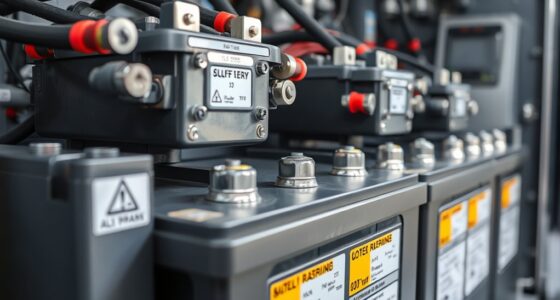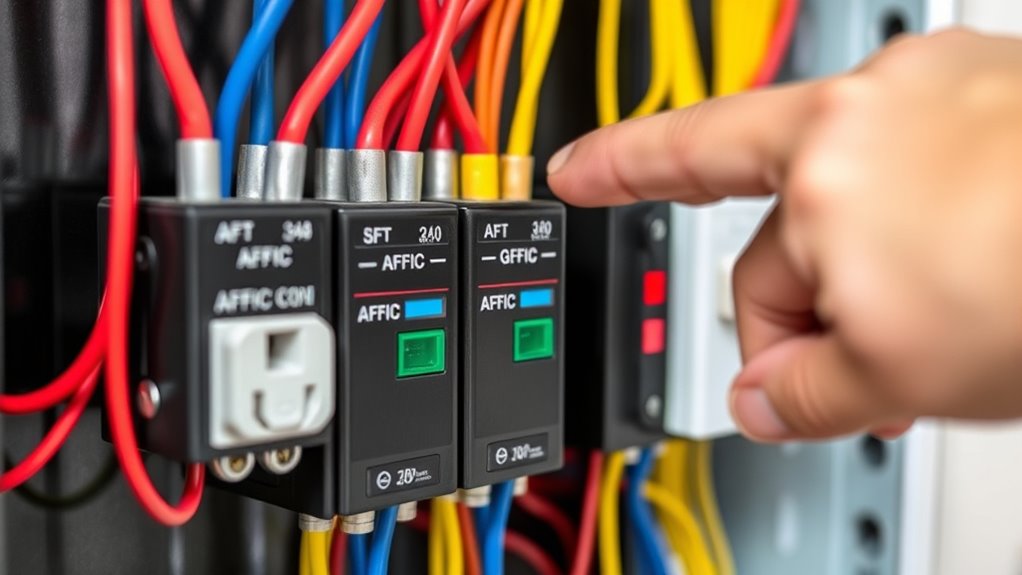

AFCIs prevent fires by detecting damaged wiring sparks, while GFCIs protect against shocks by sensing ground faults. Sometimes, both devices trip together because wiring issues or combined faults trigger their sensors simultaneously. To identify which device trips, check indicator lights or reset buttons. If they keep tripping, it may be a wiring problem needing a professional. Understanding how they work helps you keep your home safe; explore more to learn what you can do.
Key Takeaways
- GFCIs protect against ground faults, while AFCIs detect arc faults; both devices help prevent shocks and fires.
- Some outlets combine AFCI and GFCI functions, which can cause simultaneous trips during complex faults.
- Faults like damaged wiring or shared circuits can trigger both devices at the same time.
- Proper wiring and regular testing reduce false trips and improve device reliability.
- Persistent or repeated trips indicate underlying issues needing professional inspection for safety.
What Are AFCIs and GFCIs, and How Do They Differ?

Have you ever wondered how AFCIs and GFCIs protect your home? Both devices detect hazards but target different dangers. GFCIs monitor for ground faults, which occur when electricity leaks to the ground, risking shock. They trip instantly if they detect an imbalance, preventing electrocution. AFCIs focus on arc fault detection, which involves detecting dangerous electrical arcs caused by damaged wires or loose connections. These arcs can ignite fires before you even notice a problem. While GFCIs protect against shocks from ground faults, AFCIs prevent fires from arc faults. Some outlets combine both features, offering extensive protection. Understanding their differences helps you ensure your home is safer from electrical risks, keeping you and your loved ones protected.
Why Do AFCIs and GFCIs Sometimes Trip Together?

You might notice AFCIs and GFCIs trip at the same time, and that’s often due to shared wiring paths or simultaneous faults. When faults occur in the same circuit, both devices can detect issues quickly, leading to a combined trip. Additionally, overlapping trip thresholds can cause both to activate even if only one fault exists. Proper maintenance and understanding of air purifier circuitry can help prevent unintended trips caused by wiring issues or faults.
Shared Wiring Paths
Shared wiring paths can cause AFCIs and GFCIs to trip together because both devices monitor the same circuit for different types of faults. When wiring is shared or run closely together, the devices may detect electrical disturbances from each other, even if there’s no actual fault. This can lead to nuisance tripping, especially if the wiring doesn’t follow the electrical code properly. To prevent this, proper wiring separation and grounding are essential. Be aware that:
- Shared wiring can cause false trips due to interference.
- Electrical code emphasizes proper separation for AFCI and GFCI circuits.
- Proper installation minimizes the risk of simultaneous trips and ensures safety.
- Using natural materials like wood and linen in wiring conduits or junction boxes can help reduce electromagnetic interference that might contribute to false trips.
Understanding shared wiring helps you avoid unnecessary trips and maintain code-compliant, safe electrical systems.
Simultaneous Faults Occur
When wiring is shared or runs too close together, multiple faults can happen simultaneously, causing both AFCIs and GFCIs to trip at the same time. An arc fault occurs when loose or damaged wiring creates sparks, which AFCIs detect and trip to prevent fires. A ground fault happens when current leaks to the ground, which GFCIs sense and trip to protect you from electric shock. If both faults occur nearby or on shared wiring, the AFCI might trip due to the arc fault, while the GFCI trips because of the ground fault. This simultaneous trip isn’t unusual when faults happen together or are closely connected, especially in circuits with shared wiring paths. Understanding this helps you see why multiple safety devices sometimes activate together. Additionally, advanced techniques in wiring can reduce the likelihood of such simultaneous trips by minimizing shared pathways and improving circuit separation.
Overlapping Trip Thresholds
Because AFCIs and GFCIs have different trip thresholds, they can sometimes activate at the same time during certain fault conditions. When a ground fault or arc fault interaction occurs, both devices may detect the problem simultaneously. This overlapping trip threshold happens because:
- A ground fault causes a small leakage current that GFCIs are designed to detect quickly.
- An arc fault produces high-frequency noise, triggering AFCIs.
- Both faults can happen together, making both devices trip to protect you.
- Understanding device sensitivity helps clarify why these simultaneous trips occur during complex ground or arc fault interactions.
This coincidence ensures safety but can be perplexing. It’s because the devices are sensitive to different types of faults, yet they respond when their specific thresholds are exceeded during complex ground or arc fault interactions.
Can One Device Cause the Other to Turn Off?

It’s possible for one device, like a GFCI or arc-fault breaker, to cause the other to turn off if they are connected in a way that creates a fault or interference. Device malfunctions or wiring errors can trigger this interaction, leading one device to trip and shut off the power to prevent hazards. For example, a wiring mistake might cause a false trip, affecting both devices. Here’s a quick look at common causes:
| Cause | Effect |
|---|---|
| Wiring errors | Unintended trips in both devices |
| Device malfunctions | Erroneous trips caused by faulty devices |
| Shared circuits | Interference between devices |
| Faulty connections | False alarms and trips |
| Overloaded wiring | Both devices trip unexpectedly |
Understanding these interactions helps you troubleshoot and prevent unnecessary power loss. Proper wiring practices are essential to reduce the risk of these issues occurring.
How Do I Know Which Safety Device Is Tripping?

When a safety device trips, it’s important to identify which one it is. You’ll notice specific symptoms, like which outlet or circuit breaker has shut off. Recognizing these signs helps you determine whether an arc fault or GFCI is responsible. Understanding the home theatre projectors features such as contrast ratio and color accuracy can also assist in troubleshooting display issues after electrical problems are resolved.
Identifying the Tripping Device
To determine which safety device is tripping, start by observing the device’s indicator lights or displays. Clear circuit labeling helps you identify the correct device quickly, avoiding confusion. Check for signs like a reset button or blinking lights that indicate a trip. Make sure device compatibility with your electrical system to prevent nuisance trips. Keep these tips in mind:
- Look for unique indicator patterns or colors on each device
- Confirm circuit labeling matches the affected area
- Make sure the device is suitable for your circuit type (GFCI, AFCI, etc.)
- Be aware that advances in AI security and safety measures are guiding better detection and response to electrical faults.
Recognizing Tripping Symptoms
Recognizing which safety device has tripped begins with paying attention to the symptoms displayed. Ground fault detection devices typically trip when you notice ground fault warning lights or outlets that suddenly stop working, often accompanied by a gentle reset button. Arc fault prevention devices usually trip when you hear a clicking sound or see a circuit breaker flip unexpectedly, especially if you notice flickering lights or frequent outages. If your GFCI outlet trips during use, it’s often due to ground faults, like water or damaged wiring. Conversely, an arc fault interruption might be triggered by damaged cords or overloaded circuits, indicating arc fault prevention has kicked in. Paying close attention to these signs helps you identify which safety device is responding to protect your home. Understanding the importance of proper maintenance can help ensure your devices function correctly and reduce false trips.
What Should I Do if Both Devices Keep Tripping?
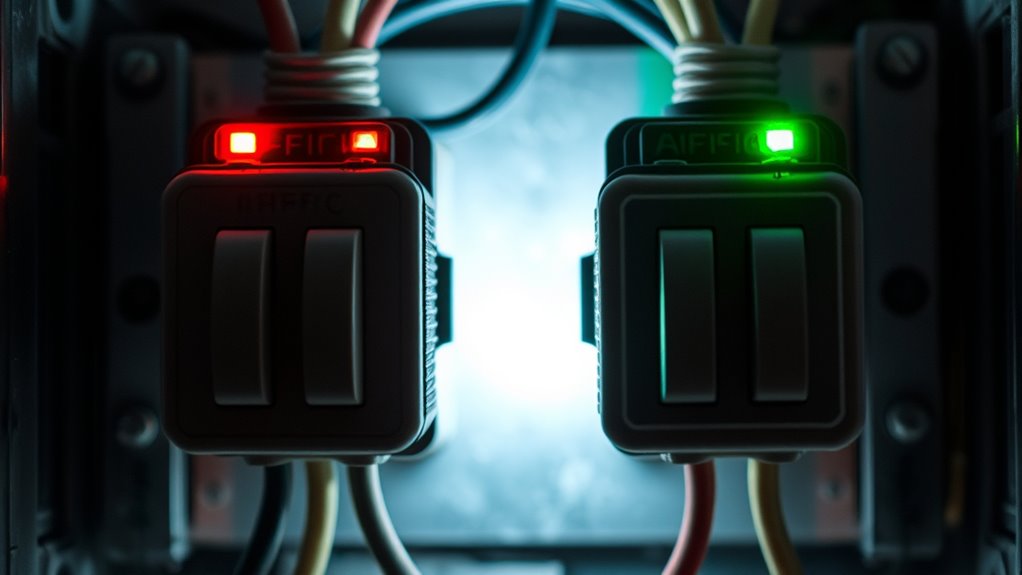
If both your arc-fault circuit interrupter (AFCI) and ground-fault circuit interrupter (GFCI) keep tripping, it indicates a potential wiring issue or a shared fault somewhere in the circuit. This could be caused by a ground fault or a problem with the circuit breaker itself. To troubleshoot:
- Check for damaged or loose wiring around outlets and switches.
- Inspect for signs of a ground fault, like sparks or burning smells.
- Test the circuit breaker to see if it’s functioning properly or needs replacement.
- Consider headphone compatibility if you recently connected new audio equipment that might be causing electrical interference.
Repeated tripping suggests a persistent issue that might require a professional electrician. Ignoring the problem could lead to safety hazards or damage to your electrical system. Addressing these issues promptly helps verify safe operation.
Are There Any Safety Tips for Using AFCIs and GFCIs Together?

Using AFCIs and GFCIs together can enhance your home’s safety, but it’s important to follow some key tips. Always verify that your devices are properly installed and compatible to avoid nuisance tripping. Regularly test your circuit protection devices to ensure ground fault safety and reliable operation. Keep in mind that different devices may trip for different reasons, so understanding their functions helps prevent confusion. Here’s a quick guide:
| Tip | Why It Matters | Action to Take |
|---|---|---|
| Use compatible devices | Prevents false trips | Check device labels and specs |
| Regular testing | Ensures circuit protection | Test monthly with test buttons |
| Avoid overloading circuits | Reduces false trips | Distribute electrical load |
| Maintain clear wiring | Ensures proper ground fault safety | Schedule professional inspections |
| Follow manufacturer instructions | Maximizes device effectiveness | Read all safety guidelines |
| Understand device functions | Helps prevent unnecessary trips | Learn about AFCI and GFCI operations |
Frequently Asked Questions
Can AFCIS and GFCIS Be Installed on the Same Circuit?
Yes, you can install AFCIs and GFCIs on the same circuit, but you need to guarantee circuit compatibility and follow safety standards. AFCIs protect against arc faults, while GFCIs prevent ground faults. Installing both enhances safety by addressing different electrical hazards. Make sure to use the correct combination devices or separate outlets, and consult local electrical codes or a professional electrician to ensure proper installation and compliance.
Are There Any Specific Electrical Codes for Using AFCIS and GFCIS Together?
Yes, you can install AFCIs and GFCIs together on the same circuit, but you must follow specific electrical codes for safety. Make certain your installation complies with the National Electrical Code (NEC) standards, which specify where each device should be used. This helps maintain code compliance and safety standards, reducing the risk of electrical hazards. Always consult a licensed electrician to verify your setup meets all applicable regulations.
Do AFCIS or GFCIS Require Regular Testing or Maintenance?
Think of your AFCIs and GFCIs like essential safety alarms in your home. You should test them monthly to confirm they’re working correctly, just like checking a smoke detector. Regular testing frequency helps catch issues early, and minimal maintenance is needed beyond that. If you forget, it’s like ignoring a warning light—risking unseen problems. So, make testing your routine to keep your electrical system safe and reliable.
Can Environmental Factors Cause False Tripping of AFCIS or GFCIS?
Environmental interference and humidity effects can definitely cause false tripping of AFCIs and GFCIs. High humidity or moisture buildup can create unintended electrical paths, triggering the devices even when there’s no real fault. You should regularly inspect these outlets for signs of moisture or environmental damage, and consider installing proper enclosures or dehumidifiers to minimize false trips caused by environmental factors.
What Are the Signs of a Malfunctioning AFCI or GFCI?
Imagine a quiet, steady hum suddenly interrupted by flickering lights—that’s a sign your AFCI or GFCI might be malfunctioning. You’ll notice circuit warnings like frequent trips, unexplained power loss, or a breaker that won’t reset. These safety indicators suggest the device isn’t detecting faults properly, risking electrical hazards. If you see these signs, it’s time to test or replace your AFCI or GFCI to keep your home safe.
Conclusion
Understanding AFCIs and GFCIs helps you keep your home safe, like having a reliable alarm system and sturdy locks. While one device detects electrical faults, the other guards against shocks—each serving a different purpose. When they trip together, it’s like a fire alarm and security alarm sounding off at once, signaling a serious issue. Staying informed guarantees you respond confidently, protecting your home’s safety and your peace of mind.