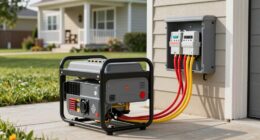
A resilient home-energy system does more than keep the lights on. It balances everyday electricity use, outage protection, equipment safety, fuel availability, weather conditions, maintenance, and local requirements. Solar panels, batteries, standby generators, portable generators, transfer equipment, surge protection, and monitoring can all contribute, but they solve different problems. The right combination depends on what must remain powered, how long outages typically last, and how much complexity the household is prepared to manage.
This hub provides a practical starting point for planning home energy and backup power. It explains how the major components fit together, which decisions should come first, and where installation details can affect reliability. It also points to focused guides on generator pads, enclosures, mufflers, propane regulators, cold-weather equipment, remote monitoring, and whole-house surge protection.
Start With the Outage You Need to Survive
Begin by defining the problem before choosing equipment. A short utility interruption calls for a different solution than a multi-day outage caused by a winter storm, wildfire, hurricane, or grid failure. Consider outage frequency, typical duration, seasonal conditions, and whether anyone in the home depends on powered medical or mobility equipment.
Next, separate essential loads from convenient loads. Refrigeration, well pumps, sump pumps, heating controls, communications, security systems, and selected lighting may be essential. Central air conditioning, electric water heating, cooking appliances, workshops, pool equipment, and vehicle charging can add substantial demand. A system intended to operate everything simultaneously must be planned differently from one that supports only selected circuits.
Equipment wattage alone does not tell the whole story. Motors and compressors can require extra power when starting, while some devices run only intermittently. An electrician or qualified installer can measure loads, identify starting demands, and determine whether load-management controls would allow a smaller backup system to serve the household safely.

Porch Shield Waterproof Universal Generator Cover 32 x 24 x 24 inch - for Most Generators 5000-10000 Watt, Black
- Compatible - More sizes for 5000w -10000w gas...
- Upgrade Material - Made of 600D polyester fabric...
- Tear Resistant & Waterproof - The high-level double...
As an affiliate, we earn on qualifying purchases.
Understand the Main Backup-Power Options
Portable Generators
Portable generators can support selected appliances or a manual transfer setup. They generally require the homeowner to retrieve, position, fuel, start, and connect the unit during an outage. Safe operation requires suitable outdoor placement and careful attention to exhaust, weather exposure, extension cords, grounding, and fuel storage. A portable generator should never be operated inside a home, garage, basement, shed, or another enclosed or partially enclosed space where carbon monoxide can accumulate.
Standby Generators
A permanently installed standby generator can detect a utility outage through its transfer equipment and begin supplying configured circuits automatically. This makes standby power attractive for homes that cannot tolerate a lengthy interruption or may be unoccupied when the grid fails. Planning involves generator capacity, transfer-switch design, fuel supply, site placement, exhaust clearances, noise, permits, and ongoing service.
The physical installation is part of the system’s reliability. The base should support the unit, promote drainage, and help keep the generator level. Homeowners planning a Generac installation can compare common mounting approaches in this guide to Generac generator pads for stability and longevity. The selected pad still needs to suit the generator model, site conditions, and manufacturer instructions.
Battery Backup
A home battery provides quiet backup power without on-site combustion. It can switch rapidly during an outage and may also support solar self-consumption or time-based energy management. Its practical outage duration depends on usable storage, connected loads, operating conditions, and whether solar panels can recharge it while the grid is unavailable.
Batteries work especially well when loads are clearly prioritized. Running communications, lighting, refrigeration, and electronics is a different challenge from operating large heating or cooling equipment for an extended period. Expansion can be possible in some system designs, but compatibility and electrical architecture should be evaluated before purchase.
Hybrid Systems
Solar, batteries, and a generator can complement one another. A battery may handle brief interruptions and overnight essentials, solar may replenish stored energy when conditions permit, and a generator may cover prolonged periods of low solar production or unusually high demand. Integration is not automatic, however. Charging limits, inverter compatibility, generator controls, transfer arrangements, and operating sequences must be designed as a coordinated system.
Porch Shield Waterproof Universal Generator Cover 38 x 28 x 30 inch - for Most Generators 5500-15000 Watt, Black
- Compatible - More sizes for 5500w -15000w gas...
- Upgrade Material - Made of 600D polyester fabric...
- Tear Resistant & Waterproof - The high-level double...
As an affiliate, we earn on qualifying purchases.
Plan Solar Around Real Household Energy Use
Solar design begins with electricity consumption, not roof size alone. Review at least a full year of utility bills when possible, noting seasonal peaks and planned changes such as a heat pump, electric vehicle, workshop, home addition, or electric water heater. Reducing unnecessary consumption before sizing the array can lower the amount of generation and storage required.
Roof orientation, shading, structural condition, available area, and local weather all influence solar production. A roof that will soon need replacement should be addressed before panels are installed. Ground-mounted arrays may provide another option where space, setbacks, terrain, and local rules allow.
Standard grid-connected solar systems often shut down during a utility outage for safety. Backup operation requires equipment specifically designed to isolate the home from the grid and establish a protected source of electricity. Ask installers exactly which circuits will operate during an outage, whether solar can recharge the battery while isolated, and what happens when the battery reaches its minimum reserve.

Portable Solar Generator 300W Portable Power Station with 60W Solar Panel
- Portable Generator with 60W Solar Panel Included: with a big battery pack,...
- Multiple Charging outlets for camping gear with SOS Flashlight: with 2* 300W Max AC...
- Multiple Charging Optional, Solar Panel Charger 60W Included: ZeroKor portable power bank generator...
As an affiliate, we earn on qualifying purchases.
Choose Fuel With Availability and Runtime in Mind
Standby generators commonly depend on natural gas or propane, while portable units may use gasoline, propane, or multiple fuels. Each choice affects storage, delivery, maintenance, cold-weather behavior, and outage logistics. A fuel source that is convenient during normal conditions may become difficult to replenish during a regional emergency.
Propane systems require correct tank sizing, piping, pressure regulation, and component compatibility. Regulators are not interchangeable simply because they appear similar. If a Generac propane installation needs replacement or updated fuel-delivery hardware, review the available considerations in this guide to Generac propane regulators for reliable operation, then confirm the exact specification with the generator documentation and a qualified gas professional.
Natural-gas availability can reduce the need for stored fuel, but generator demand must still be considered alongside other gas appliances. Gas-meter and piping capacity may need evaluation. For any fuel, estimate consumption at more than one load level and plan for realistic replenishment rather than relying only on an ideal runtime calculation.

Jackery Explorer 300 Portable Power Station,292Wh
- Ultra-Lightweight: At only 7.5 lbs, the...
- Versatile Power for 6 Devices: Equipped with 2 AC outlets,...
- Built to Last: Upgraded with premium LiFePO4 chemistry,...
As an affiliate, we earn on qualifying purchases.
Protect the Electrical System, Not Just the Generator
Backup generation does not eliminate the need for broader electrical protection. Utility events, lightning-related surges, and switching transients can damage appliances and electronic controls. A whole-house surge protective device can form one layer of protection at the service equipment, while point-of-use protection may add another layer for sensitive devices.
Service size, panel configuration, device ratings, installation location, and local code requirements matter. Owners of 200-amp services can use this comparison of 200-amp whole-house surge protectors to understand the available category before discussing installation with a licensed electrician.
A transfer switch is equally important in a generator system. It separates the home from the utility supply and directs generator power to the intended loads. Backfeeding through an improvised connection can endanger utility workers, damage equipment, and create fire or shock hazards. Permanent electrical work should follow applicable codes, permit rules, and inspection requirements.
Prepare the Generator Site for Weather and Exhaust
Placement affects safety, service access, cooling, noise, and equipment life. Follow manufacturer instructions and local requirements for distance from doors, windows, vents, property lines, combustible materials, and other equipment. Avoid locations vulnerable to flooding, roof runoff, drifting snow, vegetation growth, or stored items that could block airflow.
An enclosure may help protect compatible equipment from environmental exposure, but it must not restrict cooling or trap exhaust. Materials, ventilation, access panels, corrosion resistance, and model compatibility deserve careful review. The guide to aluminum generator enclosures for durability and safety offers a useful overview for homeowners evaluating this part of an installation.
Cold climates create additional concerns. Oil viscosity, battery performance, intake conditions, snow accumulation, and freezing temperatures can affect starting and operation. Owners of compatible Cummins equipment can explore Cummins generator cold-weather kits. Any heater or cold-weather accessory should match the model and be installed according to its electrical and temperature requirements.
Manage Generator Noise Responsibly
Generator sound can affect both the household and nearby properties, particularly during overnight operation. Site selection, distance, barriers, vibration isolation, maintenance, and exhaust condition all influence perceived noise. Barriers must never compromise required ventilation, cooling, service access, or exhaust clearance.
A muffler should be treated as an engineered component rather than a universal add-on. Exhaust backpressure, temperature, mounting, routing, and manufacturer compatibility all matter. Brand-specific starting points include the guides to Generac generator mufflers for quieter operation and Cummins generator mufflers for quiet, efficient operation. Before modifying an exhaust system, verify warranty implications, applicable rules, and safe installation practices.
Use Monitoring to Catch Problems Before an Outage
A standby generator that appears ready may still have a weak battery, overdue service, controller warning, fuel issue, or failed exercise cycle. Regular visual inspections and scheduled maintenance remain essential, but remote monitoring can make status changes easier to notice between visits.
Monitoring features vary by generator and accessory. Depending on the system, they may provide operating status, alerts, service reminders, or exercise information. Connectivity, subscription requirements, communication range, power availability, and model compatibility should all be checked. Cummins owners can begin with this guide to Cummins generator wireless monitors.
Remote information should support, not replace, physical inspection. Periodically check the area for debris, pests, corrosion, leaks, loose connections, blocked ventilation, and changes to landscaping or drainage. Keep service records and ensure household members know whom to contact when an alert appears.
Create a Maintenance and Outage Routine
Reliable backup power depends on readiness before the storm. Follow the maintenance schedule for oil, filters, spark plugs, coolant where applicable, starting batteries, and other service items. Exercise the generator as directed and investigate warnings instead of assuming the next cycle will clear them.
Before severe weather, confirm fuel availability, clear the generator surroundings, charge portable power stations, test carbon-monoxide alarms, and review the circuits supported by the backup system. Keep manuals, installer information, fuel contacts, and shutdown instructions accessible. Household members should know what the system can power and which large loads must remain off.
After an extended run, inspect the system only when conditions are safe and follow the manufacturer’s shutdown and service procedures. Look for alerts, unusual sounds, leaks, debris, or signs of overheating. Extended outages may require maintenance intervals based on operating hours rather than calendar time.
Build the System in the Right Order
A sensible planning sequence starts with load priorities and outage goals. Next, compare portable generation, standby generation, battery storage, solar, or a hybrid configuration. Then verify the electrical design, fuel capacity, site conditions, transfer equipment, surge protection, permits, and maintenance plan.
Accessories should come after the core system is defined. Pads, enclosures, regulators, mufflers, cold-weather kits, and monitors can solve important installation or operating needs, but only when they match the generator and its environment. Compatibility should be verified through current manufacturer documentation and qualified professionals rather than inferred from appearance or brand name alone.
The strongest home-energy plan is not necessarily the one with the most equipment. It is the one that clearly identifies essential loads, uses compatible components, accounts for local hazards, and can be operated and maintained safely. With those fundamentals in place, solar, batteries, generators, surge protection, and monitoring can form a resilient system tailored to the household rather than a collection of disconnected products.