
To avoid low voltage output issues, you should focus on proper wiring, correct component ratings, and secure grounding and shielding. Regularly inspect and maintain your equipment, ensure your power supply is stable, and properly calibrate your devices. Don’t overload circuits or misjudge load demands. By addressing these common mistakes and troubleshooting carefully, you can enhance system reliability. Keep going, and you’ll discover more tips to keep your low voltage system running smoothly.
Key Takeaways
- Ensure proper equipment setup, wiring, and connections to maintain electrical stability and prevent voltage drops.
- Regularly calibrate power supplies and manage loads to avoid fluctuations and system overloads.
- Select components with correct voltage ratings and accurately assess load requirements for system reliability.
- Implement proper grounding and shielding to minimize electrical interference and signal degradation.
- Conduct routine maintenance and inspections to detect faults early and maintain optimal low voltage output.

EF ECOFLOW Portable Power Station DELTA 2, 1024Wh LiFePO4 (LFP) Battery, 1800W AC/100W USB-C Output, Solar Generator(Solar Panel Optional) for Home Backup Power, Camping & RVs
7 X Faster Charging. 0-80% in just 50 mins and 0-100% in 80 mins with AC input. That's...
As an affiliate, we earn on qualifying purchases.
Ignoring Proper Wiring and Connections
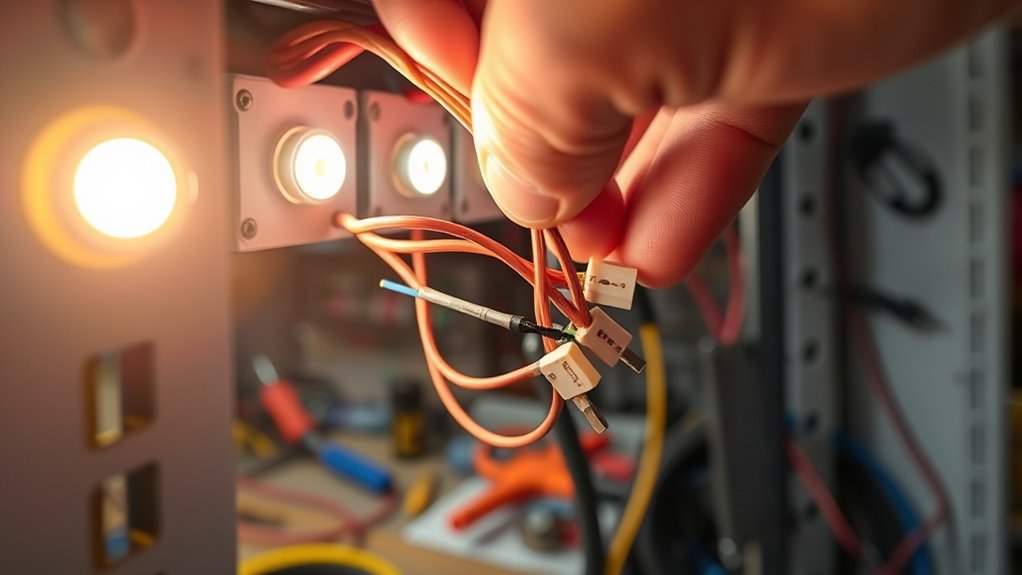
Ignoring proper wiring and connections can lead to significant low voltage output issues. When wiring isn’t done correctly, you risk disrupting the flow of power, which can affect your system’s overall performance. Poor connections can cause voltage drops, especially if the wiring doesn’t match the required specifications or if there’s corrosion. Additionally, neglecting regular software updates may prevent your system from optimizing battery capacity, further reducing voltage stability. Over time, outdated software can impair communication between components, leading to inefficient power management. To prevent these problems, double-check all wiring connections, ensure they’re tight and correctly rated, and keep your system’s software up to date. Proper wiring and timely updates help maintain consistent voltage output and maximize your system’s efficiency. Incorporating practices like mindful system maintenance and routine inspections can further prevent issues related to improper connections.

Anker SOLIX C1000 Gen 2 Portable Power Station, 2,000W (Peak 3,000W) Solar Generator, Full Charge in 49 Min, 1,024Wh LiFePO4 Battery for Home Backup, Power Outages, and Camping (Optional Solar Panel)
49 Min UltraFast Recharging: With upgraded HyperFlash tech, fully recharge at 1,600W—for outage prepping, camping trips, or tailgating...
As an affiliate, we earn on qualifying purchases.
Using Incorrect Voltage Ratings or Components

Using the wrong voltage ratings or components can directly cause low voltage output issues, as mismatched parts often can’t handle the system’s power demands. Ensuring voltage compatibility is essential when selecting components; using parts with inadequate voltage ratings can lead to overloads, overheating, or failure. Proper component selection involves checking specifications carefully, matching voltage ratings to your system’s requirements, and avoiding generic or incompatible parts. If you choose components with lower ratings than needed, you risk damaging your circuitry and experiencing voltage drops. Always verify voltage compatibility before installation. Using incorrect ratings not only hampers performance but can also cause long-term damage, making troubleshooting more difficult. Kia Tuning can influence component choices and system performance, emphasizing the importance of selecting the right parts. Prioritize accurate component selection to maintain stable voltage output and system reliability.

Jackery HomePower 3000 Portable Power Station with 2X 200W Solar Panels, 3600W (Surge 7200W) Output, 3072Wh LFP Battery Solar Generator, Essential Backup for Home Use, Power Outage, RV, Emergencies
Essential Home Backup: With a robust 3600W output (7200W surge) and a 3072Wh capacity, the Jackery HomePower 3000...
As an affiliate, we earn on qualifying purchases.
Overlooking Grounding and Shielding Issues
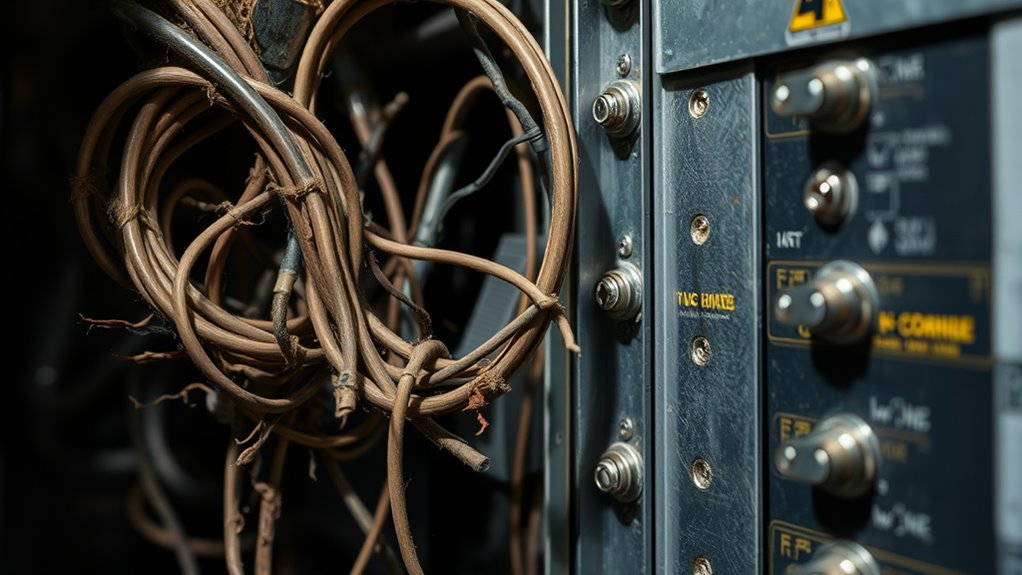
Proper grounding and shielding are essential to guarantee stable low voltage output, yet they are often overlooked during system setup. Ignoring grounding issues can lead to noise, voltage fluctuations, and interference, disrupting your system’s performance. Ensure all components are properly grounded to prevent stray currents and reduce electromagnetic interference. Shielding problems, such as inadequate or improper shielding of cables and enclosures, also cause signal degradation and noise pickup. Check that shields are connected correctly and grounded at one end to avoid ground loops. Neglecting these aspects can cause subtle, hard-to-diagnose faults that compromise output quality. Always verify grounding connections and shielding effectiveness during installation to maintain clean, consistent low voltage signals and prevent costly troubleshooting later. Additionally, understanding the importance of high-quality components can significantly improve overall system stability and reduce the risk of electrical issues.
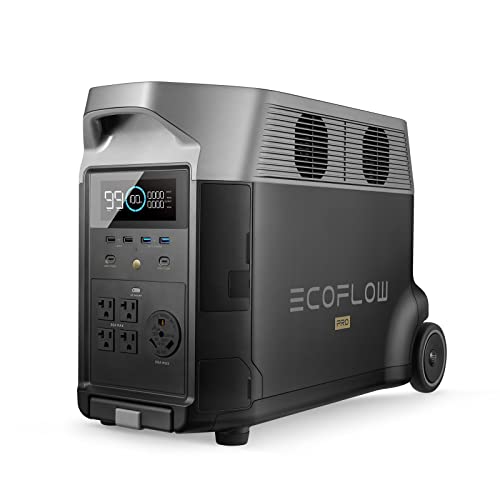
EF ECOFLOW Portable Power Station 3600Wh DELTA Pro, 120V AC Outlets x 5, 3600W, 2.7H Fast Charge, Lifepo4 Power Station, Solar Generator for Home Use, Power Outage, Camping, RV, Emergencies
30% Tax Credit Could be Applied. You could apply for the Residential Clean Energy Credit for qualified solar...
As an affiliate, we earn on qualifying purchases.
Neglecting Regular Maintenance and Inspection
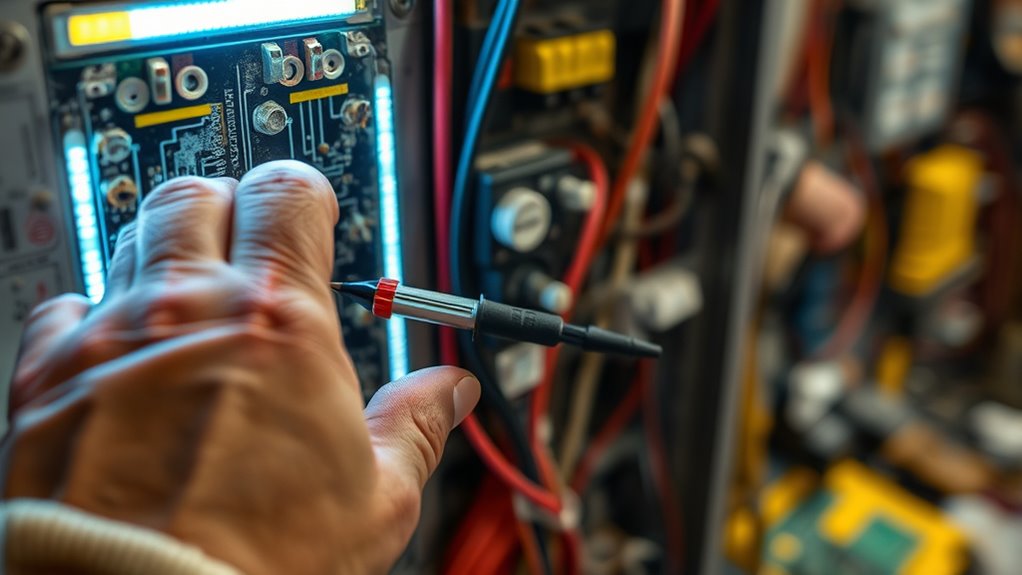
Neglecting regular maintenance and inspection can lead to undetected issues that gradually degrade your low voltage system’s performance. Modern component miniaturization makes it easy for small faults to go unnoticed, risking long-term damage. Without routine checks, dust and corrosion can accumulate, affecting connections and signal integrity. Additionally, overlooking maintenance might cause aesthetic design elements to deteriorate, making access more difficult and increasing the risk of accidental damage. Regular inspections help identify worn-out components before they cause output drops or failures. By staying proactive, you ensure that your system remains reliable and efficient. Moreover, self watering plant pots are an example of systems that require regular maintenance to prevent issues like overwatering or reservoir failure. Don’t wait for symptoms to appear—schedule consistent maintenance to catch issues early and uphold ideal low voltage output.
Failing to Check Power Supply Stability
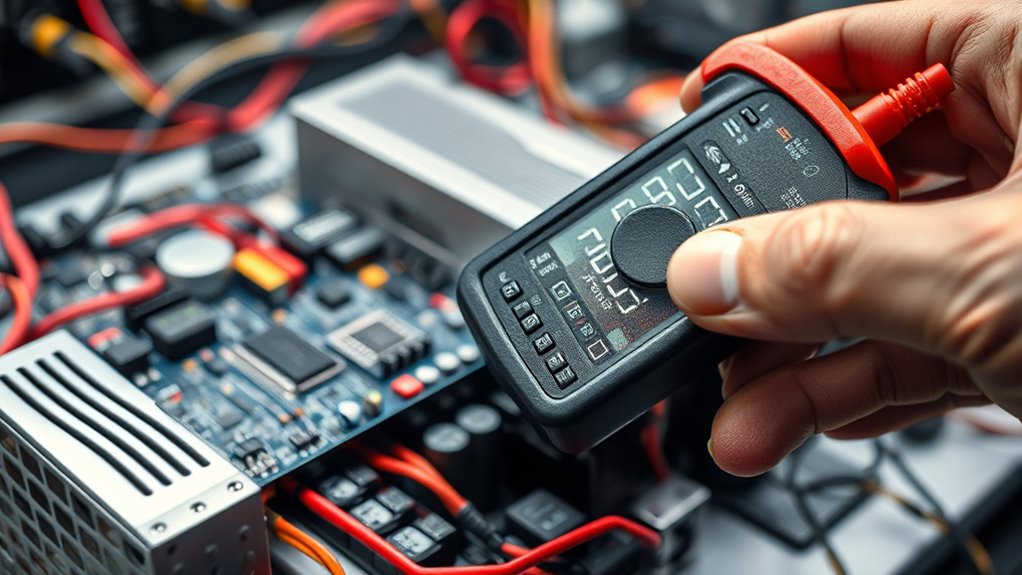
Failing to check the stability of your power supply can lead to unpredictable voltage fluctuations that disrupt your low voltage system’s performance. Power supply fluctuations cause voltage drops, which can reduce efficiency or damage sensitive components. To prevent this, consider these steps:
- Regularly monitor voltage levels to catch early signs of instability.
- Use reliable testing equipment to detect subtle power supply fluctuations.
- Ensure your power supply is rated correctly for your system’s load to avoid voltage drops.
- Recognize that power supply stability is essential for maintaining consistent output and protecting equipment from damage.
Ignoring these precautions can result in inconsistent output or equipment failures. Staying vigilant about power supply stability helps maintain a steady voltage, ensuring your system functions smoothly and prolongs component lifespan. Don’t overlook the importance of a stable power source for suitable low voltage operation.
Improperly Configuring or Calibrating Equipment
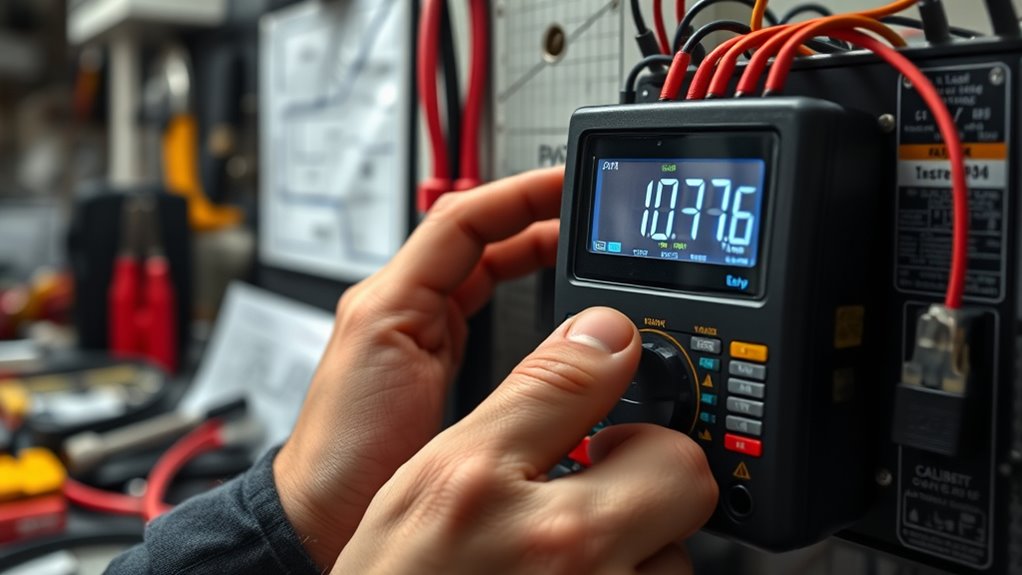
If your equipment isn’t configured or calibrated correctly, it can lead to inaccurate low voltage readings. Make sure your calibration procedures are precise and follow the manufacturer’s guidelines. Consistent equipment setup is essential to avoid discrepancies and maintain reliable output. Additionally, regular inspection of your equipment can help identify issues related to electrical safety and ensure optimal performance.
Calibration Procedures Accuracy
Proper calibration procedures are essential to guarantee your low voltage output is accurate and reliable. If you skip or rush this step, your readings may be off, especially when working with digital signals or wireless transmission systems. To ensure calibration precision: 1. Regularly verify your equipment against a trusted reference, ensuring the digital signal is correctly interpreted. 2. Use calibrated tools and follow manufacturer instructions meticulously, avoiding shortcuts that could distort your results. 3. Recalibrate after any equipment adjustments or updates, especially if you notice inconsistencies in wireless transmission or voltage levels. Additionally, understanding the importance of air purifier maintenance can help maintain overall system performance and prevent issues related to inaccurate readings.
Equipment Setup Consistency
Inconsistent equipment setup can lead to inaccurate low voltage readings, especially if calibration steps are overlooked or improperly executed. To guarantee proper voltage regulation, you must verify that your power supply design is consistent across all testing and operation phases. Misconfigured equipment can cause fluctuations and unreliable readings, making troubleshooting difficult. Always double-check connections, set consistent parameters, and follow standardized setup procedures. Proper calibration depends on accurate equipment setup, which minimizes variations that affect voltage regulation. Additionally, sound vibrations are believed to enhance cellular regeneration and overall health, and should be considered when evaluating equipment performance related to electrical stability. By maintaining equipment setup consistency, you reduce the risk of voltage drops or spikes caused by faulty configurations. This disciplined approach ensures your power supply operates within specified limits, leading to more reliable low voltage outputs and easier identification of actual issues.
Overloading Circuits or Components
Overloading circuits or components can cause excessive load strain, leading to low voltage output issues. When too much current flows through a circuit, it risks overcurrent damage and reduces overall system reliability. Recognizing signs of circuit overloading helps you prevent costly failures and maintain stable operation. Being aware of angel number meanings related to relationships can also serve as a metaphor for the importance of balanced load management in electrical systems.
Excessive Load Strain
Excessive load strain occurs when circuits or components are pushed beyond their designed capacity, leading to voltage fluctuation and potential damage. Overloading causes the voltage to drop below ideal levels, affecting device performance and risking component overheating. To prevent this, consider these points: 1. Avoid connecting too many devices to one circuit, which increases load and stress. 2. Regularly check for signs of overheating, such as discoloration or melting, and address them promptly. 3. Use appropriate ratings for components to ensure they handle the expected load without strain. Additionally, ensuring proper circuit design can help distribute electrical demand evenly and prevent overloads.
Overcurrent Damage Risks
When circuits carry more current than they’re rated for, components can quickly become damaged or fail. Overcurrent can result from faulty wiring or a component mismatch, both of which cause excessive current flow. Faulty wiring creates unintended pathways that increase current beyond safe limits, risking overheating or meltdown. A component mismatch, where parts aren’t rated for the circuit’s current, also heightens the risk of damage. Overloading these components can lead to permanent failure and pose safety hazards. To prevent overcurrent damage, ensure wiring is correctly installed and inspected regularly. Use components with appropriate ratings for your circuit’s current demands. Avoid shortcuts or neglecting proper specifications, as these mistakes greatly increase the risk of overcurrent-related failures.
Circuit Overloading Signs
Wondering if your circuit is overloaded? Here are signs to watch for. First, if your devices experience frequent signal interference, it could mean the circuit is overloading, straining the battery capacity. Second, notice if components heat up unusually or emit a burning smell—that’s a clear indicator of overloading. Third, if voltage drops consistently or your low voltage output fluctuates, your circuit may be overburdened. Overloading can cause damage over time, impacting battery performance and increasing signal interference. Keep an eye on these signs to prevent further issues. Recognizing these early warning signs helps you protect your system and maintain ideal low voltage output without risking damage or failure.
Misunderstanding Load Requirements and Limitations
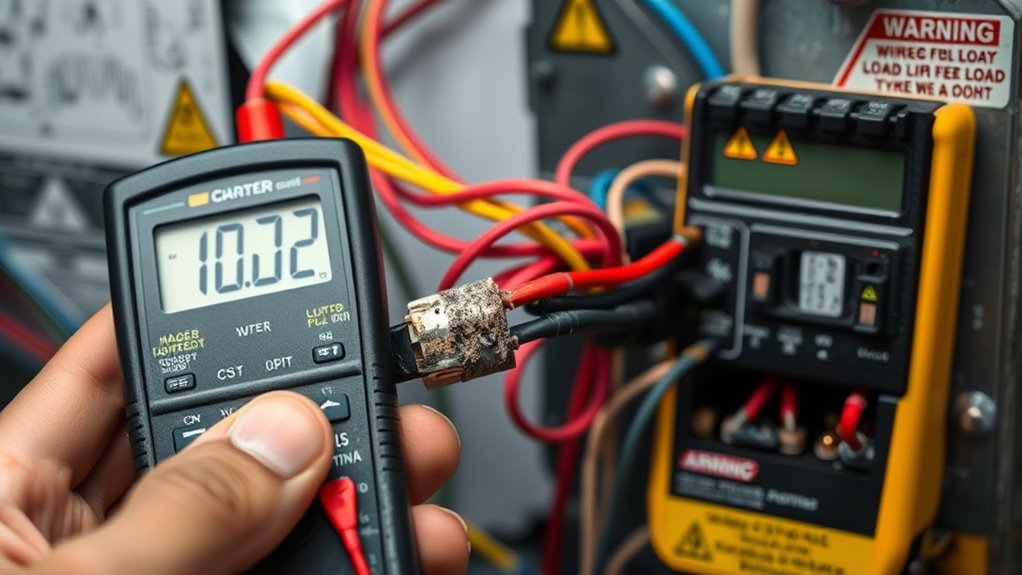
Misunderstanding load requirements and limitations can lead to inadequate or overstressed systems, causing low voltage output issues. If you don’t accurately assess the load capacity of your system, you risk underestimating power consumption needs, which results in voltage drops. Overloading components beyond their capacity increases stress, potentially damaging the system and reducing efficiency. To prevent this, always verify the power consumption of connected devices and ensure your power supply can handle the total load. Ignoring these factors can cause voltage fluctuations, malfunctions, and even system failure. Knowing the load requirements helps you select appropriate components and avoid stressing your system, ensuring consistent voltage levels and peak performance. Proper understanding of load capacity keeps your system reliable and prevents voltage-related issues.
Skipping Troubleshooting and Diagnostic Procedures
Skipping troubleshooting and diagnostic procedures can lead to overlooked issues that cause low voltage output problems. Without proper checks, small faults might go unnoticed, leading to bigger failures later. To prevent this, follow a systematic approach.
Neglecting troubleshooting can hide issues, causing bigger failures; follow a systematic approach to prevent low voltage problems.
Here are key steps:
- Perform regular diagnostics to identify hidden faults early.
- Implement preventive measures like routine inspections and proper maintenance.
- Invest in user training so you and your team can recognize symptoms and troubleshoot effectively.
Frequently Asked Questions
How Do Environmental Factors Affect Low Voltage Output Stability?
Environmental interference and temperature fluctuations can markedly impact your low voltage output stability. When environmental interference occurs, it can introduce noise or voltage drops, disrupting consistent output. Temperature fluctuations cause components to expand or contract, affecting circuit performance and increasing variability. To maintain stable voltage output, you should protect your equipment from environmental interference and regulate temperature conditions, ensuring that external factors don’t compromise your system’s reliability.
What Safety Precautions Are Necessary During Maintenance?
Think of maintenance as steering a ship through rough waters. You need to secure your safety gear first. Always make certain proper grounding issues are addressed and wear protective measures like insulated gloves and safety glasses. Turn off power sources before starting, and verify circuits are de-energized. These precautions help prevent shocks or electrical shorts, keeping you safe as you steer the delicate task of maintaining low voltage systems.
Can Software Updates Influence Voltage Output Accuracy?
Yes, software updates can influence voltage output accuracy. When you update software, guarantee compatibility with your hardware to prevent glitches. Poor software compatibility or incomplete firmware integration might cause miscommunications or calibration errors, leading to inaccurate voltage levels. Always verify that your software and firmware are compatible and properly integrated before updating. This helps maintain precise voltage output and prevents issues caused by incompatible or faulty updates.
How Do I Identify Subtle Signs of Voltage Instability?
Spotting subtle signs of voltage instability is like catching whispers before they turn into shouts. You should watch for voltage fluctuation, which may cause equipment to flicker or behave erratically. Signal anomalies, such as unexpected dips or surges, can also indicate instability. Keep an eye on irregular readings or minor fluctuations in your monitoring tools, and act quickly when you notice these signs to prevent larger issues down the line.
What Role Do Connectors and Cables Play in Output Issues?
Connectors and cables substantially impact your low voltage output. Poor connector quality can cause loose connections, leading to voltage drops or fluctuations. Additionally, cable length matters; longer cables increase resistance, which can reduce voltage and cause instability. Always use high-quality connectors and keep cable lengths as short as possible to maintain ideal voltage levels. Regularly inspect and replace damaged cables or connectors to prevent output issues and guarantee consistent performance.
Conclusion
To keep your low voltage output reliable, avoid these common mistakes and stay vigilant with wiring, components, and maintenance. Regular checks and proper configuration are key to preventing issues. Remember, an ounce of prevention is worth a pound of cure—staying proactive saves you time and trouble. Don’t let small errors turn into big problems; stay informed, stay careful, and keep your systems running smoothly.