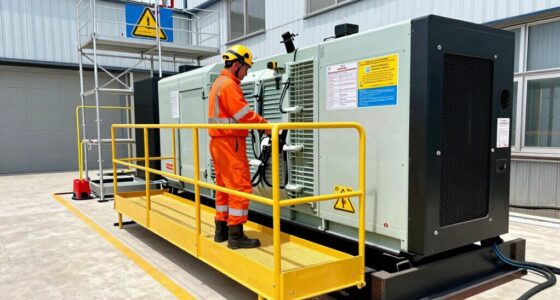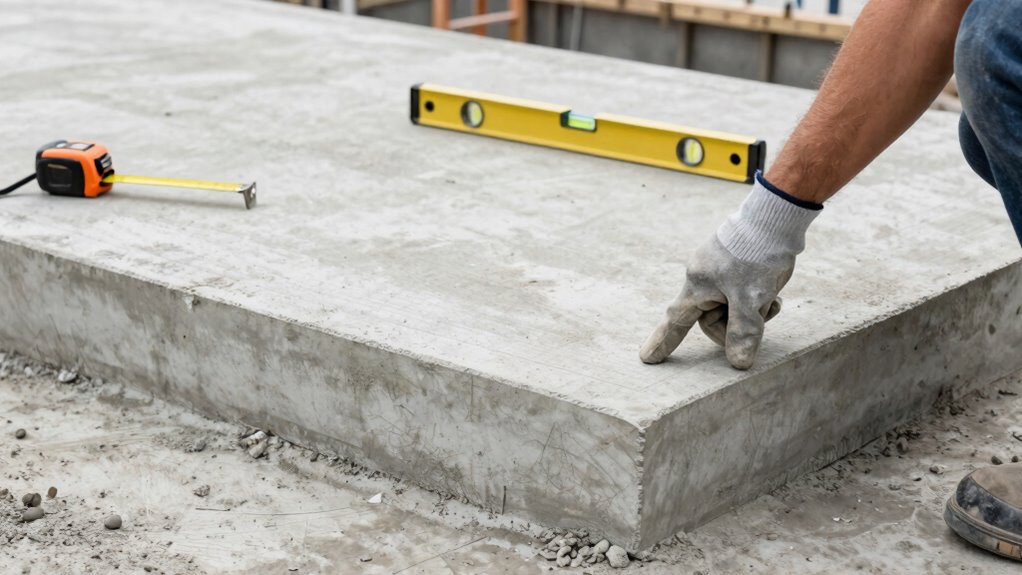
Before pouring a generator pad, make sure the ground is level, compacted, and free from organic material. Check for accurate utility markings and clearances, avoiding underground lines and guaranteeing enough space for maintenance. Evaluate drainage conditions and slope the area away from water pooling. Confirm soil stability and compliance with local codes, and avoid flood-prone spots. Taking these steps now guarantees a durable, long-lasting pad—continue for more important tips to ensure a solid foundation.

Get backup power and energy gear delivered free with Prime
- Fast, free delivery on millions of items
- Prime Video, Amazon Music and more included
- Member-only deals all year
Key Takeaways
- Confirm the ground is level, compacted, and free of organic material for stability.
- Verify underground utilities are accurately marked and clear of the site.
- Ensure proper site drainage with slopes or drainage solutions to prevent water pooling.
- Check local building codes for setback, height restrictions, and placement requirements.
- Assess soil type and site conditions to ensure long-term support and prevent settling.
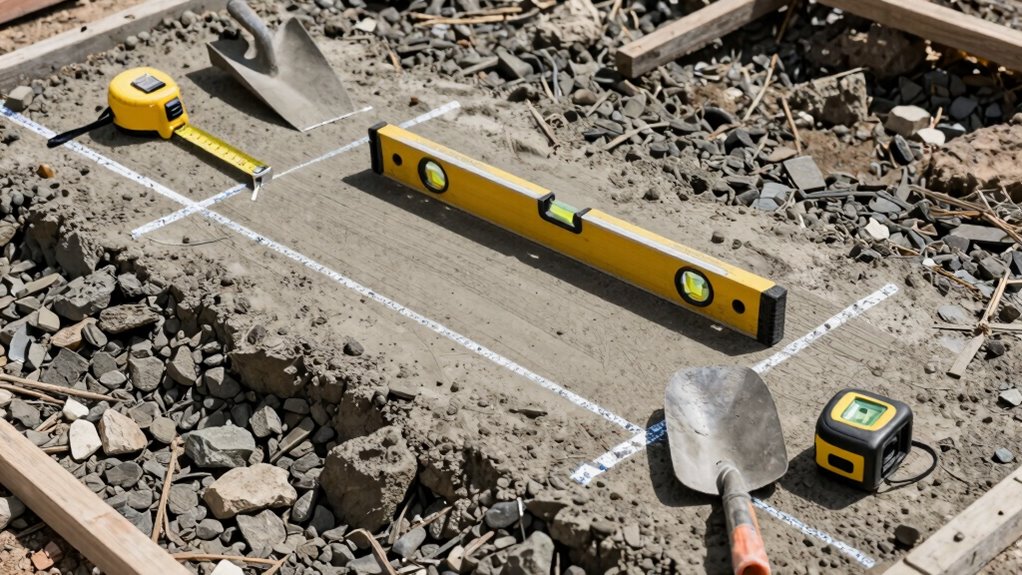
Before pouring a generator pad, it’s essential to carefully check all preparations to guarantee a solid foundation. Your first step should be a thorough foundation inspection. Look closely at the site to ensure the ground is level and compacted. Any unevenness can cause instability once the concrete sets, so use a level and a compaction tool to verify the surface. If the soil is loose or soft, consider adding a layer of gravel or crushed stone to improve drainage and stability. Avoid pouring on top of organic material, like grass or loose soil, as it can shift over time and compromise the pad’s integrity. A solid foundation prevents future cracks and uneven settling, prolonging the lifespan of your generator.
Ensure the ground is level, compacted, and free of organic material for a stable generator pad foundation.
Next, you need to ensure proper utility clearance. Before pouring, double-check that all underground utilities, such as water, gas, and electrical lines, are accurately marked and located. Contact your local utility companies for a free underground location service, and verify these markings before excavation. Any accidental damage to underground lines can lead to dangerous leaks, outages, or costly repairs. Additionally, ensure the chosen site offers enough clearance for maintenance and ventilation. Generators need adequate space around them for airflow and service access, so measure the area carefully and confirm it adheres to local codes and manufacturer recommendations.
While inspecting the site, also review the drainage around the pad. Good drainage prevents water pooling, which can weaken the concrete over time. If necessary, incorporate slight slopes or drainage solutions to divert runoff away from the pad. Check your plans against local building codes to ensure compliance with setback requirements and height restrictions. These rules often specify how far the pad should be from property lines, structures, and utility connections. Proper site analysis can help avoid future issues related to flooding or improper positioning. It’s also wise to consider environmental factors, such as avoiding placement in flood-prone or unstable areas, to ensure long-term durability. Additionally, confirming that the site’s soil type is suitable for supporting a concrete pad can prevent future settling or cracking.
Finally, consider the environmental factors. Avoid placing the pad in low-lying areas prone to flooding or on unstable slopes. Think about accessibility, ensuring you can easily reach the generator for maintenance without obstacles. Confirm that the foundation will be free from future obstructions, like trees or structures, that could interfere with operation or cause damage down the line. Proper site preparation is crucial for ensuring the longevity and safety of your generator installation. Conducting a thorough site evaluation beforehand can help identify potential issues early and save time during construction.
Frequently Asked Questions
How Deep Should the Concrete Footing Be for the Pad?
You should make the concrete footing at least 12 inches deep, but check local codes and soil stability first. Conduct a foundation inspection to assess soil conditions, ensuring it can support the load. If the soil is unstable or expansive, you may need to go deeper or add reinforcement. Proper depth prevents shifting or cracking, so always verify with local regulations and a professional if unsure.
What Type of Concrete Mix Is Best for Generator Pads?
You should use a concrete mix with high concrete strength, typically a minimum of 3000 psi, for your generator pad. Opt for a mix with appropriate mix additives like air-entraining agents for durability and workability. This guarantees your pad withstands heavy equipment and environmental factors. Always check local codes or consult a professional to determine the best mix for your specific conditions, ensuring long-lasting performance.
How Should the Site Be Prepared Before Pouring?
You must prepare the site thoroughly, or risk the entire project collapsing like a house of cards! Make certain proper site drainage to prevent water pooling and undermine the pad’s stability. Clear the area of debris, rocks, and roots, and set up safety precautions like barriers and signage. Level the ground meticulously, compact the soil, and double-check measurements. Proper prep guarantees your generator pad remains solid, safe, and durable for years to come.
Are There Specific Permits Required for Installing a Generator Pad?
You need to check local regulations to see if specific permits are required for installing a generator pad. Generator safety is essential, so obtaining permits guarantees compliance and safety standards are met. Once installed, follow maintenance tips to keep your generator running smoothly. Always consult your local authorities or a professional to confirm permit requirements, making sure your setup adheres to safety codes and prevents future issues.
How Long Should I Wait Before Installing the Generator After Pouring the Pad?
Think of your generator pad as a seed that needs time to settle. You should wait at least 7 days for concrete curing before installing your generator. Proper curing guarantees the pad’s strength and stability, making generator placement secure. Rushing this process is like planting a sapling in rocky soil—your generator won’t have the support it needs. Patience now prevents costly issues later.
Conclusion
Before pouring your generator pad, double-check all measurements, guarantee the ground is properly prepared, and verify your reinforcement placement. Think of it like building a sturdy bridge; if the foundation isn’t solid, everything else could collapse. Taking these steps now ensures your generator stays stable and functions smoothly for years to come. Don’t rush—like a craftsman, pay attention to every detail, so your pad stands strong against the test of time.
Columbus Day / Indigenous Peoples' Day Picks
long weekend sales
As an affiliate, we earn on qualifying purchases.