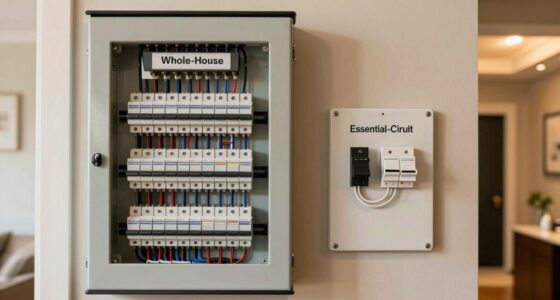
When a utility failure signal goes off, you’re alerted to an interruption in essential services like electricity, water, or gas. You might hear loud alarms, see flashing lights, or receive digital notifications on your devices. These signals serve as early warnings to help you act quickly, whether that’s unplugging electronics or shutting off water. Understanding what these signals mean and how to respond can keep you safe. Keep exploring to learn more about how to handle these situations effectively.

Get backup power and energy gear delivered free with Prime
- Fast, free delivery on millions of items
- Prime Video, Amazon Music and more included
- Member-only deals all year
Key Takeaways
- An alert is triggered through loud alarms, flashing lights, or digital notifications to notify of the outage.
- Automated sensors detect disruptions like electrical drops or leaks, activating the failure signal.
- Emergency procedures recommend staying calm, unplugging electronics, or shutting off utilities if necessary.
- Utility providers broadcast updates or instructions via various channels during the failure.
- The signal indicates whether the issue is ongoing or has been resolved, guiding safety actions.

A utility failure signal is a essential alert system that notifies you when fundamental services like electricity, water, or gas experience outages. When you hear or see the signal, it’s a clear indication that something’s wrong with the utility service you rely on daily. Recognizing this early is critical for your emergency preparedness, allowing you to take immediate steps to guarantee safety and minimize inconvenience. These signals are designed to catch your attention swiftly, often through loud alarms, flashing lights, or digital alerts, so you’re aware of the issue as soon as it occurs.
Utility failure signals alert you quickly to outages, helping you respond promptly and stay safe during service disruptions.
Understanding how the signal detection techniques work can help you respond more effectively. Utility companies use various methods to monitor and detect failures, including automated sensors and remote monitoring systems. When these systems identify a disruption—such as a sudden drop in electrical supply or a leak in the water line—they trigger the utility failure signal. This alert then propagates through designated channels, alerting both the utility providers and the public. You might receive alerts via sirens, mobile notifications, or public broadcasting systems, depending on your location and the severity of the outage.
During a utility failure, the signal acts as the first line of communication, urging you to stay calm and assess the situation. It’s essential to follow recommended safety procedures, like unplugging sensitive electronics during a power outage or shutting off the main water supply if you detect a leak. As part of your emergency preparedness, you should know how to interpret these signals and have a plan in place for different types of outages. Keep emergency kits ready, guarantee your phone is charged, and stay informed through official channels. The signals may also include instructions or updates on when the service might be restored, helping you decide whether to stay put or seek alternative resources.
In essence, a utility failure signal isn’t just a noise or flashing light; it’s your immediate alert to potential hazards. By understanding the signal detection techniques used by utility companies and maintaining good emergency preparedness, you can respond quickly and effectively. Recognizing the importance of these signals ensures you’re not caught off guard during an outage. Instead, you can act swiftly, safeguard yourself and your family, and stay informed until regular services are restored. The key is to stay alert, be prepared, and know how to interpret these signals as part of your overall safety plan. Additionally, awareness of failure detection techniques can improve your understanding of how these signals are generated and enhance your readiness to respond appropriately.
Frequently Asked Questions
How Often Do Utility Failure Signals Occur?
Utility failure signals generally occur unpredictably, but their frequency depends on your location and the reliability of your utility provider. Some areas experience signals more often due to weather or infrastructure issues, while others have fewer outages. Utilities use outage prediction technology to reduce these events, but signals can still happen randomly. Staying informed about your local utility signal frequency helps you prepare for potential disruptions and respond quickly when needed.
Can a Utility Failure Signal Indicate a Specific Outage Cause?
Imagine a steady utility signal flickering like a distant lighthouse beam, hinting at the cause of an outage. This signal can sometimes point to specific outage causes, such as equipment failure or a storm-induced disruption. While it doesn’t always identify the exact issue, it helps utility crews narrow down the problem’s origin. So, you can think of the utility signal as a helpful beacon guiding technicians toward the outage cause.
Are Utility Failure Signals Used in All Types of Utilities?
Utility failure signals are indeed used in various utility systems, but not universally. They play a vital role in outage detection, helping operators identify issues quickly. You’ll find these signals in electricity, water, and gas systems, where they alert personnel to disruptions. However, some smaller or less advanced utilities might not have such signals. Overall, utility signals enhance outage detection and improve response times across many utility types.
How Long Does a Typical Utility Failure Signal Last?
On average, a utility signal lasts about 15 minutes, but outage durations can vary widely depending on the issue. You might experience shorter signals during minor disruptions or longer ones during major outages, sometimes lasting hours. Utility signals quickly alert you to problems, helping you prepare. Keep in mind, the outage duration impacts how long your power, water, or gas might be unavailable, so staying informed is essential.
What Should I Do if I See a Utility Failure Signal?
If you see a utility failure signal, stay calm and follow your emergency preparedness plan. First, interpret the signal carefully—listen for specific tones or patterns that indicate the nature of the outage. Then, take appropriate safety measures, such as turning off affected appliances or avoiding contact with fallen power lines. Stay informed through official updates and be ready to evacuate or seek shelter if necessary.
Conclusion
When a utility failure signal sounds, it’s like a gentle nudge reminding you that even the most dependable systems need a moment of rest. Instead of panic, see it as a quiet pause—a chance to breathe, reassess, and prepare for the next chapter. Embrace the calm that follows, knowing that behind every pause lies an opportunity to come back stronger. After all, sometimes a brief lull is just nature’s way of saying, “Take a moment to reset.”
Columbus Day / Indigenous Peoples' Day Picks
long weekend sales
As an affiliate, we earn on qualifying purchases.