
If your generator battery keeps dying, it’s likely due to poor maintenance, such as corrosion on terminals or dirt buildup, which hinders proper power flow. Improper charging cycles—overcharging or undercharging—also damage the battery and shorten its lifespan. Extreme temperatures can accelerate aging or reduce capacity, especially in cold or hot climates. Older batteries beyond 3-5 years or neglecting timely replacement can cause frequent failures. Staying vigilant and following best practices can help prevent these issues; keep exploring to learn more.
Key Takeaways
- Corrosion or loose terminals can cause poor electrical connection, leading to battery drain.
- Frequent overcharging or undercharging damages the battery and reduces lifespan.
- Extreme temperatures accelerate battery wear and internal degradation.
- Neglecting regular maintenance and timely replacement increases failure risk.
- Parasitic electrical draws or faulty components drain the battery when idle.
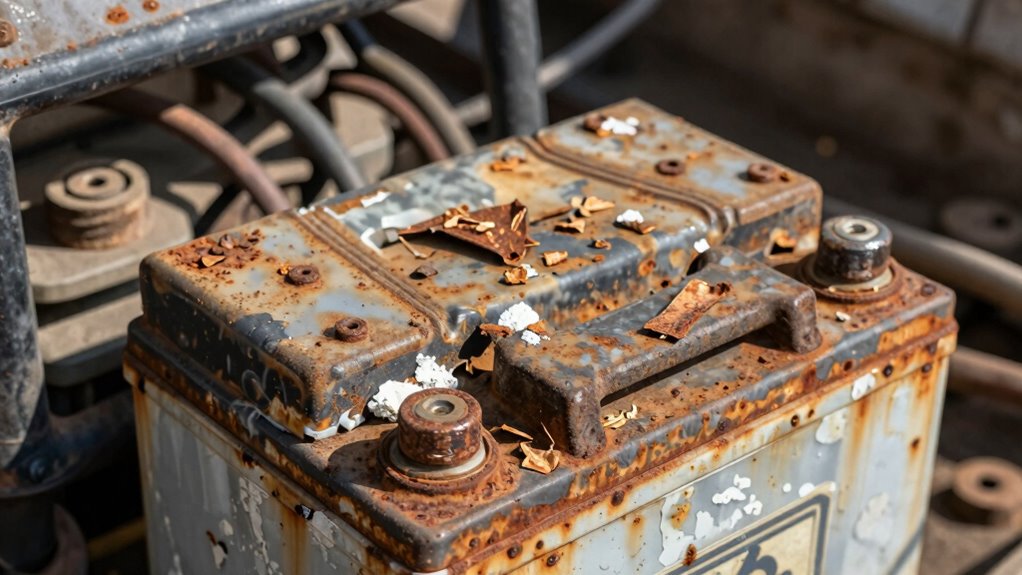
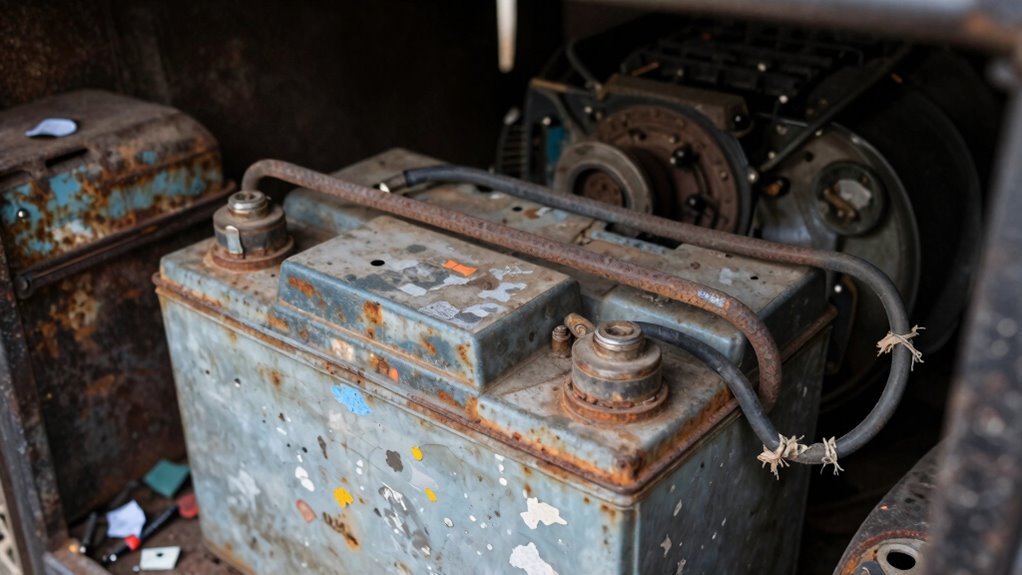
Have you ever experienced a generator that refuses to start when you need it most? If so, the issue might be your battery. Many people overlook proper battery maintenance, but it plays a key role in guaranteeing your generator starts reliably every time. Batteries naturally lose their ability to hold a charge over time, especially if they aren’t maintained properly. Regularly checking the terminals for corrosion, keeping the battery clean, and making sure it’s securely connected can make a significant difference. Neglecting these simple steps can cause your battery to drain faster and fail prematurely, leaving you stranded when you rely on your generator the most.
Regular battery checks and maintenance ensure your generator starts reliably when you need it most.
Another common reason for repeated battery failure is improper charging cycles. Your generator’s battery depends on consistent, well-managed charging cycles to stay healthy. If the battery isn’t charged correctly—either overcharged or undercharged—it can shorten its lifespan dramatically. Overcharging can lead to excessive heat and damage the internal plates, while undercharging prevents the battery from reaching full capacity, weakening it over time. You need to monitor the charging process closely, especially if your generator has an automatic charger. Using the right charger and following the manufacturer’s recommended charging cycles can help prolong the battery’s life. When your battery isn’t cycling properly through its charge and discharge phases, it becomes more prone to failure.
Temperature also plays a crucial role in battery health. Extreme cold can slow down chemical reactions inside the battery, reducing its ability to start the generator, while excessive heat can accelerate corrosion and degrade internal components. Making sure your battery is stored and operated within the recommended temperature range is essential. If you live in a hot climate, consider installing a battery cooler or relocating the battery to a cooler spot to prevent overheating. Conversely, in cold environments, keeping the battery warm or using a battery blanket can help maintain proper function.
Finally, age is a significant factor. Even with impeccable maintenance and perfect charging cycles, batteries have a limited lifespan. Typically, a generator battery lasts about 3 to 5 years, but this can vary based on usage and environmental conditions. When your battery reaches this stage, it’s wise to replace it before it fails unexpectedly. Staying vigilant about these factors—regular battery maintenance, proper charging cycles, temperature control, and timely replacement—can save you from frustrating failures and guarantee your generator starts when you need it most.
Top picks for "generator battery keep"
Open Amazon search results for this keyword.
As an affiliate, we earn on qualifying purchases.
Frequently Asked Questions
How Often Should I Test My Generator Battery?
You should test your generator battery at least once every three to six months. Regular battery maintenance helps identify issues early, ensuring your battery’s health. During tests, check the charge level and voltage, especially after multiple charge cycles, which can wear down the battery over time. Consistent testing keeps your generator ready, prevents unexpected failures, and extends the battery’s lifespan by addressing problems before they worsen.
Can Extreme Temperatures Affect Battery Lifespan?
Extreme temperatures can greatly shorten your generator battery’s lifespan. Hot weather accelerates battery chemistry reactions, causing faster degradation, while cold temperatures hinder chemical processes, reducing capacity. Proper temperature regulation helps maintain ideal battery chemistry, guaranteeing longevity. You should store your generator in a climate-controlled environment and regularly check the temperature to prevent damage. Keeping temperatures steady preserves your battery’s health and ensures reliable power when you need it most.
Is It Necessary to Disconnect the Battery for Storage?
Yes, you should disconnect the battery for storage. Proper battery maintenance and storage precautions help prevent it from draining or deteriorating. Before storing, confirm the battery is fully charged and clean. Disconnect it to avoid parasitic drain and damage from electrical shorts. Store the battery in a cool, dry place, ideally on a non-conductive surface. Regularly check the charge level to maintain peak battery health during long-term storage.
What Brand of Battery Is Most Reliable?
You should consider brands like Interstate, Odyssey, or VMAX for reliable generator batteries. To guarantee longevity, focus on proper battery maintenance and follow correct charging techniques. Keep the terminals clean and check the electrolyte levels regularly. Avoid deep discharges and use a quality charger suited for your battery type. Proper care and choosing a trusted brand help prevent your battery from dying prematurely, ensuring your generator runs smoothly when needed.
How Do I Properly Dispose of an Old Generator Battery?
Think of your old generator battery as treasure that needs safe handling. You should take it to a certified battery recycling center or follow local disposal methods, avoiding throwing it in the trash. Proper disposal prevents environmental harm and recycles valuable materials. Always check with your local waste management for specific instructions. By recycling your battery, you’re turning potential pollution into something beneficial, keeping our planet cleaner and safer.
Conclusion
So, next time your generator battery dies unexpectedly, ask yourself—are you giving it the attention it needs? Regular maintenance, proper charging, and checking for corrosion can make all the difference. Don’t let a dead battery leave you stranded in a pinch. After all, isn’t it better to keep your backup power ready and reliable, rather than scrambling when you least expect it? Stay proactive and keep your generator humming smoothly.