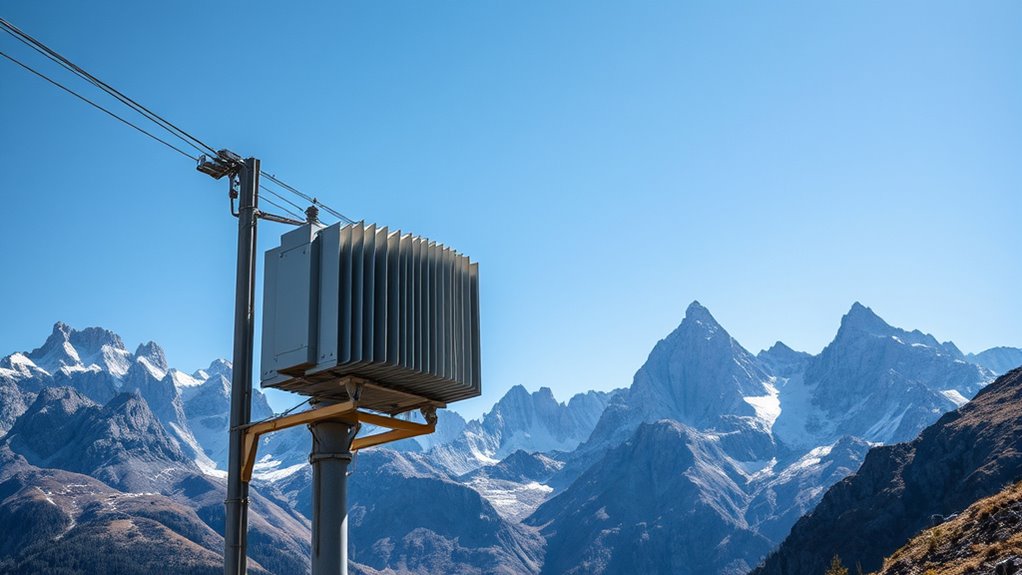
When accounting for altitude and temperature derating, you need to modify your electrical system’s ratings based on environmental conditions. As altitude increases, air density decreases, reducing cooling capacity and raising component temperatures, so you apply derating factors from standards or manufacturer guidelines. Similarly, in hot temperatures, the current-carrying capacity drops, requiring adjustments to prevent overloads. Understanding how to incorporate these corrections helps ensure your equipment operates safely and efficiently; explore further to learn the specific methods involved.
Key Takeaways
- Consult applicable standards (e.g., NEC, IEC) for prescribed derating factors based on altitude and temperature.
- Collect site-specific environmental data to determine accurate correction factors for equipment operation.
- Apply altitude correction factors to reduce rated current or capacity, compensating for decreased air density.
- Adjust equipment ratings further for ambient temperature increases above standard conditions to prevent overheating.
- Incorporate derating calculations early in design to ensure safety, compliance, and reliable system performance.
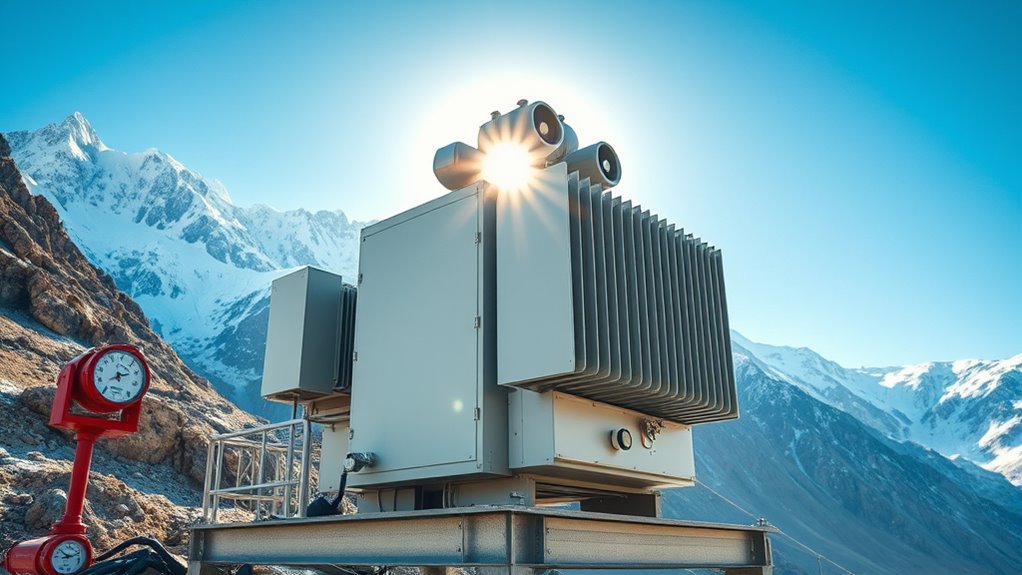
When designing electrical systems, accounting for altitude and temperature derating is essential to guarantee equipment operates safely and efficiently. As altitude increases, air density decreases, which affects the cooling capacity of electrical components and can lead to overheating if not properly adjusted. This is where altitude correction becomes indispensable. You need to recognize that at higher elevations, the reduced oxygen and air molecules mean less cooling for conductors, switches, and transformers. Without proper altitude correction, these components may run hotter than their rated limits, increasing the risk of failure or reduced lifespan. To address this, you should consult standards and manufacturer guidelines that specify derating factors at different altitudes. These factors help you adjust the rated current or power capacity of equipment, ensuring it remains within safe operating limits despite the thinner air. Temperature adjustment, on the other hand, involves considering the ambient temperature where the system will operate. When temperatures rise above standard testing conditions, electrical components can experience increased stress and potential overheating. You must apply temperature adjustment factors to account for these conditions, which typically involve reducing the current-carrying capacity of conductors or the rated load of equipment. This guarantees your system won’t be overloaded during hot weather or in environments with high ambient temperatures. Both altitude correction and temperature adjustment are indispensable because they directly influence the thermal performance and safety margins of your electrical system. Ignoring these factors can lead to equipment overheating, short circuits, or even catastrophic failures, especially in outdoor or high-altitude installations. Additionally, understanding the thermal performance of electrical components helps in designing systems that are both safe and energy-efficient. To implement these adjustments properly, you should gather detailed environmental data for your project site and refer to relevant standards, such as NEC or IEC guidelines. These standards provide tables and formulas for calculating appropriate derating factors based on altitude and temperature. Additionally, consulting with manufacturers’ technical data ensures you apply the most accurate correction values. It’s also wise to incorporate these adjustments into your system design calculations early in the planning process to avoid costly modifications later. Properly accounting for altitude correction and temperature adjustment not only enhances safety but also maximizes the reliability and longevity of your electrical system. By proactively addressing these environmental factors, you protect your equipment from unforeseen stresses, reduce maintenance costs, and ensure compliance with safety standards. In conclusion, factoring in altitude and temperature derating is a necessary step that requires careful attention to environmental conditions, adherence to standards, and precise calculations. Doing so guarantees your electrical systems operate efficiently and safely, no matter where they’re installed.

Portable Solar Generator 300W Portable Power Station with 60W Solar Panel
- Portable Generator with 60W Solar Panel Included: with a big battery pack,...
- Multiple Charging outlets for camping gear with SOS Flashlight: with 2* 300W Max AC...
- Multiple Charging Optional, Solar Panel Charger 60W Included: ZeroKor portable power bank generator...
As an affiliate, we earn on qualifying purchases.
Frequently Asked Questions
How Do Altitude and Temperature Derating Affect Long-Term Equipment Reliability?
Altitude and temperature derating can impact your equipment’s long-term reliability by causing thermal expansion and stressing components. Higher altitudes reduce cooling efficiency, while temperature increases demand better airflow management. If ignored, these factors can lead to overheating, component wear, and system failure over time. To prevent this, you should optimize airflow and monitor thermal conditions regularly, ensuring your equipment operates within safe limits despite environmental changes.
Are There Industry Standards for Altitude and Temperature Derating?
Sure, industry benchmarks and safety guidelines definitely exist for altitude and temperature derating, even if it feels like an endless maze. These standards help you guarantee equipment operates reliably at different heights and temperatures, preventing unexpected failures. While some guidelines are industry-specific, most follow recognized frameworks like IEEE or IEC. Following these helps you stay compliant, avoid costly downtime, and keep your equipment’s long-term health intact.
How Can I Optimize Equipment Performance With Derating Adjustments?
To enhance equipment performance with derating adjustments, focus on efficiency optimization and power scaling. You should regularly monitor environmental conditions and adjust operational parameters accordingly, ensuring your equipment runs within recommended derating limits. Implement adaptive control systems that automatically modify power output based on altitude and temperature changes. This proactive approach maintains efficiency, prevents overloads, and extends equipment lifespan, ensuring ideal performance despite environmental challenges.
What Tools Are Available to Calculate Derating Factors Accurately?
You might think calculating derating factors is complex, but simulation tools and empirical charts make it straightforward. Simulation tools allow you to model specific conditions accurately, while empirical charts provide quick reference points for various altitudes and temperatures. Together, these tools help you determine precise derating adjustments, ensuring ideal equipment performance even in challenging environments. Using them boosts confidence and accuracy, saving you time and reducing the risk of performance issues.
How Does Derating Impact the Overall Lifecycle Cost of Equipment?
Derating impacts your overall lifecycle cost by reducing equipment efficiency and increasing maintenance needs. When you account for derating, you’ll conduct a thorough cost analysis to understand these long-term expenses. By optimizing efficiency through proper derating considerations, you minimize operational costs and extend equipment lifespan. This proactive approach guarantees your investment remains cost-effective, helping you avoid unexpected failures and costly replacements down the line.

BLUETTI Elite 30 V2 Portable Power Station 288Wh 600W LFP Solar Generator
- [288Wh On-the-Go Power] - Only 9.4 lbs lightweight,...
- [600W Continuous & 1500W Surge Power] - Get...
- [50% Lower Power Consumption] - Upgraded UltraCell tech...
As an affiliate, we earn on qualifying purchases.
Conclusion
By accounting for altitude and temperature derating, you guarantee your equipment operates reliably and efficiently. It’s a proven fact that neglecting these factors can lead to underestimated performance issues or premature failure. So, when you factor in these environmental influences, you’re not just following best practices—you’re safeguarding your investment. Trust the theory that proper derating isn’t optional but essential for real-world applications, helping you optimize system longevity and performance under varying conditions.

Anker Portable Power Station SOLIX C300, 288Wh LiFePO4 Backup Battery, 300W Solar Generator, 140W Two-Way Fast Charging, for Camping, Hunting, Travel, Blackout & Emergencies (Solar Panel Optional)
- Compact with Massive Power: It's portable power that moves...
- 8 Versatile Charging Ports: Keep your essential devices powered...
- Travel-Friendly Design: Attach the strap(sold separately) or...
As an affiliate, we earn on qualifying purchases.

Anker SOLIX C300 DC Portable Power Station, 288Wh, 300W, Outdoor Camping
- To activate C300 DC Portable Power Station for the first time: Recharge with an 18W or...
- Massive Power on the Go: Take portable power anywhere and...
- LiFePO4 battery with a 3-year guarantee: featuring LiFePO4 batteries, smart temperature...
As an affiliate, we earn on qualifying purchases.