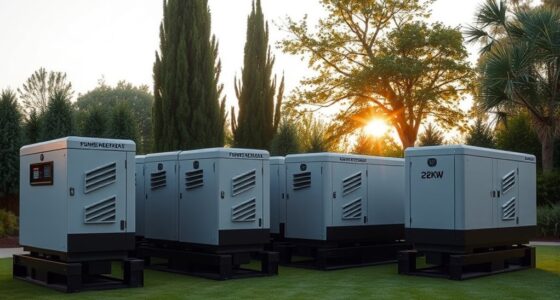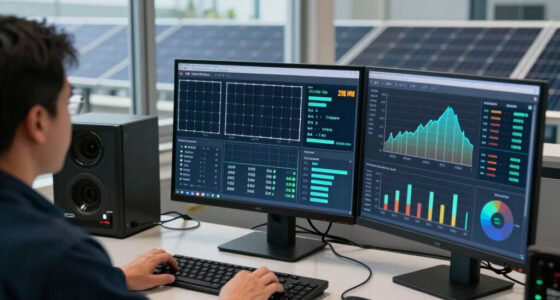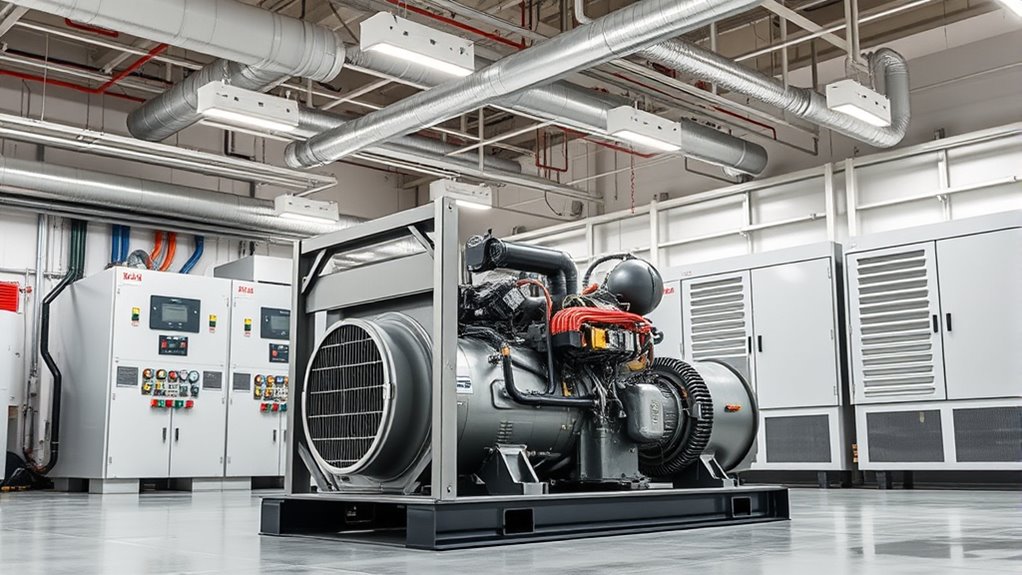

When sizing generators for HVAC and refrigeration loads, you need to account for both running and startup surges, which can be 25-30% higher than ongoing loads. Proper calculation of total power needs is vital to prevent overloads and equipment failures. Consider future expansion to guarantee your system can handle additional loads down the line. If you’d like to discover how to accurately determine the right size, keep exploring the key factors involved.
Key Takeaways
- Accurately calculate both starting and running loads to determine total power requirements for HVAC and refrigeration systems.
- Include a safety margin or buffer in generator capacity to accommodate startup surges, typically 25-30% higher than running loads.
- Consider future expansion plans and potential equipment upgrades to ensure the generator can handle increased loads long-term.
- Avoid underestimating loads to prevent generator overloads during peak operation and equipment failures.
- Balance capacity to maximize efficiency, reliability, and cost-effectiveness by consulting professionals for precise load assessments.
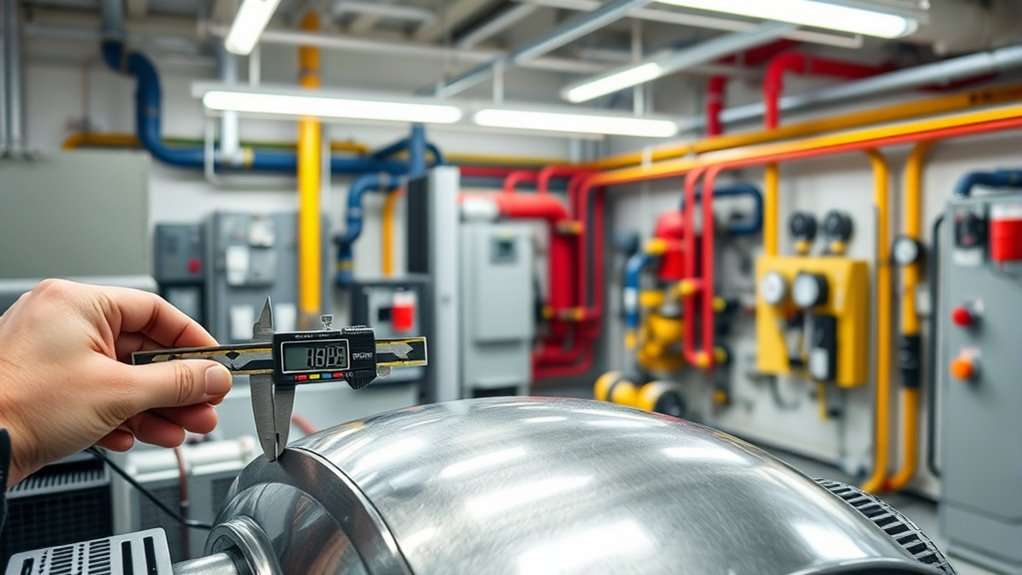
Choosing the right generator size for HVAC and refrigeration loads is crucial to guarantee reliable operation and energy efficiency. To do this effectively, you need to perform an accurate load calculation that considers all the electrical demands of your system. Load calculation is the process of determining the total power your HVAC and refrigeration units require to operate smoothly without overloading your generator. If your calculation underestimates the load, your generator might struggle to handle the power demands during peak operation, leading to frequent outages or equipment failures. Conversely, overestimating can result in unnecessary expenses and inefficient energy use. That’s why precise load calculation is essential—it provides a clear picture of your actual power needs, ensuring you select a generator with appropriate capacity.
Accurate load calculation ensures reliable, efficient operation by matching generator capacity to HVAC and refrigeration demands.
When choosing a generator capacity, it’s important to account for both the starting and running loads of your HVAC and refrigeration systems. HVAC units, especially large compressors and fans, often require a surge of power when they start up, which can be substantially higher than their running power. If you select a generator that only meets the running load, you risk overload during startup, causing interruptions or damage. To prevent this, you should select a generator capacity that can handle at least 25-30% above your calculated load, providing a buffer for startup surges. This extra capacity ensures your system runs smoothly during all phases of operation and maintains longevity.
Additionally, don’t forget to factor in future expansion or additional equipment when sizing your generator. If you anticipate adding more units or upgrading existing systems, choose a generator that can accommodate these changes without requiring immediate replacement. Properly sizing your generator prevents costly downtime and keeps your HVAC and refrigeration systems operating efficiently. Remember, a generator that’s too small will constantly be pushed to its limits, risking failure, while one that’s too large might lead to wasted energy and higher upfront costs.
Ultimately, the key is balancing your load calculation with an appropriate generator capacity. Doing so ensures your HVAC and refrigeration systems perform reliably, with minimal energy waste. Accurate load calculation, combined with a well-chosen generator capacity, safeguards your investment, reduces operational costs, and guarantees steady climate control. Including dynamic load management in your planning can further optimize your system’s efficiency and longevity. When in doubt, consult with professionals who can help you evaluate your specific load requirements and recommend the right generator size, so you can operate confidently and efficiently.

Porch Shield Waterproof Universal Generator Cover 32 x 24 x 24 inch - for Most Generators 5000-10000 Watt, Black
Compatible - More sizes for 5000w -10000w gas generator or inverter generator.
As an affiliate, we earn on qualifying purchases.
Frequently Asked Questions
How Do Ambient Temperature Variations Affect Generator Sizing?
Ambient temperature variations directly impact your generator capacity needs. When temperatures rise, your generator must work harder to cool the engine and maintain ideal performance, often reducing efficiency. Conversely, cooler temperatures improve capacity and efficiency. You should size your generator with these ambient temperature effects in mind, guaranteeing it can handle peak loads without overloading during hot days. Properly accounting for ambient temperature ensures reliable operation and avoids system failures.
What Are the Best Practices for Generator Maintenance in HVAC Systems?
Think of your generator as the heart of your HVAC system; it needs regular checkups to keep beating strong. Follow manufacturer-recommended maintenance schedules, inspecting generator fuel lines, filters, and connections regularly. Keep an eye on oil levels and replace parts before they fail. Consistent maintenance prevents unexpected breakdowns, ensuring your system runs smoothly when you need it most. Proper care prolongs your generator’s life and maintains ideal cooling and heating performance.
How Does Generator Capacity Impact Energy Efficiency?
Your generator capacity directly impacts energy efficiency by influencing the load factor. A properly sized generator operates closer to its ideal load, boosting fuel efficiency and reducing energy waste. If it’s too large, it runs at low load, decreasing efficiency; if too small, it strains and consumes more fuel. To maximize efficiency, guarantee your generator’s capacity matches your HVAC and refrigeration loads precisely, maintaining a healthy load factor.
What Are Common Troubleshooting Steps for Generator Overloads?
When troubleshooting generator overloads, you should start with generator testing to identify any faults or inefficiencies. Check the overload protection device to verify it’s functioning correctly and hasn’t tripped prematurely. Reduce the load temporarily to see if the generator handles it properly. If problems persist, inspect wiring and connections for damage or loose contacts, and consider upgrading your generator’s capacity to prevent future overloads.
How to Select a Generator for Future Load Expansions?
Measure twice, cut once. To select a generator for future load expansions, you need to start with accurate load forecasting and capacity planning. Consider your current demands and predict future increases, allowing for a buffer. Choose a generator with slightly higher capacity than your projected load to accommodate growth. Regularly review your load data, and opt for flexible, scalable options to guarantee your system remains reliable as demands grow.
Porch Shield Waterproof Universal Generator Cover 38 x 28 x 30 inch - for Most Generators 5500-15000 Watt, Black
Compatible - More sizes for 5500w -15000w gas generator or inverter generator.
As an affiliate, we earn on qualifying purchases.
Conclusion
By accurately sizing your generator, you guarantee your HVAC and refrigeration systems run smoothly, just like a well-tuned engine keeps a car moving seamlessly. Remember, underestimating your needs is like trying to fit a large puzzle into a small space—frustrating and ineffective. Proper sizing gives you peace of mind, reliability, and efficiency, so take the time to do it right. When you get it right, your system performs as reliably as the sun rises each morning.

Jackery Explorer 1000 v2 Portable Power Station,1070Wh LiFePO4 Battery,1500W AC/100W USB-C Output, 1 Hr Fast Charge, Solar Generator for Camping,Emergency, RV, Off-Grid Living(Solar Panel Optional)
Powerful yet Compact: Boasting a 1,500W AC output and a 3,000W surge peak, the Solar Generator 1000 V2...
As an affiliate, we earn on qualifying purchases.
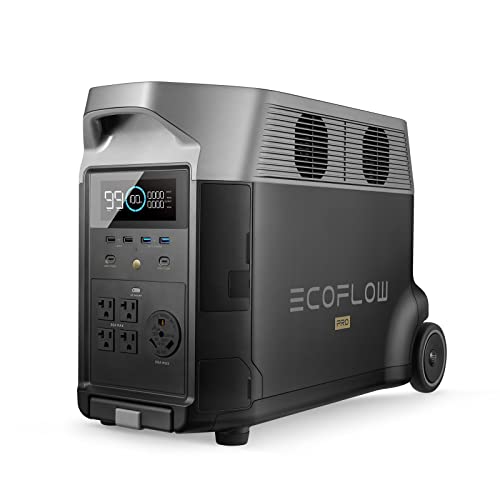
EF ECOFLOW Portable Power Station 3600Wh DELTA Pro, 120V AC Outlets x 5, 3600W, 2.7H Fast Charge, Lifepo4 Power Station, Solar Generator for Home Use, Power Outage, Camping, RV, Emergencies
30% Tax Credit Could be Applied. You could apply for the Residential Clean Energy Credit for qualified solar...
As an affiliate, we earn on qualifying purchases.