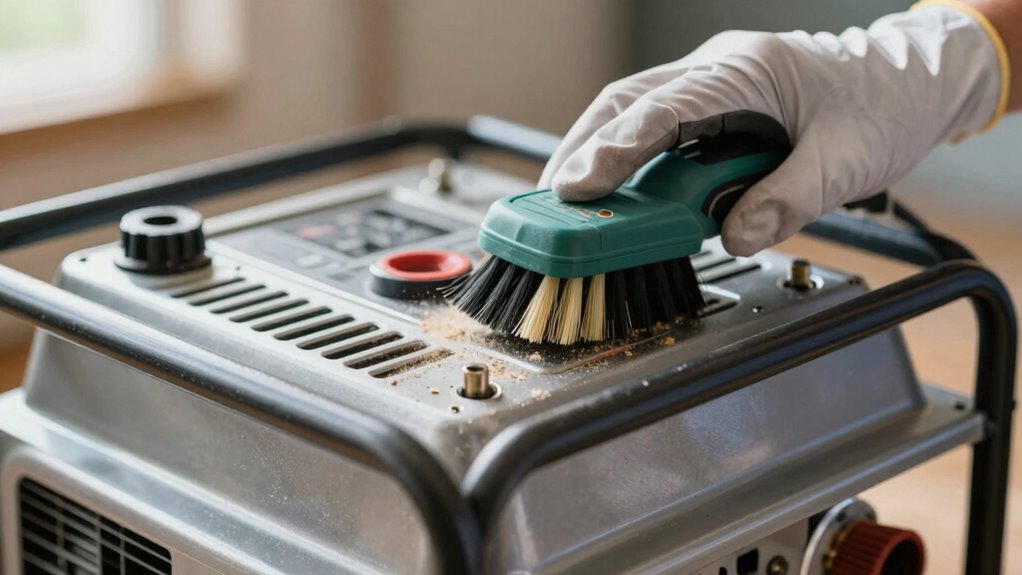

To clean around your generator safely, turn it off and let it cool down first. Use a soft brush or leaf blower to gently remove loose dirt, avoiding water sprays directly into openings or vents. Wipe the exterior with a damp cloth and mild soap, keeping water away from control panels and outlets. Clear debris from surrounding areas and trim nearby vegetation to guarantee good airflow. If you want to protect your generator’s performance, there’s more to contemplate—keep exploring.

Get backup power and energy gear delivered free with Prime
- Fast, free delivery on millions of items
- Prime Video, Amazon Music and more included
- Member-only deals all year
Key Takeaways
- Turn off and disconnect power before cleaning; allow the generator to cool completely first.
- Use a soft brush, damp cloth, or compressed air to remove debris, avoiding water sprays into openings.
- Keep cleaning tools gentle; avoid high-pressure water to prevent electrical or surface damage.
- Clear surrounding debris and trim vegetation to prevent obstruction and improve airflow.
- Regularly inspect ventilation pathways and cooling fins for debris buildup to prevent overheating.
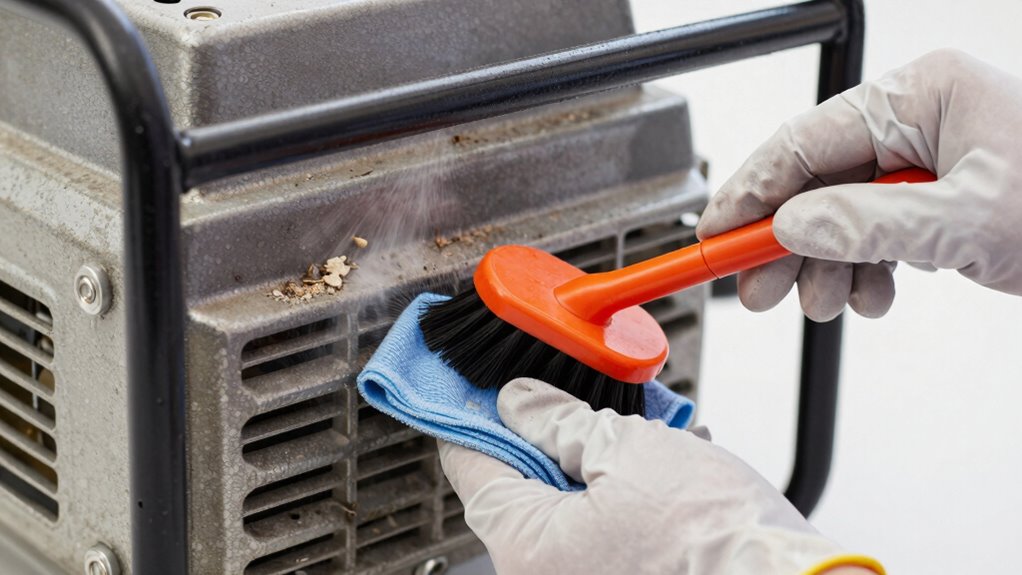
Keeping your generator clean is crucial for its peak performance and longevity. Regular outdoor cleaning helps prevent dirt, debris, and corrosion from compromising its operation. When it comes to generator maintenance, staying on top of cleaning around the unit is just as important as inspecting its internal components. Clearing away leaves, dust, and grime not only keeps the generator looking good but also ensures proper airflow and cooling**** which are essential for efficient functioning.
Start by turning off the generator and disconnecting the power to avoid any accidents. Before you begin outdoor cleaning, give the generator a few minutes to cool down completely. Once it’s safe, use a soft brush or a leaf blower to remove loose debris from the exterior surface, paying close attention to vents and cooling fins. These areas tend to trap dirt, which can hinder airflow and cause overheating. Use a damp cloth or sponge with mild soap to wipe down the outer casing, but avoid spraying water directly into any openings or vents, as this can cause electrical damage. If there’s stubborn grime, a gentle scrub with a soft brush works best, ensuring you don’t scratch or damage the surface.
When cleaning around the generator, take care to keep water away from sensitive parts such as the control panel, outlets, and fuel system. Use a vacuum or compressed air to clear dust from hard-to-reach places, especially around air filters and cooling fins. Outdoor cleaning also involves trimming vegetation or removing any objects that could obstruct airflow or pose fire risks. Maintaining a clear space around your generator not only improves efficiency but also reduces the risk of accidents or damage during operation. Additionally, understanding the importance of filter sizing/flow can help you ensure proper ventilation and cooling for your generator. Proper outdoor cleaning techniques play a key role in preventing buildup that can impair performance over time. Regularly inspecting the area for potential fire hazards and ensuring proper clearance can greatly extend the lifespan of your generator. Moreover, using appropriate cleaning tools specific to outdoor equipment can make the process safer and more effective. Ensuring proper ventilation around your generator also helps prevent overheating and improves overall safety.
Frequently Asked Questions
Can I Use a Pressure Washer to Clean Around the Generator?
You can use a pressure washer to clean around your generator, but you need to be cautious. Use a low-pressure setting and keep the nozzle at a safe distance to avoid damaging sensitive components. Proper generator maintenance and cleaning techniques involve gentle cleaning methods. Avoid direct water on electrical parts, and consider using a garden hose or soft brush for delicate areas. Always follow manufacturer guidelines to prevent costly damage.
Is It Safe to Spray Water Directly on the Generator?
Spraying water directly on your generator isn’t safe—think about electrical safety risks and potential water damage. A sudden splash could cause shorts or corrosion, especially if water gets into sensitive components. Instead, keep a careful distance, use gentle cleaning tools, and avoid high-pressure streams. Protect your investment by ensuring no water penetrates the enclosure, and always disconnect power before cleaning. Your generator’s longevity depends on cautious, informed cleaning practices.
How Often Should I Clean Around My Generator?
You should clean around your generator at least once every three to six months, depending on usage and environment. Follow your maintenance schedule to keep it in ideal condition. Always prioritize safety precautions, like disconnecting the power and wearing protective gear, before cleaning. Regular cleaning prevents dust, dirt, and debris buildup, ensuring efficient operation and prolonging your generator’s lifespan. Consistent maintenance helps avoid unexpected breakdowns.
What Cleaning Products Are Safe for Generator Surfaces?
Imagine your generator as a sturdy guardian, standing watch over your power needs. Use gentle, chemical alternatives like mild soap and water, avoiding harsh cleaners that could corrode its surface. Opt for eco-friendly products that align with environmental considerations, ensuring your guardian remains strong without harming the surroundings. These safe cleaning choices preserve your generator’s integrity and keep it shining bright, ready to protect you day after day.
Should I Disconnect the Generator Before Cleaning?
Yes, you should disconnect the generator before cleaning. For proper generator maintenance and safety precautions, always turn off and unplug your generator to prevent electrical hazards. Allow it to cool down if recently used. Disconnect the spark plug wire to avoid accidental starting. This guarantees you clean safely without risk of injury or damage. Following these steps helps maintain your generator’s longevity and keeps your workspace safe.
Conclusion
Remember, cleaning around your generator is like tending a garden—careful pruning keeps it thriving. Clear away debris and dust, letting fresh air flow like sunlight nourishing new growth. Handle delicate parts gently, like nurturing tender shoots. A clean generator stands resilient, ready to serve as your steady beacon in storms. Keep it maintained, and it’ll shine bright, symbolizing your vigilant care—your silent guardian, always ready to power through life’s darkest moments.
Fall Picks
fall essentials
As an affiliate, we earn on qualifying purchases.