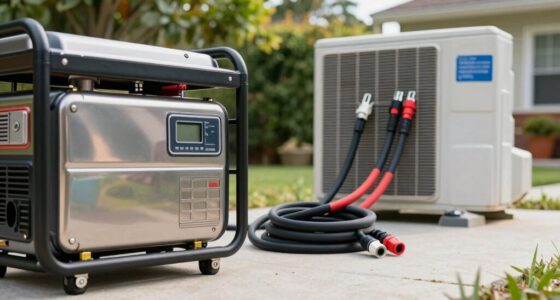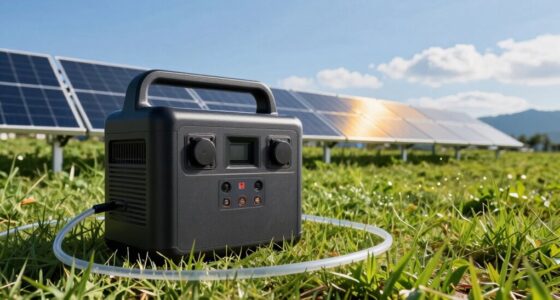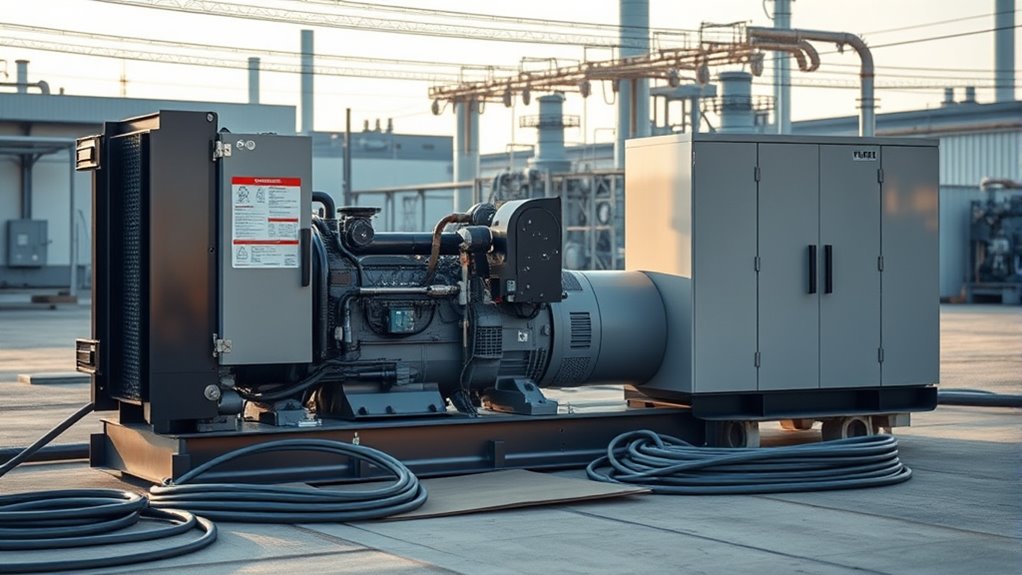
Allowing for future expansion in generator sizing means you should plan ahead by selecting systems that can handle increased loads over time. Focus on scalable, modular designs with advanced control systems that adapt as your needs grow. Incorporate high fuel efficiency and flexible load management to keep costs low and guarantee smooth integration of new units. By considering these strategies now, you’ll avoid costly upgrades later—discover more ways to plan effectively ahead.
Key Takeaways
- Incorporate future load projections into initial sizing to ensure capacity for growth.
- Use modular generator systems to enable incremental expansion as demand increases.
- Select scalable control and automation systems for flexible load management and performance adaptation.
- Design with headroom capacity to accommodate unexpected load increases without immediate upgrades.
- Plan for technology upgrades that support smart monitoring and dynamic output adjustments for future needs.
Planning for future expansion is vital when sizing a generator, as it guarantees your power system can handle increased loads without costly upgrades. When you’re designing your generator setup, you want to think ahead about how your business or facility might grow. This isn’t just about meeting current demands; it’s about building in the capacity to accommodate future needs smoothly. One of the key strategies here is effective load management. By carefully analyzing your current load profile and predicting future consumption, you can select a generator that offers enough headroom. This means avoiding the common mistake of sizing a generator just for today’s needs, which can lead to performance issues or the need for early replacement as your power requirements increase.
Planning ahead ensures your generator can handle future growth smoothly and cost-effectively.
In addition to load management, fuel efficiency plays a vital role in future-proofing your power system. A generator that operates efficiently under increased loads helps control operating costs, especially as your demand grows. Choosing a model with high fuel efficiency means you’ll spend less on fuel over its lifespan, even as the load increases. This not only saves money but also reduces your environmental footprint. When planning for expansion, consider generators with advanced fuel management systems or those designed for optimal performance at varying loads. These features ensure you get the most value out of your investment while maintaining reliable power supply as your needs evolve.
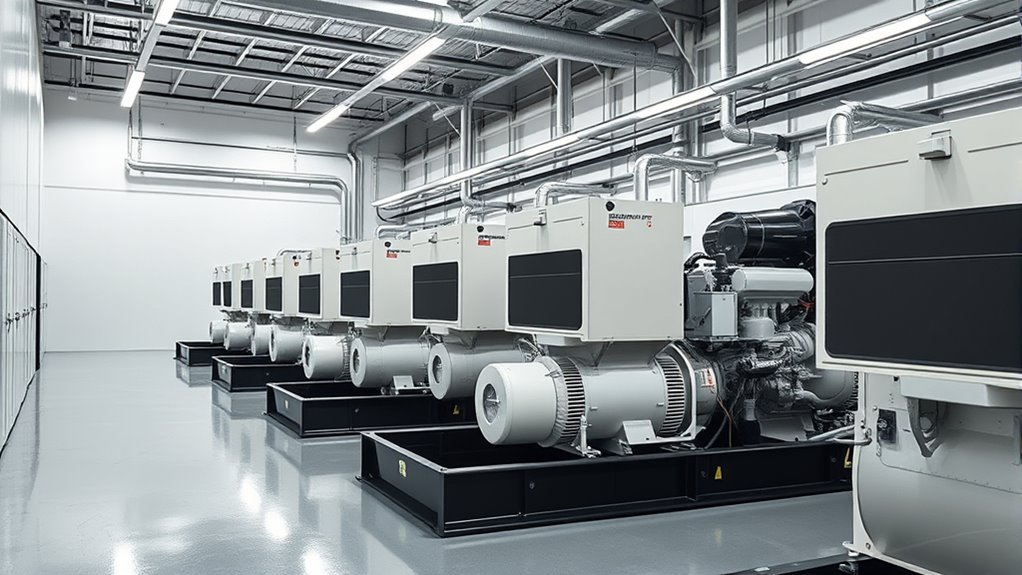
Furthermore, you should think about modular or scalable generator systems. These allow you to add capacity incrementally, rather than investing in a single oversized generator upfront. Modular systems enable you to start with a smaller unit and expand by adding more modules as your power demands grow. This approach provides flexibility, minimizes upfront costs, and ensures that your power system remains efficient and manageable over time. When selecting a generator for future expansion, also consider the availability of spare parts and service support for larger or additional units, so you can keep your system running smoothly without significant downtime or expense.
Additionally, exploring innovative generator technologies can help future-proof your power system by providing smarter, more adaptable solutions that grow with your needs. Finally, integrating smart load management and control technologies can help you optimize your generator’s performance as your load increases. These systems monitor real-time usage, adjust output accordingly, and improve fuel efficiency. By implementing such technology, you ensure your power system adapts seamlessly to future growth, maintaining stability and efficiency. Planning with these considerations in mind ensures you won’t just meet today’s needs but are prepared for tomorrow’s growth, saving you money and hassle in the long run.

Porch Shield Generator Cover for 5500-15000W, 38 x 28 x 30 inch, Black
- Compatible - More sizes for 5500w -15000w gas...
- Upgrade Material - Made of 600D polyester fabric...
- Tear Resistant & Waterproof - The high-level double...
As an affiliate, we earn on qualifying purchases.
Frequently Asked Questions
How Can I Estimate Future Power Needs Accurately?
To estimate your future power needs accurately, start with load prediction by analyzing your current energy consumption patterns and identifying peak usage times. Incorporate capacity planning by considering potential growth in your operations or equipment. You should also factor in seasonal variations and new projects. Regularly review and update your estimates to guarantee your generator capacity can handle future demands, avoiding over- or under-sizing your system.
What Are the Costs Associated With Oversized Generators?
Oversized generators can increase your initial costs by up to 30%, impacting your budget considerably. The cost implications include higher purchase prices and ongoing maintenance expenses. Plus, you’ll face installation challenges, such as needing larger space and more robust infrastructure. While it might seem like a good idea for future expansion, oversizing often leads to inefficiencies and unnecessary expenses, so careful planning is essential to avoid these costly pitfalls.
How Does Load Growth Impact Generator Maintenance?
Load growth increases your generator’s workload, making maintenance more critical. You should regularly update load forecasting to predict future demands and adjust maintenance schedules accordingly. As your load rises, components may wear faster, requiring more frequent inspections and servicing. Staying proactive with maintenance helps prevent unexpected failures, ensuring your generator runs efficiently and reliably even as your power needs expand.
Should I Consider Renewable Energy Sources for Future Expansion?
Thinking about future expansion? You should definitely consider renewable energy sources like solar or wind. They’re like planting seeds for sustainable design, helping your system grow naturally over time. Incorporating renewable integration now makes your setup more flexible, reduces reliance on traditional generators, and aligns with eco-friendly goals. Plus, it prepares you for a greener future, ensuring your power needs expand smoothly without overloading your current infrastructure.
How Do Regulatory Changes Affect Generator Sizing Plans?
Regulatory changes can substantially impact your generator sizing plans by altering compliance requirements and affecting policy incentives. You need to stay informed about new regulations to guarantee your generator meets updated standards and takes advantage of incentives. Failing to adapt could lead to penalties or missed financial benefits. By proactively monitoring policy shifts, you can adjust your generator size accordingly, ensuring ongoing regulatory compliance and maximizing available incentives.
Porch Shield Generator Cover for 5000-10000W, 32 x 24 x 24 inch, Black
- Compatible - More sizes for 5000w -10000w gas...
- Upgrade Material - Made of 600D polyester fabric...
- Tear Resistant & Waterproof - The high-level double...
As an affiliate, we earn on qualifying purchases.
Conclusion
By thoughtfully considering future expansion when sizing your generator, you’re gently opening the door to growth without the risk of feeling cramped later on. It’s like planting a seed that quietly promises more blossoms in the seasons to come. With a little foresight, your setup can gracefully adapt to whatever the future holds, ensuring smooth sailing ahead. Embrace this subtle approach, and you’ll enjoy a system that’s ready to flourish alongside your ambitions.

Jackery Explorer 1000 v2 Portable Power Station,1070Wh,1500W
- Powerful yet Compact: Boasting a 1,500W AC output...
- One Hour Fast Charging: Charge your Explorer 1000 v2...
- 10 Year Lifespan: The Explorer 1000 v2 portable...
As an affiliate, we earn on qualifying purchases.

Jackery Explorer 300 Portable Power Station,292Wh
- Ultra-Lightweight: At only 7.5 lbs, the...
- Versatile Power for 6 Devices: Equipped with 2 AC outlets,...
- Built to Last: Upgraded with premium LiFePO4 chemistry,...
As an affiliate, we earn on qualifying purchases.