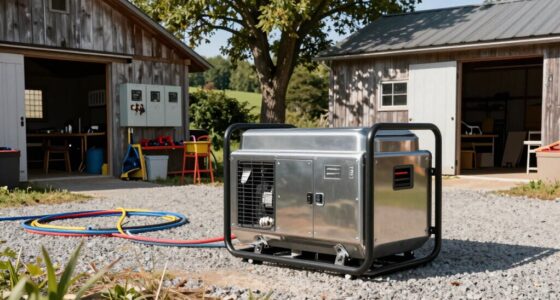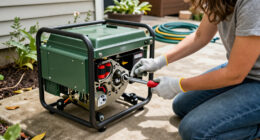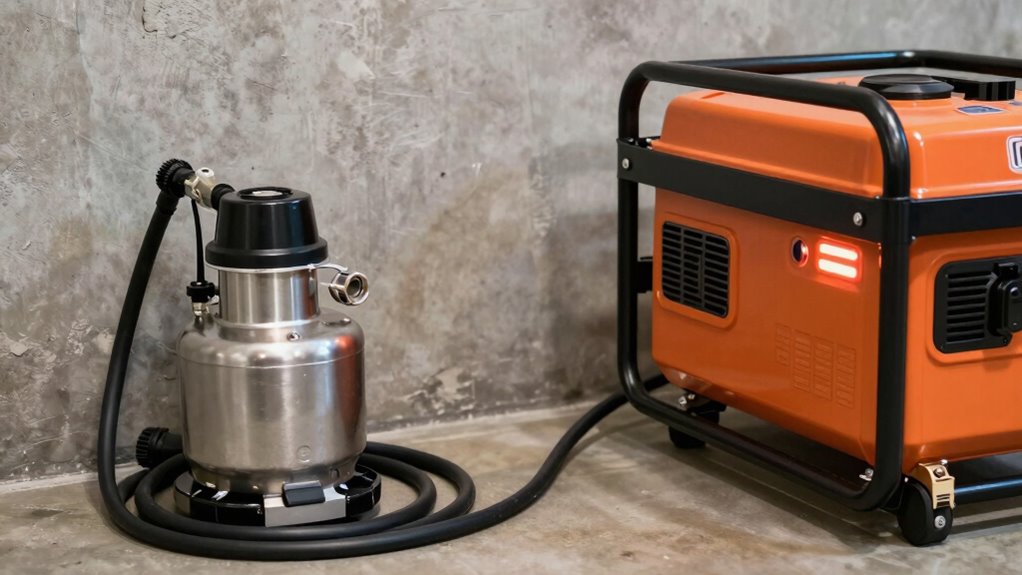

When choosing backup generators for sump pumps, the goal is to keep your basement dry during power outages. The best models balance power capacity, reliability, and ease of installation. The Basement Watchdog AGM Standby Battery stands out for maintenance-free operation, while the VEVOR 3000W System offers high power with advanced features. Common tradeoffs include size versus capacity and upfront cost versus long-term dependability. Keep reading to see how each option stacks up and find the best fit for your needs.

Get backup power and energy gear delivered free with Prime
- Fast, free delivery on millions of items
- Prime Video, Amazon Music and more included
- Member-only deals all year
Complete the kit


Key Takeaways
- High-capacity systems like the VEVOR 3000W provide more power but come with higher costs and size considerations.
- Pure sine wave inverters are preferred for sensitive electronics and prolonged operation, especially in backup scenarios.
- Auto switch features are essential for seamless transition during outages, reducing risk of sump pump failure.
- Maintenance-free AGM batteries simplify upkeep but may have higher initial costs compared to traditional flooded batteries.
- Consider your backup duration needs; larger batteries or higher wattage units ensure longer operation during extended outages.
| 1500W Sump Pump Battery Backup System with Pure Sine Wave Inverter and LCD Remote |  | Best for Compact, Reliable Emergency Power | Power: 1500W | Type: Battery Backup System | Output: Pure Sine Wave | VIEW ON AMAZON | See Our Full Breakdown |
| VEVOR 1500W Sump Pump Battery Backup System with LCD Display and Auto Switch |  | Best for Easy, Safe Setup for Small to Medium Pumps | Power Output: 1500W | Suitable Pump Size: Up to 3/4 HP | Display: LCD with LED indicators | VIEW ON AMAZON | See Our Full Breakdown |
| VEVOR 2500W Sump Pump Battery Backup System with LCD Display and Auto Switch |  | Best for High Power, Dual Pump Support | Power Output: 2500W | Voltage: 120V | Peak Power: 5000W | VIEW ON AMAZON | See Our Full Breakdown |
| 2500W Sump Pump Battery Backup System with Pure Sine Wave Inverter and LCD Remote |  | Best for Versatile, Multi-Outlet Emergency Power | Power Source: Solar and Battery Powered | Wattage: 2500 watts | Voltage: 120 volts | VIEW ON AMAZON | See Our Full Breakdown |
| 2500 Watt Sump Pump Battery Backup System with LCD Remote and Pure Sine Wave Output |  | Best for High Capacity, Multi-Pump Basement Support | VIEW ON AMAZON | See Our Full Breakdown | |||
| Cantonape 2000W Sump Pump Backup Battery System, Pure Sine Wave Output |  | Best for Easy, Reliable Backup Power with No Wiring Hassles | Power Output: 2000 watts | Material: Plastic | Dimensions: 11.73″L x 5.91″W x 3.5″H | VIEW ON AMAZON | See Our Full Breakdown |
| 1500W Sump Pump Battery Backup System for Basement Power Outages |  | Best for Versatile Power with LCD Monitoring | Power Output: 1500W | Waveform: Pure sine wave | AC Outlets: 3 | VIEW ON AMAZON | See Our Full Breakdown |
| 2500 Watt Sump Pump Backup Battery System with Remote LCD Controller |  | Best for High Power, Remote Monitoring, and Flexibility | Power Output: 2500W | Battery Type: Deep-cycle lithium, AGM, others | Remote Control: Yes | VIEW ON AMAZON | See Our Full Breakdown |
| Basement Watchdog Maintenance Free AGM Standby Battery for Backup Sump Pumps |  | Best for Long-Lasting, Maintenance-Free Backup Power | Type: Maintenance Free AGM | Compatibility: Basement Watchdog systems | Protection Time: Up to 80 hours | VIEW ON AMAZON | See Our Full Breakdown |
| VEVOR Sump Pump Battery Backup System, 3000W, Pure Sine Wave, LCD Display, Auto Switch for Continuous Operation |  | Best for High-Power, Large-Scale Home or Basement Backup | Power Source: Battery Powered | Wattage: 3000W | Voltage: 110V | VIEW ON AMAZON | See Our Full Breakdown |
| backup generators for sump pump | Power Output |
|---|---|
| 1500W Sump Pump Battery Backup | — |
| VEVOR 1500W Sump Pump Battery | 1500W |
| VEVOR 2500W Sump Pump Battery | 2500W |
| 2500W Sump Pump Battery Backup | — |
| 2500 Watt Sump Pump Battery Ba | — |
| Cantonape 2000W Sump Pump Back | 2000 watts |
| 1500W Sump Pump Battery Backup | 1500W |
| 2500 Watt Sump Pump Backup Bat | 2500W |
| Basement Watchdog Maintenance | — |
| VEVOR Sump Pump Battery Backup | — |
More Details on Our Top Picks
1500W Sump Pump Battery Backup System with Pure Sine Wave Inverter and LCD Remote
This system stands out for providing dependable backup power during outages with a pure sine wave output, ensuring sensitive sump pump components operate safely. Compared with the larger capacity VEVOR 2500W system, it’s more suited for smaller setups or homes with limited space, but it’s limited to 1500W, which may not support larger pumps. The LCD remote offers real-time system status, adding convenience, yet the need for separate batteries and potential installation complexity can be hurdles for less technical users. This model makes the most sense for homeowners with smaller sump pumps seeking a straightforward, space-efficient backup solution.
Pros:- Provides reliable backup power during outages
- Pure sine wave output ensures safe operation of sensitive devices
- Remote LCD monitor for real-time system status
- Multi-protection features for safe charging and operation
Cons:- Battery not included, requiring additional purchase
- Limited to 1500W capacity, unsuitable for larger pumps
- Installation may require technical knowledge
Best for: Homeowners with smaller sump pumps or limited space who want reliable backup power with remote monitoring.
Not ideal for: Users with larger pumps over 1500W or those lacking technical skills for installation.
- Power:1500W
- Type:Battery Backup System
- Output:Pure Sine Wave
- Remote Monitoring:LCD Remote
- Battery Compatibility:LiFePO4, AGM, GEL, Flooded
- Charger:25A multi-stage charger
- Weight:500 g
Our verdict“This pick is perfect for small to medium sump pump setups needing dependable backup with remote monitoring.”
VEVOR 1500W Sump Pump Battery Backup System with LCD Display and Auto Switch
This model excels in user-friendly installation with its quick plug-in setup, making it ideal for those new to backup systems. Its real-time LCD display monitors key system parameters, giving users peace of mind during outages. Compared with the 1500W system by B0DLWHJ8Z5, it offers similar power but emphasizes safety with multiple protections like overcurrent and reverse polarity. However, it’s limited to pumps up to 3/4 HP, which could be restrictive for larger systems, and the battery must be purchased separately. This system makes the most sense for homeowners seeking a straightforward, safe, and easy-to-install backup for smaller pumps.
Pros:- Easy quick plug-in installation reduces errors
- Real-time LCD display for monitoring system status
- Built-in safety protections for reliable operation
- Compatible with various battery types
Cons:- Battery not included, additional purchase needed
- Limited to 3/4 HP pumps
- May require technical setup for optimal operation
Best for: Homeowners upgrading from basic systems or those prioritizing quick, safe installation for smaller sump pumps.
Not ideal for: Users with larger or dual pumps over 3/4 HP who need higher capacity backup solutions.
- Power Output:1500W
- Suitable Pump Size:Up to 3/4 HP
- Display:LCD with LED indicators
- Charging Method:3-stage (Bulk, Absorption, Float)
- Protection Features:Overcurrent, overvoltage, short circuit, reverse polarity, high temp
Our verdict“Ideal for users seeking a simple, safe backup solution for small to medium sump pumps with minimal installation fuss.”
VEVOR 2500W Sump Pump Battery Backup System with LCD Display and Auto Switch
This system offers a significant leap in power with 2500W output, capable of supporting dual pumps—perfect for larger basements or more demanding setups. Its easy quick plug-in connection simplifies installation, and the LCD display provides detailed status updates, similar to the smaller VEVOR model but with greater capacity. The built-in safety protections ensure reliable operation, yet the system remains limited to 120V, which could restrict use in higher voltage environments. Like others, its batteries are separate, adding to the overall cost and setup complexity. This makes the most sense for homeowners with larger pumps or multiple sump pumps needing robust backup.
Pros:- High power output supports dual pumps
- Easy plug-in setup reduces wiring hassles
- Real-time LCD monitoring for system health
- Effective safety protections for reliable operation
Cons:- Battery not included, additional purchase needed
- Relatively heavy at 13.9 pounds, less portable
- Limited to 120V power supply, not suitable for 240V systems
Best for: Homeowners with high-capacity or dual sump pump setups seeking reliable, high-power backup.
Not ideal for: Small pump owners or those with limited space who do not need 2500W support.
- Power Output:2500W
- Voltage:120V
- Peak Power:5000W
- Waveform:Pure Sine Wave
- Frequency:60Hz
- Item Dimensions:17.52″L x 9.45″W x 3.58″H
- Item Weight:13.9 pounds
- Battery Compatibility:12V Lead-acid, AGM, Gel, LiFePO4
Our verdict“Best suited for larger or dual-pump systems requiring robust, high-capacity backup power in basement flooding scenarios.”
2500W Sump Pump Battery Backup System with Pure Sine Wave Inverter and LCD Remote
This backup system shines with 2500W power and the ability to support multiple outlets, including USB and Type-C, making it highly versatile for various devices during outages. Its automatic switching and pure sine wave inverter ensure safe, reliable operation, comparable to the Viopumpo model but with added flexibility for device charging. The LCD remote enhances convenience, yet the system’s battery not included status and technical setup requirements could deter less experienced users. Overall, it is well-suited for those needing reliable basement flood protection plus additional power for gadgets or critical electronics.
Pros:- Supports multiple devices with multiple outlets
- Automatic switching for seamless backup
- Pure sine wave output safe for sensitive electronics
- LCD remote for monitoring and control
Cons:- Battery not included, additional purchase required
- Requires technical setup for proper operation
- Limited to 2500W capacity, not suitable for larger pumps
Best for: Homeowners wanting a backup capable of supporting multiple devices and pumps, with flexible power outlets.
Not ideal for: Users seeking a plug-and-play solution or who do not want to purchase batteries separately.
- Power Source:Solar and Battery Powered
- Wattage:2500 watts
- Voltage:120 volts
- Number of Outlets:3
- Input Voltage:120 volts
- Output Power:2500 watts
- Standby Power Shutoff:91%
- Waveform:Pure Sine Wave
Our verdict“Ideal for users seeking a flexible, multi-device backup system that combines high power with convenience features.”
2500 Watt Sump Pump Battery Backup System with LCD Remote and Pure Sine Wave Output
This backup system combines 2500W power and multiple outlet support, making it an excellent choice for protecting multiple sump pumps or larger systems. Its LCD remote offers convenient real-time monitoring, similar to the VEVOR 2500W system, but with added flexibility due to multiple outlets, including USB and Type-C ports. The pure sine wave output guarantees safety for sensitive electronics, and the built-in protections ensure consistent operation. A downside is that it requires separate batteries, which adds to the overall setup complexity and cost. It’s best suited for larger basements or setups with multiple devices that need reliable backup power.
Pros:- Supports multiple pumps and devices
- LCD remote for easy system monitoring
- Pure sine wave for safe operation
- Built-in safety protections
Cons:- Requires separate batteries, increasing cost
- Relatively heavy at nearly 14 pounds
- Limited to 120V, not compatible with higher voltage systems
Best for: Homeowners with multiple sump pumps or larger basement systems seeking high-capacity backup with flexible outlets.
Not ideal for: Small pump owners or those wanting a simple, all-in-one plug-and-play solution.
Our verdict“Best suited for larger, multi-pump setups needing dependable, high-capacity backup with flexible device support.”
Cantonape 2000W Sump Pump Backup Battery System, Pure Sine Wave Output
The Cantonape 2000W system stands out for its simplicity and dependable pure sine wave output, making it ideal for homeowners who want reliable backup without complex wiring. Compared with the VEVOR 3000W system, this model offers a lower wattage but is easier to install, as it requires no additional wiring or remote controls. Its safety protections extend device lifespan, yet the need for a separate 12V battery adds an extra step and cost. This pick is perfect for those seeking straightforward, dependable backup power for their sump pump during outages.
Pros:- Pure sine wave output ensures safe, stable power for sensitive equipment
- No wiring needed—easy to install
- Multiple safety protections extend device lifespan
- Supports fast charging and continuous operation
Cons:- Requires a separate 12V battery, increasing setup complexity
- Limited to backup power applications—no other device support
Best for: Homeowners looking for a hassle-free, reliable backup solution with simple installation
Not ideal for: Users needing high wattage capacity or integrated battery management for larger systems
- Power Output:2000 watts
- Material:Plastic
- Dimensions:11.73″L x 5.91″W x 3.5″H
- Style:Black
- Warranty:12 months
- Requires Battery:Yes, 12V battery needed
Our verdict“This system is best suited for users prioritizing quick, reliable backup power with minimal setup effort.”
1500W Sump Pump Battery Backup System for Basement Power Outages
The 1500W backup system offers reliable, stable pure sine wave power with an intuitive LCD display, making it ideal for users who want real-time monitoring of their backup system. Compared to the Cantonape 2000W, this model provides fewer watts but includes multiple outlets and USB ports, giving more versatility. It requires a separate 12V deep cycle battery, which may be a drawback for those seeking an all-in-one solution. This makes sense for households that need a flexible backup for multiple devices alongside their sump pump.
Pros:- Pure sine wave power ensures stable operation
- Multiple outlets and USB ports increase device compatibility
- Real-time LCD display for easy monitoring
- Supports quick auto-switch to battery power
Cons:- Requires a separate 12V deep cycle battery (not included)
- Limited to a 16.6A load for sump pump operation
- No built-in battery or integrated charger
Best for: Homeowners desiring a versatile, monitored backup system supporting multiple electronic devices
Not ideal for: Those needing the highest possible wattage or an integrated battery system
- Power Output:1500W
- Waveform:Pure sine wave
- AC Outlets:3
- USB Port:5V/3.1A
- Type-C Port:36W
- Battery Required:Yes, 12V deep cycle
Our verdict“This backup system suits those wanting detailed monitoring and device versatility during outages.”
2500 Watt Sump Pump Backup Battery System with Remote LCD Controller
The 2500W system is designed for users who need substantial backup capacity and remote status monitoring, with support for various deep-cycle batteries. Compared to the VEVOR 3000W, this model offers less wattage but adds a remote LCD for easier oversight and detailed system status. It includes advanced protections and supports multiple battery types, though it’s limited to deep-cycle batteries and requires proper setup for optimal performance. This pick is perfect for those with larger sump pumps or multiple backup devices who value remote control and safety features.
Pros:- Pure sine wave output for safe, efficient power
- Supports various deep-cycle batteries with fast charging
- Remote LCD controls and status monitoring
- Built-in cooling and safety protections
Cons:- Limited to deep-cycle batteries—non-compatible with other types
- Price not specified, potentially expensive
- Requires correct battery compatibility for peak performance
Best for: Households with larger sump pumps or multiple backup devices that want remote status updates
Not ideal for: Users seeking a compact, plug-and-play system or those on a tight budget
- Power Output:2500W
- Battery Type:Deep-cycle lithium, AGM, others
- Remote Control:Yes
- Protection Features:Overheat, overload, short circuit, low voltage, overcharge
- Installation:Wall mount or flat
- Warranty:12 months
Our verdict“Ideal for those needing a powerful, remotely monitored backup with flexible battery options.”
Basement Watchdog Maintenance Free AGM Standby Battery for Backup Sump Pumps
This AGM standby battery offers up to 80 hours of backup for Basement Watchdog systems, making it an excellent choice for those prioritizing reliability and low maintenance. Compared to the Cantonape and VEVOR models, it provides a longer, maintenance-free backup duration but is limited to use with Basement Watchdog systems only. Its simplicity and longevity are ideal for users who prefer a set-and-forget solution, although it may generate false alarms if used with incompatible older systems. It’s best for homeowners with Basement Watchdog sump pumps seeking extended power during outages.
Pros:- Maintenance-free, no fluid addition needed
- Long backup duration up to 80 hours
- Compatible with multiple Basement Watchdog models
- Reliable, set-and-forget operation
Cons:- Limited compatibility—may cause false alarms with incompatible older systems
- Specific to Basement Watchdog systems
- Limited versatility for other sump pump brands
Best for: Homeowners with Basement Watchdog sump pumps needing long, maintenance-free backup power
Not ideal for: Users with different sump pump brands or seeking a portable, multi-device solution
- Type:Maintenance Free AGM
- Compatibility:Basement Watchdog systems
- Protection Time:Up to 80 hours
- Features:No fluid addition
Our verdict“This battery is best for Basement Watchdog owners seeking a long-lasting, maintenance-free backup option.”
VEVOR Sump Pump Battery Backup System, 3000W, Pure Sine Wave, LCD Display, Auto Switch for Continuous Operation
The VEVOR 3000W system offers the highest wattage in this lineup, suitable for homes with large sump pumps or multiple devices. Its pure sine wave output and automatic switching ensure continuous, grid-like power during outages. Compared to the Cantonape and other lower-wattage options, this model is more capable but also heavier and more complex to set up, requiring external batteries and cables. The LCD display allows for real-time status updates, making it ideal for users who want maximum capacity and monitoring, though its weight and setup complexity may deter those seeking simplicity.
Pros:- Highest wattage among reviewed options for demanding needs
- Pure sine wave output ensures safe operation
- Real-time LCD monitoring facilitates quick status checks
- Auto switch provides seamless transition during outages
Cons:- Heavy at nearly 16 pounds, less portable
- Limited to 2 outlets, which may restrict larger setups
- Requires external battery cables, adding to complexity
Best for: Large households or properties with high-capacity sump pumps needing robust, monitored backup power
Not ideal for: Small-scale users or those preferring plug-and-play systems with minimal setup
- Power Source:Battery Powered
- Wattage:3000W
- Voltage:110V
- Number of Outlets:2
- Output Power:3000W
- Waveform:Pure Sine Wave
Our verdict“This system is best for users who need maximum power and detailed outage monitoring for larger or multiple sump pumps.”

How We Picked
I evaluated these backup generators based on their power output, reliability, and ease of use specifically for sump pump applications. Performance metrics like wattage, inverter type, and battery capacity were key factors, as they determine how well the system can handle continuous operation during outages. Usability elements such as auto switch functionality, remote monitoring, and maintenance requirements also influenced the rankings. To ensure value, I balanced features against cost, selecting products that offer dependable backup performance while considering installation and long-term maintenance. The final list highlights options suitable for a variety of home needs and budgets, with a clear distinction between entry-level and premium choices.Factors to Consider When Choosing Backup Generators For Sump Pumps
Choosing the right backup generator for your sump pump involves balancing several important factors. Beyond raw power, you should consider ease of installation, maintenance needs, and whether the system can seamlessly switch on during an outage. Proper sizing is critical to ensure your sump pump operates long enough without overpaying for unnecessary capacity. Additionally, understanding the type of inverter and battery technology helps prevent damage to sensitive electronics. This guide covers key considerations to help you make an informed decision tailored to your home’s specific needs.Power Capacity and Sizing
Matching the generator’s wattage to your sump pump’s requirements is essential. Most sump pumps operate within a range of 800 to 1500 watts, but larger or dual pumps need more capacity. Oversizing can lead to unnecessary costs and bulk, while undersizing risks failure during outages. Always check your pump’s startup versus running wattage to select a unit that provides enough overhead. Proper sizing ensures reliable operation during extended power failures without wasting money on excess capacity.
Battery Technology and Runtime
The type of battery—flooded, AGM, or lithium-ion—affects maintenance needs, lifespan, and performance. AGM batteries are popular for their maintenance-free operation and reliability in cold temperatures. Runtime depends on battery capacity and load; larger batteries or higher wattage units can keep your sump pump running longer. Consider your typical outage duration and choose a system that can cover your needs without frequent recharging or replacement.
Inverter Type and Power Quality
Pure sine wave inverters produce cleaner power suitable for sensitive electronics, reducing the risk of damage. Modified sine wave inverters are cheaper but may cause noise or efficiency issues. For sump pumps, inverter quality influences system longevity and performance. If you have additional electronics or plan to use the system for other appliances, investing in a pure sine wave model makes sense, despite higher upfront costs.
Automatic Transfer and Remote Monitoring
An automatic switch ensures your sump pump activates immediately when power drops, preventing flooding. Remote monitoring features—like LCD displays or smartphone alerts—add convenience, especially if you’re away from home. These features reduce the risk of unnoticed outages and allow for quick troubleshooting. However, they often come with increased complexity and price, so consider your comfort with technology and your budget.
Installation and Maintenance
Ease of installation can vary widely, with some systems requiring professional setup and others being DIY-friendly. Maintenance needs—such as battery replacements and system checks—impact ongoing costs. Maintenance-free AGM batteries simplify upkeep but may have a higher initial price. Be wary of systems with complex wiring or hidden components that complicate troubleshooting. Choosing a unit aligned with your technical skill and willingness to maintain it is key.
Frequently Asked Questions
How long will a backup generator run during a power outage?
The runtime depends on the battery capacity and load. Most systems provide between 4 to 12 hours of backup, but larger units with bigger batteries can extend this significantly. To ensure your sump pump stays operational during prolonged outages, select a generator with sufficient capacity and consider adding extra batteries if needed. Always match your sump pump’s wattage to the generator’s output to avoid shortfalls that cut your backup short.
Can I install a backup generator for my sump pump myself?
Many smaller systems with plug-and-play features are suitable for DIY installation, especially if you’re comfortable with basic electrical work. However, more complex units that require hardwiring or integration with home electrical panels often benefit from professional installation to ensure safety and compliance. Mistakes during installation can compromise system performance or safety, so weigh your skill level carefully before proceeding on your own.
Are pure sine wave inverters worth the extra cost?
Pure sine wave inverters produce cleaner power that’s safer for sensitive electronics and prolongs the lifespan of connected devices. For sump pumps alone, the main benefit is ensuring smooth operation and avoiding potential damage during power fluctuations. If you plan to use the system for other electronics like alarm systems or computers, investing in a pure sine wave inverter can be a wise choice. However, for basic sump pump backup, a modified sine wave might suffice at a lower cost.
How often should I maintain or replace the backup system?
Most systems recommend annual checks to ensure batteries are holding charge and components are in good condition. AGM batteries typically last 3 to 5 years with proper maintenance, whereas flooded batteries may need more frequent attention. If your system shows signs of reduced runtime or difficulty switching on, replacing batteries or the entire unit might be necessary. Regular maintenance helps prevent unexpected failures during critical outages.
What features are most important for extended backup during long outages?
For longer outages, focus on systems with larger battery capacities and higher wattage output. Features like auto switch and remote monitoring add peace of mind, ensuring quick activation and real-time status updates. Consider redundancy options, such as stacking multiple batteries, to extend runtime further. Ultimately, selecting a system with sufficient power and monitoring capabilities will help protect your basement even during extended power failures.
Conclusion
For most homeowners, the Basement Watchdog AGM Standby Battery offers a dependable, low-maintenance solution that balances cost and reliability, making it ideal for those new to backup systems. If your priority is maximum power and longer runtime, the VEVOR 3000W System provides ample capacity but at a higher price and complexity. Budget-conscious buyers should consider simpler, smaller units, while those with more technical skills might prefer systems with advanced features like remote monitoring. Ultimately, your choice should reflect your backup needs, budget, and comfort with system maintenance.
Halloween Picks
halloween
As an affiliate, we earn on qualifying purchases.