
To comply with EPA emission standards for generators, you need to follow regulations that limit pollutants like NOx, CO, particulate matter, and VOCs. These standards help reduce harmful emissions that affect air quality and public health. Using certified low-emission models and maintaining your generator properly guarantees you stay within legal limits. Staying informed about current rules and advancements means you can operate responsibly and avoid penalties—more insights on how to meet these requirements await you.

Get backup power and energy gear delivered free — and shop member deals
- Fast, free delivery on millions of items
- Access to Prime Big Deal Days deals on October 6–7
- Prime Video, Amazon Music and more included
Key Takeaways
- The EPA sets emission standards to limit pollutants like NOx, CO, VOCs, and particulate matter from generators.
- Compliance with EPA regulations ensures cleaner, more efficient generator operation and avoids penalties.
- Regulations are regularly updated to incorporate advanced emission control technologies.
- Local jurisdictions may impose additional rules, especially near sensitive areas like hospitals or schools.
- Proper maintenance and choosing EPA-certified models help meet emission standards and protect air quality.
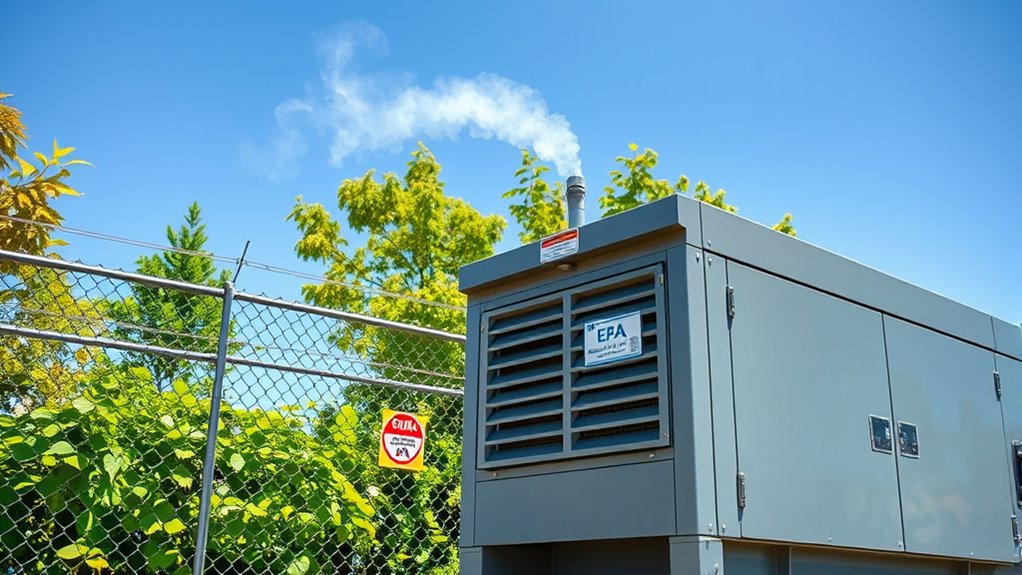
Environmental regulations for generator emissions are vital to reducing air pollution and protecting public health. When you operate generators, understanding these rules helps you minimize harmful emissions that can degrade air quality. The Environmental Protection Agency (EPA) sets emission standards aimed at limiting pollutants released by generators, making sure they run cleaner and more efficiently. These standards are designed to strike a balance between energy needs and environmental protection, making it clear that your generator use should not come at the expense of air quality.
Environmental regulations help reduce generator emissions and protect public health.
You need to be aware that emission standards specify the maximum allowable levels of pollutants such as nitrogen oxides (NOx), particulate matter, carbon monoxide (CO), and volatile organic compounds (VOCs). These pollutants contribute to smog formation, respiratory problems, and other health issues. The EPA’s regulations enforce limits that encourage manufacturers to develop cleaner engine technologies and fuel formulations. If you’re purchasing or operating a generator, you must make certain it complies with these standards, which often involve choosing models certified for low emissions. Non-compliance could result in fines or restrictions that impact your operations and your community’s health.
The EPA’s emission standards are not static; they evolve over time to reflect advancements in technology and better understanding of pollution impacts. As a generator user, you should stay informed about these updates because they influence your choices and maintenance practices. For example, newer generators are typically equipped with pollution control devices like catalytic converters or advanced combustion systems designed to meet or exceed current standards. Regular maintenance of your generator is vital to ensure it continues to operate within legal emission limits, preventing unnecessary emissions that can harm local air quality.
Adhering to EPA regulations also means being aware of local and state rules that may complement federal standards. Many jurisdictions implement additional requirements for generators, especially in sensitive areas like urban centers or near schools and hospitals. By complying with these rules, you contribute to better air quality and reduce the negative health effects associated with air pollution. Additionally, incorporating advanced emission control technologies can significantly reduce your generator’s environmental footprint. In some cases, you might be eligible for incentives or rebates when you upgrade to cleaner, EPA-compliant models.
Ultimately, understanding and following the EPA’s emission standards for generators isn’t just about avoiding penalties; it’s about actively protecting the air we breathe. When you prioritize compliance, you help decrease the release of harmful pollutants, improve air quality, and promote a healthier environment for everyone around you. Making informed decisions about generator use and maintenance ensures that your energy needs are met responsibly, with minimal impact on public health and the planet.
Frequently Asked Questions
How Often Are Generator Emission Tests Required by EPA?
You should schedule generator emission tests annually, ensuring compliance with inspection frequency and testing procedures. Regular testing helps identify any emissions issues early, preventing violations. Depending on your generator type and usage, some regulations might require more frequent inspections. Always stay updated on specific EPA guidelines for your equipment, and keep detailed records of all tests and maintenance to demonstrate compliance and avoid potential penalties.
Are There Specific Emission Standards for Different Generator Sizes?
Did you know that emission standards vary considerably based on generator size? Smaller generators usually have less stringent requirements, while larger ones face stricter emission standards to reduce pollution. Depending on your generator size, specific regulations might set limits on pollutants like nitrogen oxides and particulate matter. You’ll want to check your local or federal guidelines to guarantee your generator meets the appropriate emission standards for its size and usage.
What Are the Penalties for Non-Compliance With EPA Regulations?
If you don’t comply with EPA regulations, you face serious legal repercussions and financial penalties. The agency can impose hefty fines, sometimes reaching thousands of dollars per violation, depending on severity. You might also be subject to legal actions, including lawsuits or mandatory corrective measures. Non-compliance can damage your reputation and lead to operational shutdowns. Staying compliant helps you avoid these costly penalties and legal issues, ensuring smooth business operations.
Can Portable Generators Be Exempt From Certain Emissions Rules?
You might think portable generators can dodge emission exemptions, but that’s a myth. While some portable generator rules allow for limited exemptions, most still must meet specific emissions standards to reduce pollution. The EPA’s rules are strict to protect the environment, and exemptions are rare and often limited to small or emergency-use generators. You should always verify current regulations to ensure compliance and avoid hefty penalties.
How Do EPA Regulations Impact Generator Maintenance Schedules?
EPA regulations impact your generator maintenance schedules by requiring regular inspections and emissions testing to guarantee compliance with air quality standards. You need to follow specific maintenance strategies, like timely oil changes and filter replacements, to prevent excessive emissions. Staying on top of these tasks helps you avoid penalties and keeps your generator running efficiently while minimizing environmental impact. Consistent maintenance is key to maintaining compliance and protecting air quality.
Conclusion
Understanding EPA’s regulations for generator emissions might seem challenging, but they’re designed to protect our environment and health. While your generator keeps your essential power running, these rules guarantee it doesn’t contribute to pollution. It’s a delicate balance—your need for reliable energy versus the planet’s need for clean air. By following these regulations, you play an essential role in safeguarding the environment, proving that responsible power use can be both practical and sustainable.
Fall Picks
fall essentials
As an affiliate, we earn on qualifying purchases.