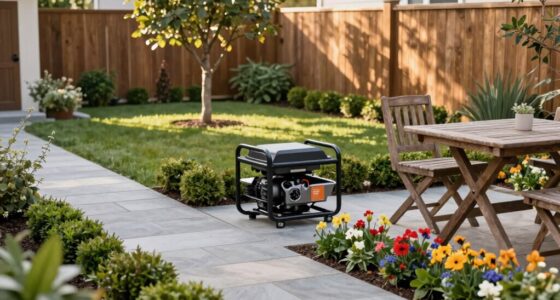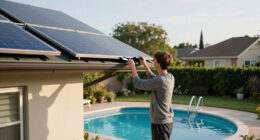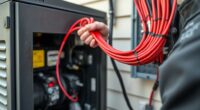
To prepare a concrete pad for your generator, you need to start with site excavation, guaranteeing the area is level and deep enough for a sturdy sub-base of compacted gravel or crushed stone. Next, build proper formwork to maintain clean edges, then pour high-quality concrete with reinforcement like rebar for durability. Finish smoothly and include expansion joints if necessary. Proper curing ensures the foundation remains stable and durable—stay with us to learn the detailed steps for ideal results.
Key Takeaways
- Excavate the site to the required pad thickness plus a gravel or crushed stone sub-base for drainage and stability.
- Install sturdy, accurately aligned formwork to shape the concrete pad and maintain proper dimensions.
- Incorporate reinforcement such as steel rebar or wire mesh within the formwork to enhance durability and prevent cracking.
- Ensure the foundation is level, properly reinforced, and includes expansion joints if necessary for large or temperature-sensitive areas.
- Cure the concrete adequately to achieve maximum strength, maintaining moisture and temperature conditions as recommended.
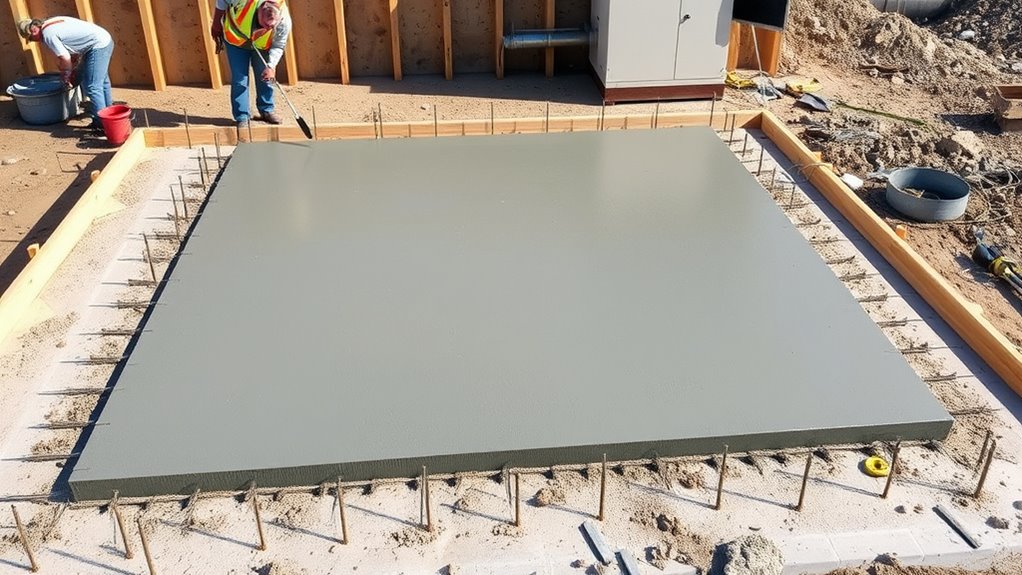
When installing a generator, preparing a solid concrete pad or base is vital for stability and longevity. Your first step involves understanding the foundational requirements that guarantee your generator remains secure and operates efficiently over time. A well-constructed base prevents shifting, reduces vibration, and protects your equipment from ground-related issues. To meet these foundational requirements, you need to focus on proper design, precise measurements, and suitable construction techniques. This foundation must be level, strong enough to support the weight of the generator, and resistant to environmental factors like moisture or shifting soil.
A solid, level concrete base ensures generator stability and long-term durability.
Material selection plays an essential role in achieving a durable concrete pad. You should choose a high-quality concrete mix with the right proportions of cement, sand, gravel, and water. A standard mix with a compressive strength of at least 3,000 psi is recommended for generator bases, as it offers the necessary strength and durability. To enhance the concrete’s performance, consider adding reinforcement such as steel rebar or wire mesh. Reinforcement helps distribute loads evenly and prevents cracking over time, especially in areas prone to temperature fluctuations or ground movement. When selecting materials, also think about the base’s thickness; typically, a minimum of 4 inches thickness is advised, but thicker bases may be necessary for larger or heavier generators.
Before pouring concrete, prepare the site thoroughly. Excavate the area to a depth that accounts for the thickness of the pad plus a gravel or crushed stone sub-base for drainage and stability. Compact the sub-base to provide a solid, level surface. When it’s time to pour, ensure your formwork is sturdy and accurately aligned, creating clean edges and a level surface. Use a concrete mixer or order ready-mix concrete to maintain consistency. During pouring, work swiftly to avoid cold joints, and use a trowel to smooth the surface for a clean finish. Incorporate expansion joints if the pad is large or if you live in an area with significant temperature variations, allowing for expansion and contraction without cracking.
Additionally, understanding the importance of proper foundation design can significantly impact the longevity and stability of your generator setup. In essence, the foundational requirements and careful material selection are the backbone of a reliable generator base. By choosing the right materials and constructing a solid, level, and well-reinforced pad, you guarantee your generator remains stable, operational, and protected against ground movement or environmental stressors for years to come. Proper preparation saves you time and money in the long run, providing peace of mind knowing your equipment is supported by a sturdy, expertly constructed foundation.

SOARAISE Solar Power Bank 48000mAh Wireless Portable Charger with 4 Cables
- Upgraded High-Efficiency 4 Solar Panels: Equipped with 4 premium solar...
- Massive 48000mAh Solar Power Bank: Featuring a high-capacity 48000mAh lithium-polymer...
- Built-in 4 Cable for Multi-Device Compatibility: Designed for multi-device charging, this...
As an affiliate, we earn on qualifying purchases.
Frequently Asked Questions
How Thick Should the Concrete Pad Be for Different Generator Sizes?
For different generator sizes, the concrete pad thickness depends on generator weight and soil stability. Typically, a small generator weighing up to 200 pounds needs a 4-inch thick pad, while larger models over 1,000 pounds require at least 6 to 8 inches. If your soil isn’t very stable, consider increasing the thickness or adding a gravel base to support the weight and prevent cracking. Always check manufacturer recommendations for best results.
What Type of Concrete Mix Is Best for Outdoor Generator Bases?
You should use a high-strength, durable concrete mix for outdoor generator bases. Look for a mix with good concrete durability, such as one with Portland cement, sand, gravel, and water in the right proportions—typically 1:2:3 or 1:2:4. Adding reinforcement like rebar enhances strength. Proper mix proportions guarantee the base withstands weather and load pressures, preventing cracks and ensuring long-lasting support.
How Long Should I Wait Before Placing the Generator on the New Pad?
Did you know concrete typically takes about 28 days to fully cure? You should wait at least 48 hours before placing your generator on the new pad, but weather considerations matter too. If it’s hot, cold, or rainy, curing time might extend. To guarantee stability and prevent cracks, give your concrete the recommended curing time and check weather conditions before installing your generator.
Can I Build a Concrete Pad Without Professional Help?
Yes, you can build a concrete pad yourself, but be aware of DIY challenges like guaranteeing proper leveling and reinforcement. Safety considerations are vital—wear protective gear and follow safety guidelines for handling concrete and tools. Make certain you have the right materials and skills to avoid cracks or uneven surfaces. If you’re unsure, consulting a professional can help prevent costly mistakes and guarantee your generator’s stability and safety.
What Are Common Mistakes to Avoid When Preparing a Concrete Base?
When preparing a concrete base, avoid reinforcement issues by ensuring your steel rebar or mesh is correctly placed and secured. Don’t neglect proper curing, as improper curing can weaken your concrete. Also, double-check your formwork for stability and levelness before pouring. Skipping these steps can lead to cracks, uneven surfaces, or structural failures, compromising your generator’s safety and longevity. Always follow best practices for reinforcement and curing to get a durable foundation.
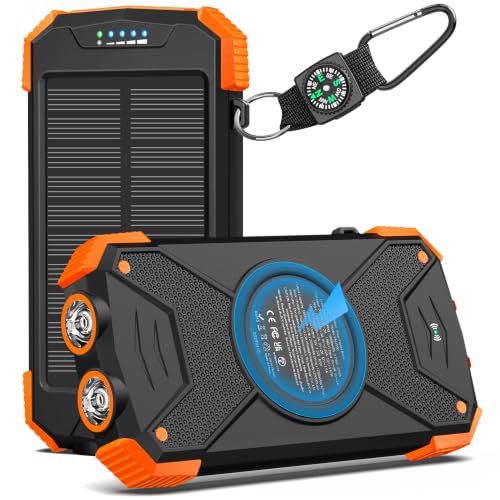
BLAVOR Solar Power Bank 10,000mAh, Portable Wireless Charger, 20W Fast Charging External Battery Pack with USB C for Cell Phones, Solar Panel Charging with Dual Flashlight for Camping
- Brand-Oriented and Outdoor Charger Pro: With over 10 years of...
- Leading USB C Input Output Tech and Wireless: The latest upgrade includes a...
- Premium Battery and Smallest Solar Charger: BLAVOR uses the safer Lithium-cobalt...
As an affiliate, we earn on qualifying purchases.
Conclusion
Now that you’ve prepared your concrete pad, it’s ready to support your generator’s power and stability. While the pad keeps your equipment grounded and secure, neglecting proper preparation can lead to cracks, instability, or costly repairs. Just like a sturdy foundation ensures a building’s longevity, your well-prepared base guarantees reliable operation. So, don’t rush the process—lay a solid foundation, and your generator will stand strong through every storm and power outage.

FEELLE Solar Power Bank 50000mAh Magnetic Portable Charger with Hand Crank
- 50000mAh Massive Capacity: Features the latest high-density lithium...
- 15W MAX Magnetic Wireless Power Bank: Strong magnetic technology that automatically...
- All-in-One Solar Portable Charger: It powers up to 6...
As an affiliate, we earn on qualifying purchases.

MINRISE Solar Power Bank 40000mAh, Portable Charger PD 20W Fast Charging
- 【Large Capacity & Universal Compatibility】This Solar power bank...
- 【20W PD Ultra-Fast Charging】Equipped with a 20W Type-C...
- 【Built-in 4 Charging Cables & 9 Charging Methods】No...
As an affiliate, we earn on qualifying purchases.