When integrating transfer switches in multi-generator systems, you should guarantee compatibility and proper installation to enable seamless switching between power sources. Automatic transfer switches are ideal for critical loads, as they activate instantly during outages, while manual switches give you more control for less critical applications. Proper setup requires following safety standards and working with qualified electricians. To learn the best practices for choosing and installing these systems, keep exploring the essential details.
Key Takeaways
- Ensure transfer switches are compatible with multiple generators and support seamless switching among them.
- Consider automatic versus manual transfer switches based on criticality and control preferences in multi-generator setups.
- Properly coordinate wiring and control systems to prevent back-feeding and ensure safe operation across generators.
- Engage qualified electricians for installation to meet safety standards and system compatibility requirements.
- Regularly test and maintain transfer switches to ensure reliable performance during power outages.
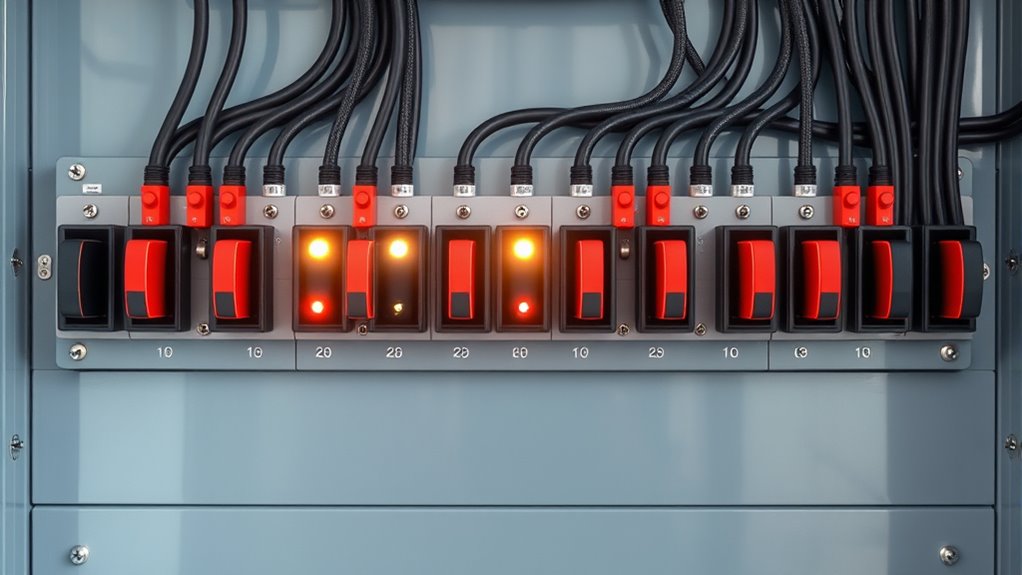
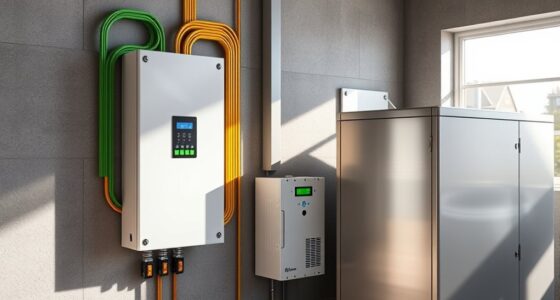
Integrating transfer switches into your electrical system guarantees a seamless switch between utility power and backup sources during outages. When you have multiple generators, choosing the right transfer switch is vital to ensure smooth operation and safety. You can opt for an automatic transfer switch or a manual switching system, depending on your needs. Automatic transfer switches activate instantly when they detect a power failure, switching the load from the utility to your backup generators without any manual intervention. This setup is ideal for critical systems that require uninterrupted power, such as hospitals, data centers, or essential business operations. The automatic transfer process is fast and reliable, minimizing downtime and preventing damage from power fluctuations. It works by continuously monitoring the utility power, and as soon as it senses an outage, it automatically engages the backup generator, restoring power almost instantaneously. This seamless transition provides peace of mind, especially when you can’t be present during a power failure. Proper integration also requires understanding the regulatory requirements to ensure compliance with safety standards and reporting obligations.
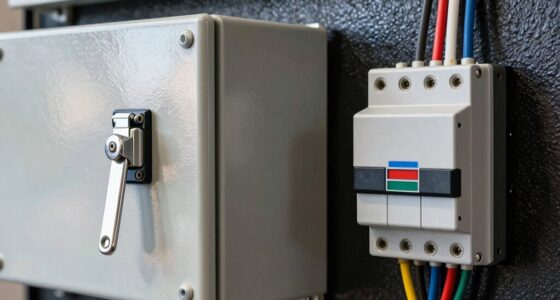
On the other hand, manual switching systems require you to intervene during an outage. With manual transfer switches, you need to physically activate the switch to connect your load to a backup generator. While this method might seem less convenient, it offers a straightforward, cost-effective solution for systems that don’t need constant uptime or for applications where backup power is rarely used. Manual switching gives you full control over when and how your generators operate, which can be advantageous in certain situations. However, it also means you’re responsible for ensuring a safe and proper transfer—any mistake can lead to dangerous back-feeding or damage to your equipment. When integrating multiple generators, you’ll want to take into account how often you’ll need backup power, the critical nature of your loads, and your comfort level with manual operation.
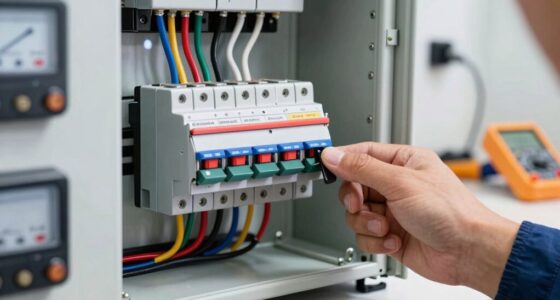
Both automatic transfer and manual switching systems have their benefits and limitations. Automatic transfer switches are more complex and typically more expensive but provide unmatched convenience and safety. Manual systems are simpler and more affordable, suitable for less critical applications or where occasional backup power suffices. Regardless of your choice, verify your transfer switch is compatible with your multi-generator setup and installed correctly by a qualified electrician. Proper integration guarantees that switching occurs safely and efficiently, preserving your equipment and maintaining power continuity in emergencies. Whether you prefer the convenience of automatic transfer or the control of manual switching, selecting the right system is essential for reliable, safe, and efficient operation of your multi-generator power setup.

Porch Shield Waterproof Universal Generator Cover 38 x 28 x 30 inch - for Most Generators 5500-15000 Watt, Black
- Compatible - More sizes for 5500w -15000w gas...
- Upgrade Material - Made of 600D polyester fabric...
- Tear Resistant & Waterproof - The high-level double...
As an affiliate, we earn on qualifying purchases.
Frequently Asked Questions
Can Transfer Switches Support Different Generator Brands Simultaneously?
Yes, transfer switches can support different generator brands simultaneously, but you need to consider brand compatibility and installation considerations. Not all switches work seamlessly with every brand, so check compatibility before installation. You might need specific transfer switch models or adapters to guarantee proper functioning. Proper installation is vital to prevent electrical issues, so always follow manufacturer guidelines and consult a professional to ensure safe and reliable operation across multiple generator brands.
What Maintenance Is Required for Multi‑Generator Transfer Switch Systems?
You should perform regular maintenance routines and system inspections to keep your multi-generator transfer switch system reliable. Check for loose connections, corrosion, and wear on contacts. Test automatic functions periodically to ensure proper operation during power outages. Clean and lubricate moving parts as recommended by the manufacturer. Also, verify control wiring and relays are functioning correctly. Consistent maintenance helps prevent failures, extends lifespan, and guarantees your system operates smoothly when needed.
How Do Transfer Switches Handle Power Surges or Faults?
Transfer switches handle power surges and faults by incorporating surge protection and fault detection features. When a surge occurs, the switch automatically isolates the affected generator or power source, preventing damage. Fault detection systems monitor for abnormalities, triggering automatic shutdowns or alerts to guarantee safety. This proactive approach helps maintain system stability, protect your equipment, and ensure reliable power transfer during unexpected surges or faults.
Are There Wireless Options for Controlling Transfer Switches?
While traditional transfer switches rely on wired connections, wireless control options are increasingly available, allowing you to manage your system remotely. With remote monitoring, you can oversee operations conveniently, reducing physical intervention. These wireless solutions often include secure communication protocols, ensuring safety while offering flexibility. So, yes, you can now control transfer switches wirelessly, making system management more efficient and adaptable to your needs.
What Are the Cost Differences Between Automatic and Manual Transfer Switches?
You’ll find that automatic transfer switches generally cost more upfront than manual ones, mainly due to their advanced technology and automatic operation features. The cost comparison shows automatic switches can be two to three times pricier, and installation expenses might also be higher since they require electrical integration and testing. Manual switches are cheaper initially and simpler to install, but automatic ones offer greater convenience and faster response during power outages.
Porch Shield Waterproof Universal Generator Cover 32 x 24 x 24 inch - for Most Generators 5000-10000 Watt, Black
- Compatible - More sizes for 5000w -10000w gas...
- Upgrade Material - Made of 600D polyester fabric...
- Tear Resistant & Waterproof - The high-level double...
As an affiliate, we earn on qualifying purchases.
Conclusion
By integrating transfer switches into your multi-generator system, you guarantee seamless power transitions, reducing downtime and protecting your equipment. Did you know that properly installed transfer switches can cut power outage response time by up to 90%? This quick switch means you stay connected and operational, even during outages. Embrace these systems to boost reliability and safety—your backup power’s best friend. Stay prepared and keep your essential systems running smoothly with the right transfer switch integration.

GenArmor Generator Covers While Running, 100% Waterproof Heavy Duty Tarps Generator Tent, Portable Outdoor Generator Enclosure for Most 4000w~13000w Generators, Black, Standard
- 100% Waterproof Protection: A patented innovation from GenArmor...
- Robust Integrated Design: Our unique design secures the...
- Long-lasting Durability: Weighs a hefty 14 pounds,...
As an affiliate, we earn on qualifying purchases.
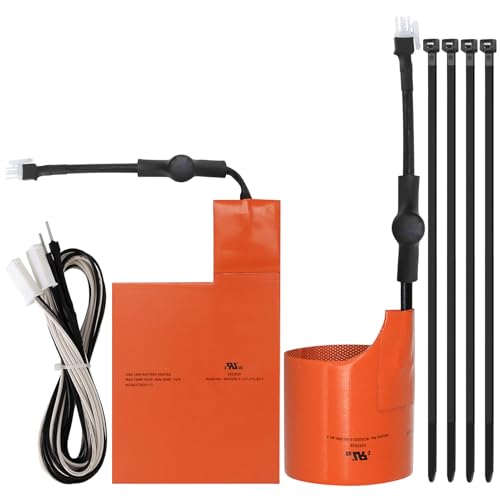
Cold Weather Kit for Generac- Battery Warmer Pad 7101 & Oil Heater Pad 7102
- Safety&Trusted: Our cold weather kit for...
- Compatible for: Our 7101 battery warmer for...
- Heating kit protection for Generac generator: No worried about forgetting to...
As an affiliate, we earn on qualifying purchases.