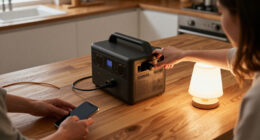
Among these home battery backup systems, I rank the EcoFlow DELTA Pro Ultra with Extra Battery best overall for households that need substantial capacity and room to expand. The Jackery Explorer 5000 Plus stands out for high-output backup, while the Jackery Explorer 1000 v2 is a more manageable pick for essential devices and shorter outages. The main tradeoff is scale: compact units are easier to move and set up, but they cannot run as many loads or for as long as larger systems. Solar bundles can add charging flexibility, though panel compatibility, available sunlight, and setup space all affect their usefulness. Read on for the full breakdown and guidance on matching system size to your home’s needs.

Get backup power and energy gear delivered free with Prime
- Fast, free delivery on millions of items
- Prime Video, Amazon Music and more included
- Member-only deals all year
Complete the kit


Key Takeaways
- Capacity and output are different limits: the DELTA Pro Ultra’s 12 kWh capacity favors longer backup, while the Explorer 5000 Plus’s 7,200W output suits heavier simultaneous loads.
- The 1,024Wh EcoFlow models serve similar use cases: the DELTA 3 Classic and DELTA 3 are compact choices for essentials, so compare their exact configurations and included features before choosing.
- Jackery’s HomePower 3600 Plus sits between portable and large-scale backup: its 3,584Wh capacity and 3,600W output offer more headroom than the 1,000Wh-class picks without reaching the largest systems.
- Solar bundles trade convenience for flexibility: the HomePower 3000 and HomePower 3600 Plus bundles include two 200W panels, while buyers who already own compatible panels may prefer a standalone system.
- Smallest is not automatically best value: the Anker SOLIX S2000 and Explorer 1000 v2 are easier to place and move, but buyers should match their capacity and output to actual outage loads.
| EcoFlow Portable Power Station Delta 3 Classic 1024Wh 1800W |  | Best for Fast-Recharging Backup | Capacity: 1,024 Wh | Continuous output: 1,800 W | Surge power: 3,600 W | VIEW LATEST PRICE | See Our Full Breakdown |
| EF ECOFLOW DELTA 3 Portable Power Station, 1024Wh, 1800W |  | Best for Expandable Portable Backup | Battery capacity: 1,024 Wh | AC output: 1,800 W | Surge output: 3,600 W | VIEW LATEST PRICE | See Our Full Breakdown |
| EF ECOFLOW DELTA Pro Ultra 12 kWh Power Station with Extra Battery |  | Best for Whole-Home Backup Expansion | Battery capacity: 12 kWh | Capacity per battery: 6,144 Wh | Maximum expandable capacity: 90 kWh | VIEW LATEST PRICE | See Our Full Breakdown |
| Jackery Explorer 5000 Plus Portable Power Station, 5040Wh, 7200W |  | Best Portable 240V High-Output Pick | Capacity: 5,040 Wh | Surge output: 14,400 W | Voltage: 120V and 240V | VIEW LATEST PRICE | See Our Full Breakdown |
| Anker SOLIX S2000 Portable Power Station |  | Best for Compact, Long-Life Backup | Capacity: 2,010 Wh | Continuous output: 1,500 W | Peak output: 3,000 W | VIEW LATEST PRICE | See Our Full Breakdown |
| Jackery HomePower 3000 Portable Power Station with Two 200W Solar Panels |  | Best Solar-Ready Mid-Capacity Pick | Battery capacity: 3,072Wh | Battery chemistry: LiFePO4 | AC output: 3,600W; 7,200W surge | VIEW LATEST PRICE | See Our Full Breakdown |
| Jackery HomePower 3600 Plus Portable Power Station, 3584Wh, 3600W |  | Best for Expandable Home Backup | Battery capacity: 3,584Wh | Output: 3,600W | Parallel output: 7,200W | VIEW LATEST PRICE | See Our Full Breakdown |
| Jackery Explorer 1000 v2 Portable Power Station |  | Best Compact Backup for Essential Devices | Battery capacity: 1,070Wh | Battery type: LFP | Output and surge: 1,500W; 3,000W surge | VIEW LATEST PRICE | See Our Full Breakdown |
| Jackery HomePower 3600 Plus Portable Power Station with Two 200W Solar Panels |  | Best Expandable Backup Bundle | Battery capacity: 3,584Wh | Output: 3,600W | Parallel output: 7,200W | VIEW LATEST PRICE | See Our Full Breakdown |
| home battery backup system | Weight | Battery capacity |
|---|---|---|
| EcoFlow Portable Power Station | — | — |
| EF ECOFLOW DELTA 3 Portable Po | 12.5 kg | 1,024 Wh |
| EF ECOFLOW DELTA Pro Ultra 12 | 293.6 lb | 12 kWh |
| Jackery Explorer 5000 Plus Por | 134.5 lb | — |
| Anker SOLIX S2000 Portable Pow | 35.7 lb | — |
| Jackery HomePower 3000 Portabl | 59.5 lbs | 3,072Wh |
| Jackery HomePower 3600 Plus Po | 77.2 lbs | 3,584Wh |
| Jackery Explorer 1000 v2 Porta | 23.8 lbs | 1,070Wh |
| Jackery HomePower 3600 Plus Po | 77.2 lbs | 3,584Wh |
More Details on Our Top Picks
EcoFlow Portable Power Station Delta 3 Classic 1024Wh 1800W
The DELTA 3 Classic is a strong fit for buyers who need a quick-turnaround backup for electronics and mid-draw appliances, rather than an expandable whole-home battery. Its 1,800W output and 3,600W surge rating cover a broad range of individual devices, while the under-10ms UPS response helps protect computers from brief power interruptions. The standout is charging speed: AC input takes the battery to 80% in 45 minutes, and a suitable 500W solar panel can recharge it in about 2.5 hours. Compared with the standard EcoFlow DELTA 3, this model lists faster 0–80% AC charging but lacks compatibility with Delta 2 and Delta 3 Series Smart Extra Batteries. That limits its usefulness for buyers whose main goal is extending runtime. The solar panel for the stated recharge time is also sold separately.
Pros:- Reaches 80% charge in 45 minutes with AC charging.
- 1,800W continuous output and 3,600W surge support a wide range of devices.
- Under-10ms UPS switching helps keep sensitive electronics running through brief outages.
- LiFePO4 battery chemistry is rated for a 10+ year lifespan.
Cons:- Not compatible with Delta 2 or Delta 3 Series Smart Extra Batteries.
- The 500W solar panel needed for the stated 2.5-hour solar recharge is sold separately.
Best for: Home-office users and households that need fast-recharging backup for a computer, router, lights, and selected appliances.
Not ideal for: Buyers who want to expand capacity with Delta 2 or Delta 3 Series Smart Extra Batteries, or run multiple heavy household loads for long periods.
- Capacity:1,024 Wh
- Continuous output:1,800 W
- Surge power:3,600 W
- X-Boost maximum power:2,600 W
- AC charge time:0–80% in 45 minutes
- Solar recharge time:2.5 hours with a 500 W panel
- UPS switch time:Under 10 ms
- Battery type:LiFePO4
Our verdict“Choose the DELTA 3 Classic if fast recharging and UPS protection matter more than expandable battery capacity.”
EF ECOFLOW DELTA 3 Portable Power Station, 1024Wh, 1800W
The standard EcoFlow DELTA 3 makes more sense than the DELTA 3 Classic for buyers who may need longer runtime later: compatible extra batteries can raise capacity to 5 kWh. Its 1,024Wh battery and 1,800W AC output suit outage essentials such as networking gear, lighting, and selected appliances, while 13 outlets help serve several devices at once. Charging is also quick, with a full recharge listed at 56 minutes and 80% in 30 minutes. Compared with the Classic, this model trades the Classic’s stated 45-minute 80% charge for a clear expansion path. It remains a portable station, not a substitute for a high-output 240V system like the DELTA Pro Ultra. Expansion batteries are not included, and its 12.5kg weight makes frequent carrying less appealing.
Pros:- Expandable to 5 kWh with compatible EcoFlow extra batteries.
- Full recharge is listed at 56 minutes, with 80% charge in 30 minutes.
- 13 outlets allow several devices to connect at once.
- LiFePO4 battery is rated for 4,000 cycles to 80% capacity.
Cons:- Extra batteries needed for expansion are sold separately.
- At 12.5kg, it is less convenient to move often than smaller portable stations.
Best for: Households that want a portable outage battery now and the option to add compatible EcoFlow batteries for longer backup later.
Not ideal for: Buyers seeking built-in 240V output or a ready-to-run, high-capacity home backup system without purchasing additional batteries.
- Battery capacity:1,024 Wh
- AC output:1,800 W
- Surge output:3,600 W
- Expansion capacity:Up to 5 kWh
- AC input:Up to 1,500 W
- Solar input:500 W
- Recharge time:56 minutes to full; 30 minutes to 80%
- Battery cycle life:4,000 cycles to 80% capacity
- Weight:12.5 kg
Our verdict“Pick the DELTA 3 if you want fast charging with a practical path to longer portable backup, rather than 240V household coverage.”
EF ECOFLOW DELTA Pro Ultra 12 kWh Power Station with Extra Battery
For buyers planning around serious household loads, the DELTA Pro Ultra is in a different class from the portable DELTA 3 models. Its 12kWh battery capacity and 7,200W output at 120V or 240V are suited to broader home backup, while the system can scale to 90kWh and accept charging from solar, wall outlets, EV equipment, or generators. The listed 0ms UPS transfer is a notable advantage for equipment that cannot tolerate an interruption. Compared with the Jackery Explorer 5000 Plus, the Pro Ultra offers greater stated maximum expansion and a zero-millisecond transfer time, but its 293.6-pound weight makes it a substantially less flexible portable option. The inverter and battery ship separately, so setup and delivery require more planning than with a single-unit station.
Pros:- 7,200W output supports demanding household loads at 120V and 240V.
- Expandable capacity reaches up to 90 kWh.
- Multiple charging options include solar, wall outlets, EV charging equipment, and generators.
- 0ms UPS transfer time avoids a gap in power for connected equipment.
Cons:- The 293.6-pound system is difficult to reposition.
- Inverter and battery arrive in separate packages, adding delivery and setup coordination.
Best for: Homeowners who need 120V and 240V backup, expect substantial household loads, and want room to expand storage substantially.
Not ideal for: Renters, frequent movers, or buyers who need a lightweight, single-box power station that can be carried between locations.
- Battery capacity:12 kWh
- Capacity per battery:6,144 Wh
- Maximum expandable capacity:90 kWh
- Output:7,200 W
- Maximum output with three inverters:21.6 kW AC
- Voltage:120V and 240V
- UPS transfer time:0 ms
- Charging time per battery:2 hours
- Weight:293.6 lb
Our verdict“Choose the DELTA Pro Ultra for expandable, high-output residential backup; skip it if portability or simple one-box setup is a priority.”
Jackery Explorer 5000 Plus Portable Power Station, 5040Wh, 7200W
The Jackery Explorer 5000 Plus pairs a substantial 5,040Wh battery with 7,200W of rated output and 120V/240V support, making it a compelling middle ground between small portable stations and larger expandable home systems. It can scale to 60kWh and accepts up to 4,000W of solar input, so buyers with suitable panels can replenish a larger battery faster than the smaller-input Anker SOLIX S2000. Compared with the DELTA Pro Ultra, its stated expansion ceiling is lower at 60kWh rather than 90kWh, but the Jackery weighs 134.5 pounds instead of 293.6 pounds. That is still heavy enough to limit casual portability, and the unit lists only two outlets, so buyers should check whether their connection needs call for additional distribution hardware. Solar panels are optional rather than included.
Pros:- 7,200W rated output and 120V/240V support suit demanding backup loads.
- 5,040Wh capacity provides more stored energy than the 1–2kWh portable models in this group.
- Expandable to 60kWh for longer backup needs.
- Accepts up to 4,000W of solar input.
Cons:- At 134.5 pounds, it is difficult to move without planning.
- Only two outlets are listed, which may constrain direct connections.
- Solar panels are optional and not included.
Best for: Households or RV owners who need strong 120V/240V output, substantial built-in capacity, and the option to add batteries.
Not ideal for: Buyers who need a lightweight station, many built-in outlets, or a complete solar-ready package with panels included.
- Capacity:5,040 Wh
- Surge output:14,400 W
- Voltage:120V and 240V
- Expandable capacity:Up to 60 kWh
- Solar input:Up to 4,000 W
- Recharge time:About 2 hours
- Battery type:LiFePO4
- Weight:134.5 lb
Our verdict“Choose the Explorer 5000 Plus for high-output 120V/240V backup with less system weight than the DELTA Pro Ultra, while accepting fewer outlets and lower maximum expansion.”
Anker SOLIX S2000 Portable Power Station
The Anker SOLIX S2000 favors manageable size and battery longevity over the higher output of the EcoFlow DELTA 3 models. At 35.7 pounds, it is far easier to reposition than the Jackery Explorer 5000 Plus, while its 2,010Wh capacity gives it more stored energy than the 1,024Wh DELTA units. The tradeoff is a lower 1,500W continuous output, which narrows the range of appliances it can run at once. Under-10ms UPS switching suits a home office or networking setup, and six charging methods give owners flexibility when grid power is unavailable. Its LiFePO4 battery is rated for 10,000 cycles, but the unit has no 12V DC port. Runtime also depends heavily on the connected load and temperature, so buyers should match expected usage to its capacity rather than rely on a fixed runtime assumption.
Pros:- 2,010Wh capacity in a 35.7-pound unit makes it easier to move than larger high-output systems.
- LiFePO4 battery is rated for 10,000 charge cycles.
- Under-10ms UPS switching supports sensitive home-office equipment.
- Six charging methods, including solar input up to 400W, add recharging flexibility.
Cons:- 1,500W continuous output is lower than the 1,800W EcoFlow DELTA 3 models.
- No 12V DC port is provided.
- Actual runtime varies substantially with appliance use and temperature.
Best for: Home-office users and smaller households who want a comparatively easy-to-move battery for essential devices and repeated backup use.
Not ideal for: Buyers who need 120V/240V high-output backup for heavy appliances, a 12V DC connection, or capacity suited to extended whole-home outages.
- Capacity:2,010 Wh
- Continuous output:1,500 W
- Peak output:3,000 W
- Battery type:LiFePO4
- Battery cycle life:10,000 cycles
- Weight:35.7 lb
- Solar input:Up to 400 W
- Outlets:8 total
- Recharge methods:6, including AC, solar, generator, and car
Our verdict“Pick the SOLIX S2000 for portable, long-cycle backup for essential devices, not for high-draw appliances or whole-home coverage.”
Jackery HomePower 3000 Portable Power Station with Two 200W Solar Panels
The HomePower 3000 balances substantial stored energy with a package that is less demanding to move than Jackery’s 77.2-pound HomePower 3600 Plus. Its 3,072Wh capacity and 3,600W output can support several household essentials or higher-draw equipment, while the ≤20 ms UPS switching helps keep connected electronics running through a brief outage. The two included 200W panels give buyers a solar starting point, though reaching 80% charge can take about nine hours in suitable conditions, compared with the HomePower 3600 Plus bundle’s stated four-hour solar recharge. Multiple charging inputs and an RV port add flexibility beyond the smaller Explorer 1000 v2. The tradeoff is that this is still a portable power station, not a whole-home installation, and the panels may arrive separately.
Pros:- 3,072Wh capacity and 3,600W output support a broad range of essential loads.
- UPS switching within 20 ms helps protect continuously powered electronics.
- Two 200W solar panels are included, along with AC, solar, car, and generator charging options.
- LiFePO4 battery is rated for 4,000 cycles to 70% capacity.
Cons:- Included panels take about nine hours to recharge the unit to 80% under the stated conditions.
- Power station and panels may arrive in separate packages.
- It lacks the HomePower 3600 Plus’s stated expandable capacity and 240V parallel operation.
Best for: Households and RV owners who want substantial portable backup, UPS support, and included solar panels without moving up to the heavier HomePower 3600 Plus.
Not ideal for: Buyers who need long-duration whole-home backup or faster solar replenishment; its 3,072Wh capacity is limited beside expandable systems, and the included panels have a lengthy stated recharge time.
- Battery capacity:3,072Wh
- Battery chemistry:LiFePO4
- AC output:3,600W; 7,200W surge
- Battery life:4,000 cycles to 70% capacity
- UPS switching:≤20 ms
- Included solar panels:Two 200W panels
- AC recharge time:2.2 hours
- Weight:59.5 lbs
Our verdict“Choose this bundle for portable, solar-equipped backup with strong output, but pick the HomePower 3600 Plus if expandable capacity matters more than a lighter unit.”
Jackery HomePower 3600 Plus Portable Power Station, 3584Wh, 3600W
For buyers whose priority is adding backup capacity over time, the HomePower 3600 Plus is the most flexible Jackery option here. Its 3,584Wh battery expands up to 21kWh per unit, with larger multi-unit configurations listed at up to 43kWh; that puts it in a different class from the fixed-capacity Explorer 1000 v2. Parallel operation can provide 120V and 240V output, though 240V requires that configuration rather than working from one unit alone. Hybrid charging is listed at two hours, and wheels with a telescopic handle make the 77.2-pound unit easier to move than its weight suggests. It also supports plug-and-play home backup when paired with an MTS. The costs in practicality are its considerable mass and the extra planning required for expansion and 240V use.
Pros:- Expandable capacity reaches 21kWh per unit or 43kWh with multiple units.
- 3,600W output and parallel operation support higher loads, including 240V when configured.
- Hybrid AC and DC recharge is listed at two hours.
- Wheels and a telescopic handle aid movement, and the stated warranty is five years.
Cons:- The 77.2-pound unit remains heavy to lift, despite its wheels and handle.
- 240V operation requires a parallel configuration.
- Home backup integration requires pairing with an MTS.
Best for: Homeowners planning to expand portable backup capacity and who may need 240V loads through a parallel setup and compatible MTS.
Not ideal for: Apartment dwellers or buyers who need a light, ready-to-carry power station; at 77.2 pounds, it is far heavier than the Explorer 1000 v2, and 240V requires parallel configuration.
- Battery capacity:3,584Wh
- Output:3,600W
- Parallel output:7,200W
- Expansion capacity:Up to 21kWh per unit or 43kWh with multiple units
- Voltage:120V; 240V in parallel
- Battery type and cycle life:LFP; 6,000 cycles
- Recharge time:2 hours hybrid AC+DC; 2.5 hours AC or gas generator; 4 hours solar
- Weight:77.2 lbs
- Warranty:5 years
Our verdict“Choose the HomePower 3600 Plus if you want a capacity-expansion path and can accommodate its weight and setup needs.”
Jackery Explorer 1000 v2 Portable Power Station
The Explorer 1000 v2 is the compact choice for buyers who need backup for selected devices rather than a large share of household circuits. At 1,070Wh and 1,500W output, it stores far less energy than either HomePower 3600 model, but weighs 23.8 pounds and offers three AC outlets plus USB and DC connections. That makes it easier to relocate or keep near a desk, fridge, or communications gear. Its app adds charging controls, including an emergency mode that enables a stated one-hour recharge; that speed depends on enabling the mode, while the default time is 1.7 hours. Unlike the HomePower 3000 bundle, solar panels are not included, and solar input is limited to Jackery panels. I would skip it for sustained high-load or whole-home backup.
Pros:- Compact 23.8-pound design is easier to move and store than the HomePower models.
- 1,070Wh battery and 1,500W output suit a range of essential devices.
- Three pure sine wave AC outlets plus USB and DC ports allow several devices to connect.
- LFP battery is rated to retain over 70% capacity after 4,000 cycles.
Cons:- Solar panels are not included and solar charging works only with Jackery panels.
- The one-hour recharge requires enabling emergency charging in the app.
- Its capacity and output are not suited to extended backup for multiple high-demand household loads.
Best for: People in smaller homes or apartments who want a portable battery for selected essentials, electronics, and short outages.
Not ideal for: Households seeking multi-day backup, high-draw appliance support, or a panel-agnostic solar setup; capacity and output are well below the HomePower 3600 Plus.
- Battery capacity:1,070Wh
- Battery type:LFP
- Output and surge:1,500W; 3,000W surge
- AC outlets:3 pure sine wave outlets
- USB ports:2 USB-C and 1 USB-A
- Cycle lifespan:Over 70% capacity after 4,000 cycles
- Charging time:1 hour with emergency charging enabled; 1.7 hours default
- Weight:23.8 lbs
- Solar compatibility:Panels not included; compatible only with Jackery solar panels
Our verdict“Pick the Explorer 1000 v2 for compact backup of selected essentials, not as a substitute for the larger HomePower systems.”
Jackery HomePower 3600 Plus Portable Power Station with Two 200W Solar Panels
This bundle pairs Jackery’s expandable HomePower 3600 Plus with two 200W solar panels, making it the strongest fit here for buyers who want a large-capacity system and a solar starting point in one package. The 3,584Wh capacity and 3,600W output match the standalone HomePower 3600 Plus, including expansion up to 21kWh per unit and parallel configurations up to 43kWh across multiple units. That scale is well beyond the Explorer 1000 v2, but the 77.2-pound station is much less convenient to carry; wheels and a telescopic handle help with rolling, not lifting. Its stated four-hour solar recharge is faster than the HomePower 3000 bundle’s nine-hour estimate to 80%, though actual conditions affect solar charging. The included panels may arrive separately, and 240V output requires parallel operation.
Pros:- Includes two 200W solar panels with a 3,584Wh, 3,600W power station.
- Capacity can expand to 21kWh per unit or 43kWh with multiple units.
- Hybrid AC and DC charging is listed at two hours, with multiple other charging methods supported.
- Wheels and a telescopic handle help move the heavy unit across level surfaces.
Cons:- At 77.2 pounds, it is difficult to lift and move between floors.
- 240V operation requires a parallel configuration.
- The panels and power station may arrive in separate packages.
Best for: Homeowners seeking a high-capacity expandable backup system with included solar panels and room to build a larger setup.
Not ideal for: Buyers who need a lightweight station, immediate 240V from one unit, or a guaranteed single-package delivery; the unit is heavy, parallel operation is needed for 240V, and panels may ship separately.
- Battery capacity:3,584Wh
- Output:3,600W
- Parallel output:7,200W
- Expansion capacity:Up to 21kWh per unit or 43kWh with multiple units
- Voltage:120V; 240V in parallel
- Battery cycle life:6,000 cycles
- Included solar panels:Two 200W panels
- Recharge time:2 hours hybrid AC+DC; 2.5 hours AC or gas generator; 4 hours solar
- Weight:77.2 lbs
Our verdict“Choose this bundle over the standalone HomePower 3600 Plus if included solar panels matter, and accept the weight and parallel setup needed for 240V.”

How We Picked
I ranked these systems by how well their capacity, output, expandability, and setup match distinct home-backup jobs—not by treating every portable power station as a whole-home solution. I gave more weight to sustained household usefulness: enough stored energy for the intended loads, sufficient output to run them together, and practical options for recharging during a prolonged outage. Solar-panel bundles earned credit for being ready to use, but not automatically for being better; bundled panels matter less to buyers who already have compatible solar equipment.
The ranking favors systems with a clear advantage for home use while accounting for size and complexity. The DELTA Pro Ultra leads for its 12 kWh configuration and expansion potential; the Explorer 5000 Plus follows for its strong output and substantial capacity. Mid-size units rank well for buyers seeking a balance, while compact models suit narrower backup plans. Similar-capacity entries are separated by configuration and buyer fit, and I avoid treating a portable station as a substitute for a professionally integrated home battery where whole-home coverage or automatic switching is required.
Factors to Consider When Choosing Home Battery Backup Systems
Choosing a home battery backup system starts with the outage plan, not the largest number on a spec sheet. I would first identify which circuits or devices matter, then check whether the system can power them together and for the required duration. These broader factors can prevent overspending on unused capacity—or finding out during an outage that a portable unit cannot support a key appliance.
Size the battery around essential loads
List the devices you want to keep running and estimate both their energy use and how long you need them powered. A refrigerator cycling on and off, a modem, and a few lights create a different demand from electric cooking, heating, or air conditioning. Battery capacity, measured in watt-hours, gives a rough indication of stored energy, but real runtime varies with device draw, conversion losses, and operating conditions. A common mistake is to add appliance wattages and assume that number tells you how long the battery lasts. Decide what can be switched off during an outage before paying for capacity you may rarely use. If outages last several days, plan around recharge opportunities as well as the battery’s initial charge.
Check output and surge needs separately
A system can have plenty of stored energy yet still be unable to start or run a demanding appliance. Compare continuous output with the appliances’ running requirements, then check surge capability for motors and compressors that draw extra power at startup. If you hope to run several devices at once, add their loads together rather than checking each one in isolation. Buyers often focus on the biggest output figure without checking whether it is continuous or a short-duration peak. For hardwired circuits or a transfer switch, confirm the system supports the needed connection and installation method. When appliance specifications are unclear, ask a qualified electrician rather than guessing from a label or general rule.
Choose portable backup or home integration
Portable power stations can be placed near the devices they support and may need little setup, but that does not automatically make them whole-home backup systems. Running extension cords can limit where appliances sit and may create trip or weather-exposure concerns. A transfer switch or other approved connection can let a compatible system serve selected circuits more neatly, but installation and compatibility need checking before purchase. Buyers expecting automatic outage response should confirm whether the system supports it; many portable units require someone to connect loads or start charging. If you need seamless backup for fixed household circuits, compare portable stations with dedicated, professionally installed battery systems. The right choice depends on whether flexibility or integrated operation matters more.
Treat solar charging as a full setup, not a panel count
Included panels can make a bundle easier to start using, but their rated wattage does not promise that much charging throughout the day. Sun angle, shade, weather, panel placement, and the system’s solar input limits all affect what reaches the battery. Check connector type, allowable voltage and current, and the maximum solar input before pairing a station with panels you already own. A bundle may simplify compatibility, while a standalone unit can make more sense if you have a roof array or prefer larger panels. For prolonged outages, work out whether solar can replace the energy your planned loads consume each day. If it cannot, reduce the loads or plan another charging source.
Balance capacity against mobility and storage
Large-capacity systems can support more loads or extend runtime, but they take up more space and can be harder to move or position. Think about where the unit will be stored, how it gets to the intended backup location, and whether it can be operated safely there. A compact system may be easier to keep charged and ready, while a larger one may call for a dedicated place and a clearer handling plan. Do not judge portability by product category alone; check the actual system configuration, including any extra battery. Also consider whether you can expand later, since modular growth may be more practical than buying maximum capacity at the outset. Expansion only helps if added batteries are compatible and fit your backup plan.
Compare ownership details before committing
Read the manufacturer’s warranty, operating limits, maintenance guidance, and support terms for the exact model and configuration. Battery chemistry, temperature limits, recharge methods, and storage recommendations can affect how well a unit fits your home and climate. Check whether the package includes the cables and accessories needed for your intended setup; a panel bundle does not necessarily include every connection required. Look for clear instructions on safe indoor or outdoor placement, since ventilation and weather protection depend on the product. Buyers can miss ongoing practical needs by comparing only capacity and output. A little attention to setup and care can matter more than a small specification advantage.
Frequently Asked Questions
Can one of these portable power stations run my whole home during an outage?
Not automatically. These products are portable power stations, and their usefulness depends on which loads you connect, their combined draw, and how the system is installed. A high-capacity model such as the DELTA Pro Ultra can support a larger backup plan than a compact unit, but that does not mean it can power every household circuit. Check compatibility with a transfer switch or other approved connection if you want to serve fixed circuits. For whole-home or automatic backup, compare the system with professionally installed home batteries and ask an electrician about your panel and loads.
How do I estimate whether a battery will last through an overnight outage?
Start by listing the devices that will stay on overnight and estimating how much energy each uses over that period. Use appliance labels or manufacturer specifications where available, and account for cycling devices such as refrigerators rather than assuming they draw their running wattage continuously. Then compare the estimated total with the battery’s usable capacity, allowing for conversion losses and a reserve. If the calculation is close, plan to switch off nonessential loads or choose more capacity. The answer depends on your household’s actual devices, not the product’s capacity figure alone.
Should I choose the Jackery solar bundle or buy a power station without panels?
The bundles with two 200W panels may suit buyers who want a matched starting setup and do not already own solar equipment. A standalone station can be a better fit if you have compatible panels, a roof array, or a preference for sourcing larger panels separately. Before deciding, verify the station’s solar input limits and panel connector specifications; matching the total panel wattage alone is not enough. Also think about where panels can sit in full sun during an outage and whether you can bring them indoors when weather changes. If solar cannot keep up with your planned use, another charging source or lower loads may be needed.
When is a larger system like the DELTA Pro Ultra worth choosing over a compact unit?
A larger system makes more sense when you need longer runtime, plan to power several meaningful loads, or value the option to expand capacity. The DELTA Pro Ultra’s 12 kWh configuration gives it a different role from the 1,024Wh DELTA 3 models and the Explorer 1000 v2, which suit more limited backup plans. The added scale can also mean more space, weight, setup planning, and system complexity. If your priority is keeping a phone, router, and a few small devices powered, compact capacity may be easier to live with. Match the added capacity to an outage plan you will actually use.
Can I run a refrigerator or other motor-driven appliance from a battery backup system?
Often this is possible, but check both the appliance’s running draw and its startup surge against the power station’s output specifications. A refrigerator may use modest energy over time while briefly requiring more power when its compressor starts. Other motor-driven appliances can have similar startup demands, so a capacity figure alone cannot answer the question. Check the manufacturer’s figures for the exact appliance and power station, including any limits on simultaneous loads. If the appliance is essential and its startup requirements are unclear, confirm compatibility with the manufacturer or an electrician before relying on it in an outage.
Conclusion
For the broadest home-backup role in this lineup, I recommend the EcoFlow DELTA Pro Ultra with Extra Battery as best overall, especially for households that need substantial stored energy and expansion options. The Jackery HomePower 3600 Plus is my best-value-style pick for buyers who want a middle ground between compact stations and the largest systems, while the Jackery Explorer 5000 Plus is the premium choice for buyers prioritizing high output. Beginners with modest essential-device needs should start by comparing the Explorer 1000 v2 and the 1,024Wh DELTA 3 models; the simpler fit is the one that matches their loads and charging setup. For buyers who want panels included, the HomePower 3000 or HomePower 3600 Plus solar bundle offers a ready-made starting point, while buyers with existing compatible solar gear may prefer a standalone unit. I would choose only after checking appliance startup demands, realistic runtime, and whether portable backup meets the connection and outage-response needs of the home.
Fall Picks
fall essentials
As an affiliate, we earn on qualifying purchases.