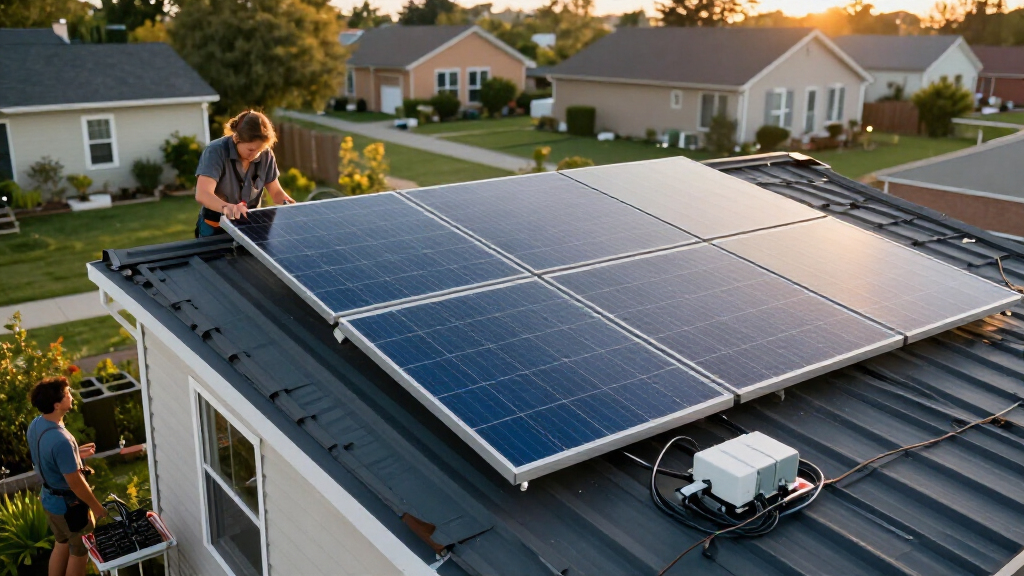
For homeowners looking at solar panel kits for homes, my best overall pick is the ECO-WORTHY 10 kW Off-Grid Solar System Kit with a 10 kW split-phase inverter, 20.48 kWh of battery storage, and 5,310 W of panels, because its combination of storage and household-style power delivery is the most balanced on paper. The 10 kW kit with 32.2 kWh of storage stands out for buyers who need longer backup, while the 1,170 W kit is a smaller-scale option for modest loads. The main tradeoff is between panel generation, battery capacity, inverter output, and the installation work needed to connect an off-grid system safely. Kit names and headline wattage alone do not show how well a system will match your daily use or local conditions. Read on for my ranking, the differences that matter, and a guide to choosing a kit that fits your home.

Get backup power and energy gear delivered free with Prime
- Fast, free delivery on millions of items
- Prime Video, Amazon Music and more included
- Member-only deals all year
Key Takeaways
- The 10 kW split-phase kit with 20.48 kWh of storage is my best overall pick because it pairs a high-output inverter with substantial storage and 5,310 W of panels.
- The 32.2 kWh battery kit prioritizes stored energy over a balanced entry point, making it the standout for buyers who need more reserve capacity and can plan around its panel and inverter details.
- Panel wattage and daily energy are not interchangeable: the listed 9.36 kWh daily output on one 10 kW kit gives buyers a more direct generation reference than its headline system size alone.
- The 1,560 W panel and 5 kWh battery kit is a smaller off-grid setup, while the 1,170 W kit with a 3,500 W inverter is aimed at lighter loads rather than whole-home coverage.
- Several kits share a 10 kW label but differ in panels, storage, and inverter information, so I rank them by the completeness and balance of the stated components, not the label by itself.
| ECO-WORTHY 10 kW Off-Grid Solar System Kit, 9.36 kWh Daily Output |  | Best for 120/240 V Household Loads | Maximum inverter output: 10,000 W | Solar panel capacity: 2,340 W | Solar panels: 12 × 195 W N-type bifacial panels | VIEW LATEST PRICE | See Our Full Breakdown |
| ECO-WORTHY 10 kW Off-Grid Solar System Kit with 10 kW Split-Phase Inverter, 20.48 kWh Battery Storage, and 5,310 W of Solar Panels |  | Best for High Daily Energy Needs | Inverter continuous output: 10,000 W | Inverter peak output: 20,000 W | Solar panel capacity: 5,310 W; 9 × 590 W panels | VIEW LATEST PRICE | See Our Full Breakdown |
| ECO-WORTHY 5 kW Off-Grid Solar System Kit with 2,340 W Panels |  | Best for Cabins and Backup Power | Solar panel count and capacity: 12 × 195 W; 2,340 W total | Inverter: 5,000 W, 48 V off-grid | Battery: 51.2 V, 100 Ah LiFePO₄ | VIEW LATEST PRICE | See Our Full Breakdown |
| ECO-WORTHY 48V Off-Grid Solar System Kit, 1560W Panels, 5kWh Battery |  | Best for Smaller Off-Grid Setups | Solar panel capacity: 1,560 W; 8 × 195 W bifacial panels | Battery: 48 V, 100 Ah LiFePO₄ | Inverter: 3,500 W | VIEW LATEST PRICE | See Our Full Breakdown |
| ECO-WORTHY 10 kW Off-Grid Solar Panel Kit with 48 V Battery |  | Best for Large Battery Reserve | Inverter continuous output: 10,000 W | Inverter peak output: 20,000 W | Output voltage: 120 V or 120/240 V split-phase | VIEW LATEST PRICE | See Our Full Breakdown |
| ECO-WORTHY 1170W Solar Panel Kit with 48V 50Ah Battery and 3500W Inverter |  | Best for Smaller Off-Grid Loads | Solar panel output: 1,170W total (6 × 195W) | Panel type: N-type bifacial, 18 busbars | Panel conversion efficiency: 25% | VIEW LATEST PRICE | See Our Full Breakdown |
| ECO-WORTHY 10 kW Off-Grid Solar Panel Kit with 32.2 kWh Battery Storage |  | Best for High-Capacity Off-Grid Homes | Solar panel count: 18 | Total PV capacity: 10,620W | Battery configuration: 2 × 48V 314Ah LiFePO4 | VIEW LATEST PRICE | See Our Full Breakdown |
| solar panel kits for home | Solar panel capacity | Output voltage | Panel dimensions | Battery |
|---|---|---|---|---|
| ECO-WORTHY 10 kW Off-Grid Sola | 2,340 W | — | — | — |
| ECO-WORTHY 10 kW Off-Grid Sola | 5,310 W; 9 × 590 W panels | 120 V or 120/240 V split-phase | 89.7 × 44.6 × 1.4 in | — |
| ECO-WORTHY 5 kW Off-Grid Solar | — | 120 V | 58.86 × 26.18 × 1.18 in | 51.2 V, 100 Ah LiFePO₄ |
| ECO-WORTHY 48V Off-Grid Solar | 1,560 W; 8 × 195 W bifacial panels | — | — | 48 V, 100 Ah LiFePO₄ |
| ECO-WORTHY 10 kW Off-Grid Sola | 2,950 W; 5 × 590 W panels | 120 V or 120/240 V split-phase | 89.69 × 44.65 × 1.18 in | 48 V, 314 Ah LiFePO₄ |
| ECO-WORTHY 1170W Solar Panel K | — | — | 58.86 × 26.18 × 1.18 in | 48V 50Ah LiFePO4; 2,560Wh usable energy |
| ECO-WORTHY 10 kW Off-Grid Sola | — | 120V or 120/240V split phase | — | — |
More Details on Our Top Picks
ECO-WORTHY 10 kW Off-Grid Solar System Kit, 9.36 kWh Daily Output
I’d choose this kit when 120 V/240 V output and a ready-to-match panel, battery, and inverter package matter more than maximizing solar harvest. Its 10,000 W inverter can serve split-phase household loads, while the 10.24 kWh battery bank provides storage for use after sunlight fades. Compared with ECO-WORTHY’s 10 kW kit with 5,310 W of panels, this one has less than half the PV capacity, so it is a less compelling fit for buyers seeking faster replenishment or the listed 21.24 kWh daily generation of that larger array. The included 2,340 W of bifacial panels are a more restrained starting point, and the stated 9.36 kWh daily output assumes four hours of full sunshine. I’d also plan for professional installation, rather than treating this as a simple plug-in home kit.
Pros:- Combines panels, batteries, inverter, mounting brackets, and accessories in one kit.
- 10,000 W inverter provides 120 V/240 V AC output for split-phase household loads.
- Two 48 V 100 Ah batteries provide 10.24 kWh of stated storage.
- Bluetooth and Wi-Fi app monitoring, multiple charging modes, and inverter parallel capability.
Cons:- The 2,340 W array is substantially smaller than the 5,310 W array in ECO-WORTHY’s other 10 kW kit.
- The stated 9.36 kWh daily output depends on four hours of full sunshine.
- Professional installation is recommended, adding planning and installation demands.
Best for: Off-grid homeowners who need 120/240 V output and battery storage for household appliances, but have moderate daily energy needs.
Not ideal for: Households with high daily consumption or limited solar hours that need a larger array to recharge storage; the included solar capacity is only 2,340 W.
- Maximum inverter output:10,000 W
- Solar panel capacity:2,340 W
- Solar panels:12 × 195 W N-type bifacial panels
- Stated daily energy output:9.36 kWh under 4 hours of full sunshine
- Battery storage:10.24 kWh total; 2 × 48 V 100 Ah lithium batteries
- AC output:120 V / 240 V
- Panel efficiency:25%
- Certifications:Inverter: UL 1741; batteries: UL 1973 and UL 9540A; CEC-compliant
Our verdict“Choose this kit for split-phase household loads and a bundled battery system when its comparatively modest 2,340 W array fits your energy needs.”
ECO-WORTHY 10 kW Off-Grid Solar System Kit with 10 kW Split-Phase Inverter, 20.48 kWh Battery Storage, and 5,310 W of Solar Panels
Among these kits, this is the clearest fit for a home that needs substantial solar collection as well as storage: it pairs a 5,310 W array with 20.48 kWh of batteries and a 10,000 W split-phase inverter. The listed generation reaches up to 21.24 kWh per day under optimal conditions, giving it a stronger solar-recharge profile than the 2,340 W arrays in the other ECO-WORTHY 10 kW kits here. Four batteries also give it more stored energy than the 10 kW kit with 10.24 kWh of storage. The tradeoff is physical scale: its nine 590 W panels measure 89.7 × 44.6 inches and ship on a pallet, so roof access, handling, and installation planning matter. I’d favor it for a carefully planned off-grid home, not a casual DIY setup.
Pros:- 5,310 W of solar capacity is the largest stated array among the three 10 kW kits in this batch.
- 20.48 kWh of LiFePO₄ storage supports more stored energy than the other 10 kW kits listed here.
- Split-phase inverter supports 120 V or 120/240 V output and has 10,000 W continuous output.
- Dual MPPT charge controllers, Wi-Fi monitoring, and support for parallel inverter connection.
Cons:- Nine large panels require substantial handling and suitable roof or ground-mount space.
- Panels ship by truck on a pallet, which can complicate delivery and unloading.
- Professional installation is recommended for safe setup and system performance.
Best for: Off-grid households with substantial daily energy use, room for large panels, and a need for both split-phase output and sizable battery storage.
Not ideal for: Homeowners with limited roof or ground-mount area, difficult delivery access, or no plan for professional electrical installation.
- Inverter continuous output:10,000 W
- Inverter peak output:20,000 W
- Solar panel capacity:5,310 W; 9 × 590 W panels
- Maximum stated daily generation:Up to 21.24 kWh under optimal conditions
- Battery storage:20.48 kWh; 4 × 48 V 100 Ah LiFePO₄ batteries
- Output voltage:120 V or 120/240 V split-phase
- Charge controllers:Dual MPPT
- Panel dimensions:89.7 × 44.6 × 1.4 in
Our verdict“Pick this kit when a large off-grid household needs the strongest combination of solar capacity and battery storage in this group and can accommodate a demanding installation.”
ECO-WORTHY 5 kW Off-Grid Solar System Kit with 2,340 W Panels
This is the more restrained choice for a cabin, RV setup, or home backup system where a 5,000 W inverter is a better match than the 10 kW models elsewhere in this roundup. It includes the same total panel capacity as the 10 kW ECO-WORTHY kit with 9.36 kWh stated daily output, but its single 51.2 V 100 Ah LiFePO₄ battery and 120 V output point to a narrower use case than a larger split-phase household system. Panels, inverter, battery, cables, and brackets are included, which helps keep the system components together. The key mismatch is that a 2,340 W array may not sustain the inverter’s full 5,000 W output from solar alone. Compared with the smaller 1,560 W, 3,500 W kit, it offers more panel and inverter capacity, but still calls for electrical know-how to install.
Pros:- Includes 12 panels, a 5,000 W inverter, LiFePO₄ battery, cables, and mounting brackets.
- 2,340 W of panel capacity exceeds the 1,560 W array in the smaller ECO-WORTHY 3,500 W kit.
- LiFePO₄ battery is suited to deep-cycle storage.
- MC4 connectors and 120 V output support a straightforward component layout.
Cons:- The 2,340 W array may not consistently supply the inverter’s full 5,000 W output.
- Listed output is 120 V, unlike the split-phase 120/240 V options in the 10 kW kits.
- DIY installation may require electrical knowledge and careful system planning.
Best for: Cabin owners and homeowners seeking a 120 V off-grid or backup system with a moderate inverter and included battery.
Not ideal for: Households needing 240 V split-phase loads, long periods of high-power use, or a system that can reliably replenish a large battery from limited sunlight.
- Solar panel count and capacity:12 × 195 W; 2,340 W total
- Inverter:5,000 W, 48 V off-grid
- Battery:51.2 V, 100 Ah LiFePO₄
- Output voltage:120 V
- Panel efficiency:25%
- Maximum current:100 A
- Panel dimensions:58.86 × 26.18 × 1.18 in
- Connector type:MC4
Our verdict“Choose this kit for a cabin or backup system that needs more inverter capacity than the 3,500 W option but does not require 240 V output.”
ECO-WORTHY 48V Off-Grid Solar System Kit, 1560W Panels, 5kWh Battery
For a modest off-grid setup, this kit scales the system down without dropping the core pieces: eight bifacial panels, a 48 V battery, and a 3,500 W inverter with a built-in 80 A MPPT controller. Its 1,560 W array and stated maximum of 6.24 kWh per day under four hours of full sunlight make it a better match for lighter loads than the 2,340 W, 5,000 W ECO-WORTHY kit. The built-in controller and touchscreen, Bluetooth, and Wi-Fi monitoring give owners several ways to check system status. It also lists 20 ms backup switching, a useful feature for backup applications. The tradeoff is limited daily generation and a single 48 V 100 Ah battery; buyers expecting whole-home coverage should compare it with the larger 10 kW systems. Delivery in multiple packages also means checking that all components arrive.
Pros:- Includes eight bifacial panels, a 48 V 100 Ah LiFePO₄ battery, and a 3,500 W inverter.
- Built-in 80 A MPPT controller reduces the need to source a separate controller.
- Touchscreen, Bluetooth, and Wi-Fi provide several system-monitoring options.
- Battery is rated for 6,000+ cycles and supports charging down to -4°F.
Cons:- The 1,560 W array and stated 6.24 kWh daily output are limited for high-use homes.
- A 48 V 100 Ah battery offers less storage than the 10.24 kWh and 20.48 kWh options in this roundup.
- Components arrive in multiple packages, so deliveries may need to be tracked separately.
Best for: Owners of small cabins or modest backup systems who want an integrated 48 V kit with monitoring and a built-in MPPT controller.
Not ideal for: Households seeking whole-home coverage, high daily solar production, or enough capacity for sustained heavy appliance use.
- Solar panel capacity:1,560 W; 8 × 195 W bifacial panels
- Battery:48 V, 100 Ah LiFePO₄
- Inverter:3,500 W
- Inverter peak power:7,000 W
- Solar controller:Built-in 80 A MPPT
- Stated daily energy output:Up to 6.24 kWh under 4 hours of full sunlight
- Monitoring:4.3-inch touchscreen, Bluetooth, and Wi-Fi
- Low-temperature charging:Down to -4°F
Our verdict“Choose this kit for a smaller off-grid or backup setup where integrated monitoring matters more than high daily energy production.”
ECO-WORTHY 10 kW Off-Grid Solar Panel Kit with 48 V Battery
This kit prioritizes stored energy and inverter capacity over a large solar array. Its 16.076 kWh LiFePO₄ battery and 10,000 W split-phase inverter offer substantial reserve for household loads, while five 590 W panels provide just 2,950 W of PV capacity. Compared with ECO-WORTHY’s 10 kW kit with 5,310 W of panels and 20.48 kWh of storage, this system has both a smaller array and less battery capacity, but it still gives buyers a sizable battery bank and the same stated inverter continuous output. Monitoring options are unusually broad, including the battery display, Bluetooth, Wi-Fi, and PC connectivity. I’d select it where backup duration and inverter output take priority over rapid solar replenishment. The large panels, 72.8 lb listed item weight, pallet delivery, and recommended professional installation make this a substantial project rather than a small home kit.
Pros:- 16.076 kWh LiFePO₄ battery capacity provides a substantial stored-energy reserve.
- 10,000 W continuous inverter output with 120 V or 120/240 V split-phase options.
- Battery monitoring is available through its display, Bluetooth, Wi-Fi, and PC connectivity.
- Dual MPPT controllers and support for battery parallel expansion add system flexibility.
Cons:- Its 2,950 W array is smaller than the 5,310 W array in ECO-WORTHY’s other 10 kW kit.
- Large components require pallet delivery by truck and careful handling.
- Professional installation is recommended.
Best for: Off-grid homeowners who want a large battery reserve and 120/240 V inverter output, with plans to manage a moderate-sized solar array.
Not ideal for: Buyers who need the greatest solar generation or fastest battery replenishment; the 2,950 W array is smaller than the 5,310 W array in the other large ECO-WORTHY kit.
- Inverter continuous output:10,000 W
- Inverter peak output:20,000 W
- Output voltage:120 V or 120/240 V split-phase
- Solar panel capacity:2,950 W; 5 × 590 W panels
- Battery:48 V, 314 Ah LiFePO₄
- Battery energy capacity:16.076 kWh
- Battery management system:PACE 200 A BMS
- Panel dimensions:89.69 × 44.65 × 1.18 in
Our verdict“Pick this kit when battery reserve and split-phase inverter capacity matter more than having the largest solar array in the lineup.”
ECO-WORTHY 1170W Solar Panel Kit with 48V 50Ah Battery and 3500W Inverter
This kit pairs 1,170W of bifacial panels with a 48V battery and a 3,500W inverter, making it a more contained off-grid package than the much larger ECO-WORTHY 10 kW Off-Grid Solar Panel Kit with 32.2 kWh Battery Storage. Its 2.56 kWh of usable battery energy can support modest household loads, while the inverter’s 7,000W surge rating gives short bursts of extra capacity for starting compatible appliances. Wi-Fi monitoring and UPS switching add useful visibility and backup behavior. The tradeoff is scale: the listed daily output assumes four hours of full sunlight, and the battery is far smaller than the 32.2 kWh option. I’d choose this for a cabin or a limited set of essential loads, not as a whole-home system for sustained heavy use. The shipment may also arrive in separate packages.
Pros:- Includes panels, inverter, battery, cables, mounts, and accessories
- 3,500W inverter with 7,000W surge capacity and Wi-Fi monitoring
- 48V LiFePO4 battery is rated for more than 4,000 cycles
- Bifacial panels are designed for high-temperature performance
Cons:- Estimated daily generation depends on four hours of full sunlight
- 2.56 kWh usable storage limits runtime for larger household loads
- Components may arrive in separate packages
Best for: Cabin owners or households powering a modest set of essential appliances who want panels, battery, inverter, cables, and mounts in one kit.
Not ideal for: Buyers seeking whole-home backup or long autonomy for high-consumption appliances; the 2.56 kWh usable battery and 1,170W array are comparatively limited.
- Solar panel output:1,170W total (6 × 195W)
- Panel type:N-type bifacial, 18 busbars
- Panel conversion efficiency:25%
- Inverter:3,500W output; 7,000W surge; 48V DC input; 110/120V AC output
- MPPT controller:80A
- Battery:48V 50Ah LiFePO4; 2,560Wh usable energy
- Battery cycle life:More than 4,000 cycles
- Panel dimensions:58.86 × 26.18 × 1.18 in
Our verdict“Choose this kit for a cabin or modest off-grid setup where an all-in-one package matters more than large solar production or extended battery backup.”
ECO-WORTHY 10 kW Off-Grid Solar Panel Kit with 32.2 kWh Battery Storage
For an off-grid home with substantial energy needs, this kit stands apart through its 10.62 kW solar array and 32.2 kWh of LiFePO4 storage. Its 10,000W split-phase inverter can supply 120V or 120/240V output, giving it a broader household fit than the ECO-WORTHY 1170W Solar Panel Kit with 48V 50Ah Battery and 3500W Inverter. Dual MPPT controllers and Wi-Fi monitoring add useful system management, while the batteries support app and display monitoring and parallel expansion. That capacity comes with practical demands: professional installation is recommended, and the large shipment needs truck access and a suitable delivery address. This is a stronger match for buyers planning a substantial off-grid installation than for someone seeking a simple, small-scale backup kit. I’d skip it if the site cannot accommodate its panels, delivery, or installation requirements.
Pros:- 10,620W of solar capacity from 18 panels
- 32.2 kWh total LiFePO4 battery storage
- 10,000W split-phase inverter provides 120V or 120/240V output
- Battery monitoring includes app and display access, with scalable parallel support
Cons:- Professional installation is recommended
- Large shipment requires truck delivery and an accessible address
- Its system scale may exceed the needs of smaller homes or limited backup loads
Best for: Owners of larger off-grid homes who need substantial battery reserve, 120/240V split-phase output, and the capacity to run multiple household loads.
Not ideal for: Small cabins, DIY buyers seeking a straightforward installation, or homes without truck-accessible delivery space; the system is large and professional installation is recommended.
- Solar panel count:18
- Total PV capacity:10,620W
- Battery configuration:2 × 48V 314Ah LiFePO4
- Total energy storage:32.2 kWh
- Inverter output:10,000W continuous; 20,000W peak
- Output voltage:120V or 120/240V split phase
- MPPT controllers:Dual MPPT
- Maximum voltage:500V
- Installation:Professional installation recommended
Our verdict“Pick this kit for a professionally installed off-grid home that needs high solar production, substantial storage, and split-phase household power.”
How We Picked
I compared each kit through the needs of a home off-grid system: stated panel capacity, battery storage, inverter output and configuration, and how clearly those components are specified. I also looked at the gap between headline system size and the details a buyer needs to plan daily energy use. For a home, a kit’s value depends on whether generation, storage, and inverter capability work together; a large number in one category cannot make up for an undersized or poorly matched component.
My ranking favors kits with a clearer, more balanced combination of panels, storage, and household-oriented inverter details. That puts the 10 kW split-phase kit with 20.48 kWh of storage first, while the 32.2 kWh option earns a premium role for buyers who prioritize reserve energy. Smaller kits rank lower for whole-home use but can suit limited loads or phased projects. Product names do not provide every detail needed for a final system design, so I treat unclear specifications as a reason to verify compatibility and sizing before purchase.
Factors to Consider When Choosing Solar Panel Kits For Homes
Choosing among these kits starts with your home’s energy needs, not its advertised kilowatt figure. I would work through the following factors before deciding whether a preassembled off-grid package can serve your intended loads.
Size the System Around Daily Energy Use
Start by estimating how many kilowatt-hours your household uses each day, then separate essential loads from appliances you can switch off during limited production. A utility bill is a useful starting point, but seasonal use, electric heating, pumps, and air conditioning can change the picture sharply. Do not treat a kit’s panel wattage as its daily energy output: sunlight, shade, roof direction, temperature, and system losses all affect generation. The listed 9.36 kWh daily output on one kit is a stated figure, not a promise that every home will receive that amount year-round. Size for your location and usage pattern, and leave room for cloudy periods if the system must support essential loads.
Match Battery Storage to the Backup You Need
Battery capacity describes stored energy, not how much electricity the panels produce in a day. Decide which loads must keep running overnight or through poor weather, then estimate their combined energy use over that period. A larger battery, such as the 32.2 kWh option, can offer more reserve, but it cannot compensate for panels that fail to replenish it under local conditions. Check usable capacity, battery chemistry, operating limits, and whether expansion is supported; headline capacity may not equal energy available to your appliances. Buyers with limited backup needs may be better served by a smaller storage package than by paying for capacity they rarely use.
Check Inverter Output and Household Compatibility
The inverter converts battery power into the electricity your appliances use, so its continuous output and surge capability matter as much as its headline rating. A 10 kW split-phase inverter is especially relevant to homes with compatible 120/240 V circuits, but the name alone does not confirm that every household circuit or appliance will work. Motors, well pumps, and compressors may need extra starting power, while some systems require specific wiring or transfer equipment. Verify voltage, phase, surge ratings, and connection requirements with a qualified installer before choosing a kit. Never assume that a panel or battery package can connect directly to an existing home’s electrical system without additional equipment.
Look Beyond the Kit List Before Planning Installation
A packaged system can simplify component selection, but it does not automatically include every item or service needed for a safe installation. Check whether mounting hardware, wiring, breakers, disconnects, monitoring, and permitting support are included or must be sourced separately. Roof condition, available space, structural capacity, and local rules can affect both the design and the final scope of work. Off-grid systems also need a plan for periods when solar production falls short, such as load reduction or a generator. Confirm the complete bill of materials and installation requirements before treating a kit as a ready-to-connect home system.
Plan for Expansion and Seasonal Changes
A system that fits current usage may become strained if you add an electric vehicle, larger appliances, or more conditioned space. Ask whether the charge controller, inverter, battery, and wiring support expansion; adding panels alone may not raise the system’s usable output if another component becomes the limit. Seasonal changes matter too, since winter sunlight and heating demand can move in opposite directions. Buyers comparing the 1,170 W and 1,560 W kits with the larger packages should decide whether a smaller starting system is a deliberate first phase or an undersized final plan. A written load forecast can help prevent expensive component changes later.
Frequently Asked Questions
Can one of these off-grid kits power my entire home?
It depends on your household’s daily energy use, peak loads, local solar conditions, and how much storage you need overnight. A kit described as 10 kW does not by itself confirm whole-home suitability, because panel capacity, inverter output, and battery capacity serve different roles. List the appliances you expect to run together and check their continuous and startup demands against the inverter specifications. You may need a larger system, load management, or a backup generator for high-demand periods. Have a qualified solar professional review the design before relying on it as your home’s only power source.
Should I choose more battery storage or more solar panels?
Choose based on the shortfall you are trying to solve: more panels can improve energy production when sunlight is available, while more battery capacity stores energy for later use. If your batteries are regularly full while panels still have strong production hours, additional storage may help. If batteries stay low because the array cannot replace what the home uses, extra panel capacity may be the better direction, subject to controller and inverter limits. Cloudy seasons can call for both more generation and more reserve, not just one upgrade. Compare your daily energy use with a location-specific production estimate before deciding.
What does split-phase inverter support mean for a home?
Split-phase output is commonly used for household circuits that need both 120 V and 240 V power, but compatibility depends on the inverter’s exact output and your home’s electrical setup. It can matter for equipment such as certain pumps, dryers, or other 240 V appliances. The 10 kW kit that specifies a split-phase inverter provides more useful information on this point than a kit name that lists only system wattage. Still, verify wiring, surge capability, and any transfer or panel equipment needed for your installation. An electrician or solar installer can confirm whether the inverter suits your service and intended loads.
Are these kits suitable for a grid-connected home?
The products in this roundup are described as off-grid kits, so buyers should not assume they can export power to a utility or operate as a standard grid-tied system. Grid connection can require different inverter certifications, utility approval, protective equipment, and a design that follows local interconnection rules. A system may also need a transfer arrangement if it will coexist with utility power or a generator. Ask the supplier and a qualified installer to confirm the intended operating modes and required components before purchase. If exporting excess electricity is a priority, compare purpose-built grid-tied or hybrid systems instead.
What should I verify before ordering a kit for my house?
Request the full component list, including usable battery capacity, inverter voltage and surge ratings, charge-controller limits, included cabling, and mounting hardware. Confirm the panel count and dimensions against available roof or ground space, then check local permitting and electrical requirements. Ask which components can be expanded or replaced and whether the system has monitoring and support for troubleshooting. The product titles in this roundup do not provide every design detail, so missing information should be resolved before you commit. A site assessment can reveal shading, roof, and wiring issues that a product listing cannot address.
Conclusion
For the best overall balance, I would start with the ECO-WORTHY 10 kW kit with a 10 kW split-phase inverter, 20.48 kWh of storage, and 5,310 W of panels, then confirm it fits your loads and site. The best premium choice for greater reserve is the 10 kW kit with 32.2 kWh of battery storage, provided its full panel and inverter specifications suit the design. For best value in a smaller setup, compare the 1,560 W panel and 5 kWh battery kit with the 1,170 W kit; the latter’s 3,500 W inverter may suit modest loads, but neither should be assumed to cover an entire home. The best option for beginners is the kit whose supplier can provide the clearest complete component list and installation guidance, rather than the one with the largest headline number. For buyers focused on stated daily generation, the 10 kW kit listing 9.36 kWh per day offers a useful reference point, while anyone needing more storage should examine the 32.2 kWh model. Match the choice to measured household use, and confirm system compatibility with a qualified installer before ordering.
Evergreen bestsellers Picks

KitchenAid Artisan 5-Quart Tilt-Head Stand Mixer, Almond Cream

Apple AirPods Max 2 Wireless Over-Ear Headphones – Midnight

Breville Barista Express Espresso Machine, Black Sesame
As an affiliate, we earn on qualifying purchases.