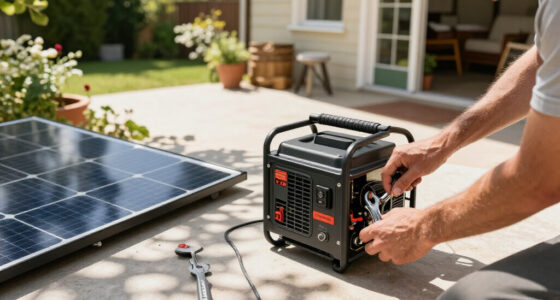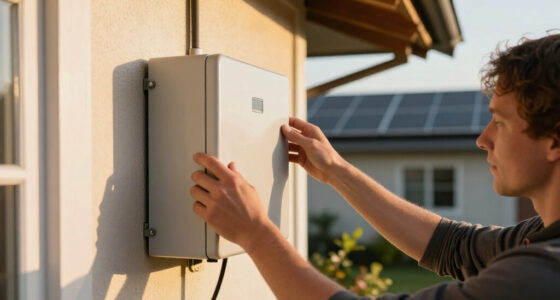
For most homes pairing a generator with a 120/240V split-phase service, I’d start with the Square D HEPD80 as the best overall balance of capacity and straightforward whole-home coverage. The Siemens BoltShield FSPD140 stands out for buyers seeking a higher listed surge-current rating, while the Bad Wolf SP240V200KA offers a Type 1 design and a weather-resistant enclosure for installations that need them. The main tradeoffs are not just surge ratings: panel compatibility, Type 1 versus Type 2 placement, enclosure rating, and generator-specific installation details all affect the right choice. A larger kA figure alone does not prove that a device will protect a generator or home better. Read on for my comparison, buying criteria, and practical checks before installation.

Get backup power and energy gear delivered free with Prime
- Fast, free delivery on millions of items
- Prime Video, Amazon Music and more included
- Member-only deals all year
Complete the kit


Key Takeaways
- The Square D HEPD80 leads on balance: its 80 kA rating is below several high-capacity Bad Wolf and Siemens options, but it avoids making maximum surge-current claims the only measure of fit.
- Type 1 and Type 2 are not interchangeable labels: the Bad Wolf Type 1 models are positioned for different installation locations than the listed Siemens Level 2 and other panel-mounted options; confirm the device instructions and local code before choosing.
- Bad Wolf’s lineup emphasizes enclosure and capacity choices: the SP240V200KA and 400KA models suit buyers prioritizing Type 1 construction and NEMA 4X protection, while the HSD240V advertises a much higher 260 kA rating.
- The Siemens options span distinct rating levels: the BoltShield FSPD140 lists 140 kA, while the FSPD100 lists 100 kA; the FS140 also lists 140,000 amps, so verify exact model specifications and installation details rather than relying on similar names.
- Generator protection depends on the whole installation: none of the product names alone establishes compatibility with every generator, transfer switch, or neutral-ground arrangement; an electrician should check the complete system.
| Square D HEPD80 Whole-Home Surge Protection Device, 1-Phase, 3-Wire, 120/240V, 80kA |  | Best for a Compact Panel-Mounted Upgrade | Model: HEPD80 | Phase: 1-phase | Wiring: 3-wire | VIEW LATEST PRICE | See Our Full Breakdown |
| ProSurge Whole-House Surge Protector, 120/240V, 25 kA per Phase |  | Best for Indoor or Outdoor Installation Flexibility | Model: 2W+G (L1, L2, G/N), 25KA | System: Single-phase or split-phase | Voltage: 120/240V AC | VIEW LATEST PRICE | See Our Full Breakdown |
| Generac 7409 Whole-House Surge Protective Device |  | Best for Generator-System Brand Matching | Model: 7409 | Device type: Dual-rated Type 1 and Type 2 SPD | Surge capacity: 50 kA per phase | VIEW LATEST PRICE | See Our Full Breakdown |
| Bad Wolf HSD240V Whole House Surge Protector, 260kA, Type 1 SPD, 120/240V Split Phase |  | Best for a High Stated Surge-Capacity Rating | Model: HSD240V | System compatibility: 120/240V split-phase | Surge capacity: 260 kA | VIEW LATEST PRICE | See Our Full Breakdown |
| Eaton CHSPT2SURGE10 Whole-Home Surge Protector |  | Best for a Type 2 Panel Installation | Model: CHSPT2SURGE10 | Device type: Type 2 surge protective device | Surge current capacity: 60,000 A | VIEW LATEST PRICE | See Our Full Breakdown |
| Siemens BoltShield FSPD140 Level 2 Whole House Surge Protection Device, 140 kA, 120/240V |  | Best for Clear Service Alerts | Model: FSPD140 | Protection type: Level 2 whole-house surge protection | Voltage: 120/240V | VIEW LATEST PRICE | See Our Full Breakdown |
| Siemens Boltshield FSPD100 Level 2 Whole-Home Surge Protection Device |  | Best Siemens Entry Point | Model: FSPD100 | Protection type: Level 2 whole-home surge protection | Voltage: 120/240V | VIEW LATEST PRICE | See Our Full Breakdown |
| Bad Wolf SP240V200KA Whole-House Surge Protector, 200kA, Type 1, 120/240V Split-Phase, NEMA 4X/IP67 |  | Best for Outdoor Service Locations | Model: SP240V200KA | Device type: Type 1 service-entrance SPD | System voltage: 120/240V split-phase | VIEW LATEST PRICE | See Our Full Breakdown |
| Bad Wolf SP240V400KA Whole-House Surge Protector, 120/240V, 400kA, Type 1, NEMA 4X |  | Best for Highest Stated Surge Capacity | Model: SP240V400KA | Device type: Type 1 SPD | System voltage: 120/240V split phase | VIEW LATEST PRICE | See Our Full Breakdown |
| Siemens FS140 Whole-House Surge Protection Device, 140,000 Amp |  | Best for Broad Load-Center Compatibility | Model: FS140 | Device type: Type 2 surge protective device | Surge current capacity: 140,000 amps per phase | VIEW LATEST PRICE | See Our Full Breakdown |
| SPD2ULTRA Whole-Home Surge Protector, 120/240V, 108,000A |  | Best for a Clearly Specified Breaker Setup | Voltage: 120/240V AC | Frequency: 60 Hz | Stated surge capacity: 108,000 A | VIEW LATEST PRICE | See Our Full Breakdown |
| whole house surge protectors for generator | Model | Warranty | Voltage | Device type |
|---|---|---|---|---|
| Square D HEPD80 Whole-Home Sur | HEPD80 | — | 120/240V | — |
| ProSurge Whole-House Surge Pro | 2W+G (L1, L2, G/N), 25KA | 2 years | 120/240V AC | UL Type 1 or Type 2 SPD |
| Generac 7409 Whole-House Surge | 7409 | — | — | Dual-rated Type 1 and Type 2 SPD |
| Bad Wolf HSD240V Whole House S | HSD240V | 5-year limited warranty | — | — |
| Eaton CHSPT2SURGE10 Whole-Home | CHSPT2SURGE10 | — | 240 volts | Type 2 surge protective device |
| Siemens BoltShield FSPD140 Lev | FSPD140 | 10 years; 100K warranty | 120/240V | — |
| Siemens Boltshield FSPD100 Lev | FSPD100 | — | 120/240V | — |
| Bad Wolf SP240V200KA Whole-Hou | SP240V200KA | 5-year limited | — | Type 1 service-entrance SPD |
| Bad Wolf SP240V400KA Whole-Hou | SP240V400KA | 5-year limited | — | Type 1 SPD |
| Siemens FS140 Whole-House Surg | FS140 | 10 years for product and connected equipment | — | Type 2 surge protective device |
| SPD2ULTRA Whole-Home Surge Pro | — | 10 years | 120/240V AC | — |
More Details on Our Top Picks
Square D HEPD80 Whole-Home Surge Protection Device, 1-Phase, 3-Wire, 120/240V, 80kA
The Square D HEPD80 is a straightforward choice for homeowners who want a compact device installed at a residential load center, with an 80 kA rating and an LED that signals when the unit needs replacement. Its role is simpler than the Generac 7409, which offers dual Type 1/Type 2 ratings and a weather-resistant enclosure, while this Square D’s stated appeal is its small form and basic panel integration. For generator users, it can add protection against surges reaching household circuits, but it does not replace generator-specific transfer equipment or protect data and communication lines. The installation requirement also means this is not a plug-in fix. I’d pair it with point-of-use strips for sensitive electronics, as the product description recommends; buyers seeking an outdoor-rated enclosure or broader installation flexibility should compare the ProSurge instead.
Pros:- Compact design for installation in a residential load center
- 80 kA maximum current rating
- LED status indicator shows when replacement is needed
- Helps protect household appliances and electronics connected to the home electrical system
Cons:- Requires installation in a residential load center
- The product description recommends keeping plug-in strips for sensitive electronics
- Product data does not specify an outdoor-rated enclosure or Type 1/Type 2 rating
Best for: Homeowners with a compatible residential load center who want a compact, hardwired surge device and plan to retain plug-in protection for sensitive electronics.
Not ideal for: Generator owners seeking a plug-in solution, outdoor mounting, or a device explicitly rated for Type 1 or Type 2 installation.
- Model:HEPD80
- Phase:1-phase
- Wiring:3-wire
- Voltage:120/240V
- Maximum current:80 kA
- Status indicator:LED
- Recommended use:Indoor
Our verdict“Choose the Square D HEPD80 for a compact panel-mounted layer of household surge protection, not as a standalone solution for every generator-connected device.”
ProSurge Whole-House Surge Protector, 120/240V, 25 kA per Phase
The ProSurge stands out for installation flexibility: its waterproof enclosure is specified for indoor or outdoor use, and the device is listed as UL Type 1 or Type 2. That makes it a useful candidate when a generator-connected home’s panel layout or mounting location calls for options beyond an indoor-only device. Its 25 kA per-phase capacity is lower than the Generac 7409’s 50 kA per phase, so buyers prioritizing that stated capacity may prefer the Generac, which also has a weather-resistant NEMA 4X enclosure. ProSurge instead offers an LED status indicator and thermally protected 20PTMOV technology. It is hardwired with no power plug, and its system compatibility is limited to single- or split-phase 120/240V systems. I’d shortlist it for flexible placement, not for buyers who need a plug-in protector or a higher listed per-phase capacity.
Pros:- Waterproof plastic enclosure supports indoor or outdoor installation
- Listed as a UL Type 1 or Type 2 SPD
- LED protection-status indicator
- Thermally protected 20PTMOV technology
Cons:- Limited to single- or split-phase systems
- No power plug; installation is hardwired
- 25 kA per phase is lower than the Generac 7409’s listed 50 kA per phase
Best for: Homeowners with a single- or split-phase 120/240V system who need a listed surge protector that can be mounted indoors or outdoors.
Not ideal for: Buyers who need a plug-in device, a three-phase system solution, or a higher stated per-phase surge capacity than 25 kA.
- Model:2W+G (L1, L2, G/N), 25KA
- System:Single-phase or split-phase
- Voltage:120/240V AC
- Surge capacity:25 kA per phase
- Device type:UL Type 1 or Type 2 SPD
- Standards:UL 1449 5th Edition and CSA
- Enclosure:Waterproof plastic
- Installation:Indoor or outdoor
- Warranty:2 years
Our verdict“Pick ProSurge when indoor/outdoor mounting flexibility matters more than a higher per-phase capacity or plug-in convenience.”
Generac 7409 Whole-House Surge Protective Device
The Generac 7409 is a compelling fit for homeowners building around Generac equipment who want a device with clearly stated 50 kA-per-phase capacity, dual Type 1/Type 2 ratings, and an outdoor-capable NEMA 4X enclosure. Against the Square D HEPD80, it provides more explicit installation and enclosure details, while the Square D is more compact and has an 80 kA maximum-current figure that is not stated on a per-phase basis. The 7409’s 20A two-pole breaker is not included, and the product calls for professional installation, so it is not a simple add-on. It helps address utility, indirect-lightning, and everyday surges, but does not cover phone, coaxial, or Ethernet lines and is not protection from a direct lightning strike. Generator compatibility still depends on the home’s electrical setup and installation plan.
Pros:- Dual-rated Type 1 and Type 2 installation
- 50 kA surge capacity per phase
- Weather-resistant NEMA 4X enclosure supports indoor or outdoor mounting
- Green LED indicates whether protection elements are active
Cons:- Requires a separately supplied 20A two-pole breaker and professional installation
- Does not protect phone, coaxial, or Ethernet lines
- Does not protect against a direct lightning strike
Best for: Homeowners with 120/240V residential panels, especially those integrating Generac equipment, who want a dual-rated device suitable for indoor or outdoor mounting.
Not ideal for: DIY buyers seeking a ready-to-install kit, or households that need surge protection for phone, coaxial, Ethernet, or direct-lightning events.
- Model:7409
- Device type:Dual-rated Type 1 and Type 2 SPD
- Surge capacity:50 kA per phase
- SCCR:200 kA
- Panel compatibility:120/240V residential panels
- Operating temperature:-4°F to 122°F
- Leads:24-inch pre-wired 12-gauge L1, L2, and neutral
- Breaker requirement:20A two-pole breaker, not included
- Status indicator:Green LED
Our verdict“Choose the Generac 7409 if you want a dual-rated, outdoor-capable panel SPD and are prepared to supply the breaker and arrange professional installation.”
Bad Wolf HSD240V Whole House Surge Protector, 260kA, Type 1 SPD, 120/240V Split Phase
The Bad Wolf HSD240V is the capacity-focused entry here, with a stated 260 kA surge capacity and a Type 1 design for 120/240V split-phase panels. Compared with the Generac 7409’s 50 kA per phase, Bad Wolf’s headline figure is much larger, though the product data presents the ratings differently; buyers should not treat those numbers as directly interchangeable without checking the manufacturers’ rating details. Its ETL listing to UL 1449 5th Edition and CSA standards adds useful certification information, but the device is hardwired and panel-mounted, so installation calls for electrical expertise. Unlike Generac’s listed weather-resistant enclosure, the supplied data does not give this model an outdoor enclosure rating. I’d favor it for buyers focused on its stated capacity and certification, while those needing clearly specified outdoor placement should compare the Generac or ProSurge.
Pros:- 260 kA stated surge capacity
- Type 1 SPD for 120/240V split-phase systems
- ETL listed to UL 1449 5th Edition and CSA standards
- Compact 5 × 4-inch panel-mounted form
Cons:- Hardwired installation may require an electrician
- Designed specifically for 120/240V split-phase systems
- Product data does not specify an outdoor enclosure rating
Best for: Homeowners with 120/240V split-phase panels who prioritize a high stated surge-capacity figure and want an ETL-listed Type 1 SPD.
Not ideal for: Buyers with a different electrical system, those needing a plug-in unit, or anyone requiring an explicitly rated outdoor enclosure.
- Model:HSD240V
- System compatibility:120/240V split-phase
- Surge capacity:260 kA
- SPD type:Type 1
- Certification:ETL listed to UL 1449 5th Edition and CSA C22.2 No. 269.1/269.2
- Installation:Hardwired, panel-mounted
- Dimensions:5 × 4 in
- Weight:16 oz
- Warranty:5-year limited warranty
Our verdict“Choose the Bad Wolf HSD240V if its high stated capacity and Type 1 listing suit your split-phase panel, but look elsewhere for a specified outdoor-rated enclosure.”
Eaton CHSPT2SURGE10 Whole-Home Surge Protector
The Eaton CHSPT2SURGE10 suits buyers who specifically want a Type 2 hardwired SPD for an electrical panel, with indoor or outdoor installation listed and LED status indicators. Its 60,000-amp surge-current capacity sits between the ProSurge’s 25 kA per phase and the Generac 7409’s 50 kA per phase by the supplied figures, though the ratings are not presented on identical bases. Eaton also lists a 10 kA nominal discharge rating, UL listing, and NEC compliance. Unlike the Generac, it is not described as dual-rated Type 1/Type 2, and unlike the Square D HEPD80, it has no compactness claim tied to a residential load center. This is a practical panel-protection option, not a plug-in protector; professional installation is recommended, and generator owners should confirm compatibility with their panel and transfer arrangement.
Pros:- 60,000-amp surge-current capacity and 10 kA nominal discharge rating
- Indoor or outdoor installation is specified
- LED indicators show protection status
- UL listed and NEC compliant
Cons:- Hardwired installation is required
- Professional installation is recommended
- Listed as Type 2 rather than dual-rated Type 1/Type 2 like the Generac 7409
Best for: Homeowners seeking a hardwired Type 2 panel SPD for a 240V installation, with indoor/outdoor placement and clear status indication.
Not ideal for: Buyers who need a Type 1-rated device, a plug-in protector, or a product with specified generator-transfer compatibility.
- Model:CHSPT2SURGE10
- Device type:Type 2 surge protective device
- Surge current capacity:60,000 A
- Voltage:240 volts
- Installation:Hardwired
- Use:Indoor or outdoor
- Certifications:UL listed; NEC compliant
- Dimensions:5 in × 5 in
Our verdict“Pick the Eaton when you want a listed Type 2 panel SPD with indoor/outdoor placement, and skip it if you specifically need a Type 1 rating.”
Siemens BoltShield FSPD140 Level 2 Whole House Surge Protection Device, 140 kA, 120/240V
The FSPD140 suits generator owners who want a whole-house device that makes its service status hard to miss. Its 140 kA surge rating and thermally protected MOVs cover surges from both outside the home and equipment within it, while the red replacement indicator and audible alarm tell you when the unit needs attention. That monitoring is more explicit than the LED status indication on the Bad Wolf SP240V200KA. The indoor/outdoor enclosure also gives an electrician options for placement near the service equipment.
The tradeoff is installation: this is an external parallel-connected device, not a plug-in generator accessory, so it needs a suitable connection beside electrical gear. Its 140 kA rating is below the Bad Wolf SP240V200KA’s 200 kA and well below the SP240V400KA’s stated 400 kA. I would choose it for its alerting and Siemens fit, not for the highest listed capacity. Generator compatibility and installation should be confirmed with an electrician.
Pros:- 140 kA surge current rating for whole-house protection
- Red replacement indicator and audible alarm provide clear service warnings
- Thermally protected MOVs
- Indoor- or outdoor-suitable enclosure
Cons:- Requires external parallel connection next to electrical gear
- The device needs replacement when its end-of-service alert appears
- Lower stated surge capacity than the Bad Wolf SP240V200KA and SP240V400KA
Best for: Homeowners with a 120/240V residential system who want audible and visual notice when a hardwired surge device needs replacement.
Not ideal for: Buyers seeking a plug-in solution, the highest stated surge capacity, or a unit that avoids external parallel installation beside electrical equipment.
- Model:FSPD140
- Protection type:Level 2 whole-house surge protection
- Voltage:120/240V
- Maximum current:140 A
- MOV protection:Thermally protected
- Installation:External parallel connection; indoor or outdoor
- Enclosure material:Polycarbonate
- Warranty:10 years; 100K warranty
Our verdict“Choose the FSPD140 if clear audible and visual service alerts matter more to you than a higher surge-capacity figure or simpler installation.”
Siemens Boltshield FSPD100 Level 2 Whole-Home Surge Protection Device
The FSPD100 is the lower-capacity Siemens option here, with a 100 kA surge rating and useful status alerts rather than the FSPD140’s 140 kA rating. Its visual red flag and audible alarm help you identify when the device needs replacement, and thermally protected MOVs add a protection feature without requiring you to monitor the unit continuously. For a generator-equipped home, that matters because a surge device is a hardwired layer of protection, not a substitute for checking generator and transfer-system compatibility.
Compared with the FSPD140, this model gives up some stated surge capacity while retaining the same broad Siemens approach to alerts and mounting. It can be installed outdoors or inside a load center, but the listed external parallel mounting may call for work beside electrical equipment. I would pick it over the Bad Wolf SP240V200KA when the Siemens setup is the better match, not when maximizing the stated rating is the priority.
Pros:- 100 kA surge current protection
- Visual red flag and audible replacement alarm
- Thermally protected MOVs
- Can be installed outdoors or inside a load center
Cons:- Lower stated surge capacity than the Siemens FSPD140
- External parallel mounting may require installation beside electrical gear
- Generator and transfer-system compatibility still needs to be checked for the installation
Best for: Homeowners with a Siemens-compatible installation who want audible and visual replacement alerts and do not need the lineup’s higher stated surge ratings.
Not ideal for: Buyers prioritizing maximum stated capacity or an installation that does not involve parallel wiring near a load center.
- Model:FSPD100
- Protection type:Level 2 whole-home surge protection
- Voltage:120/240V
- Number of poles:3
- Mounting:External parallel
- Replacement indicators:Visual red flag and audible alarm
- MOV protection:Thermally protected
Our verdict“Choose the FSPD100 for Siemens-style status alerts and a 100 kA rating when the FSPD140’s higher capacity is not necessary.”
Bad Wolf SP240V200KA Whole-House Surge Protector, 200kA, Type 1, 120/240V Split-Phase, NEMA 4X/IP67
The SP240V200KA stands out for a generator setup where the surge device may need to live outdoors: its Type 1 service-entrance design is paired with a NEMA 4X/IP67 enclosure rated for indoor or outdoor installation. The listed 200 kA surge protection and six protection modes give this model a higher stated capacity than either Siemens BoltShield in this group. Its 36-inch, 10 AWG leads also give an electrician a defined hardwired connection, while LED indicators provide a quick status check.
Those advantages come with a less beginner-friendly installation. Unlike the Siemens FSPD140’s red flag and audible alarm, the Bad Wolf listing specifies LED status indicators, so it does not offer the same stated audible warning. It also requires hardwiring and includes no plug; this is not a portable generator connection device. The five-year limited warranty is shorter than the Siemens models’ stated 10-year warranty terms. I would favor it when enclosure rating and Type 1 placement lead the decision.
Pros:- 200 kA surge protection and six protection modes
- Type 1 service-entrance design
- NEMA 4X/IP67 enclosure for indoor or outdoor installation
- ETL listed to UL 1449 5th Edition and CSA standards
Cons:- Hardwired panel installation requires qualified electrical work
- No plug is included
- Five-year limited warranty is shorter than the Siemens models’ stated 10-year terms
Best for: Generator owners with a 120/240V split-phase system who need a hardwired Type 1 protector in an exposed indoor or outdoor location.
Not ideal for: Buyers wanting a plug-in device, audible replacement alerts, or the longer warranty terms listed for the Siemens options.
- Model:SP240V200KA
- Device type:Type 1 service-entrance SPD
- System voltage:120/240V split-phase
- SCCR:100 kA
- Protection modes:6
- Enclosure:NEMA 4X/IP67; polycarbonate
- Leads:36-inch 10 AWG
- Warranty:5-year limited
Our verdict“Pick the SP240V200KA when outdoor-rated Type 1 construction and a 200 kA rating matter more than plug-in convenience or audible alerts.”
Bad Wolf SP240V400KA Whole-House Surge Protector, 120/240V, 400kA, Type 1, NEMA 4X
Among these five products, the SP240V400KA carries the highest stated surge-capacity figure: 400 kA. Its Type 1 design targets 120/240V split-phase residential systems, and the NEMA 4X enclosure supports indoor or outdoor installation. That combination may appeal to generator owners seeking a hardwired service-level device with a high published rating. It also lists ETL testing to UL 1449 5th Edition and CSA standards, plus visual status indication and EM protection.
The larger rating does not make this a better fit for every panel. Compared with the Bad Wolf SP240V200KA, it doubles the stated capacity, but both require panel-mounted installation and the 400KA model’s five-year limited warranty is shorter than the Siemens FS140’s stated 10-year product and connected-equipment warranty. Its listed voltage and amperage fields should also be checked against the manufacturer’s documentation and the electrician’s assessment; the listing includes figures that may not describe the system connection in the way a buyer expects. Generator compatibility is not established by capacity alone.
Pros:- 400 kA stated surge capacity
- Type 1 device listed to UL 1449 5th Edition and CSA standards
- NEMA 4X enclosure supports indoor or outdoor installation
- Visual status indication and EM protection
Cons:- Requires panel-mounted installation by a qualified electrician
- Specified for 120/240V split-phase residential systems, not every generator arrangement
- Five-year limited warranty is shorter than the Siemens FS140’s stated 10-year term
Best for: Homeowners with 120/240V split-phase service who want the lineup’s highest stated surge-capacity rating in a hardwired Type 1 enclosure.
Not ideal for: Buyers who need a plug-in option, are unsure about their system specifications, or prefer the longer warranty stated for the Siemens FS140.
- Model:SP240V400KA
- Device type:Type 1 SPD
- System voltage:120/240V split phase
- Surge capacity:400 kA
- Listing:ETL listed to UL 1449 5th Edition and CSA C22.2 No. 269.1/269.2
- Enclosure:NEMA 4X; polycarbonate
- Dimensions:7.5 x 2.25 in
- Weight:1.3 lb
- Warranty:5-year limited
Our verdict“Choose the SP240V400KA if you want the highest stated surge-capacity figure here and have an electrician confirm its ratings suit your service.”
Siemens FS140 Whole-House Surge Protection Device, 140,000 Amp
The FS140 is a practical pick when the home’s load center is not Siemens-branded: the product data says it is compatible with any brand of load center and breakers. It pairs a 140,000-amp-per-phase Type 2 rating with a NEMA 4X enclosure for indoor or outdoor placement. Indicator lights and an audible alarm can flag service needs or a grounding issue, giving it more explicit troubleshooting feedback than the Bad Wolf SP240V400KA’s listed visual status indication alone.
Its stated 10-year product and connected-equipment warranty is another distinction from the Bad Wolf models’ five-year limited warranties. Still, this device requires electrical expertise for installation, and the supplied specs list 100 volts and 10 A alongside a whole-house description; I would verify those fields with Siemens and an electrician before purchase rather than assume they describe the service voltage. It is a Type 2 unit, while the Bad Wolf options are Type 1, so service location and panel design should guide the choice. Confirm generator-system compatibility before installation.
Pros:- 140,000 amps of surge current capacity per phase
- Compatible with any brand of load center and breakers
- NEMA 4X enclosure supports indoor or outdoor installation
- Audible and visual alerts can flag service needs or grounding issues
Cons:- Installation may require electrical expertise
- Listed 100-volt and 10-amp specifications warrant confirmation for a whole-house application
- Type 2 design differs from the Bad Wolf products’ Type 1 service-entrance approach
Best for: Homeowners with a non-Siemens load center who want an indoor/outdoor Type 2 device with audible and visual alerts and a stated connected-equipment warranty.
Not ideal for: Buyers who need a Type 1 service-entrance design or cannot verify the FS140’s listed voltage and amperage details with the manufacturer.
- Model:FS140
- Device type:Type 2 surge protective device
- Surge current capacity:140,000 amps per phase
- Certification:UL/cUL 1449
- Installation:Indoor or outdoor
- Listed voltage:100 volts
- Listed amperage:10 A
- Enclosure material:Iron
- Warranty:10 years for product and connected equipment
Our verdict“Consider the FS140 for cross-brand load-center compatibility and status alerts, but verify its listed electrical specifications and Type 2 placement before buying.”
SPD2ULTRA Whole-Home Surge Protector, 120/240V, 108,000A
The SPD2ULTRA earns its place for buyers who want a high stated surge capacity alongside a defined panel connection: it recommends a 2-pole 50 A breaker and includes installation instructions. Its listed 108,000 A capacity is higher than the Square D HEPD80’s 80 kA rating, though those figures alone do not establish how either unit will perform in a particular generator installation. The LED status indicator gives a visible way to check device status, and the 10-year warranty adds a clear ownership detail.
The tradeoff is that this is not a plug-in device: installation involves wiring inside the breaker panel, so a qualified electrician may be needed. The 50 A breaker recommendation also deserves a panel-compatibility check before purchase. Choose it over more broadly specified alternatives only if its breaker requirements suit your setup.
Pros:- Designed for most residential breaker panels
- 108,000 A stated surge capacity
- LED status indicator and installation instructions included
- 10-year warranty
Cons:- Panel wiring makes installation more involved than a plug-in device
- The recommended 2-pole 50 A breaker may not suit every panel
- Product details do not specify a generator-specific operating mode or installation method
Best for: Homeowners with a compatible residential panel who want a hardwired surge protector with a stated 108,000 A capacity, status indicator, and documented breaker recommendation.
Not ideal for: Generator owners seeking a plug-in or independently installable device, or anyone whose panel cannot accommodate the recommended 2-pole 50 A breaker.
- Voltage:120/240V AC
- Frequency:60 Hz
- Stated surge capacity:108,000 A
- Maximum current:50 A
- Recommended breaker:2-pole 50 A
- Dimensions:2.2 x 3.62 x 5.11 inches
- Operating temperature:-40 to 50°C
- Warranty:10 years
Our verdict“Choose the SPD2ULTRA if your panel supports its recommended breaker and you want a hardwired unit with a visible status indicator; skip it if you need a simpler installation.”
How We Picked
I ranked these products around the decisions that matter in a generator-backed home: compatibility with common 120/240V split-phase systems, stated surge-current capacity, device type and intended installation location, enclosure suitability, and how clearly a buyer can match the unit to a panel or service. I treated published kA ratings as one comparison point, not a direct promise of superior protection; ratings and test methods may not be directly comparable across brands. Since the listed information does not establish every model’s clamping performance, status indicators, warranty, or generator-specific approval, I avoid treating those details as proven.
The order favors a balanced, broadly applicable choice before models that specialize in high listed capacity, Type 1 placement, or outdoor enclosure needs. The Square D HEPD80 ranks first for its mix of recognizable whole-home application and 80 kA rating. Higher-capacity Bad Wolf and Siemens devices follow where their differentiators may matter, but their figures alone do not make them a better fit for every installation. I place a strong emphasis on confirming panel compatibility, transfer-switch layout, grounding, and manufacturer instructions with a qualified electrician before purchase.
| whole house surge protectors for generator | Device type |
|---|---|
| Square D HEPD80 Whole-Home Sur | — |
| ProSurge Whole-House Surge Pro | UL Type 1 or Type 2 SPD |
| Generac 7409 Whole-House Surge | Dual-rated Type 1 and Type 2 SPD |
| Bad Wolf HSD240V Whole House S | — |
| Eaton CHSPT2SURGE10 Whole-Home | Type 2 surge protective device |
| Siemens BoltShield FSPD140 Lev | — |
| Siemens Boltshield FSPD100 Lev | — |
| Bad Wolf SP240V200KA Whole-Hou | Type 1 service-entrance SPD |
| Bad Wolf SP240V400KA Whole-Hou | Type 1 SPD |
| Siemens FS140 Whole-House Surg | Type 2 surge protective device |
| SPD2ULTRA Whole-Home Surge Pro | — |
Factors to Consider When Choosing Whole House Surge Protectors For Generators
Choosing a surge protective device for a generator system takes more than matching a voltage label or picking the largest kA number. My main advice is to treat the generator, transfer equipment, service panel, and surge protector as one electrical system, then choose a product that fits the intended installation point and wiring arrangement.
Match the device to the generator and transfer-switch layout
Start by identifying whether the generator feeds the home through a transfer switch, an interlock, or another approved arrangement. The surge protector may connect at the service equipment, a subpanel, or another point allowed by its instructions, and those locations do not offer identical coverage. A device marked 120/240V split phase is a useful starting point for many North American homes, but that label does not confirm compatibility with every generator configuration. Have an electrician check the transfer switch, panel bus, neutral arrangement, and grounding path together. Buying before that check can leave you with a device that fits the voltage but not the installation.
Choose Type 1 or Type 2 for the actual mounting point
Type 1 and Type 2 classifications relate to where a surge protector can be installed and how it connects to the electrical system. They are not simple quality tiers, and a Type 1 device is not automatically the right replacement for a panel-mounted Type 2 unit. Follow the product listing and installation instructions, along with local electrical requirements, to determine the permitted location. If the generator connection is outdoors or ahead of the main panel, a Type 1 model may be relevant, but the exact service arrangement matters. Ask the installer to explain why the selected type belongs at that point rather than buying by label alone.
Read kA ratings as one clue, not a protection guarantee
A surge-current rating can help distinguish products, but it does not tell the whole story of how a protector performs in a real installation. Manufacturers may present ratings using different product details or testing contexts, so compare specifications carefully instead of assuming that 400 kA is simply twice as protective as 200 kA. Check the device’s recognized standards, voltage protection information, and manufacturer documentation where available. Also ask whether the rating applies per phase, per mode, or to the unit as a whole. A sound installation and suitable protective coordination matter alongside the headline number.
Check enclosure and location before paying for extra capacity
Where the unit will sit can matter as much as its surge rating. An indoor panel installation may not need the same enclosure protection as equipment exposed to weather, dust, or washdown conditions. NEMA 4X or IP-rated housings can be useful for harsher locations, but only when the selected device is approved for that mounting and its cable entries are installed correctly. Outdoor placement can also affect wire routing, distance to the panel, and service access. If the equipment will remain inside a protected electrical area, spending more for a rugged enclosure may not improve the fit.
Plan for grounding, lead length, and installation access
A surge protector cannot perform as intended if its connection to the electrical system is poorly installed. Long or awkward connecting conductors can undermine the installation, while unsuitable grounding or bonding can create safety and performance problems. Confirm that the panel has room, the device can be mounted as directed, and the installer can keep conductors within the manufacturer’s specified limits. Consider whether the unit has visible status indication and whether it can be checked without removing a cover. These practical details can make maintenance easier than choosing a model with a larger headline rating but a poor installation fit.
Treat generator-specific claims as a documentation check
“For generators” does not mean every surge protector has been tested or approved for every generator and transfer-switch combination. Ask the manufacturer or installer to confirm the device’s intended use with the home’s system, including any neutral switching and bonding details. A standby generator, portable generator with an inlet, and inverter generator can connect to a home through different equipment. Do not alter neutral-ground bonds or wiring to make a protector fit; those choices affect electrical safety and belong with a qualified professional. When documentation is unclear, a confirmed installation plan is a better reason to buy than a broad marketing label.
Frequently Asked Questions
Does a whole-house surge protector protect my generator as well as my home?
It can help limit certain surges on the electrical system, but a whole-home device should not be treated as a guarantee against every event or as a substitute for generator-specific protection. The result depends on where the unit is installed, how the generator connects, and whether the transfer equipment and grounding are correctly configured. Check the device documentation for its intended connection and ask an electrician whether it protects the generator-side conductors in your setup. You may also need to follow the generator maker’s recommendations for additional protection. Avoid assuming that a panel-mounted device automatically covers every component equally.
Should I choose a Type 1 protector instead of a Type 2 for a generator setup?
Not by default. Type 1 and Type 2 identify different installation applications, and the right choice depends on the device location, service arrangement, and applicable electrical rules. A Type 1 model may suit some installations ahead of service equipment, while a Type 2 product is commonly considered for panel installation. The generator’s transfer switch can change which locations are practical or permitted. Have the electrician identify the intended mounting point first, then choose a unit listed for that use.
Is a 400 kA model automatically better than an 80 kA model?
No single kA figure settles the choice. The rating is useful for comparing stated surge-current capacity, but figures may be presented differently between manufacturers and do not by themselves establish the device’s full protective performance. Installation type, voltage protection information, standards, wiring, and location also matter. A higher-rated unit can be a sensible fit for a buyer seeking that capacity, but it may be unnecessary or unsuitable for a particular panel. Compare the complete documentation and ask an electrician to explain the practical difference for your system.
Can I install a whole-house surge protector in a generator transfer-switch system myself?
That depends on local rules and the specific equipment, but the work involves electrical service or panel connections that can present serious shock and fire hazards. Generator systems also raise questions about transfer equipment, neutral switching, grounding, and bonding that are not answered by a product’s voltage rating. A mistake can leave the home or generator improperly protected or create an unsafe condition. Use a qualified electrician who can review the panel and generator wiring as a complete system. Before buying, confirm that the installer accepts the product and has a suitable mounting location.
What should I verify before ordering a protector for my existing panel?
Check the panel make and model, available breaker or connection space, service voltage, and the protector’s mounting requirements. Confirm whether the product is designed for the intended Type 1 or Type 2 location and whether its instructions allow the planned connection. For generator-backed service, also identify the transfer-switch arrangement and any neutral-ground configuration questions for the electrician. If the device will be mounted outdoors, verify its enclosure rating and the suitability of the cable entries and location. These checks can prevent buying a unit that has an appealing rating but cannot be installed correctly in your system.
Conclusion
For a broadly applicable starting point, I recommend the Square D HEPD80 as best overall; it balances a clear whole-home role with an 80 kA rating without making maximum capacity the sole deciding factor. The ProSurge 25 kA per Phase is the roundup’s best value-oriented option for buyers who want a simpler, lower stated rating and have confirmed it suits their system. For a premium capacity-focused choice, look at the Bad Wolf SP240V400KA, but pay for its Type 1 and NEMA 4X features only if your installation can use them. The Siemens BoltShield FSPD100 is a sensible beginner-friendly starting point when its panel fit and installation instructions are clear. For outdoor or demanding locations, the Bad Wolf SP240V200KA stands out for its Type 1 design and NEMA 4X/IP67 enclosure. Whichever you choose, have an electrician verify the generator, transfer equipment, panel, and grounding arrangement before installation.
Fall Picks
fall essentials
As an affiliate, we earn on qualifying purchases.