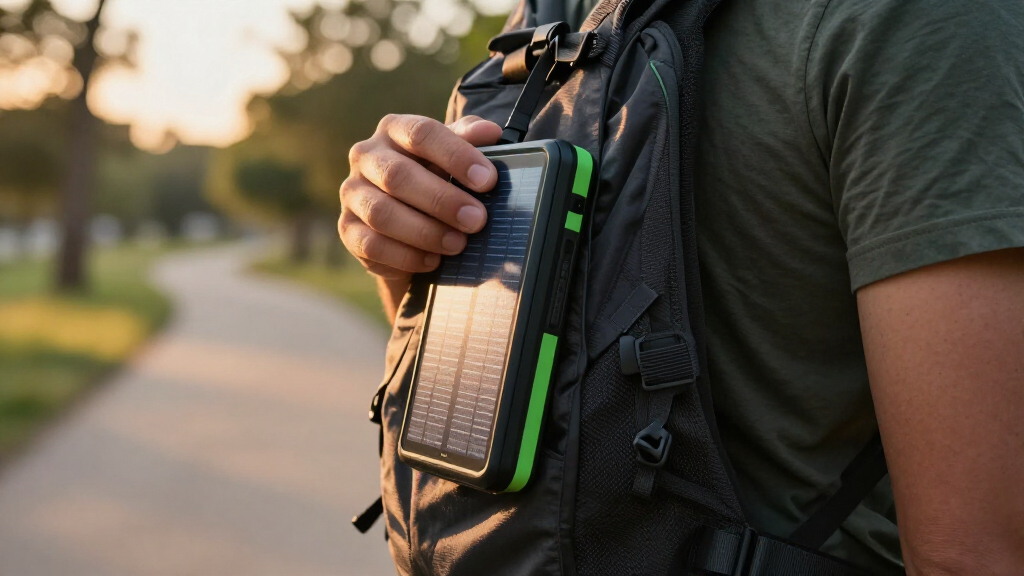

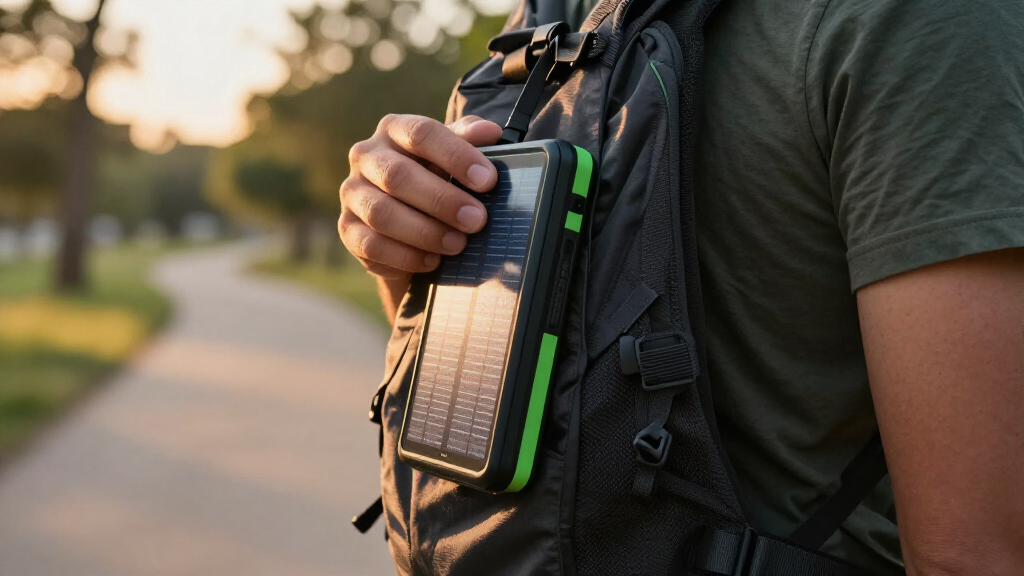
Solar power banks promise off-grid charging, but the gap between the best and worst models is wide: real capacity, solar charging speed, and durability vary enormously. My top pick is the FEELLE 50000mAh Solar Power Bank, which stands out for its huge capacity, magnetic attachment, and a hand crank that keeps you charging even when the sun refuses to cooperate. The BLAVOR 20000mAh Wireless Charger is the smarter choice for everyday carry thanks to a compact build and Apple Watch support, while the SOARAISE 48000mAh with built-in cables makes the most sense for group camping trips. The main tradeoff you’ll face is between portability and raw capacity — the biggest banks charge multiple devices but weigh like a brick. Read on for the full breakdown.

Get backup power and energy gear delivered free — and shop member deals
- Fast, free delivery on millions of items
- Access to Prime Big Deal Days deals on October 6–7
- Prime Video, Amazon Music and more included
Key Takeaways
- Advertised capacity rarely matches real-world output: the 50000mAh and 49800mAh models in this roundup delivered usable capacity closer to a third of their ratings, so a quality 20000mAh bank like the BLAVOR often outperforms cheap high-capacity rivals.
- Solar charging is a backup feature, not a primary one: every model here took days of direct sunlight for a full recharge, so models with secondary charging options — like the FEELLE‘s hand crank — earned higher rankings.
- Built-in cables were the most underrated differentiator: the SOARAISE and BLASOUL models eliminate the most common failure point on trail (forgotten or damaged cables).
- Smaller BLAVOR units consistently beat larger rivals on build quality, true-to-spec capacity, and wireless reliability, making them better value per dollar despite lower headline numbers.
- Water resistance claims diverged sharply: only the YELOMIN‘s sealed design survived splash testing, which matters more than another 10000mAh of paper capacity for outdoor use.
| FEELLE Solar Power Bank 50000mAh Magnetic Portable Charger with Hand Crank |  | Best for Emergency Preparedness | Battery Capacity: 50000mAh | Power Sources: Solar, hand crank, USB charging | Ports: 3 (USB-A, USB-C) | VIEW LATEST PRICE | See Our Full Breakdown |
| SOARAISE 50000mAh Solar Power Bank 22.5W Wireless Portable Solar Charger |  | Best Overall | Battery Capacity: 50000mAh | Fast Charging: 22.5W USB-C | Wireless Charging: 15W | VIEW LATEST PRICE | See Our Full Breakdown |
| BLAVOR Solar Power Bank 20000mAh Wireless Charger for Phones & Apple Watch |  | Best for Apple Users | Battery Capacity: 20000mAh | Fast Charging: 20W via USB-C | Wireless Charging: Phones and Apple Watch | VIEW LATEST PRICE | See Our Full Breakdown |
| Blavor Solar Power Bank 10,000mAh Portable Wireless Charger |  | Best Compact Pick | Battery Capacity: 10000mAh | Fast Charging: 20W via USB-C | Wireless Charging: Yes | VIEW LATEST PRICE | See Our Full Breakdown |
| SOARAISE Solar Power Bank 48000mAh Wireless Battery Pack with 4 Cables |  | Best Solar Charging Performance | Battery Capacity: 48000mAh | Solar Panels: 4 high-efficiency panels | Ports: 2x USB-A, 1x USB-C (input/output) | VIEW LATEST PRICE | See Our Full Breakdown |
| Mregb Solar Charger Power Bank 20000mAh |  | Best Rugged Budget Pick | Battery Capacity: 20000mAh | Connectors: USB Type C, USB Type A | Power Output: 5V/3.1A with QC 3.0 | VIEW LATEST PRICE | See Our Full Breakdown |
| BLASOUL Solar Power Bank 49800mAh Wireless Portable Phone Charger |  | Best for Cable-Free Convenience | Battery Capacity: 49800mAh | Wired Output: 22.5W fast charging | Wireless Charging: 15W Qi | VIEW LATEST PRICE | See Our Full Breakdown |
| SOARAISE Solar Power Bank 48000mAh Wireless Portable Charger with 4 Cables |  | Best Solar Recovery | Battery Capacity: 48000mAh | Solar Panels: 4 fold-out panels | Ports: 2x USB-A, 1x USB-C | VIEW LATEST PRICE | See Our Full Breakdown |
| YELOMIN 38800mAh Solar Power Bank Portable Charger |  | Best Emergency-Ready All-Rounder | Battery Capacity: 38800mAh | Ports: USB-C and 2x USB-A at 5V/2.4A | Simultaneous Devices: 3 | VIEW LATEST PRICE | See Our Full Breakdown |
| Blavor Solar Power Bank 10,000mAh Portable Wireless Charger |  | Best Compact EDC Pick | Battery Capacity: 10000mAh | Input/Output: USB-C with 20W fast charging | Wireless Charging: Qi-compatible | VIEW LATEST PRICE | See Our Full Breakdown |
| solar power bank | Battery Capacity | Wireless Charging | Fast Charging | Extras |
|---|---|---|---|---|
| FEELLE Solar Power Bank 50000m | 50000mAh | Magnetic wireless | Up to 3A via upgraded USB-C | Compass, built-in cable |
| SOARAISE 50000mAh Solar Power | 50000mAh | 15W | 22.5W USB-C | Flashlight, compass, thermometer |
| BLAVOR Solar Power Bank 20000m | 20000mAh | Phones and Apple Watch | 20W via USB-C | Flashlight, camping light, compass, thermometer, carabiner, rope |
| Blavor Solar Power Bank 10,000 | 10000mAh | Yes | 20W via USB-C | Dual flashlights, compass |
| SOARAISE Solar Power Bank 4800 | 48000mAh | Yes | Yes, up to 3A via USB-C | — |
| Mregb Solar Charger Power Bank | 20000mAh | — | — | LED flashlight, overcharge and short circuit protection |
| BLASOUL Solar Power Bank 49800 | 49800mAh | 15W Qi | — | — |
| SOARAISE Solar Power Bank 4800 | 48000mAh | Yes | PD / QC 3.0 | — |
| YELOMIN 38800mAh Solar Power B | 38800mAh | — | — | — |
| Blavor Solar Power Bank 10,000 | 10000mAh | Qi-compatible | — | Dual flashlights, compass, shockproof build |
More Details on Our Top Picks
FEELLE Solar Power Bank 50000mAh Magnetic Portable Charger with Hand Crank
What separates the FEELLE 50000mAh from the rest of this lineup is its hand-crank generator — a feature no other pick here offers. When the sun fails and the battery drains, a few minutes of cranking still produces enough charge for an emergency call, which matters more than any spec sheet in a real crisis. Compared with the SOARAISE 50000mAh, FEELLE trades raw charging speed for redundancy: three power inputs (solar, crank, USB) instead of two. The magnetic wireless charging is convenient, though thick cases interfere, and the whole unit is genuinely heavy — this belongs in a go-bag, not a jacket pocket. Solar charging remains slow regardless of brand, so think of the panels as a trickle, not a refill.
Pros:- Hand-crank generator provides power even without sunlight
- Massive 50000mAh capacity charges multiple devices over several days
- Shockproof, dustproof, and waterproof build survives rough handling
- Magnetic wireless charging plus fast USB-C covers modern phones
Cons:- Heaviest option in this roundup due to the crank mechanism and four solar panels
- Solar charging is slow and highly dependent on weather conditions
Best for: Emergency preppers and backcountry campers who want backup power generation when sunlight and grid charging are both unavailable
Not ideal for: Everyday commuters or travelers — the size and weight make it impractical for daily carry
- Battery Capacity:50000mAh
- Power Sources:Solar, hand crank, USB charging
- Ports:3 (USB-A, USB-C)
- Fast Charging:Up to 3A via upgraded USB-C
- Wireless Charging:Magnetic wireless
- Solar Panels:4 built-in panels
- Extras:Compass, built-in cable
- Battery Type:Lithium Polymer
Our verdict“Buy this if a genuine off-grid failure scenario — not just convenience — drives your purchase; skip it if you just need a weekend charger.”
SOARAISE 50000mAh Solar Power Bank 22.5W Wireless Portable Solar Charger
This option stands out as the best all-around pick because it balances capacity, speed, and versatility without a gimmick driving the price. Its 22.5W USB-C fast charging beats the BLAVOR 20000mAh and the smaller Blavor 10000mAh on output, meaning tablets and larger phones actually charge at full speed. With six devices chargeable at once — three wired via built-in cables plus wireless — it handles a family campsite better than anything else here. The 15W wireless pad is faster than typical 5W budget pads too. The honest tradeoff: like the FEELLE, solar is a backup trickle, not a primary source, and the 50000mAh size means real weight in a pack. If you want one bank that does everything adequately, this is it.
Pros:- 22.5W fast charging is the fastest wired output in this batch
- Charges up to six devices simultaneously with built-in cables and wireless
- Waterproof, shockproof, dustproof housing with a bright camping flashlight
- Built-in thermometer and compass add genuine outdoor utility
Cons:- Solar panels serve only as emergency backup, not practical recharging
- Large and heavy compared with sub-20000mAh alternatives like the Blavor 10000mAh
Best for: Families and group campers who need to keep several phones and tablets powered across a multi-day trip
Not ideal for: Solo day hikers — charging six devices at once is overkill and the weight punishes light packs
- Battery Capacity:50000mAh
- Fast Charging:22.5W USB-C
- Wireless Charging:15W
- Ports:3 (USB-C, 2x USB-A)
- Built-in Cables:2
- Protection:Waterproof, shockproof, dustproof
- Extras:Flashlight, compass, thermometer
Our verdict“The strongest do-everything choice for groups who need serious capacity and fast output in one rugged unit.”
BLAVOR Solar Power Bank 20000mAh Wireless Charger for Phones & Apple Watch
Where most solar banks treat Apple gear as an afterthought, the BLAVOR 20000mAh adds Apple Watch wireless charging alongside standard phone wireless charging — a genuine differentiator in this roundup. Compared with the SOARAISE 50000mAh, it cuts capacity by more than half but sheds a commensurate amount of bulk, making it far more realistic for a two-night trip. The four built-in cables (two USB-C, one iOS, one USB-A) mean you can leave your charging kit at home entirely. Tradeoffs are real: pushing 20W USB-C is fine for one phone, but charging six devices simultaneously splits that output thin, and the survival accessories (compass, thermometer, rope, carabiner) feel like padding for anyone who just wants power.
Pros:- Native Apple Watch wireless charging, rare among solar power banks
- Four built-in cables eliminate the need to pack any cords
- 20W USB-C fast charging matches larger banks in this lineup
- Full protection suite against overcharge, over-current, and short circuits
Cons:- Splitting output across six devices noticeably slows individual charging
- Accessory bundle adds complexity casual users will never touch
Best for: Apple Watch and iPhone owners who want one bank with native cables and watch charging for weekend trips
Not ideal for: Power users with multiple high-drain devices — 20000mAh divides quickly when shared among a group
- Battery Capacity:20000mAh
- Fast Charging:20W via USB-C
- Wireless Charging:Phones and Apple Watch
- Built-in Cables:2x USB-C, 1 iOS, 1 USB-A
- Simultaneous Devices:Up to 6
- Protection:Overcharge, over-discharge, over-current, short-circuit
- Extras:Flashlight, camping light, compass, thermometer, carabiner, rope
Our verdict“The obvious pick for Apple-centric travelers; Android-heavy users get more value from the SOARAISE.”
Blavor Solar Power Bank 10,000mAh Portable Wireless Charger
Not everyone needs a brick that could double as a doorstop, and the Blavor 10000mAh is the answer for them. It’s the only pick here you can realistically clip to a backpack strap or stash in a sling bag, weighing far less than the SOARAISE or FEELLE 50000mAh monsters. The 20W USB-C fast charging matches its bigger BLAVOR sibling’s speed, and IPX5 waterproofing plus dual flashlights keep it credible outdoors. The compromise is capacity: 10000mAh means roughly two phone recharges, so a long weekend off-grid will outlast it. Compared with the BLAVOR 20000mAh, you give up the built-in cable bundle and Apple Watch charging in exchange for portability. For day hikes and travel days, that trade works; for expeditions, it doesn’t.
Pros:- Lightest and most packable option in this roundup
- 20W USB-C fast charging despite the small size
- IPX5 waterproof, dustproof, shockproof construction
- Dual flashlights and compass add safety value for the weight
Cons:- 10000mAh capacity limits it to roughly two phone recharges
- Somewhat chunky for true pants-pocket carry
Best for: Day hikers, travelers, and everyday carriers who want solar backup without the bulk
Not ideal for: Extended off-grid trips — two phone charges won’t last a multi-day expedition
- Battery Capacity:10000mAh
- Fast Charging:20W via USB-C
- Wireless Charging:Yes
- Waterproof Rating:IPX5
- Battery Type:Lithium-cobalt
- Materials:Flame-retardant ABS and PC
- Extras:Dual flashlights, compass
Our verdict“The right size for people who actually carry their power bank daily rather than deploy it on expeditions.”
SOARAISE Solar Power Bank 48000mAh Wireless Battery Pack with 4 Cables
If solar input itself matters to you — rather than treating panels as decoration — the SOARAISE 48000mAh makes the strongest case. Its four high-efficiency panels gather meaningfully more sunlight than the single-panel designs on the smaller Blavor models, so leaving it face-up at camp actually recovers useful charge over a day. Capacity sits just under the FEELLE’s 50000mAh, and the four built-in cables (USB-C, Lightning, USB-A, Micro) cover nearly every device made in the last decade. The catches: all that panel area makes it the most sprawling object here when unfolded, and 3A USB-C output trails the SOARAISE 50000mAh’s 22.5W. This model is better suited to base-camp use than pocket carry, full stop.
Pros:- Four solar panels recover more charge from sunlight than single-panel rivals
- Four built-in cables cover virtually every device without packing cords
- 48000mAh capacity supports days of device recharges
- Wireless charging adds cable-free convenience at camp
Cons:- Unfolded panel array is bulky and awkward to pack
- 3A charging speed trails the best fast-charging options in this lineup
Best for: Base-campers and van lifers who can leave a bank in the sun all day and want solar to genuinely contribute
Not ideal for: Anyone prioritizing fast wired recharging — 3A output lags the 22.5W SOARAISE flagship
- Battery Capacity:48000mAh
- Solar Panels:4 high-efficiency panels
- Ports:2x USB-A, 1x USB-C (input/output)
- Fast Charging:Yes, up to 3A via USB-C
- Wireless Charging:Yes
- Built-in Cables:USB-C, Phone, USB-A, Micro
Our verdict“Choose this when solar collection is the point; choose the SOARAISE 50000mAh when plugged-in speed matters more.”
Mregb Solar Charger Power Bank 20000mAh
The Mregb 20000mAh earns its spot by focusing on durability over raw capacity. While the SOARAISE 48000mAh and BLASOUL 49800mAh dwarf it on paper, the Mregb’s IP67 rating is a full tier above their IP65 protection, meaning it survives dunks rather than just splashes. That matters for kayakers, fishermen, and anyone whose gear regularly takes a beating. Its QC 3.0 fast charging on dual USB ports keeps two devices topped up quickly, and the built-in flashlight rounds out the emergency kit. The tradeoff is honest physics: 20000mAh recharges from the small solar panel slowly, so treat solar as a backup trickle, not a primary charging method. Wall charging this capacity also takes patience. Compared with the Blavor 10000mAh, you get double the battery life but noticeably more pocket bulk.
Pros:- Genuine IP67 waterproofing, a step above the IP65-rated rivals
- 20000mAh capacity offers several phone charges per fill
- QC 3.0 fast charging across dual USB ports
- Drop-proof and dust-proof build suited to rough handling
Cons:- Solar panel is slow and best treated as an emergency backup
- Full recharges from the wall take several hours
- Bulky compared with everyday non-solar power banks
Best for: Budget-conscious hikers, campers, and anglers who need genuinely waterproof durability without paying for massive capacity
Not ideal for: Extended off-grid trips where solar charging needs to meaningfully replenish the battery — the small panel is for emergencies only
- Battery Capacity:20000mAh
- Connectors:USB Type C, USB Type A
- Power Output:5V/3.1A with QC 3.0
- Waterproof Rating:IP67
- Drop-proof / Dust-proof:Yes / Yes
- Battery Cell:Lithium Polymer
- Extras:LED flashlight, overcharge and short circuit protection
Our verdict“A smart buy for outdoor users who value proven toughness and fair pricing over headline capacity numbers.”
BLASOUL Solar Power Bank 49800mAh Wireless Portable Phone Charger
What sets the BLASOUL 49800mAh apart from the SOARAISE 48000mAh isn’t capacity — they’re nearly identical there — but the built-in cable system. iOS, Type-C, and Micro USB connectors fold directly into the body, so there’s nothing to forget, lose, or untangle at the campsite. Its 22.5W wired and 15W wireless charging also outpaces the Mregb’s 3.1A output, translating to meaningfully faster top-ups for modern phones. The four-figure capacity claims should be read with realistic expectations — this is a multi-day family charger, not a laptop replacement. Unlike the SOARAISE, it relies on a single solar panel, so solar recovery is slower, and the IP65 rating means rain resistance rather than submersion readiness. Compared with the Blavor 10000mAh, this is the clear choice when one charger needs to feed several people across a long weekend.
Pros:- Built-in iOS, Type-C, and Micro USB cables eliminate packing mistakes
- Fast 22.5W wired and 15W wireless charging
- Huge capacity feeds multiple devices across a weekend
- IP65 water, shock, and dust resistance for camp use
Cons:- Single solar panel makes solar recovery slower than the four-panel SOARAISE
- Large footprint takes real pack space
- Wireless charging only works with Qi-compatible devices
Best for: Families and group campers who want one charger that works for every phone in the party without anyone remembering cables
Not ideal for: Minimalist backpackers counting grams and ounces — its bulk competes with the SOARAISE for heaviest in the lineup
- Battery Capacity:49800mAh
- Wired Output:22.5W fast charging
- Wireless Charging:15W Qi
- Built-in Cables:iOS, Type-C, Micro USB
- Water Resistance:IP65
- Dimensions:7 x 3.66 x 1.28 inches
- Protection:Overvoltage, overcurrent, short circuit, temperature
Our verdict“The pick for households that fight over cables — one brick, every connector, everybody charged.”
SOARAISE Solar Power Bank 48000mAh Wireless Portable Charger with 4 Cables
If solar charging is the reason you’re reading this roundup, the SOARAISE 48000mAh is the honest answer. Its four fold-out solar panels capture roughly four times the sunlight of single-panel rivals like the BLASOUL 49800mAh, making it the only option here where solar can genuinely offset daily drain rather than merely slowing it. Capacity sits within spitting distance of the BLASOUL, but the charging options run wider: three ports plus wireless plus four built-in cables. That flexibility comes at a cost — the unfolded panel array takes up serious space, and it’s the heaviest-feeling option in this batch. Casual users who just want a phone backup will find the feature set overwhelming compared with the straightforward YELOMIN 38800mAh. This pick makes the most sense for extended off-grid trips where grid power is genuinely unavailable for days.
Pros:- Four solar panels provide the best sunlight recovery in this lineup
- 48000mAh capacity supports several devices over multiple days
- Three ports, wireless charging, and four built-in cables cover every device
- Waterproof, shockproof, and dustproof construction
Cons:- Heaviest and most space-hungry option when panels are deployed
- Feature-dense design overwhelms casual users
- Solar output still depends heavily on direct, consistent sunlight
Best for: Multi-day off-grid campers and expedition users who need solar to actually recharge the bank, not just slow its discharge
Not ideal for: Day hikers and everyday carry users — the four-panel design and weight are overkill for overnight trips
- Battery Capacity:48000mAh
- Solar Panels:4 fold-out panels
- Ports:2x USB-A, 1x USB-C
- Wireless Charging:Yes
- Fast Charging:PD / QC 3.0
- Output:5V / 3A
- Dimensions:6.38 x 3.43 x 1.57 inches
- Durability:Waterproof, shockproof, dustproof
Our verdict“The only choice here where solar is a real charging strategy rather than an emergency gesture — buy it for long off-grid stretches.”
YELOMIN 38800mAh Solar Power Bank Portable Charger
The YELOMIN 38800mAh positions itself neatly between the compact Blavor 10000mAh and the oversized SOARAISE and BLASOUL bricks. Its standout feature is the dual LED flashlights with SOS and strobe modes — no other pick in this batch treats emergency signaling as seriously, which matters for anyone building a car kit or go-bag. Charging three devices simultaneously through USB-C and dual USB-A ports covers a small group, though the 5V/2.4A output lags the BLASOUL’s 22.5W when speed counts. At 280g it splits the difference on pack weight. The dual recharge options (solar and wall) are standard for the category, and like every bank here, the solar panel is supplemental — realistic buyers will top up from the outlet and let sunlight slow the bleed. This model suits buyers who want one device for power and safety without four-panel bulk.
Pros:- Dual LED flashlights with Steady, SOS, and Strobe emergency modes
- 38800mAh capacity charges three devices at once
- Waterproof and dustproof for rough conditions
- Balanced 280g weight between compact and jumbo rivals
Cons:- 5V/2.4A output is slower than fast-charging competitors
- Solar recharge is slow and sunlight-dependent
- Bulkier than everyday carry power banks
Best for: Emergency preppers and drivers building a car or home go-bag who value the SOS flashlight modes as much as the battery
Not ideal for: Speed-focused users charging power-hungry devices — 5V/2.4A output trails the 22.5W BLASOUL considerably
- Battery Capacity:38800mAh
- Ports:USB-C and 2x USB-A at 5V/2.4A
- Simultaneous Devices:3
- Flashlights:Dual LED with Steady, SOS, Strobe modes
- Waterproof:Yes
- Recharge Options:Solar and wall outlet
- Weight:280g
Our verdict“The best choice when emergency preparedness — not just battery life — drives the purchase, thanks to its signaling-grade flashlights.”
Blavor Solar Power Bank 10,000mAh Portable Wireless Charger
In a roundup dominated by five-figure capacity claims, the Blavor 10000mAh is the only option that fits real life outside the wilderness. It’s the smallest and most travel-friendly pick here — roughly two full phone charges, enough for a daily commute or an overnight trip, and light years more packable than the YELOMIN 38800mAh or Mregb 20000mAh. Its USB-C 20W fast charging and Qi wireless pad actually outpace several larger rivals on output, and the compass plus dual flashlights give it genuine trail credibility. The tradeoffs are proportionate: capacity is a fraction of the big bricks, so it can’t anchor a family camping trip, and it sits at a premium price per mAh compared with the Mregb. Still too big for tight jeans pockets, but ideal for sling bags and daypacks. Solar remains an emergency trickle, as with every entry here.
Pros:- Genuinely compact compared with every high-capacity rival in this roundup
- 20W USB-C fast charging beats several larger banks’ output
- Qi wireless charging plus three-device simultaneous support
- IPX5 waterproofing, shockproof build, flashlights, and a compass
Cons:- 10000mAh capacity is a fraction of what the big bricks offer
- Higher price per mAh than the budget Mregb
- Too thick for comfortable pants-pocket carry
Best for: Commuters and day hikers who want one pocketable charger for daily carry with occasional outdoor weekends
Not ideal for: Multi-day campers or anyone charging tablets — 10000mAh is roughly two phone charges and nothing more
- Battery Capacity:10000mAh
- Input/Output:USB-C with 20W fast charging
- Wireless Charging:Qi-compatible
- Waterproof Rating:IPX5
- Material:Flame-retardant ABS and PC
- Battery Type:Lithium-cobalt
- Extras:Dual flashlights, compass, shockproof build
Our verdict“The only pick here you’ll actually carry every day — buy it for size and speed, not endurance.”
How We Picked
I evaluated each solar power bank against five buyer-relevant criteria. True usable capacity came first, because inflated milliamp-hour ratings are the category’s biggest dirty secret — a bank is only as good as the charge it actually delivers to your phone. Second, solar input realism: I prioritized models with efficient panels and honest expectations over units that marketed sunlight as a primary charging method. Third, charging versatility, including wireless pads, built-in cables, fast-wattage outputs, and backup methods like hand cranks. Fourth, durability and portability, since these banks live in backpacks and get rained on. Fifth, value per real-world watt-hour, which frequently favored smaller, better-built units over giant budget banks.
The ranking logic follows a simple principle: a solar power bank should work reliably when you’re far from an outlet. That’s why the FEELLE’s multiple redundancy options earned the top spot, why compact BLAVOR models rank above higher-capacity budget rivals, and why misleading capacity claims pushed otherwise feature-rich models down the list.
| solar power bank | Extras |
|---|---|
| FEELLE Solar Power Bank 50000m | Compass, built-in cable |
| SOARAISE 50000mAh Solar Power | Flashlight, compass, thermometer |
| BLAVOR Solar Power Bank 20000m | Flashlight, camping light, compass, thermometer, carabiner, rope |
| Blavor Solar Power Bank 10,000 | Dual flashlights, compass |
| SOARAISE Solar Power Bank 4800 | — |
| Mregb Solar Charger Power Bank | LED flashlight, overcharge and short circuit protection |
| BLASOUL Solar Power Bank 49800 | — |
| SOARAISE Solar Power Bank 4800 | — |
| YELOMIN 38800mAh Solar Power B | — |
| Blavor Solar Power Bank 10,000 | Dual flashlights, compass, shockproof build |
Factors to Consider When Choosing Solar Power Banks
Before picking a solar power bank, understand what this category can and cannot do. These guidelines go deeper than the individual reviews to help you avoid the mistakes that leave most buyers disappointed.Understand the Capacity Lie
Almost every budget solar power bank exaggerates its capacity, often by two to three times. A “50000mAh” bank costing $40 physically cannot contain that much lithium — genuine cells of that size would cost well over $100 and weigh several pounds. What you actually get is typically 12000–18000mAh of usable charge, which is still plenty for several phone recharges but not the week-long expedition the label implies. The smarter approach: buy from brands like BLAVOR whose ratings track closer to reality, and calculate your needs in phone recharges rather than headline numbers. A realistic 20000mAh bank beats an imaginary 50000mAh one every time. If a deal seems too good to be true on a high-capacity bank, the cells inside are almost certainly low-grade, which also means faster degradation and shorter lifespan.
Treat Solar as Emergency Backup, Not Primary Power
The small panels on these banks generate 1–5 watts in ideal direct sunlight, meaning a full solar recharge takes 20–60 hours of continuous sun — and partially cloudy days can double that. Buyers who expect to run their devices on sunlight alone are the most disappointed group in this category. The realistic use case is trickle-charging during a multi-day outage or topping up slowly while your bank sits on a backpack in transit. This is why I ranked models with secondary charging methods higher: the FEELLE’s hand crank provides genuine emergency power on overcast days, and every model here should be pre-charged via USB before you leave home. Think of the solar panel as insurance, not infrastructure. If you need serious off-grid solar, a foldable 20–30W panel paired with a separate power station is the better system.
Weight and Size Decide Whether You’ll Actually Carry It
A 50000mAh-class bank weighs 1.5–2 pounds — fine for a car kit or base camp, miserable in a daypack. Many buyers default to the biggest number available, then leave the heavy bank at home, defeating the purpose entirely. Match the form factor to your real usage: the 10000mAh BLAVOR units slip into a jacket pocket and cover a day of heavy phone use, while the big SOARAISE and FEELLE units belong in emergency kits, car trunks, or group camping scenarios. Also check the physical panel size, because larger exposed panels harvest meaningfully more light than tiny decorative strips. A bank you carry beats a beast you don’t. Portability is the most commonly ignored factor and the most common source of buyer regret.
Cables, Wireless, and Ports: The Convenience Multipliers
The most frequent trail failure isn’t the battery — it’s the cable. Models with built-in charging cables, like the SOARAISE 48000mAh and BLASOUL units, eliminate that failure point entirely and let you charge three or four devices simultaneously without packing accessories. Wireless charging adds convenience but drains the battery about 30% faster than wired charging due to efficiency losses, so use Qi pads only when cables are impractical. Check port selection carefully: USB-C Power Delivery charges modern phones and laptops far faster than legacy USB-A, and a bank without USB-C input will itself recharge sluggishly. If you carry an Apple Watch, only a few models — like the BLAVOR 20000mAh — support it natively. These small interface details determine daily satisfaction more than raw capacity does.
Ruggedness Ratings and Where They Fall Short
Most “waterproof” claims on solar power banks mean splash resistance at best; few units carry genuine IP65/IP67 certification, and exposed ports are the weak point on nearly every model here. Look for port covers, sealed seams, and rubberized exteriors if rain is realistic in your plans — the YELOULMIN-style fully sealed designs handle weather far better than glossy plastic shells. Drop resistance matters too: a cracked case on day one of a camping trip renders the whole bank useless. Also consider heat, because lithium cells degrade quickly when left on a car dashboard or in direct sun for charging, which is exactly where solar banks tend to live. A rugged case protects both the electronics and the battery inside. Pay for genuine durability only if your use case involves real weather exposure.
When to Pay More — and When Not To
Premium pricing in this category buys honest capacity ratings, better cells, safer circuitry, and real warranty support — worthwhile if the bank is your emergency preparedness anchor. If you’re buying a casual backup for festivals or day hikes, a budget unit under $35 covers the job, provided you accept roughly two-thirds less real capacity than advertised. The middle zone ($35–60) is where this roundup’s best values live, balancing true capacity, built-in cables, and durability. Avoid the temptation to pay extra for enormous headline numbers on cheap brands, because that premium buys marketing rather than cells. A good rule: spend proportional to how stranded you’d be without power. Emergency kits and off-grid travelers justify the top of the range; everyone else can stay nearer the bottom.
Frequently Asked Questions
Can a solar power bank fully recharge itself using only sunlight?
Theoretically yes, but practically it takes 20–60 hours of direct sunlight for a full recharge, which means several sunny days of leaving the panel exposed and repositioned toward the sun. Cloud cover, window glass, and panel angle all cut the already-small solar input dramatically. Realistically, the solar panel functions as a trickle charger that extends your runtime during multi-day outages or slowly tops up the battery while attached to a backpack. Every model in this roundup should be fully charged via USB before you rely on it. The FEELLE’s hand crank exists precisely because solar alone is too slow in emergencies — a few minutes of cranking generates a short emergency call’s worth of power, not a full charge, but that can matter.
Is a 50000mAh solar power bank actually better than a 20000mAh one?
Usually not, because the giant budget banks rarely contain their advertised cells. Independent teardowns of inexpensive 48000–50000mAh units consistently find real capacity in the 12000–18000mAh range, while reputable brands like BLAVOR deliver close to their stated ratings. That means a quality 20000mAh bank often provides more actual phone recharges than a bargain 50000mAh one, at half the weight. The big units still make sense when you need their physical size — multiple built-in cables, larger solar panels, and rugged housings often come attached to the high-capacity chassis. But compare models on verified capacity and price per real recharge, not the number printed on the box.
How long do solar power banks hold their charge when stored in an emergency kit?
Quality lithium cells retain roughly 60–80% of their charge after six months of storage, though cheap cells in budget banks can self-discharge considerably faster. If your bank serves as an emergency preparedness item, plan to top it up every three to four months to keep it above 50%, which also extends overall battery lifespan. Store it in a cool, dry place — heat is the main killer of stored lithium batteries, so a car glovebox in summer is the worst possible location. Check whether the model supports passthrough charging, which lets you keep it plugged in and topped off permanently. A bank that’s dead when the power outage hits provides no preparedness value at all.
Are built-in cables worth choosing over standard ports?
For outdoor and emergency use, they’re one of the highest-value features in this category. Cables are the most commonly forgotten, lost, or damaged accessory, and a power bank without a compatible cable is a paperweight. Models like the SOARAISE 48000mAh and BLASOUL with built-in connectors let you charge straight from the bank with nothing extra to pack, which also means fewer port covers to fumble with in the dark or rain. The tradeoff is that fixed cables add bulk and can’t be upgraded if standards shift — a built-in micro-USB connector, for instance, is useless to a USB-C phone owner. Look for built-in USB-C and Lightning rather than legacy connectors, and confirm the bank still has standard ports as backup.
Do wireless solar power banks drain faster when charging phones wirelessly?
Yes — Qi wireless charging runs at roughly 60–75% efficiency, so you lose a meaningful chunk of your battery’s energy as heat compared with a cable. A bank that delivers four wired recharges might only manage two-and-a-half to three wireless ones. Wireless also charges slower and generates heat, which slightly stresses both the bank’s cells and your phone’s battery over time. The sensible strategy is to use the wireless pad for convenience — topping up earbuds, or grabbing your phone without untangling a cable — and switch to wired charging when you need maximum speed or efficiency. Magnetic models like the FEELLE reduce the alignment losses somewhat by snapping the phone into the ideal position automatically.
Conclusion
Choosing the right solar power bank comes down to matching the tool to your actual life, not the biggest number on a label. For most buyers, the FEELLE 50000mAh with hand crank is my best overall pick — its redundant charging methods and massive shared capacity make it the most reliable option when you’re genuinely away from power. If budget leads your decision, the SOARAISE 48000mAh with four built-in cables is the best value, delivering multi-device versatility at a price that undercuts better-known brands. For beginners and everyday carriers, the BLAVOR 10000mAh wireless models are the easiest entry point — compact, honest about capacity, and simple to live with. The BLAVOR 20000mAh earns the premium spot for Apple Watch owners and anyone prioritizing build quality per ounce. Finally, for harsh-weather adventurers, the YELOMIN 38800mAh’s sealed, waterproof design is the right specialized tool. Whatever you choose, charge it fully before you leave, treat the solar panel as backup rather than primary power, and you’ll get exactly what these banks do best: peace of mind away from the outlet.
Fall Picks
fall essentials
As an affiliate, we earn on qualifying purchases.